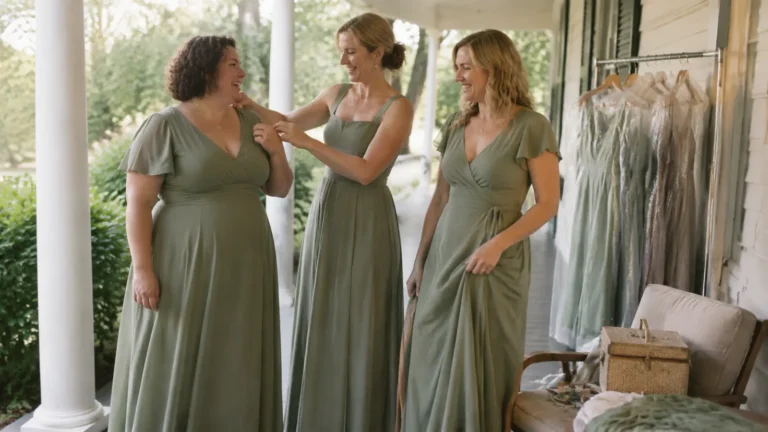
Who pays for bridesmaid dresses is often answered with one short sentence: in the United States, bridesmaids traditionally purchase their own dresses.
That may describe the common expectation, but it does not resolve every situation fairly.
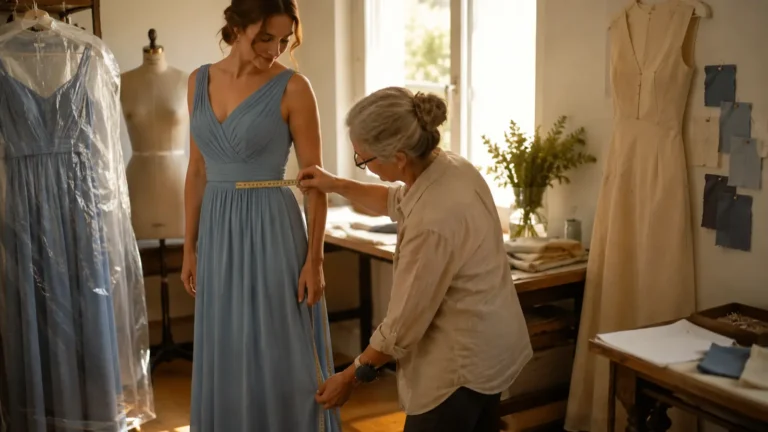
A bridesmaid is not purchasing only a dress. She may also be paying for alterations, shoes, undergarments, accessories, professional beauty services, travel, accommodation and pre-wedding events.
The bride also controls how specific and expensive many of those requirements become.
At Wedding Dress Style, we use a more practical principle:
The more specific and mandatory the requirement, the stronger the couple’s responsibility to pay for it—or provide an affordable alternative.
Tradition can begin the conversation. It should not end it.
The Short Answer
In many U.S. weddings, bridesmaids expect to pay for:
- Their bridesmaid dresses
- Necessary alterations
- Shoes within a flexible guideline
- Optional professional hair and makeup
- Travel and accommodation
- Some pre-wedding activities they willingly attend
The couple commonly pays for:
- Bridesmaid bouquets
- Wedding-day transportation arranged for the bridal party
- Required accessories given to everyone
- Mandatory professional hair and makeup
- Costs created by unusually specific or expensive requirements
These are guidelines, not laws. Families, cultures and individual weddings handle the expenses differently.
The important point is that everyone knows the arrangement before accepting the role or spending money.
Tradition Does Not Reveal the Complete Cost
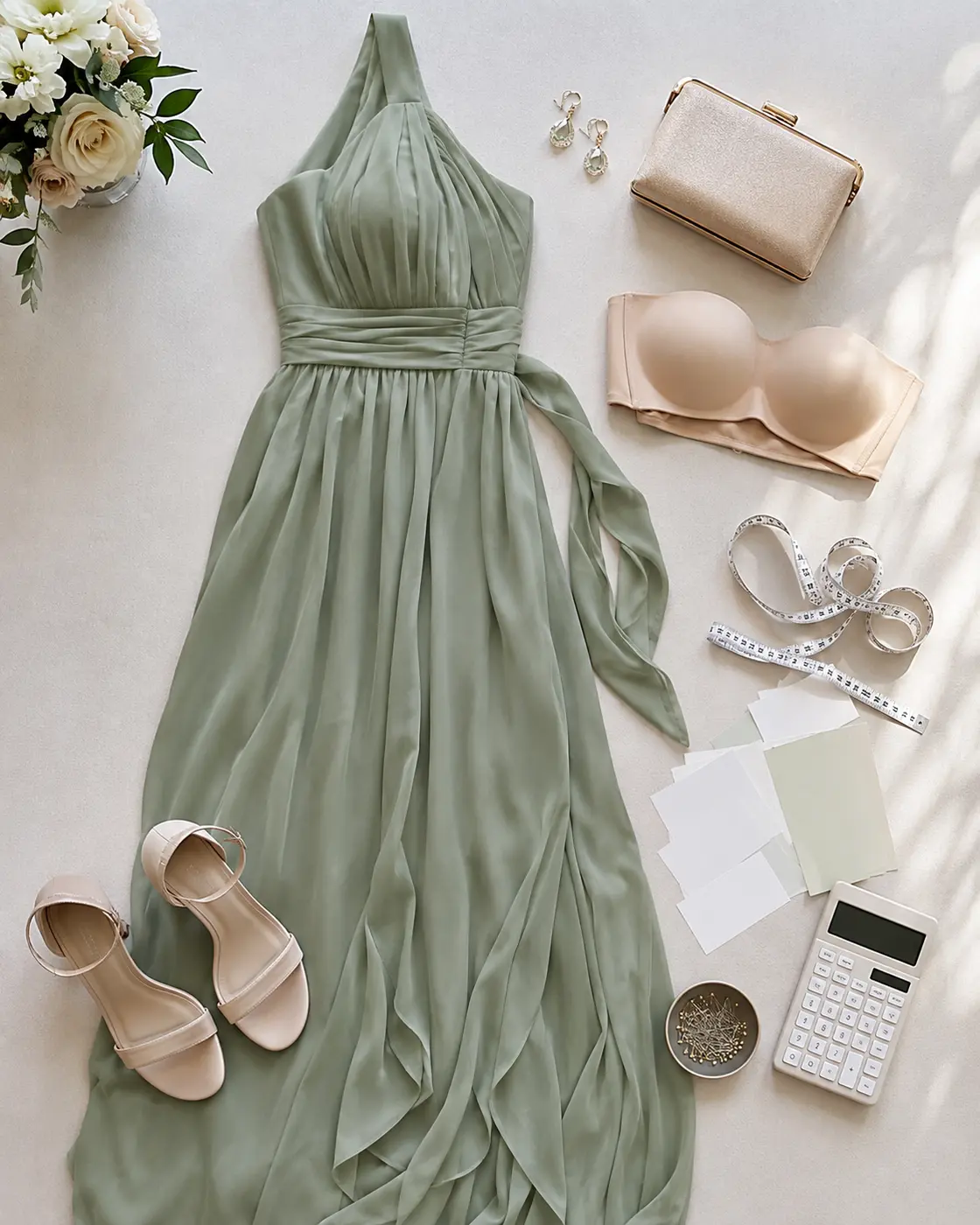
Imagine that a bride selects a $160 dress.
At first, the expense may sound manageable. Then the bridesmaid learns that she also needs:
- A $90 hem and strap adjustment
- Specific $70 shoes
- A particular bra or shapewear
- Professional hair
- Professional makeup
- Jewelry selected by the bride
- Two hotel nights
- Transportation to the wedding
- A bachelorette trip
The dress was never truly a $160 commitment.
When discussing the budget, calculate the full required outfit and participation cost—not only the price displayed on the product page.
Alteration prices vary by location, fabric and complexity. Azazie currently estimates approximately $30–$150 for many bridesmaid-dress alterations, while The Knot reports that bridesmaid alterations commonly fall around $75–$150. Complicated hems, restructuring and rush service can cost more.
The bride does not need to predict every expense exactly. She does need to acknowledge that the listed dress price is only the beginning.
Ask About Budgets Privately

Do not ask bridesmaids to announce what they can afford in a group conversation.
A person may agree to a higher amount because she does not want to appear difficult or less financially secure than her friends. Another may say “whatever works” while privately worrying about rent, childcare, debt or travel.
Ask each bridesmaid separately:
What is the highest total dress-and-alterations budget that would feel comfortable for you—not merely possible?
“Comfortable” is important.
A person might technically have enough money to purchase a $300 dress, but doing so may require canceling another obligation or using a credit card.
The goal is not to discover the greatest amount she could produce under pressure. It is to understand what she can spend without resentment or financial strain.
Use the Lowest Comfortable Budget
Suppose four bridesmaids provide these comfortable limits:
- $150
- $200
- $250
- $300
The working budget is not the $225 average.
It is approximately $150, including reasonable room for alterations.
The bridal party does not make a financial decision as one shared household. Each person pays from her own circumstances.
Selecting according to the lowest comfortable budget prevents one bridesmaid from repeatedly having to request exceptions while everyone else proceeds.
If the bride wants a more expensive dress, she can:
- Pay the difference
- Cover alterations
- Purchase the dresses as gifts
- Select a less expensive alternative
- Allow a coordinated dress from another retailer
- Reduce other mandatory expenses
This keeps the wedding vision without making one friend absorb the additional cost.
When the Bride Should Pay or Contribute
The bride or couple should seriously consider paying when:
The Dress Is Unusually Expensive
If the selected dress exceeds the budget discussed with the bridal party, the couple should cover the difference or choose another option.
Only One Specific Dress Is Allowed
The less choice bridesmaids receive, the more responsibility the bride has for ensuring the required dress is affordable.
The Dress Is Difficult to Reuse
“Everyone can wear it again” should not be used to justify the cost unless the bridesmaids genuinely would choose the dress for another event.
A highly specific color, formal gown or customized style may have little practical value after the wedding.
A Bridesmaid Has Already Communicated a Financial Limit
Once someone has clearly stated her budget, selecting something beyond it and expecting her to “make it work” is not a misunderstanding.
It is ignoring the information she provided.
The Wedding Requires Expensive Travel
A bridesmaid attending a destination wedding may already face flights, accommodation, local transportation and time away from work.
Covering the dress, alterations or beauty services can meaningfully reduce the burden.
The Bride Requires Professional Beauty Services
When professional hair or makeup is mandatory, the couple should pay for it.
If the service is optional and bridesmaids may genuinely style themselves, asking each person to pay for her chosen service is more reasonable.
The Wedding Dress Style Mandatory-Means-Funded Rule
Use one question for every potential bridesmaid expense:
Can the bridesmaid decline or replace this item without disappointing the bride or disrupting the wedding plan?
If the honest answer is no, treat it as mandatory.
Examples include:
- One exact pair of shoes
- One specific jewelry set
- Professional hair by a selected stylist
- Professional makeup by a selected artist
- A required robe for getting-ready photographs
- A specific manicure
- A particular clutch
- An expensive pre-wedding outfit
When the item is mandatory, the couple should provide it, pay for it or include its cost in the budget conversation from the beginning.
Calling something “optional” while making the alternative socially uncomfortable does not make it optional.
Who Pays for Alterations?
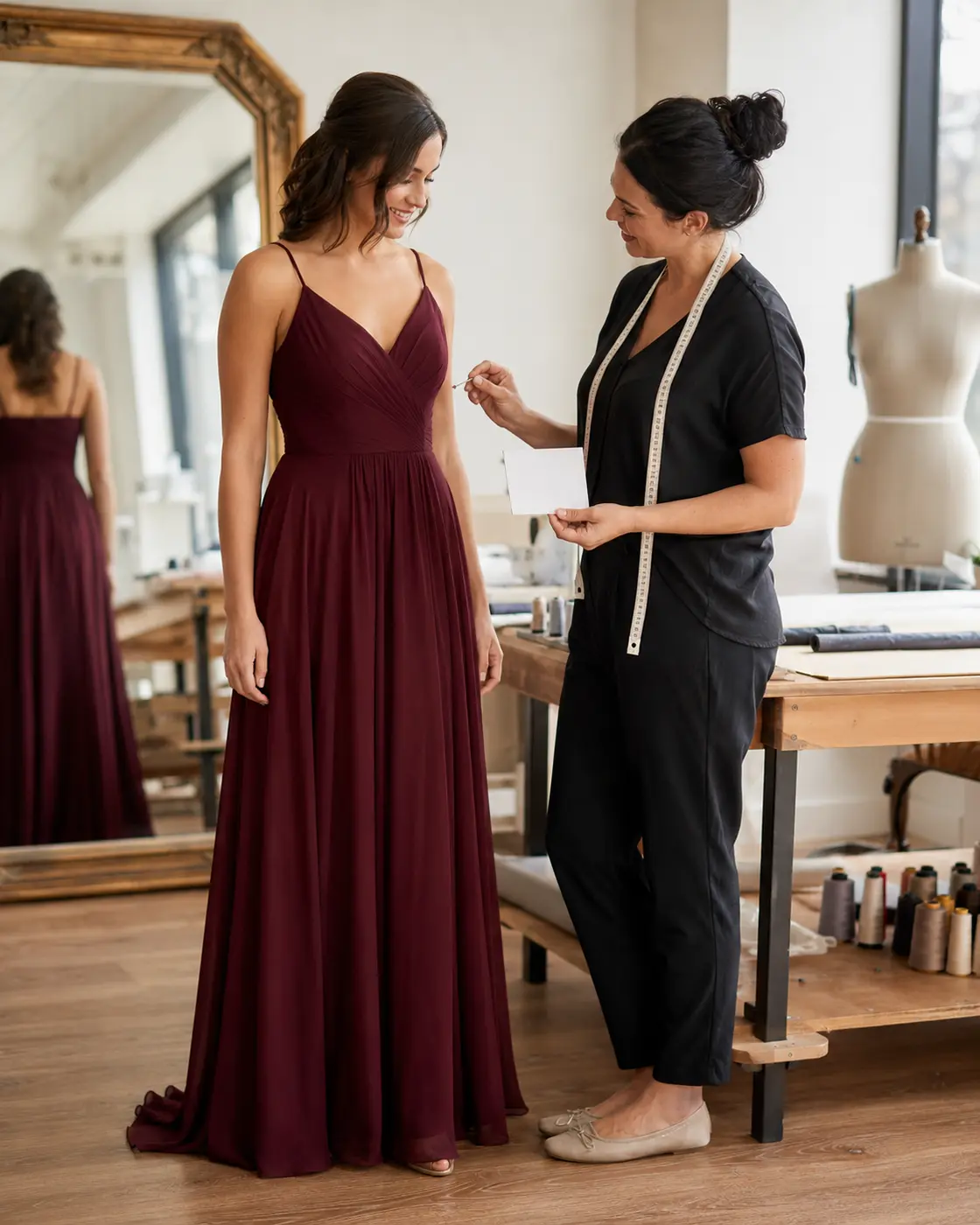
In many U.S. weddings, bridesmaids pay for their own alterations along with the dress.
However, alterations do not affect every person equally.
One bridesmaid may need only a small strap adjustment. Another may require a multilayer hem, significant bodice work or structural changes because the standard size chart does not accommodate her proportions.
That difference is not a measure of who chose her size more responsibly.
Ready-made dresses are produced for standardized measurements. Real bodies are not.
When selecting the dress budget, reserve space for alterations. If the group’s limit is $200, choosing a $200 dress leaves no room for tailoring.
A more realistic plan might be:
- Dress: up to $140
- Expected alterations: $60
- Total working limit: $200
If the bride chooses a construction known to require expensive alterations—such as a complicated multilayer hem—offering to contribute is considerate.
Our guide explaining when to order bridesmaid dresses can help the group leave enough time for fittings without rush fees.
Who Pays for Shoes?
If bridesmaids may wear shoes they already own within a general guideline, they can reasonably provide their own.
A flexible instruction might be:
Wear comfortable nude, tan, metallic or black formal shoes with a heel height you can walk in safely.
If the bride requires one exact shoe, she should consider purchasing it for the group.
The exact shoe may not fit every foot equally well. Bridesmaids may have different width, arch, balance or mobility requirements. Visual uniformity should not require someone to spend the wedding in pain.
The most useful shoe standard is often a shared color family rather than an identical product.
Who Pays for Jewelry and Accessories?
When jewelry is optional, bridesmaids can wear pieces they already own.
When one exact necklace, pair of earrings, belt or hairpiece is required, the couple should ideally provide it. It can also serve as the bridesmaid gift if it is chosen with the recipient in mind.
Be careful about calling a mandatory accessory a gift.
A gift should feel as though it belongs to the person receiving it—not merely to the wedding photographs.
Bouquets and floral accessories are normally part of the couple’s floral budget rather than a bridesmaid expense.
Who Pays for Hair and Makeup?
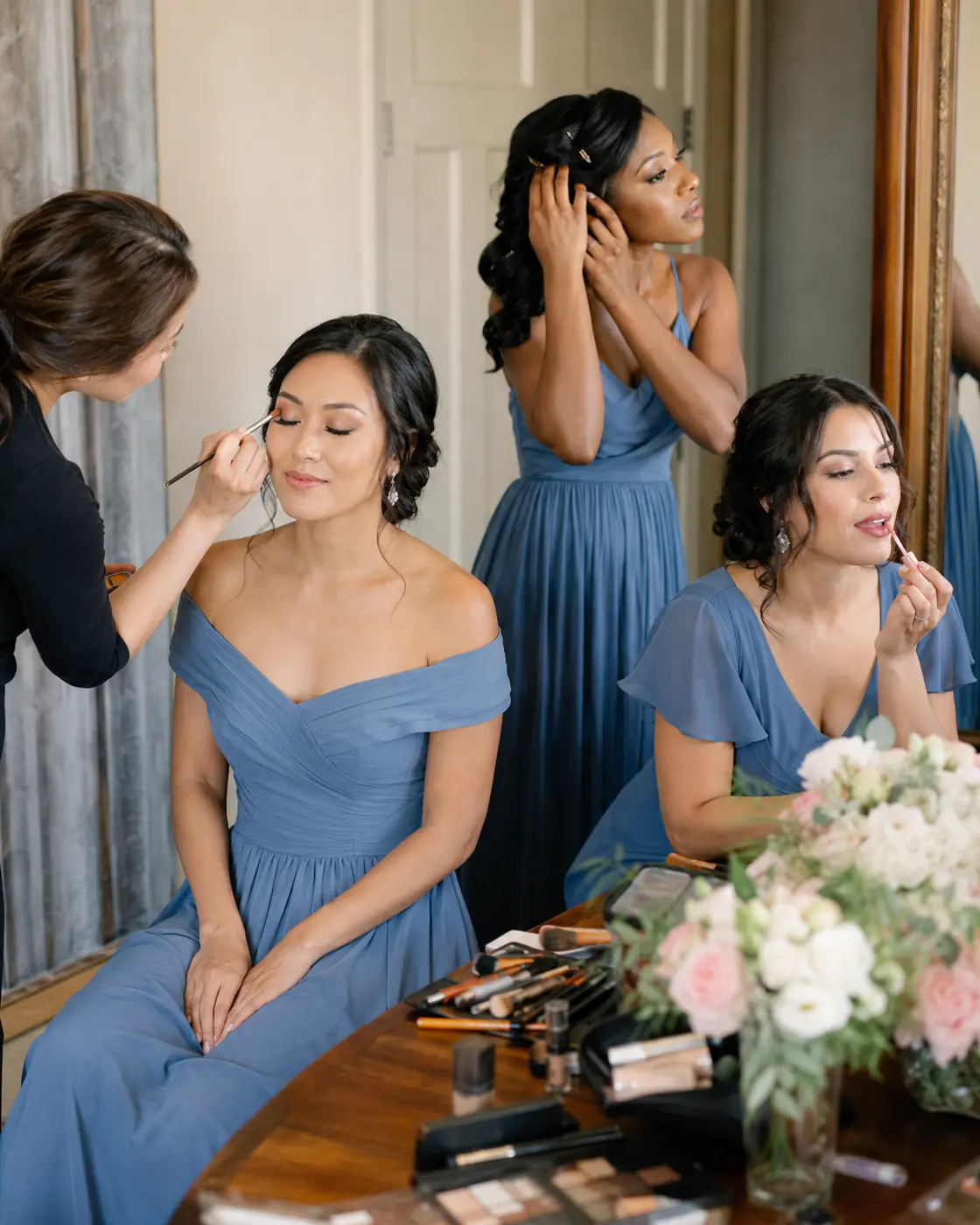
There are three fair arrangements.
The Couple Pays
This is the clearest choice when professional hair and makeup are required.
The Service Is Truly Optional
Bridesmaids may book and pay for professional services or style themselves without penalty.
The bride can provide broad guidance, but the do-it-yourself option must be genuinely acceptable.
The Couple Contributes
The couple might cover makeup while bridesmaids pay for optional hair, pay a fixed amount toward each person’s services or cover gratuities.
What does not work well is announcing mandatory professional services after bridesmaids have already agreed to other expenses.
Current etiquette guidance from Brides and The Knot supports the principle that when professional hair and makeup are required, the couple should cover the cost or provide real flexibility.
Travel Changes What “Affordable” Means
A $150 dress may be manageable for a local wedding and difficult for a destination wedding.
Travel can add:
- Airfare
- Baggage fees
- Hotel nights
- Ground transportation
- Meals
- Childcare
- Pet care
- Unpaid time away from work
The bride should consider the total commitment before adding optional aesthetic requirements.
For destination weddings, useful contributions can include:
- Paying for the dress
- Covering a shared hotel night
- Arranging airport transportation
- Paying for hair and makeup
- Hosting meals
- Eliminating additional required outfits
- Keeping the bachelorette event local or optional
The goal is not to reimburse every personal expense. It is to avoid treating travel costs as invisible while continuing to add requirements.
Mix-and-Match Dresses Can Protect the Budget
A well-managed mix-and-match plan can give bridesmaids more control over price.
The bride might define:
- One color family
- Floor or midi length
- A formality level
- Several approved fabrics
- A deadline for approval
Bridesmaids can then choose from different retailers or price points.
However, vague freedom can create stress. “Buy any blue dress” may cause bridesmaids to purchase options that are later rejected.
Give clear visual examples and approve every selection before it becomes nonreturnable.
Our guide to mix and match bridesmaid dresses explains how to provide flexibility while maintaining a cohesive bridal party.
What If One Bridesmaid Cannot Afford the Dress?
Respond privately and without making her justify her financial circumstances.
Useful solutions include:
- Paying the difference
- Covering the entire dress discreetly
- Selecting a less expensive style
- Finding a ready-to-ship alternative
- Allowing a coordinated dress from another retailer
- Purchasing a secondhand version
- Removing another required expense
- Offering a payment deadline with more time
Do not discuss her budget with the group unless she asks you to.
Do not describe the assistance publicly as charity or generosity. Solve the problem quietly and preserve her dignity.
If no workable arrangement exists, allow her to step out of the bridal party without anger or embarrassment. A friendship should survive a role someone cannot responsibly afford.
What If a Bridesmaid Says the Cost Is Too High?
Do not answer immediately with:
- “Everyone else is fine with it.”
- “You agreed to be a bridesmaid.”
- “You can wear it again.”
- “The wedding is still months away.”
- “Just put it on a credit card.”
Instead, ask which part of the total is creating difficulty.
The problem might be the dress itself, the alterations, travel, beauty services or the combined total.
Once you identify the actual expense, you can decide whether to reduce, remove or cover it.
A budget concern is information—not an attack on the wedding.
Discuss Expenses Before the Bridesmaid Accepts
When inviting someone to join the bridal party, share the known financial expectations.
You may not have exact prices yet, but you can provide a realistic outline:
- Expected dress range
- Who pays for alterations
- Wedding location
- Expected hotel nights
- Whether professional beauty services will be required
- Planned pre-wedding events
- Whether a destination bachelorette trip is being considered
Then say clearly:
I would love to have you beside me, but I want you to decide without pressure. Please take time to consider the cost and commitment before answering.
This gives the person the ability to accept the real role—not an incomplete version of it.
A Message the Bride Can Send
After selecting the attire, send one clear cost summary:
The approved bridesmaid dresses cost between $120 and $150. Please also reserve approximately $50–$100 for possible alterations, although the final amount will depend on your dress and local tailor. You may wear formal neutral shoes you already own. Professional hair and makeup will be optional, and you may do your own. I will provide the earrings and cover wedding-day transportation between the hotel and venue. Please message me privately before ordering if this total is uncomfortable so we can find another option together.
This message does not require anyone to disclose personal finances publicly. It makes the expected expenses visible and opens the door to solutions.
The Wedding Dress Style Fair-Cost Test
Before finalizing the bridal-party requirements, ask five questions.
1. The Complete-Total Test
Have you calculated the dress, expected alterations, shoes, beauty, travel and required accessories?
2. The Lowest-Budget Test
Does the plan work for the bridesmaid with the lowest comfortable budget?
3. The Choice Test
Can bridesmaids make genuine choices that reduce their expenses?
4. The Mandatory Test
Is the couple paying for requirements bridesmaids cannot reasonably decline?
5. The Relationship Test
Would you still consider the request fair if your friend made it of you?
If one answer is no, adjust the plan before purchases become nonreturnable.
An Example: The $180 Dress That Became a $500 Outfit
A bride selects one $180 satin gown and tells the group it falls within the agreed $200 dress budget.
The dress requires hemming and bodice adjustments. The bride also requests one exact pair of shoes, matching earrings, professional makeup and an updo from her chosen stylist.
The bridesmaid’s estimated total becomes:
- Dress: $180
- Alterations: $100
- Shoes: $65
- Earrings: $30
- Makeup: $100
- Hair: $125
- Total: $600
Travel and accommodation are not included.
The mistake was not necessarily selecting a $180 dress.
The mistake was describing the decision as a $180 request.
A fairer plan could allow bridesmaids to wear shoes and jewelry they own, make professional beauty services optional and have the couple pay for any required services.
The visual result can remain polished while the financial burden changes significantly.
Our Final Perspective
In the United States, bridesmaids commonly pay for their dresses and alterations. That custom does not give the bride unlimited control over the price.
Ask about budgets privately. Use the lowest comfortable budget. Calculate the complete cost. Pay for highly specific mandatory requirements, and provide genuine alternatives whenever possible.
If you are beginning the selection process, our guide on how to choose bridesmaid dresses can help you balance the wedding vision with different bodies, preferences and budgets.
The fairest bridal party is not necessarily the one in which the couple pays for everything.
It is the one in which nobody discovers the true cost after saying yes.