Learning how to mix and match bridesmaid dresses is not simply about allowing everyone to select a different gown.
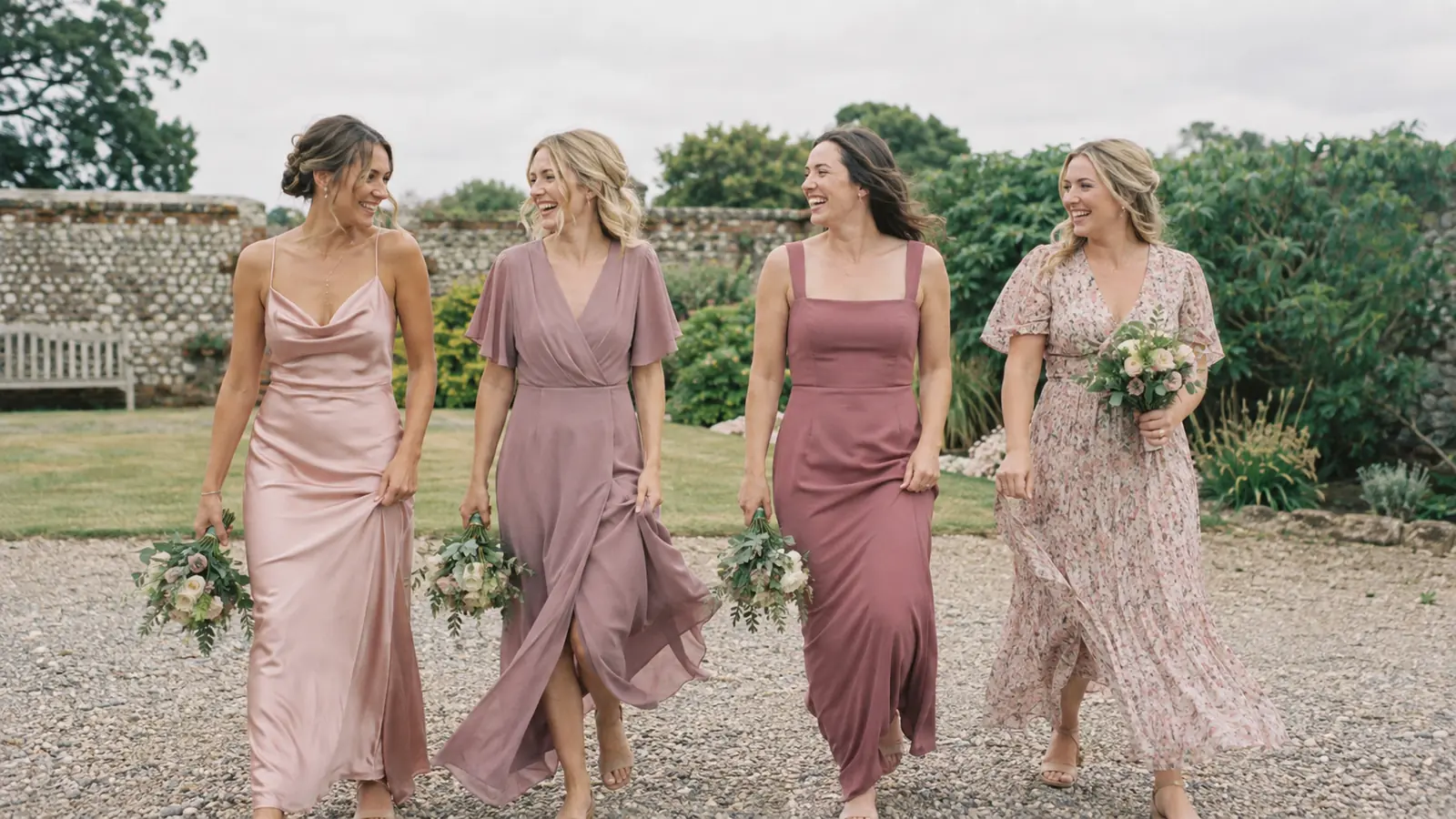
The strongest bridal-party combinations contain visible differences, but those differences follow a clear system. The dresses may vary in color, neckline or fabric, yet they still look as though they belong to the same wedding.
When the system is missing, the result can feel accidental. One dress looks much more formal than the others. One shade appears unexpectedly bright. Three bridesmaids select nearly identical styles while another person looks completely separated from the group.
At Wedding Dress Style, we use a practical rule:
Keep two visual elements consistent and allow one main element to change.
That one decision gives bridesmaids meaningful choice without asking them to design the entire bridal party themselves.
First, Decide What “Mix and Match” Means for Your Wedding
Mix-and-match bridesmaid dresses can describe several different arrangements.
You might choose:
- One color with different dress styles
- Several shades of one color family
- Different fabrics in a controlled palette
- Solid dresses combined with one or two prints
- Different colors connected by the same fabric
- Different dresses with the same length and formality
Do not begin by sending bridesmaids a general color and telling them to find something they like. Decide which type of variation you want first.
If you are still deciding how much choice your bridal party should receive, read our guide on how to choose bridesmaid dresses before building the palette.
The Wedding Dress Style Two-Plus-One Rule
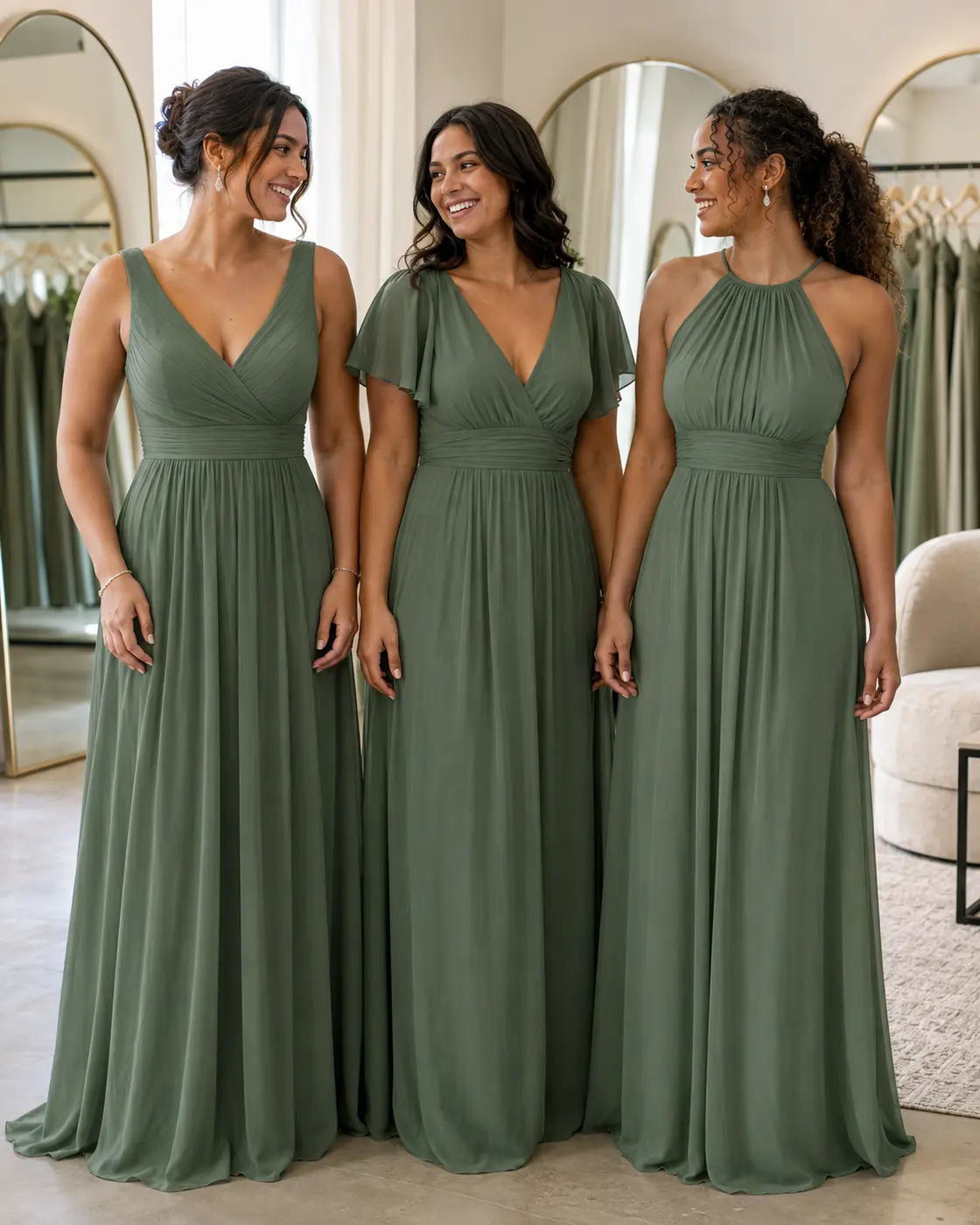
The simplest way to produce a cohesive bridal party is to control two elements while varying one.
Option 1: Same Color and Fabric, Different Silhouettes
Everyone wears the same designer’s exact color and fabric, but each bridesmaid chooses an approved neckline or bodice.
This is the safest mix-and-match method because the color creates an immediate visual connection.
It also gives bridesmaids flexibility over the features that affect support and comfort, including:
- Strap width
- Sleeve coverage
- Neckline depth
- Back height
- Waist placement
- Slit or no slit
This option works especially well when the bride wants traditional bridal-party photographs without requiring every person to wear identical construction.
Option 2: Same Fabric and Length, Different Colors
Every bridesmaid wears the same fabric and dress length, while the colors vary within a controlled palette.
For example, a fall wedding might combine burgundy, cinnamon, deep rose and muted mauve in floor-length chiffon.
The consistent fabric prevents the different colors from feeling disconnected.
Option 3: Same Color Family and Formality, Different Fabrics
The dresses use related shades and equally formal silhouettes, while textures vary.
This can create a rich, editorial effect using satin, velvet, crepe or chiffon. However, it is more difficult because each material reflects light differently.
A dusty rose chiffon will not necessarily look like dusty rose satin, even if both fabrics carry the same color name.
Use this method only after viewing physical swatches together.
Choose One Source of Variation First
The more elements you vary at once, the more planning the arrangement requires.
If every bridesmaid selects a different color, fabric, length and silhouette, there may be nothing left to visually connect the group.
Start with one primary source of variation:
- Different necklines
- Different shades
- Different textures
- Different prints
Once that decision works, evaluate whether the palette truly needs another variable.
A bridal party does not become more personal simply because every visible detail is different. Often, the thoughtful freedom to choose a comfortable neckline creates enough individuality.
Build the Palette With Fabric, Not Screenshots
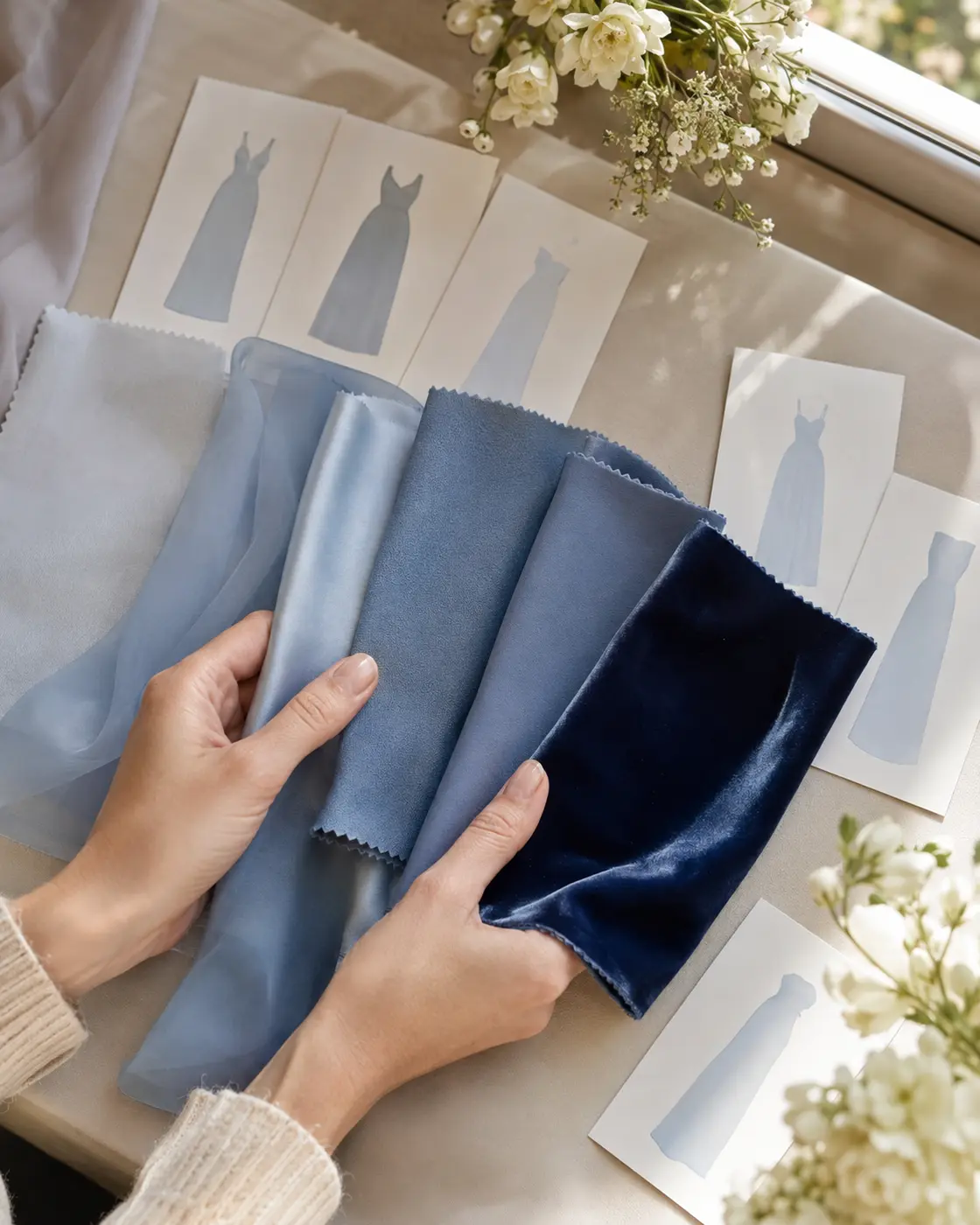
Screenshots are useful for collecting ideas, but they should not be the final color reference.
A color can change because of:
- Screen brightness
- Website editing
- Fabric texture
- Indoor versus outdoor lighting
- Camera exposure
- Dye-batch differences
Order swatches in the actual fabrics being considered. Place them together and examine them in daylight, indoor lighting and, if possible, lighting similar to the wedding venue.
Retailers such as Jenny Yoo sell swatches across their bridesmaid fabrics, while Birdy Grey specifically recommends comparing the same color in different materials because chiffon, tulle and satin reflect light differently.
The physical swatches are the palette. The website photographs are inspiration.
Use Color Roles Instead of Collecting Pretty Shades
Every shade in the lineup should have a role.
A balanced palette commonly contains:
- A light shade
- One or two middle shades
- A deep anchoring shade
For example, a blue palette could include mist blue, slate and navy. A pink palette might combine blush, dusty rose and deep mauve.
Without an anchoring shade, a pale palette can appear washed out. Without lighter or middle shades, a dark palette can become visually heavy.
This does not mean every palette requires strong contrast. Tonal variation can be very subtle. The goal is to make every color look intentional beside the others.
Place the swatches in the approximate order in which the bridesmaids may stand. If one color immediately pulls your eye away from the entire group, decide whether you want that emphasis.
If not, replace it or repeat it elsewhere.
Repeat Important Colors
A color that appears once can look like a mistake. A color that appears more than once becomes part of the pattern.
Imagine six bridesmaids wearing:
- Two dusty-rose dresses
- Two mauve dresses
- Two burgundy dresses
The repetition makes the palette easy to understand.
Now imagine five dresses in dusty rose and one in dark burgundy. The darker dress may look separated unless that contrast has a purpose, such as identifying the maid of honor.
The same principle applies to prints and textures. If only one bridesmaid wears velvet while everyone else wears lightweight chiffon, she may appear dressed for a different season.
You do not always need identical pairs, particularly in a small bridal party. However, important visual ideas should normally appear more than once or connect clearly to flowers, suits, accessories or other wedding details.
Avoid the Unplanned Almost-Match
Dresses that are intentionally different can work beautifully.
Dresses that are supposed to match but do not quite match are more distracting.
This often happens when bridesmaids purchase the same general color from different brands. Each retailer may interpret names such as sage, champagne, blush or dusty blue differently.
If an exact match matters:
- Use one designer
- Specify the exact color
- Specify the fabric
- Order physical swatches
- Ask everyone to order within the same period
- Follow the retailer’s instructions regarding dye lots
Azazie advises assigning a specific fabric or style and ordering a swatch when a bridal party wants consistent color. The company also notes that separate production batches can create slight color variation.
If you cannot guarantee an exact match, create deliberate contrast instead. Three clearly different shades look more intentional than three versions of “almost the same” sage green.
Balance Necklines Across the Group
When everyone chooses her own style, the group can accidentally select very similar dresses.
The bride may offer ten approved designs, only to discover that four people selected spaghetti straps while one chose long sleeves.
Before anyone orders, create a simple lineup using product screenshots. Place the selected dresses side by side and look at:
- Neckline distribution
- Sleeve balance
- Skirt volume
- Slit placement
- Visual weight
- Overall formality
The goal is not to force perfect symmetry. It is to notice whether one dress looks dramatically heavier, more revealing or more formal than the others.
If necessary, ask for volunteers before assigning styles. A bridesmaid may be completely happy to select her second choice if she understands how it improves the complete arrangement.
Be Careful With Prints
Floral bridesmaid dresses can make a bridal party feel relaxed, romantic and individual. They also introduce several colors and more visual movement than solid gowns.
Start with the print and pull the solid-dress colors directly from it.
For example, if the floral dress contains muted rose, sage and burgundy, the remaining bridesmaids can wear solids in those exact color families.
For a small bridal party, one printed dress can serve as a deliberate focal point. In a larger group, repeating the print often makes the styling feel more integrated.
Avoid introducing multiple unrelated prints unless the wedding vision is intentionally eclectic. Differences in print scale, background color and formality can quickly compete.
Keep Dress Length and Formality Connected
Mixing midi and floor-length dresses can work, but the styles should still belong to the same level of formality.
A structured satin midi dress may coordinate with a floor-length satin gown. A casual cotton sundress will normally look disconnected beside formal chiffon dresses, even when the colors match.
Look beyond hem length and compare:
- Fabric quality
- Bodice structure
- Finish and sheen
- Skirt volume
- Detail level
- Venue suitability
Every bridesmaid does not need the same amount of fabric, but everyone should appear dressed for the same event.
Give Controlled Choice, Not an Open Assignment
“Wear any green dress” sounds flexible, but it transfers the styling work and uncertainty to the bridesmaids.
One person may select emerald satin. Another chooses pale sage chiffon. Another finds an olive jersey dress. Each individual choice may be attractive, but the group may not share a clear visual relationship.
Instead, give each bridesmaid:
- The approved color or palette
- Acceptable fabrics
- Required length
- Formality level
- A collection of approved dresses
- Spending limit
- Ordering deadline
- A private way to discuss fit concerns
A useful method is to approve three to five styles for each person rather than giving everyone the same large catalog.
The bridesmaid still makes the final decision, but every available option already works within the wedding plan.
Do Not Assign Colors According to Skin Tone
Avoid telling bridesmaids that one shade belongs to them because it is supposedly more flattering to their complexion.
Color is personal. Someone may feel beautiful in a shade that a traditional chart would never recommend, while another person may dislike the color she has been assigned.
If the palette includes several shades, ask for preferences privately. Then organize the distribution while balancing the complete group.
The objective is not to use your friends as color samples. It is to build a palette that they can participate in willingly.
Create a Complete Digital Lineup Before Ordering
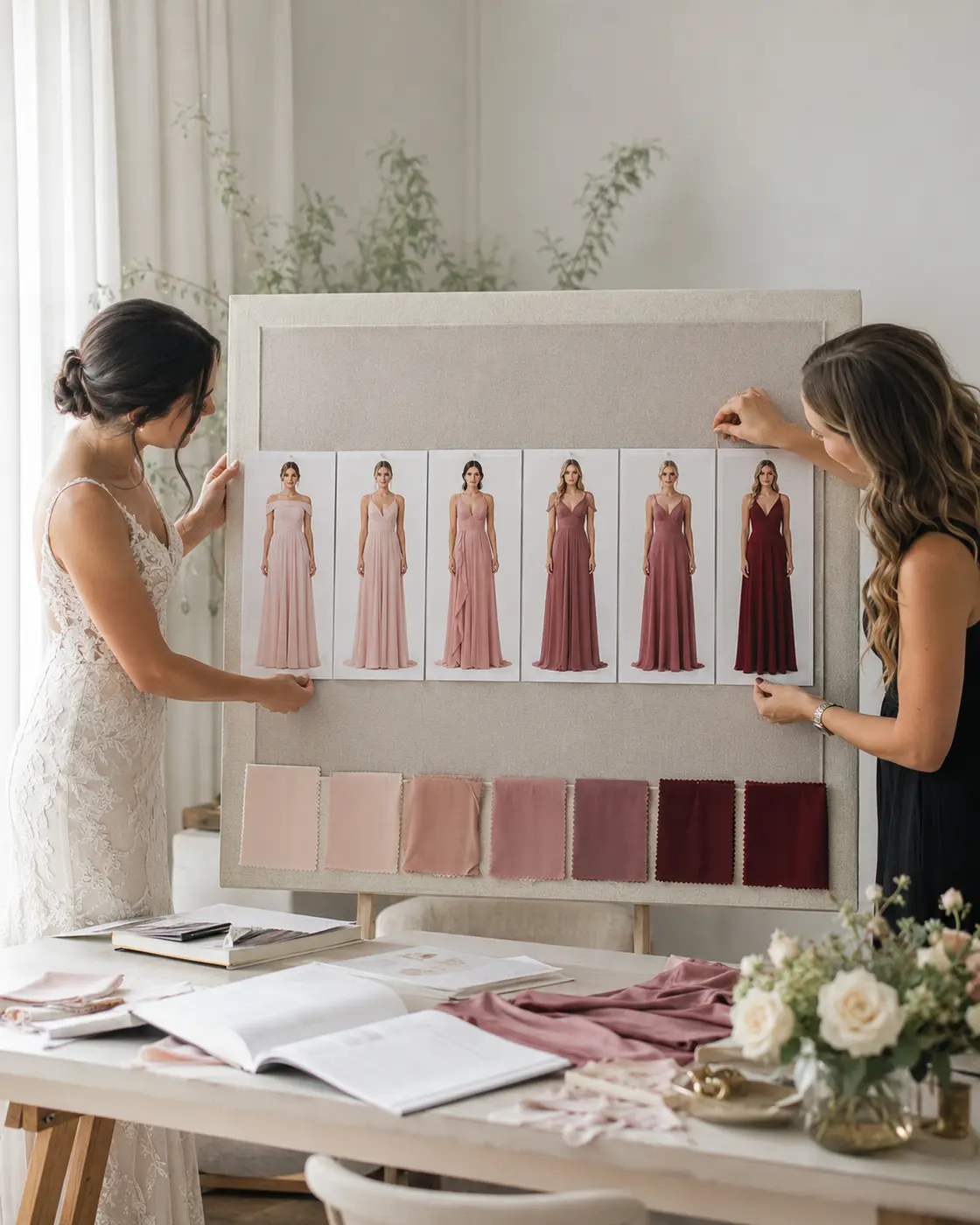
Collect a front-facing product image of every final dress and place them in one horizontal row.
The lineup does not need sophisticated design software. A simple Canva page, presentation slide or document is enough.
Review it in three ways:
Squint Test
Step back or slightly blur your vision. Does one color or dress dominate immediately?
Black-and-White Test
Temporarily remove the color. This reveals differences in visual weight, shine and skirt volume.
Replacement Test
Remove each dress individually. Does the remaining group still make sense, or was one dress doing all the work of connecting the palette?
A digital lineup cannot replace physical swatches, but it reveals composition problems before money is spent.
Plan the Ceremony Order After the Dresses Arrive
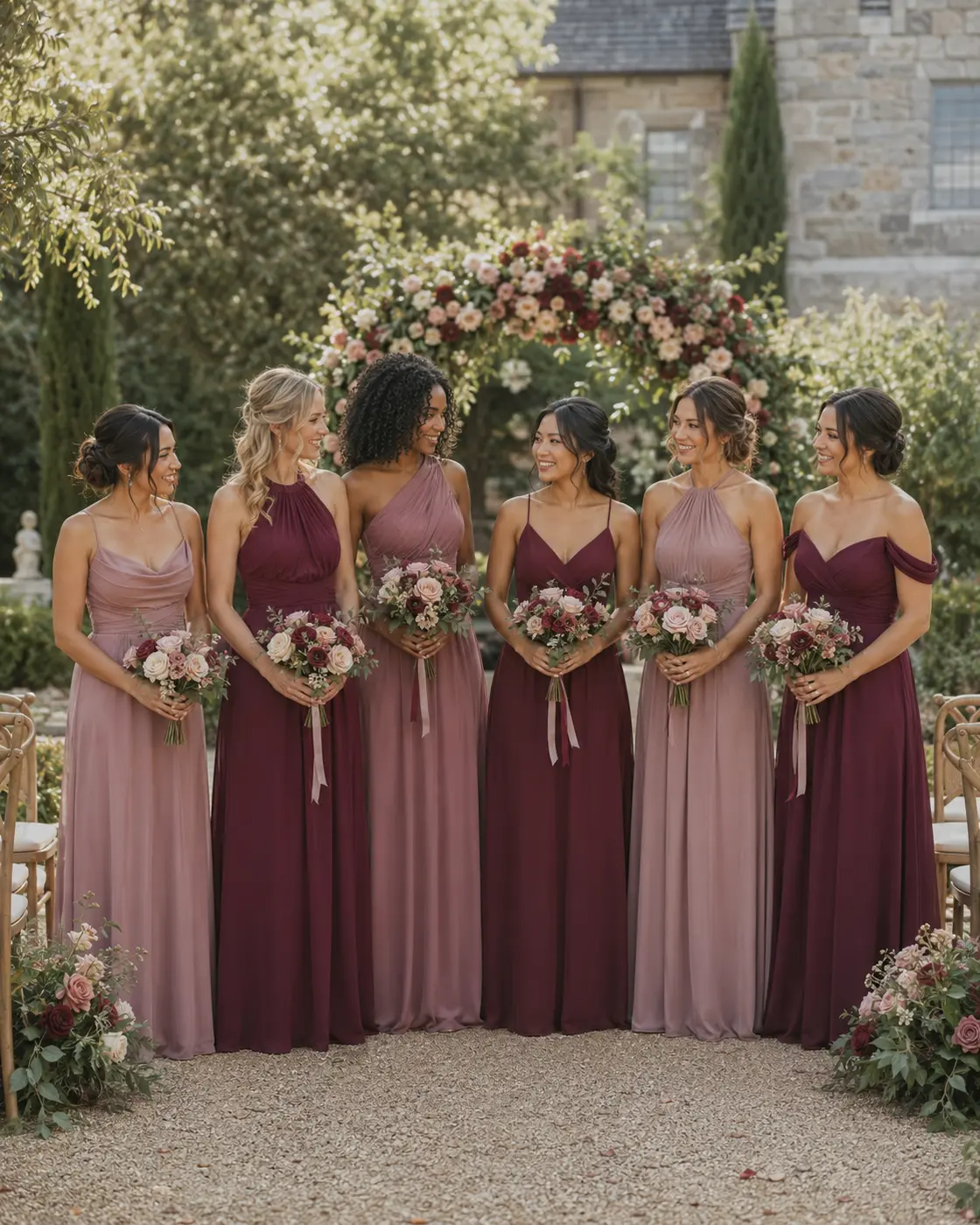
Do not finalize where everyone will stand using website pictures alone.
Once dresses arrive, photograph the bridal party—or the dresses on hangers—in several possible arrangements.
You can organize them through:
- A light-to-dark gradient
- Alternating light and deep shades
- Balanced repetition
- Deliberate asymmetry
- Randomized color placement
A gradient creates a clean, modern appearance. Alternating shades often distributes visual weight more evenly. Intentional asymmetry can feel natural and editorial.
Check the arrangement from the front and consider how it will appear on both sides of the couple during the ceremony.
The Wedding Dress Style Cohesion Test
Before approving the final mix, ask five questions.
1. The Connection Test
Can you identify at least two elements shared across the group?
2. The Distance Test
From across the room, does the bridal party read as one group?
3. The Dominance Test
Does one dress attract attention for an unintended reason?
4. The Comfort Test
Did every bridesmaid receive a genuine choice involving fit, coverage and support?
5. The Reality Test
Have you compared physical swatches and created a complete lineup rather than relying on separate website images?
If the answer to one question is no, the solution is usually small. Remove one shade, repeat one texture, limit the fabric choices or replace the dress that feels disconnected.
An Example of a Palette That Almost Works
Imagine a six-person bridal party for an October estate wedding.
The original plan includes:
- Two dusty-rose chiffon dresses
- One mauve chiffon dress
- One burgundy chiffon dress
- One copper satin dress
- One floral organza dress
The colors appear related on a mood board, but the copper satin reflects much more light than the chiffon. The floral organza adds both a new texture and multiple additional colors. Instead of looking layered, the lineup contains two dresses competing to become the focal point.
A more controlled version might use:
- Two dusty-rose chiffon dresses
- Two mauve chiffon dresses
- Two burgundy chiffon dresses
Alternatively, the bride could keep one floral dress and select solid dresses pulled directly from its print, while maintaining a similar fabric weight and formality.
The first plan collected attractive individual dresses. The revised plan designed a bridal party.
That is the difference.
Our Final Perspective
Successful mix-and-match bridesmaid dresses are not random, and they are not entirely uniform.
They sit between those two extremes.
Keep two elements consistent. Vary one important feature. Compare physical fabrics. Repeat the colors and textures that matter. Give bridesmaids meaningful choices within a clearly designed system.
When each dress supports both its wearer and the complete group, the bridal party looks cohesive without losing its humanity.
The goal is not to make every bridesmaid appear the same.
It is to make every difference look intentional.