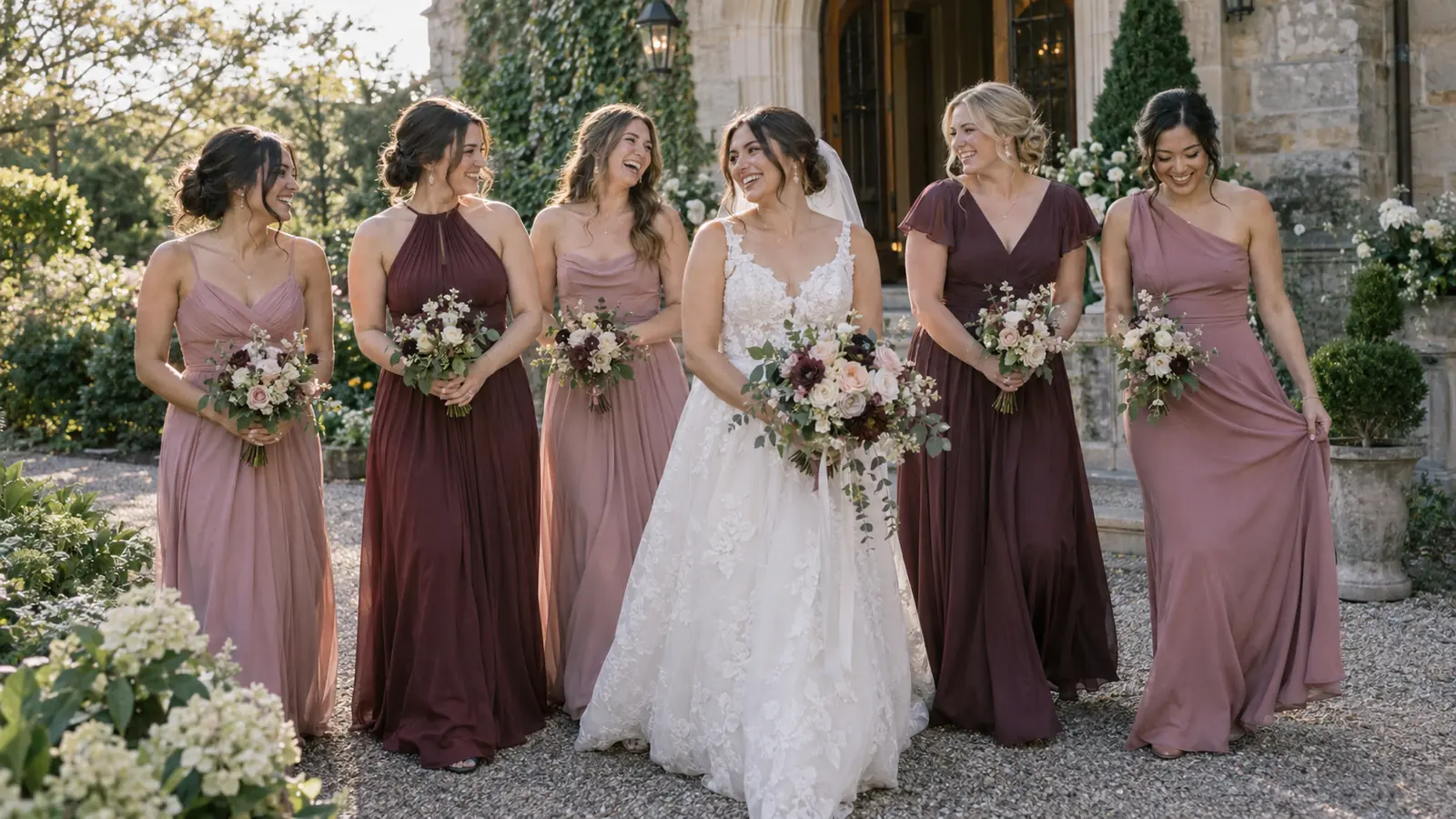
How to choose bridesmaid dress colors becomes much easier when you stop searching for the single “perfect” shade and start thinking about how the entire wedding will feel. The dresses should work with the venue, season, flowers and level of formality, but they also need to look good on the people wearing them.
That does not mean every bridesmaid must look identical. A thoughtful color choice can bring the group together while still allowing room for different complexions, body types and personal styles.
Here is how to find a bridesmaid dress color that feels connected to your wedding without making the process more complicated than it needs to be.
Start With the Mood of Your Wedding
Before comparing dozens of fabric swatches, describe the atmosphere you want in a few words.
Is your wedding soft and romantic, modern and minimal, colorful and energetic, or formal and dramatic?
Those words can guide your color choices more effectively than following a list of popular shades. For example:
- A soft garden wedding might suit dusty rose, muted lavender, sage or pale blue.
- A modern city wedding could work beautifully with black, deep navy, champagne or a rich jewel tone.
- A relaxed coastal celebration might call for misty blue, sea green, sand or soft coral.
- A formal evening wedding can support deeper colors such as emerald, burgundy, plum or black.
The goal is not to make every element match perfectly. It is to create a consistent mood from the ceremony through the reception.
Look at Your Venue Before Choosing a Color
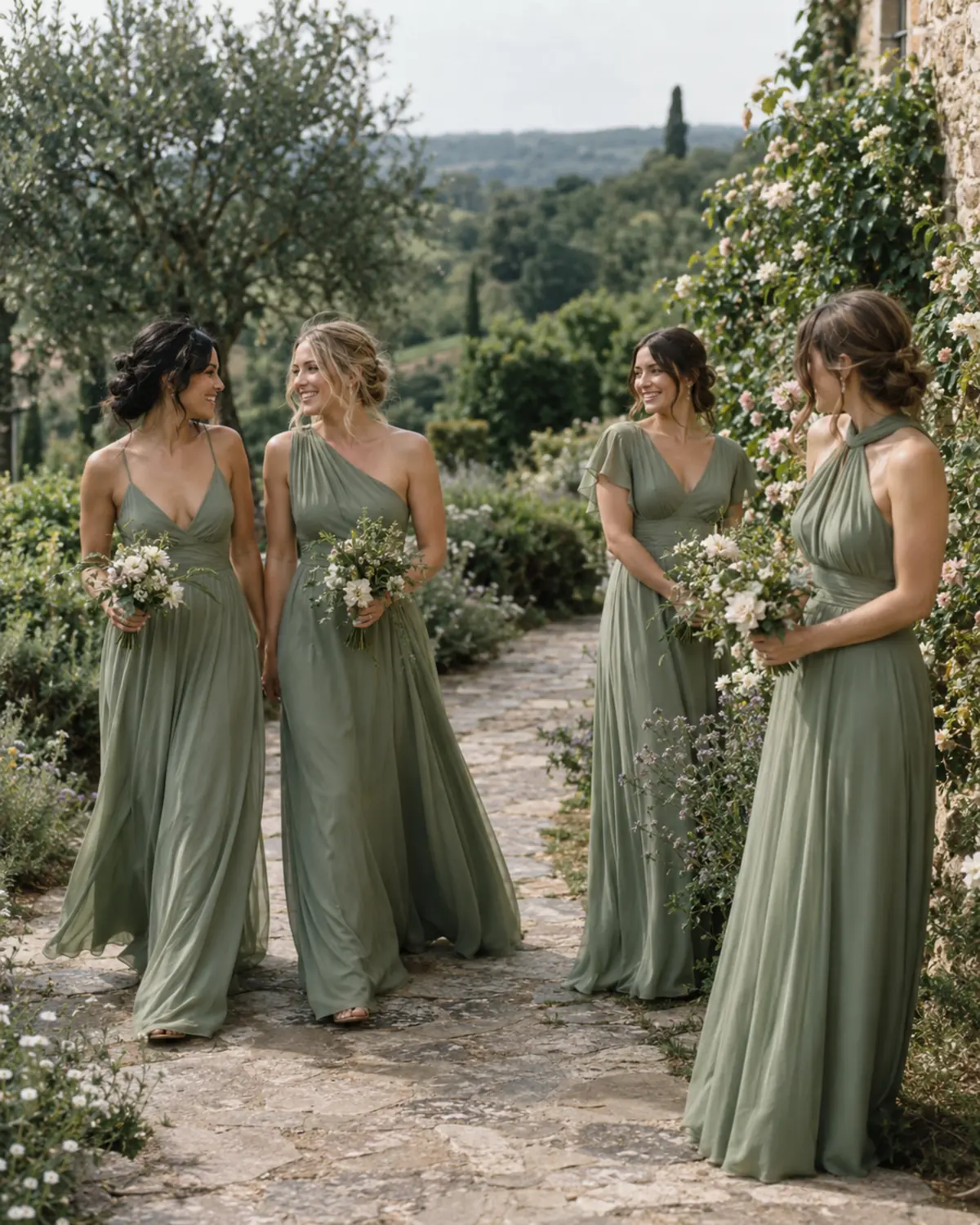
A bridesmaid dress color never appears in isolation. It will be photographed against the walls, flooring, landscaping and lighting of your venue.
An earthy terracotta dress may look warm and natural at a desert venue but compete with a ballroom covered in cool gray marble. Pale blue can feel fresh beside the ocean yet look washed out in a dim, wood-paneled room.
Review photographs of your venue taken during the same season and around the same time of day as your ceremony. Pay attention to the dominant colors in the background.
You do not need the dresses to match the venue. They simply should not fight with it.
If the setting already contains strong colors or detailed décor, a restrained bridesmaid palette can provide balance. If the venue is mostly neutral, the dresses can introduce more color without overwhelming the space.
Consider the Season But Do Not Let It Control You
Seasonal color advice can provide a helpful starting point, but it is not a rulebook.
Spring bridesmaid colors
Spring weddings often work well with:
- Blush pink
- Dusty blue
- Soft lilac
- Sage green
- Butter yellow
- Muted peach
These shades feel light and fresh, especially in gardens and bright indoor venues.
Summer bridesmaid colors
For summer, consider:
- Sky blue
- Coral
- Rose
- Lavender
- Soft green
- Bright floral prints
Outdoor light can handle more color than many couples expect. Just remember that very pale shades may appear nearly white in strong sunlight and photographs.
Fall bridesmaid colors
Autumn weddings can support richer, earthier shades such as:
- Rust
- Terracotta
- Olive
- Burgundy
- Chocolate brown
- Deep teal
These colors pair naturally with changing leaves, warm florals and candlelit receptions.
Winter bridesmaid colors
Winter palettes often include:
- Black
- Navy
- Emerald
- Plum
- Wine
- Silver-gray
Velvet, satin and crepe can give these deeper colors noticeably different effects, so fabric choice matters as much as the shade itself.
You can still choose a pale color in winter or a dark color in summer. The fabric, venue and styling will determine whether it feels appropriate.
Think About Different Skin Tones
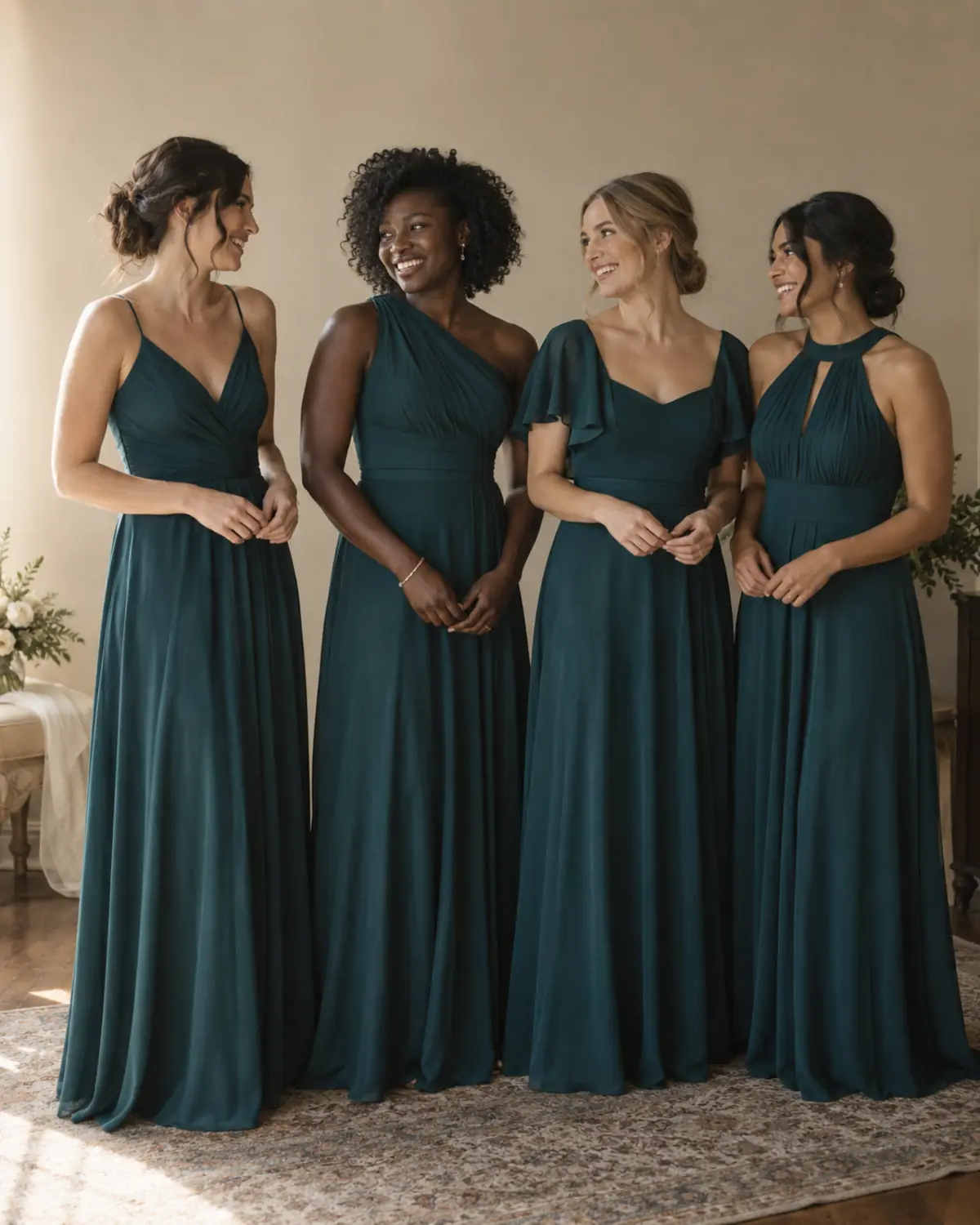
One color may look different on every member of the bridal party. That is normal, and it does not mean you need to find a universally flattering shade before moving forward.
Instead, consider choosing a flexible color family.
Deep blue, forest green, burgundy and other moderately rich colors often work across a broad range of complexions. Very pale beige, yellow or pastel pink may require more care because some shades can sit too close to a person’s skin tone.
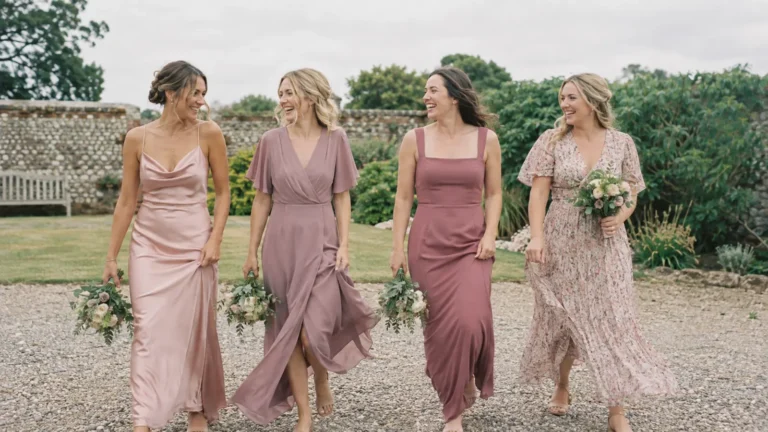
If you love a color that does not suit everyone equally, allow bridesmaids to wear different shades within that family. One person might feel better in dusty rose while another prefers mauve or berry. The variation can look intentional when the undertones remain consistent.
Whenever possible, ask bridesmaids to hold real fabric swatches near their faces in natural daylight. A color displayed on a phone or computer screen is not reliable enough for the final decision.
Decide Between One Color and a Coordinated Palette
There are several ways to structure the color plan.
One exact color
Every bridesmaid wears the same shade, possibly in different dress styles.
This produces the most uniform appearance and makes the final lineup easy to visualize. However, everyone should order from the same designer and color collection when an exact match matters. Two brands may use the same color name while producing noticeably different shades.
Different shades of one color
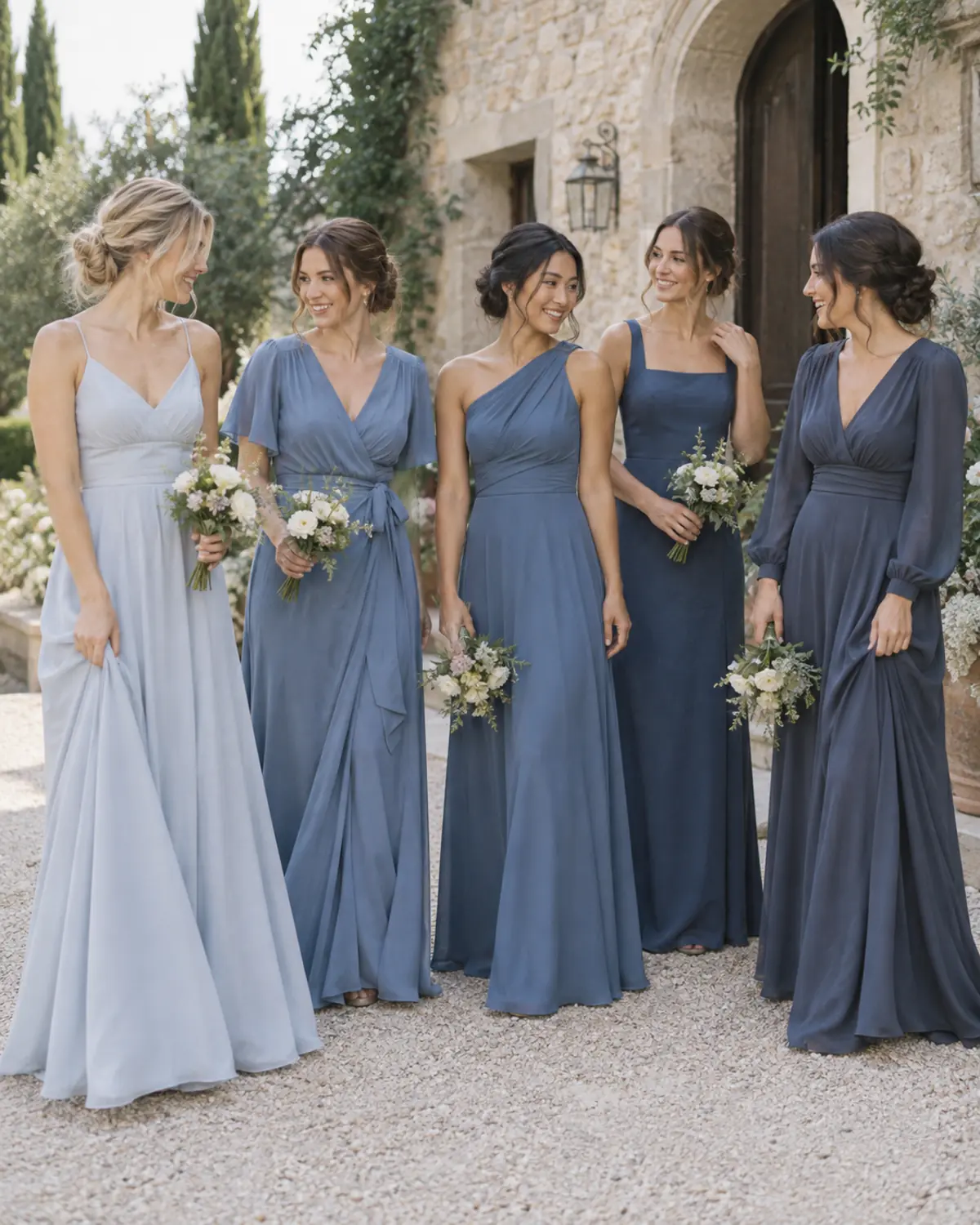
Bridesmaids wear light, medium and dark versions of the same color family.
This works especially well for blues, greens, pinks and neutrals. It creates dimension while remaining cohesive.
To prevent the combination from feeling accidental, choose the exact shades yourself. Avoid giving a broad instruction such as “wear any blue,” which could produce a mixture of icy blue, turquoise and navy with unrelated undertones.
Several complementary colors
Each bridesmaid wears a different color selected from an approved palette.
This approach can look beautiful but requires more planning. Limit the palette to a manageable number of colors and decide how many dresses you want in each shade.
For example, a five-person bridal party might include two dresses in dusty rose, two in mauve and one in deep berry. Repeating at least some colors usually creates more visual balance than assigning a completely different shade to every person.
A print mixed with solid colors
A floral or patterned dress can serve as the bridge between several solid shades. Pull the solid dress colors directly from the print so the connection is clear.
Use prints selectively. One or two patterned dresses often make a stronger statement than giving everyone an unrelated print.
Pay Attention to Undertones
Two colors can appear similar until they are placed beside each other.
One sage green might contain gray undertones, while another leans yellow. One blush might feel cool and dusty, while another looks peachy. These differences become particularly visible when bridesmaids stand together.
Choose either predominantly warm or predominantly cool colors unless you intentionally want contrast.
A warm palette could combine terracotta, peach and muted gold. A cool palette might include slate blue, lavender and cool gray. Mixing them is possible, but the colors should share a similar softness or depth.
This is one reason fabric swatches are so important. Place every proposed shade together and view them in daylight, indoor lighting and photographs before approving the palette.
Consider the Fabric
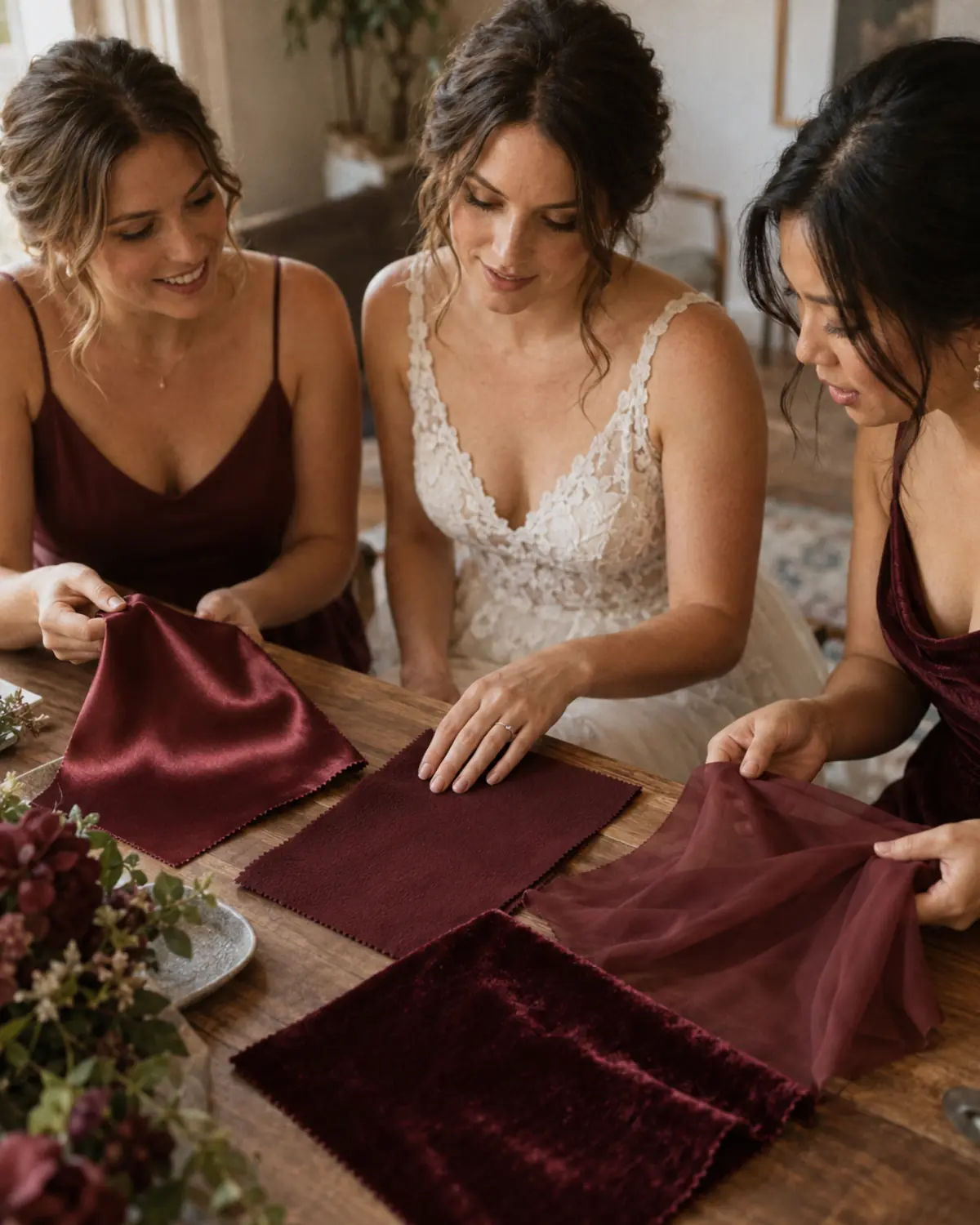
Color changes when it moves from one fabric to another.
Satin reflects light and may appear lighter in some areas and darker in others. Chiffon has a soft, matte appearance. Velvet absorbs light and gives color greater depth. Crepe generally looks smooth and understated.
If all bridesmaids will wear the same color but different fabrics, expect some variation. That variation can be attractive, especially in a tonal bridal party, but it should look deliberate.
For the closest possible match, keep both the designer and fabric consistent. If you want texture and dimension, mix fabrics while maintaining an approved group of shades.
Coordinate With the Flowers and Suits
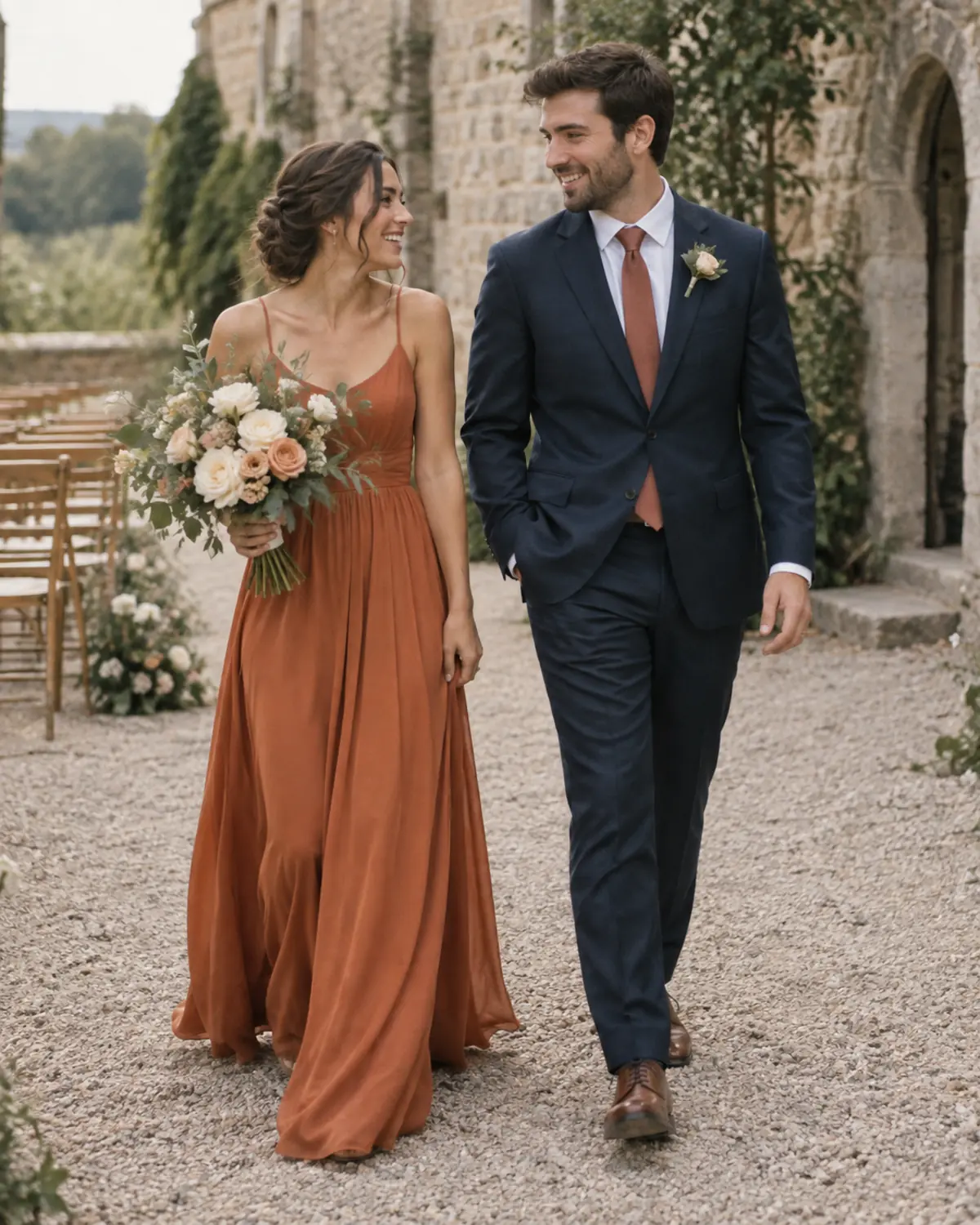
Bridesmaid dresses do not need to match the flowers exactly. In fact, a bouquet often looks more interesting when it includes several tones rather than repeating the dress color.
If the dresses are sage green, for example, the flowers might include white, cream, peach and deeper greenery. If the dresses are burgundy, the bouquets could introduce blush, ivory and muted red.
Also consider what the groomsmen or other wedding-party members will wear. Navy suits are flexible, while tan, gray, brown and black each interact differently with a bridesmaid palette.
You can repeat a dress color in a tie, pocket square or boutonniere, but exact matching is optional. The two sides of the wedding party should feel connected rather than copied.
Set a Realistic Dress Budget
Some colors are widely available across different price ranges, while more specific shades may limit your choices to one designer or collection.
Before committing to a color, check whether suitable dresses are available within the agreed budget and size range. Also confirm that the collection offers enough silhouettes if bridesmaids will choose their own styles.
A beautiful shade is not practical if it forces someone to buy a dress she cannot comfortably afford or wear.
Talk about costs before making the final selection. If the chosen color is available only through an expensive designer, consider contributing to the purchase or offering a more flexible alternative.
Order Swatches Before Approving Anything
Never make the final color decision from product photographs alone.
Screens display color differently, and online images may be affected by editing, studio lighting and fabric movement. Order swatches from the exact designer and fabric collection you plan to use.
Compare the swatches:
- At the venue, if possible
- Beside the wedding flowers or floral inspiration
- Against suit or tuxedo fabric
- In daylight and indoor light
- Next to one another in the planned color combination
- In photographs taken with a phone
If you are mixing designers, order swatches from every company. Matching color names do not guarantee matching colors.
Give Bridesmaids Clear Instructions
Flexibility works best when it has boundaries.
Instead of saying, “Choose a green dress,” provide a short set of approved details:
- Exact color or approved shades
- Preferred designer or stores
- Acceptable fabrics
- Required dress length
- Styles or features to avoid
- Spending range
- Ordering deadline
- Whether dresses require approval before purchase
If bridesmaids are choosing their own dresses, ask everyone to send a link or photograph before ordering. Keep a simple list of which color, style and fabric each person selects.
This is not about controlling every detail. It prevents duplicate styles, clashing shades and last-minute surprises.
For more flexibility without losing cohesion, read How to Mix and Match Bridesmaid Dresses Without Looking Mismatched.
Common Bridesmaid Color Mistakes to Avoid
Choosing from a screen alone
A digital image cannot show the exact shade or texture of a real dress. Always examine fabric swatches.
Ignoring the venue
The dresses may look very different against the venue’s walls, landscaping and lighting.
Using too many unrelated colors
A wide variety can quickly become visually confusing. Limit the palette and repeat some shades.
Selecting the color before discussing the budget
A highly specific shade may restrict bridesmaids to an expensive collection.
Forgetting about availability
Popular colors and sizes can sell out. Confirm availability and ask everyone to order within the same period.
Giving instructions that are too vague
Terms such as “dusty,” “neutral” or “light blue” can mean different things to different people. Provide exact examples and swatches.
Expecting perfect photographic matching
Light, fabric and editing will create natural differences. Aim for harmony rather than absolute sameness.
A Simple Color-Selection Checklist
Before approving the bridesmaid dress color, ask:
- Does it support the overall feeling of the wedding?
- Does it work with the venue and ceremony time?
- Is it suitable for the season without feeling predictable?
- Can the shade work across different complexions?
- Is it available in the necessary sizes and styles?
- Can everyone reasonably afford it?
- Does it coordinate with the flowers and suits?
- Have we compared physical fabric swatches?
- Are the instructions clear enough for every bridesmaid?
- Is there enough time to order and alter the dresses?
If you can answer yes to most of these questions, you probably have a strong choice.
Final Thoughts
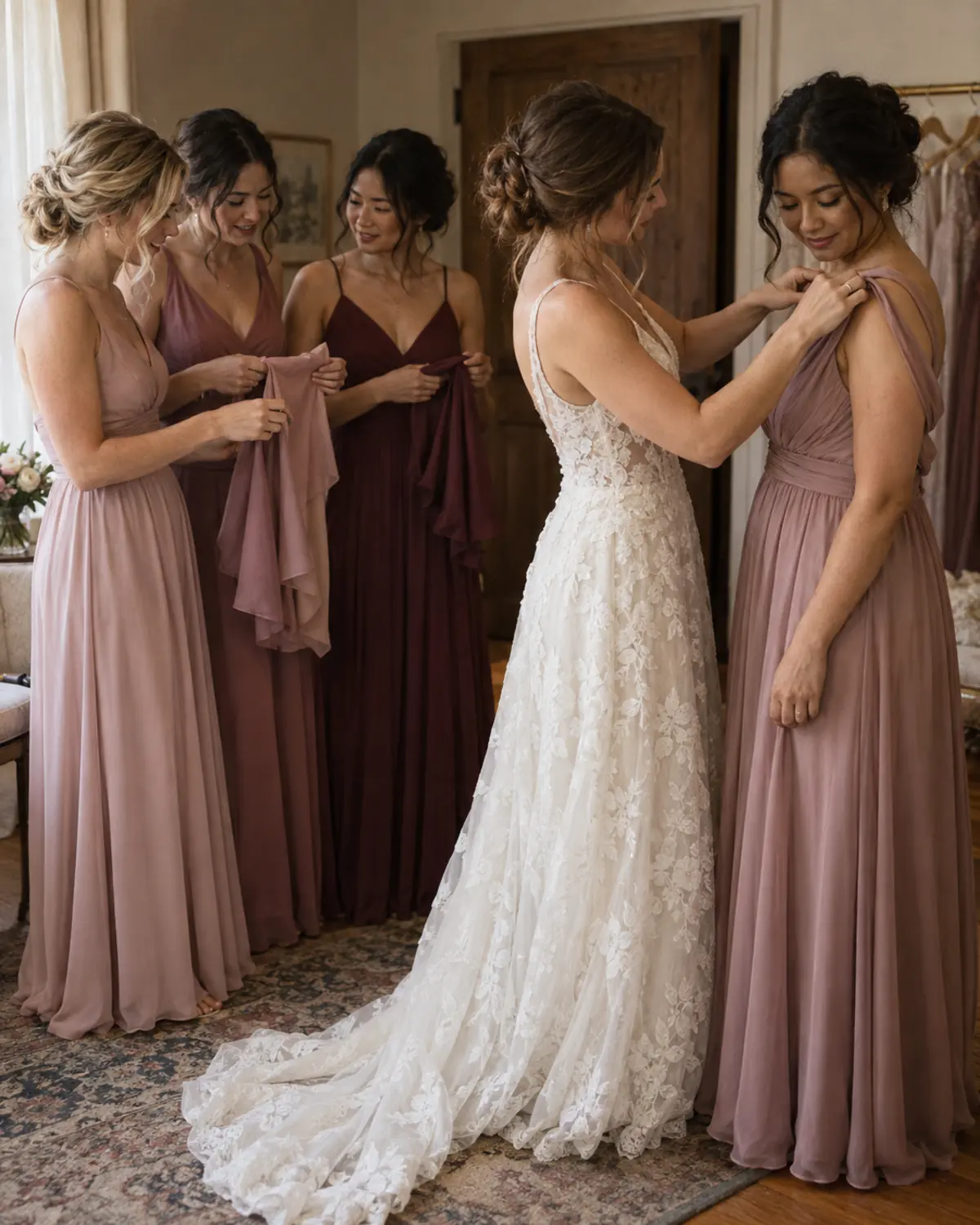
The best bridesmaid dress color is not necessarily the most fashionable shade or the one that looks perfect in a carefully edited inspiration photo. It is the color that supports your wedding setting, works for your bridal party and remains practical to purchase.
Begin with the atmosphere you want, narrow the options using the venue and season, and then test real swatches. Listen when a bridesmaid has a genuine concern about cost, coverage or how a very pale shade works against her complexion.
A coordinated bridal party does not require everyone to look identical. With a clear palette and a few thoughtful boundaries, the dresses can feel connected while still allowing each bridesmaid to feel like herself.