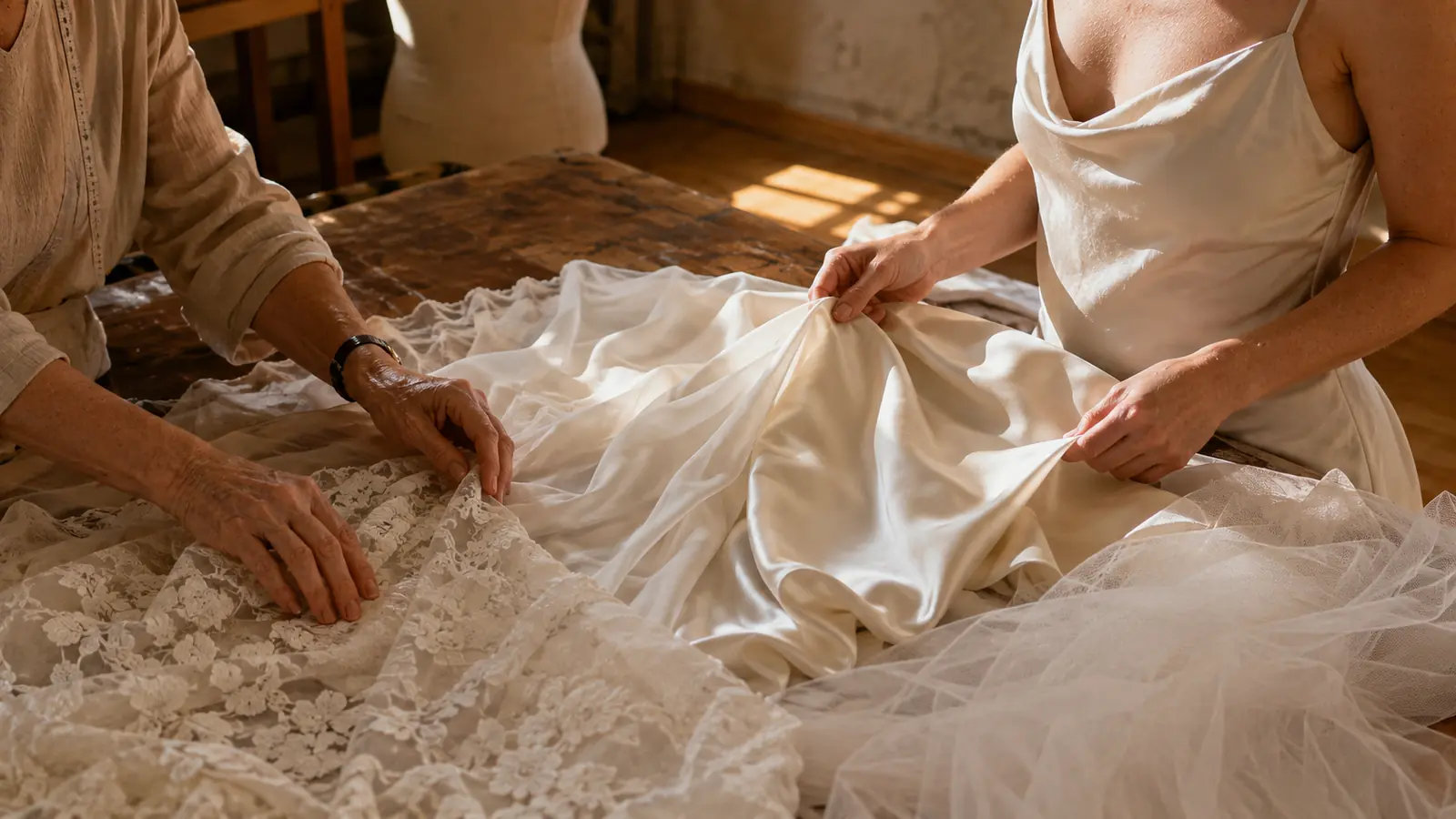
A wedding dress can have the right silhouette and still feel completely wrong because of its fabric.
Fabric determines whether a skirt floats behind you or maintains an architectural shape. It influences whether a fitted gown stretches with your stride, whether wrinkles become part of the look and whether several layers begin feeling heavy after a few hours.
Yet fabric descriptions are often reduced to single words: satin is elegant, chiffon is light and lace is romantic.
Those descriptions tell you how the material looks in a photograph. They do not tell you what it is like to wear.
At Wedding Dress Style, we recommend evaluating bridal fabric through five practical questions:
- How does it move?
- How does it feel against the skin?
- How much structure does it hold?
- What happens when it wrinkles?
- How does it react to light?
The answers matter more than memorizing fabric names.
First, Understand Fabric Versus Fiber
Silk and satin are not interchangeable terms.
Silk is a fiber produced by silkworms. Satin is a type of weave that creates a smooth surface and characteristic sheen. Satin can be woven from silk, polyester or other fibers.
This distinction affects price, weight, breathability, care and appearance.
Two gowns labeled “satin” may feel dramatically different because one uses silk satin and another uses polyester satin. Similarly, crepe describes a fabric construction and texture rather than one specific fiber.
When you like a dress, ask for more than the fabric name:
- What fiber is it made from?
- What is used in the lining?
- Does it contain stretch?
- How many layers are beneath the visible fabric?
- Is the lace soft or heavily corded?
- Is the fabric likely to wrinkle during travel?
The outer layer is only part of what you will actually wear.
Satin: Smooth, Luminous and More Revealing Than Expected
Satin has a smooth surface that reflects light. Depending on its weight, it can create anything from a fluid slip dress to a structured ball gown.
What brides often notice first is not the shine—it is the way the fabric responds to touch.
A smooth satin skirt can feel luxurious beneath the hand, but its reflective surface may reveal wrinkles, seam tension and pressing marks more clearly than a textured material. Light moves across it, which means the same dress may look soft in natural daylight and considerably shinier under flash photography.
Heavier satins can hold a formal silhouette and create deep, deliberate folds. Lighter satins may follow the body more closely and show the outline of undergarments.
Satin may suit you when:
- You want a classic or formal appearance.
- You enjoy a smooth, luminous surface.
- You want the fabric to create visible movement in photographs.
- You are comfortable with careful steaming and handling.
- You prefer minimal embellishment because the fabric provides visual interest.
During the fitting, sit for several minutes and then stand. Look at how the skirt responds around the lap and hips. Some creasing is normal; the question is whether you can accept that appearance throughout the day.
Mikado: Structure You Can Feel
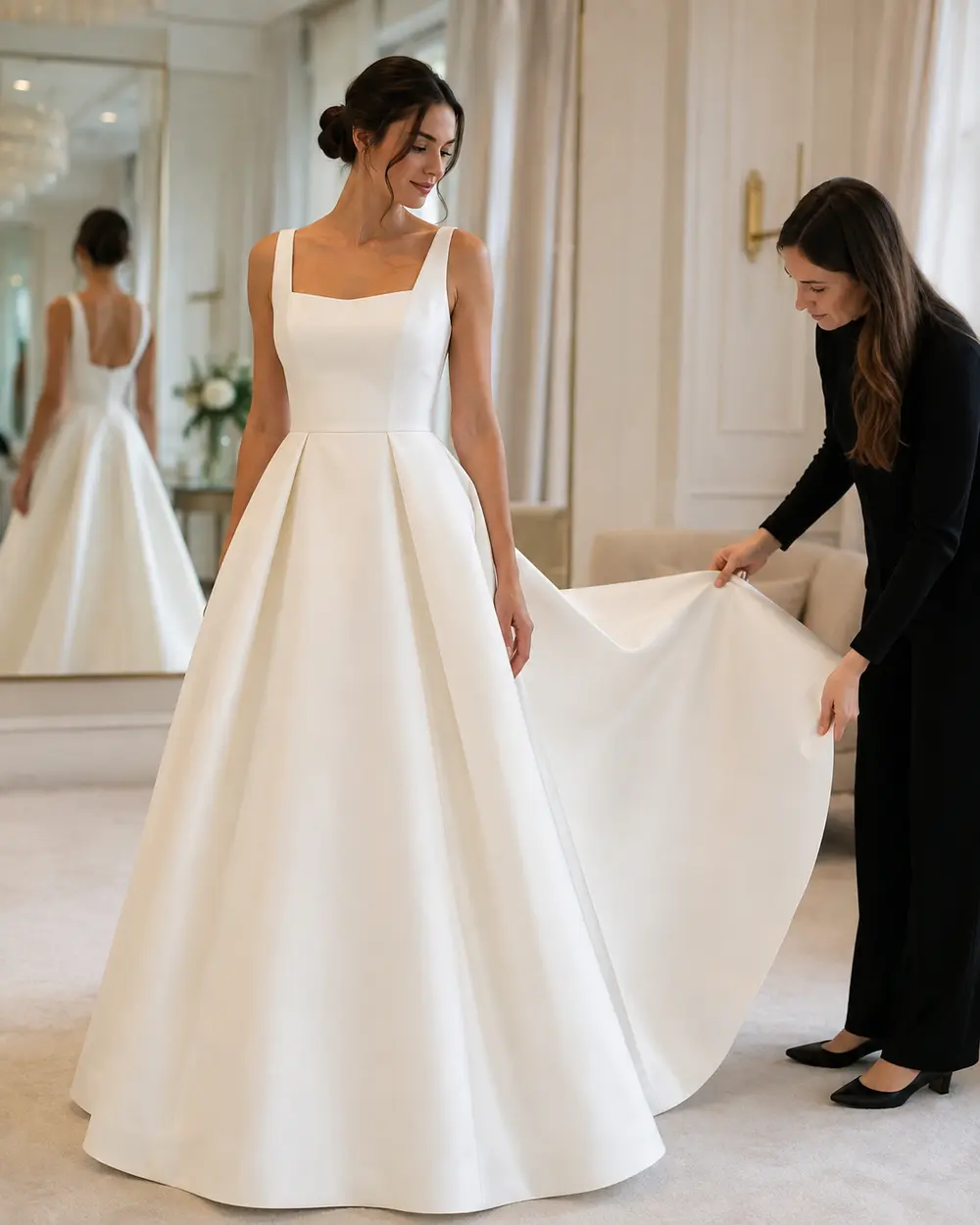
Mikado is commonly described as a heavier, more structured fabric with a refined sheen. It is often used for clean A-line gowns, ball gowns and sculptural fit-and-flare designs.
The practical difference becomes clear when you lift the skirt.
Mikado tends to maintain its shape rather than collapsing immediately around the legs. It can create crisp pleats, strong waistlines and dramatic skirts without requiring extensive surface decoration.
That structure also has a physical presence. A large Mikado gown may feel warmer or heavier than it appears in carefully posed photographs.
It is not automatically uncomfortable. A well-balanced gown can distribute its weight through the bodice and waist. But brides planning a warm outdoor wedding should spend enough time wearing the sample to understand the heat and weight.
Mikado may suit you when:
- You want a clean, architectural silhouette.
- You prefer a subtle sheen rather than delicate transparency.
- You love crisp pleats, bows or structured skirts.
- You want the fabric to hold its shape in photographs.
- You do not mind feeling the presence of the gown around you.
Walk through a narrow doorway during the fitting if possible. Mikado does not always move out of the way as softly as chiffon or tulle. That resistance is part of its beauty—and part of its reality.
Crepe: Minimalist, Fluid and Honest
Crepe is popular in modern fitted gowns because it can create a smooth, understated silhouette without the reflective shine of satin.
Its matte surface often looks beautifully quiet in photographs. Instead of the fabric becoming the main event, the cut, seams and body create the shape.
Crepe can also be honest.
A soft or stretch crepe may reveal the outline of undergarments, seams and body contours more clearly than lace or a heavily layered skirt. This is not a flaw; it is part of the fabric’s visual language.
Different crepes behave differently. Some are light and fluid, while others have enough weight and stretch to support a fitted silhouette.
Crepe may suit you when:
- You want a clean, modern wedding dress.
- You prefer a matte finish.
- You like fabric that follows the body rather than standing away from it.
- You want easier movement from a fitted gown.
- You are comfortable carefully selecting undergarments.
Before choosing a crepe dress, view it in daylight and take photographs from the front, side and back. Also test it with the undergarments you intend to wear.
Do not assume that adding stronger shapewear is always the solution. The lining, seam placement and fit should do most of the work.
Chiffon: Movement Before Volume
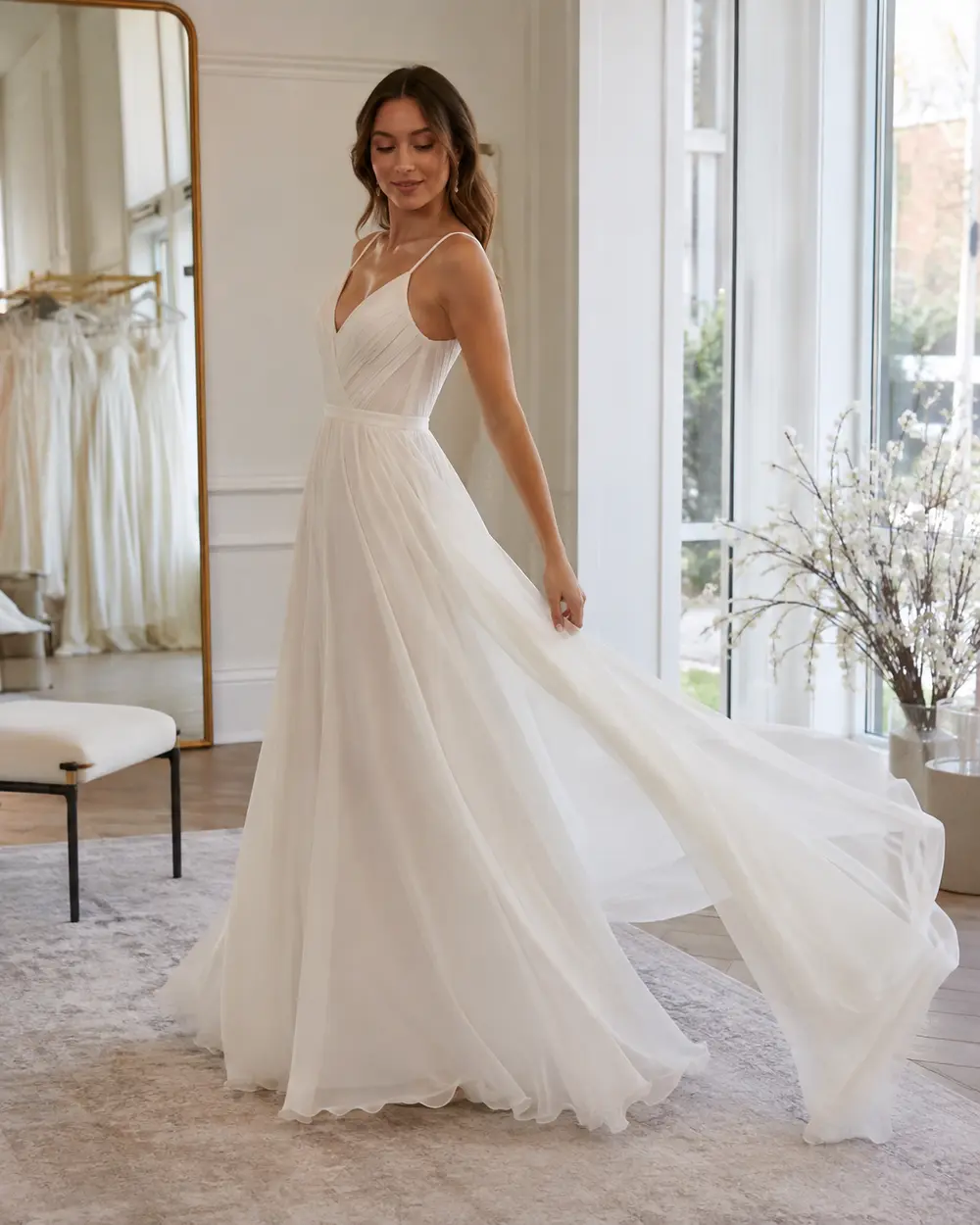
Chiffon is lightweight, sheer and fluid. Because it is transparent, it is normally layered over a lining or another fabric.
The most noticeable quality of chiffon is how quickly it responds to movement. A chiffon skirt follows a step, breeze or turn without maintaining a rigid shape.
That makes it attractive for destination, garden and warm-weather weddings. It can feel less physically demanding than a heavily structured gown, although several layers and a full lining can still add warmth.
Chiffon is delicate. It may catch on jewelry, rough surfaces or outdoor surroundings. It can also show temporary wrinkles, although its naturally fluid surface makes some creasing less visually disruptive than it would be on satin.
Chiffon may suit you when:
- You want a soft, flowing skirt.
- Your wedding involves warm weather or outdoor movement.
- You prefer drape over architectural structure.
- You want the gown to move visibly in photographs.
- You are comfortable with a softer, less sharply defined silhouette.
During your appointment, walk briskly and turn without arranging the skirt. Chiffon should recover naturally rather than wrapping uncomfortably around the legs.
Tulle: Light by Itself, Substantial in Layers
A single layer of tulle is extremely light. A wedding skirt made from many layers of tulle may not be.
Tulle is a fine netting used for skirts, veils, illusion panels and embroidered overlays. Its stiffness varies. Soft tulle can fall gently, while firmer tulle can create considerable volume.
The fitting-room surprise is often texture.
Some tulle feels almost weightless against the hand. Other versions can feel scratchy, particularly around armholes, necklines or exposed seams. The bride may never touch the outer skirt directly against her skin, but an unfinished edge inside the bodice can become irritating after several hours.
Glitter tulle deserves special attention. Ask whether the shimmer is woven into the material or applied to its surface. Surface glitter may transfer onto skin, floors, car seats and other clothing.
Tulle may suit you when:
- You want an airy, romantic or voluminous skirt.
- You enjoy visible layers and soft movement.
- You want embellishment without a heavy solid fabric.
- You prefer a gown that creates space around the legs.
- You have checked every skin-contact area for irritation.
Run your hand carefully along the armholes, neckline and waist interior. Comfort is determined by the edges you feel—not only the skirt everyone sees.
Organza: Lightness With Memory
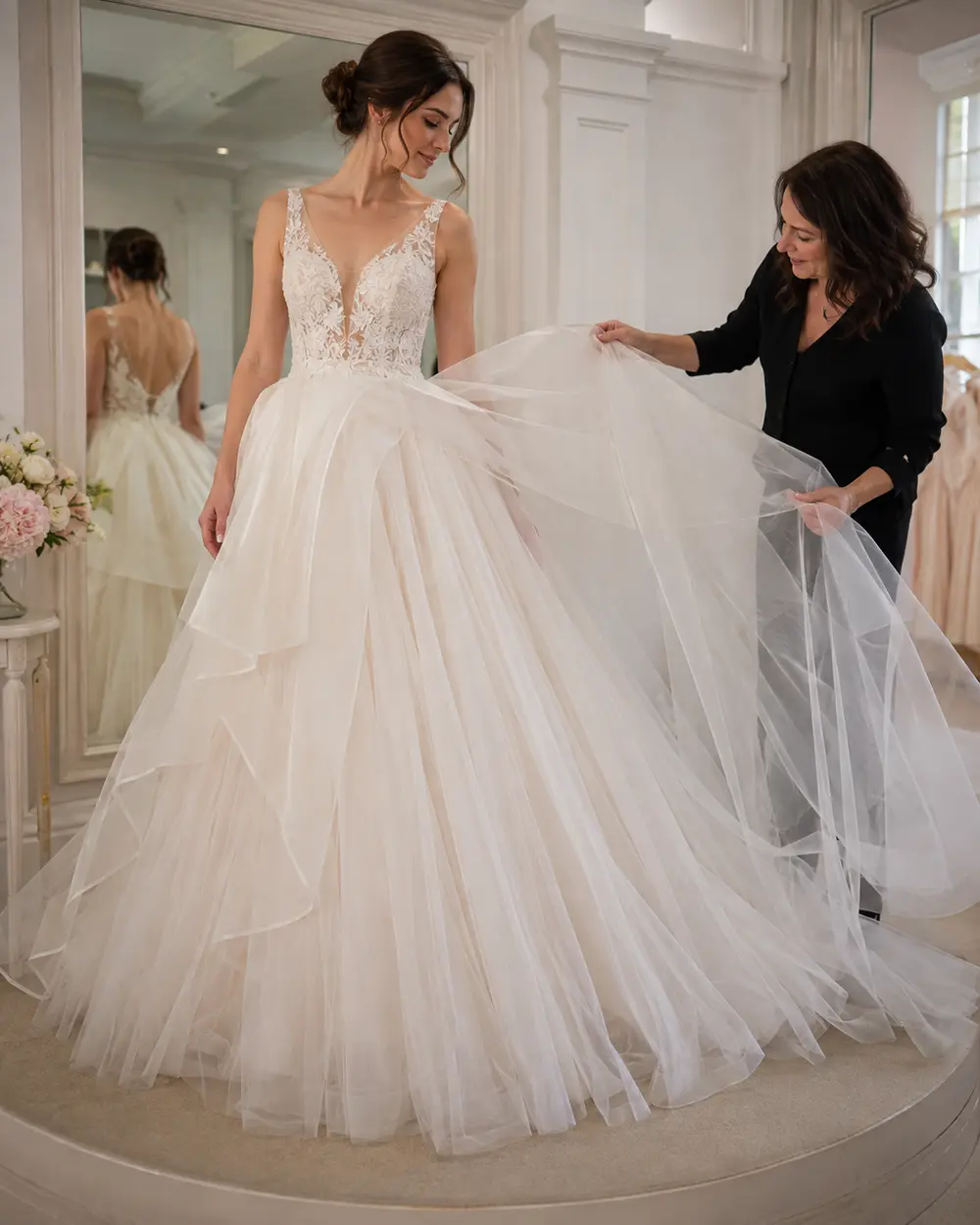
Organza is sheer and lightweight like chiffon, but it behaves very differently.
Where chiffon tends to fall, organza tends to hold. It has a crisp quality that allows it to create volume, ruffles and structured layers without the same visual weight as Mikado or heavy satin.
We think of organza as a fabric with memory: when shaped into a fold or curve, it tries to preserve that shape.
This can make an organza skirt look luminous and dimensional in natural light. It can also produce a faint crisp sound as the layers move against one another.
Organza may suit you when:
- You want volume without a visually heavy skirt.
- You like sculptural ruffles or layered details.
- You prefer crisp movement instead of soft draping.
- You want a fabric that catches light without looking like traditional satin.
- You do not mind a fabric that feels less soft to the touch.
Compare organza and tulle in person whenever possible. Photographs can make them look similarly airy, but their movement is noticeably different.
Lace: A Surface, Not One Single Experience
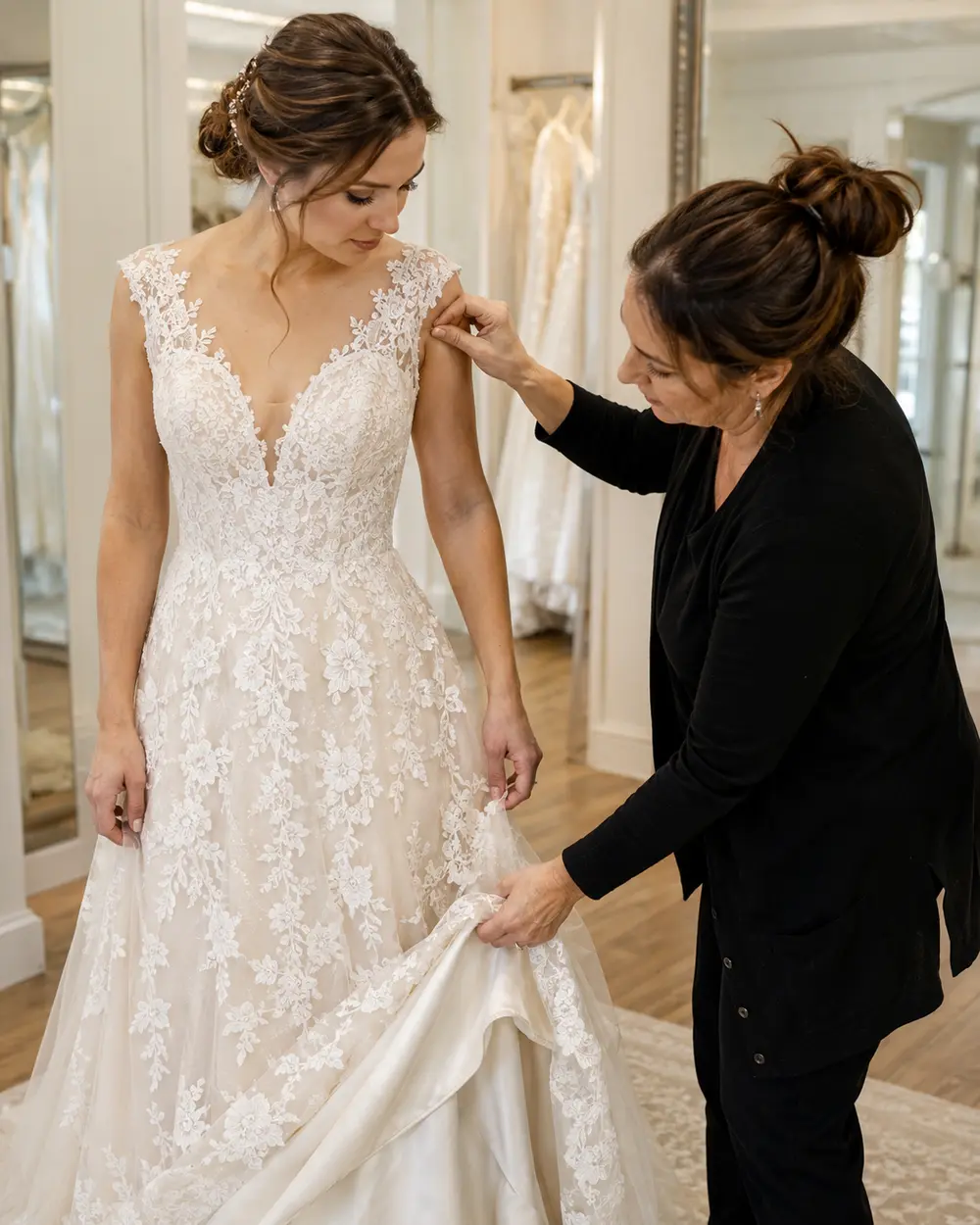
“Lace wedding dress” describes an enormous category.
Delicate Chantilly lace can appear soft and fine. Heavier corded or guipure lace creates stronger texture and more defined patterns. Embroidered lace appliqués may be attached over tulle, crepe, satin or another base fabric.
That base changes everything.
Lace over crepe may create a fitted, controlled shape. Lace over layered tulle can feel softer and more dimensional. A gown covered in dense appliqués, beads or sequins may become considerably heavier than its delicate appearance suggests.
The placement of motifs also matters. Large patterns can change the apparent scale of the body and draw attention to specific areas. Seams may require the lace to be removed and reapplied during alterations, increasing both labor and cost.
Lace may suit you when:
- You value texture and close-up detail.
- You want the gown to have visual depth without relying on shine.
- You enjoy romantic, vintage, botanical or highly detailed styling.
- You want the fabric to disguise minor creasing.
- You have checked that appliqués and edges do not irritate your skin.
Photograph the lace from a normal viewing distance and from close range. A pattern that feels overwhelming near the mirror may look beautifully balanced in a full-length photograph—and the opposite can also happen.
Silk: The Fiber Behind Many Different Personalities
Silk is not one single-looking fabric.
It can be woven into satin, chiffon, organza, Mikado, crepe and other materials. That is why saying “I want a silk dress” does not identify one particular appearance or silhouette.
Silk is valued for its natural luster, drape and tactile quality. Depending on the weave, it can feel fluid, crisp, light or substantial.
It also commonly carries a higher price and may require careful handling. Natural variations, creasing and sensitivity to moisture can be part of the experience.
Synthetic alternatives are not automatically inferior. Modern polyester fabrics can provide durability, consistency, lower cost or different levels of structure and stretch.
The useful question is not whether one fiber is universally better. It is whether the material creates the appearance, comfort and behavior you want within your budget.
What the Lining Changes
A bride rarely wears only the fabric visible from the outside.
The lining touches the skin, influences opacity and affects how smoothly the outer fabric moves. Internal boning, cups, interlining and skirt layers also determine the final weight and temperature of the gown.
A chiffon dress with a heavy synthetic lining may feel warmer than expected. A structured gown with a smooth breathable lining may feel more comfortable than its appearance suggests.
During your fitting, reach inside the skirt and feel the lining. Check the seams around the waist, bust and armholes. Ask whether the ordered gown uses the same lining as the sample.
The most beautiful outer fabric cannot compensate for an interior that irritates you.
The Wedding Dress Style Fabric Test
Before choosing a gown, spend five minutes testing the fabric rather than only studying it.
1. Touch the inside
Feel the areas that contact your skin, including the neckline, waist, armholes and sleeves.
2. Sit down
Remain seated long enough for the skirt and bodice to crease naturally. Stand and observe how the material recovers.
3. Walk and turn
Notice whether the fabric floats, clings, resists or wraps around your legs.
4. Stand near a window
Natural light reveals sheen, transparency, texture and color more accurately than some boutique lighting.
5. Take a flash photograph
Flash can intensify satin shine, reveal lining differences and change the appearance of sheer areas.
6. Listen
Some structured fabrics create a crisp sound during movement. Decide whether you find that luxurious, distracting or completely unimportant.
7. Hold the skirt briefly
Feel its actual weight instead of estimating it from appearance.
This test does not identify a universally perfect fabric. It shows you what that specific dress will ask you to live with.
Match the Fabric to the Wedding Experience
Consider how the material fits the practical setting of your wedding.
For warm outdoor celebrations, lightweight chiffon, soft tulle or certain crepes may feel easier—but lining and layers remain important.
For formal indoor venues, Mikado and structured satin can create a strong visual presence. They may also require more space in transportation and careful handling before the ceremony.
For destination weddings, ask how easily the gown can be packed, steamed and restored after travel. A fabric that looks perfect when professionally prepared in a boutique may require more attention inside a hotel room.
For brides sensitive to texture, prioritize every point where lace, tulle, beading or internal seams touch the skin. Sensory discomfort rarely becomes less noticeable after eight hours.
Your venue can guide the decision, but it does not dictate it. A bride can wear structured satin at a summer wedding or chiffon in winter if she understands and accepts the practical tradeoffs.
Fabric Changes the Silhouette
The same pattern can create two different dresses when made from different materials.
A soft fabric follows the body and gravity. A structured fabric creates space, holds folds and maintains its intended outline.
This is why silhouette and fabric should never be evaluated separately.
If you are still comparing shapes, read our guide on how to choose the right wedding dress silhouette. If you are deciding between two fitted options, our A-line versus fit-and-flare comparison explains how the release point affects movement.
Once you find a promising combination, use our guide to how a wedding dress should fit before approving the final alterations.
Our Final Perspective
Do not choose a wedding dress fabric only because its name sounds luxurious or because it photographs beautifully while perfectly arranged.
Touch it. Sit in it. Walk quickly enough to make it respond. Stand near a window and look at what the light reveals.
The right fabric is not necessarily the lightest, softest or most expensive.
It is the one whose movement, texture, structure and imperfections you are willing to experience for the entire wedding day.
A silhouette creates the outline of the dress.
Fabric determines how that outline comes alive.