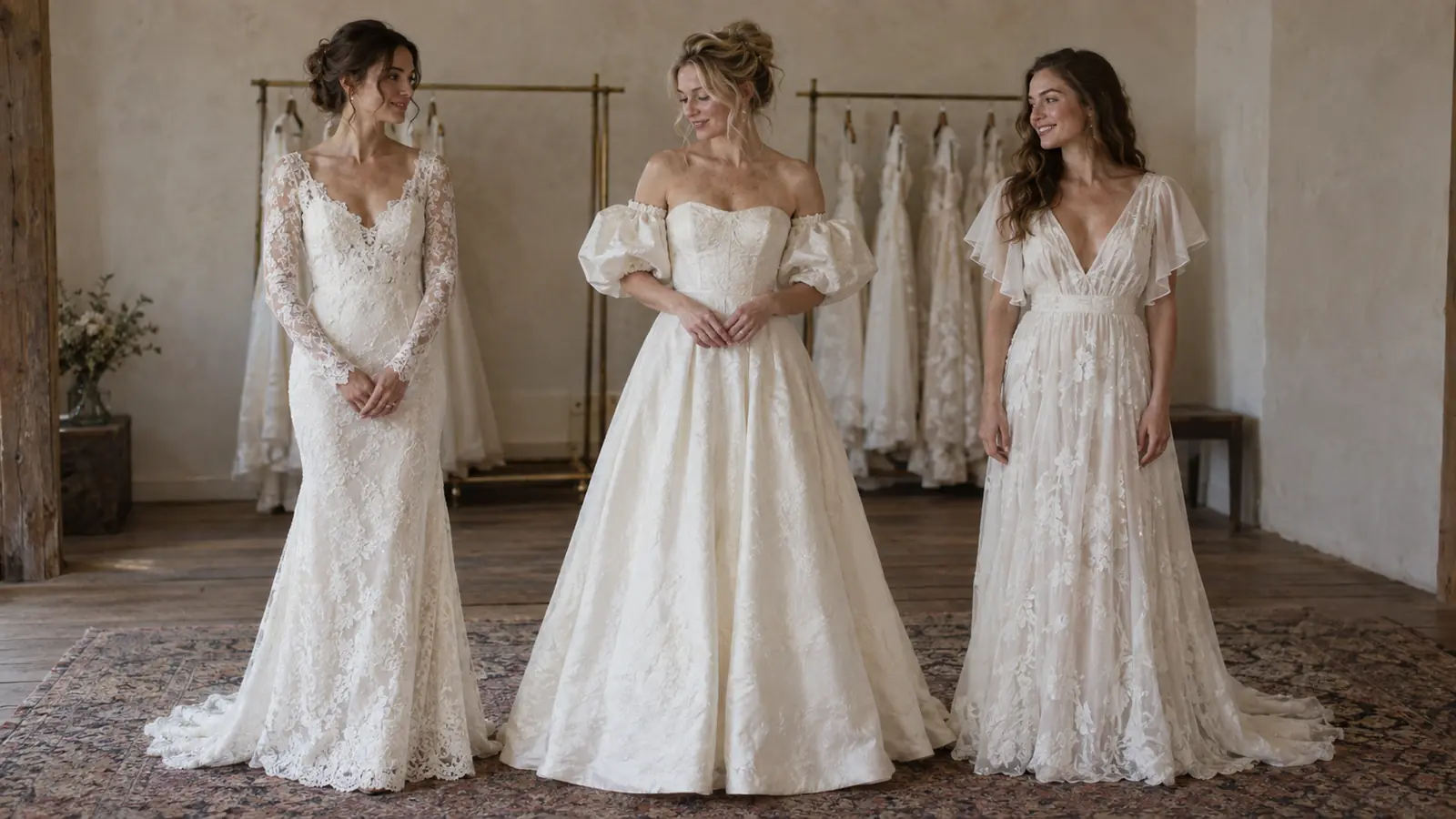
Wedding dress sleeve styles can change the entire character of a gown. Long lace sleeves may make a simple dress feel romantic and detailed, while clean fitted sleeves can create a more modern impression. Puff, flutter and bishop sleeves introduce movement, and detachable designs allow you to change your look during the day.
Sleeves are not only decorative. They affect how easily you can raise your arms, how warm the dress feels and how much support you have around the shoulders. The fabric and construction can also determine whether a sleeve feels soft and flexible or structured and restrictive.
The right choice is not necessarily the style you have been told is most flattering. It is the one that works with your gown, venue and comfort while still feeling like something you would happily wear.
This guide explores the most popular wedding dress sleeve styles and what to consider before choosing yours.
What to Consider When Choosing Wedding Dress Sleeves
Begin with the overall design of the gown. The sleeves, neckline and bodice should look as though they were created together rather than assembled from separate ideas.
A heavily embellished sleeve may compete with an already detailed neckline. A simple sleeve, on the other hand, can balance an intricate skirt or dramatic train.
Your wedding environment matters too. Long fitted sleeves may feel comfortable during a cool indoor ceremony but become warm at an outdoor summer wedding. Loose flutter sleeves allow more airflow, although they can move unpredictably in strong wind.
Think about how you naturally use your arms. During the wedding, you may need to:
- Hug guests
- Lift your bouquet
- Hold hands during the ceremony
- Sit down for dinner
- Raise your arms while dancing
- Put on a coat or wrap
- Move comfortably during photographs
Test these movements during your bridal appointment. A sleeve should feel secure without pulling the bodice upward or restricting your shoulders.
Sleeveless Wedding Dresses and Straps
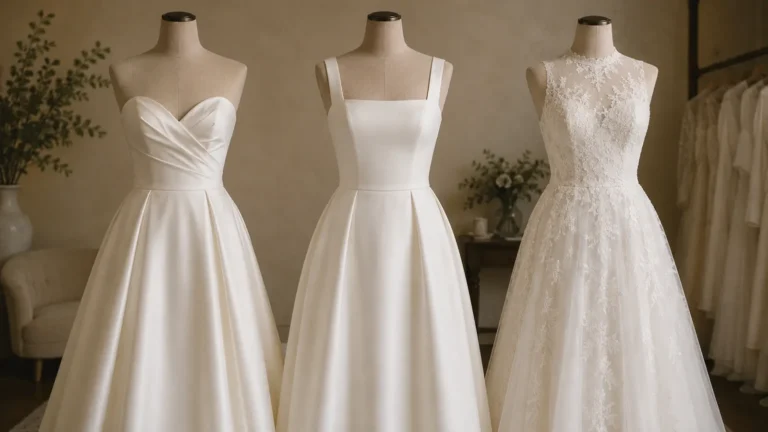
Sleeveless gowns do not have traditional sleeves, but their straps still shape the upper part of the dress and affect its support.
Thin spaghetti straps create a delicate appearance and leave the shoulders largely uncovered. Wider straps provide more structure and can better support a heavier bodice or skirt. Some straps feature lace, pearls or embroidery, while others continue seamlessly from the fabric of the gown.
Sleeveless designs work with many necklines, including:
- V-neck
- Square
- Scoop
- Sweetheart
- Straight
- Plunging necklines
When trying on a sleeveless gown, check whether the straps stay flat against your shoulders. They should not dig into your skin, slip down or leave large gaps.
Ask whether the strap length can be adjusted during alterations. Even a small change can improve the position of the neckline and the overall support of the bodice.
Cap Sleeves
Cap sleeves cover the very top of the shoulder without extending far down the arm. They create a subtle transition between a sleeveless dress and one with more noticeable sleeves.
You may see cap sleeves on lace A-line gowns, vintage-inspired dresses and soft romantic styles. Some are cut from the same fabric as the bodice, while others are made from sheer tulle or lace appliqués.
Cap sleeves can add detail without making the gown feel heavily covered. However, their small size does not automatically guarantee freedom of movement. If the sleeve opening is narrow or the fabric has no stretch, it may feel tight when you raise your arms.
During your appointment, reach forward and lift your arms gently. Check whether the sleeves remain comfortable and whether the neckline moves out of position.
Short Sleeves
Short sleeves typically end above the elbow. Depending on their shape, they can appear clean and structured, soft and casual or inspired by vintage dresses.
A fitted short sleeve creates a neat line around the arm. A slightly looser version feels more relaxed and may allow easier movement. Lace short sleeves add texture, while satin or crepe versions can make a gown look more tailored.
Short sleeves can be a practical option for brides who want more coverage than straps provide but do not want full-length sleeves.
Pay attention to where the sleeve ends. A band that is too tight may become uncomfortable after several hours. You should be able to bend your elbows and move your shoulders without feeling the fabric pull.
Flutter Sleeves
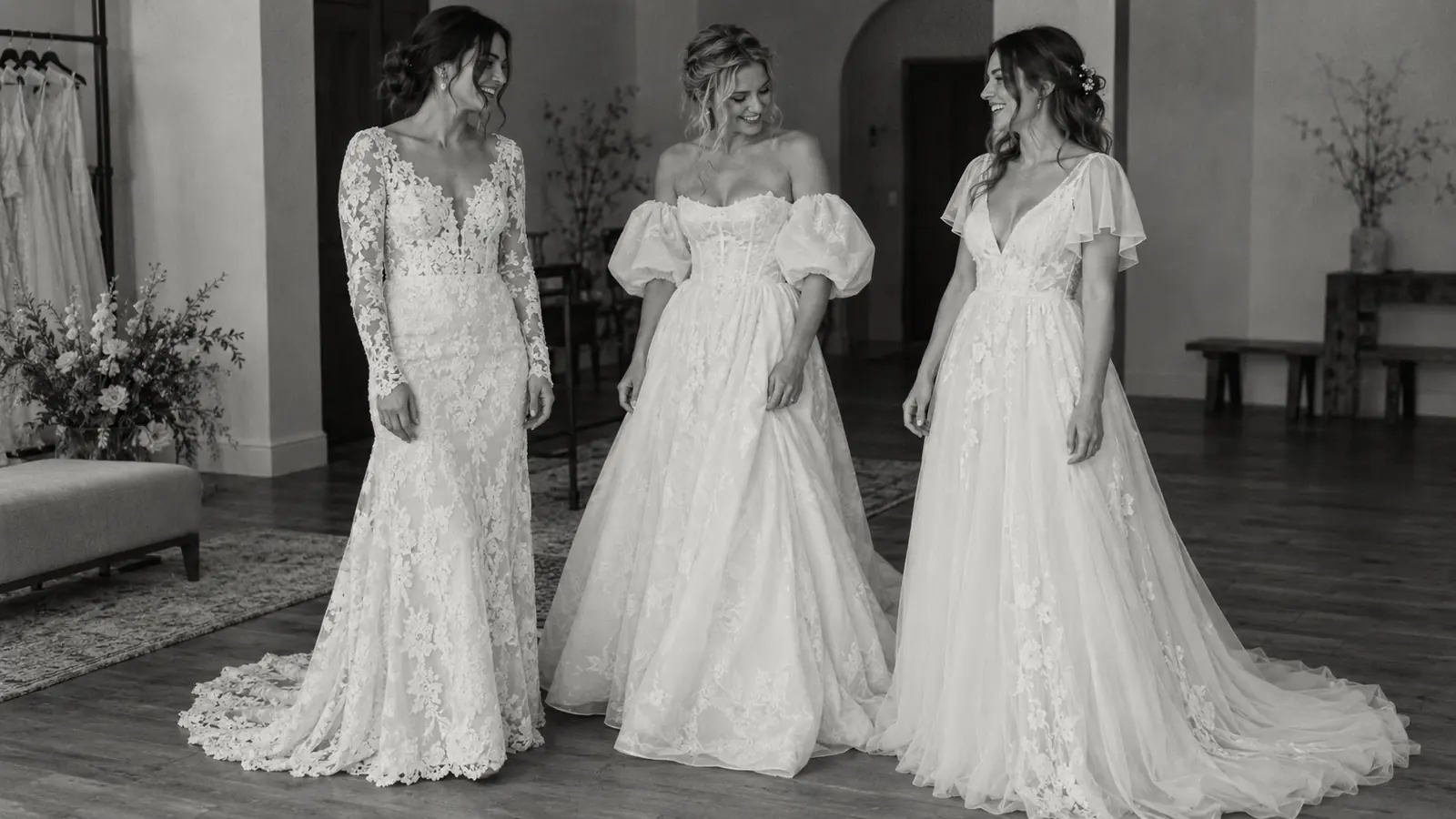
Flutter sleeves are loose pieces of fabric that fall softly from the shoulder. They move as the bride walks and may be short, layered or extended toward the elbow.
Chiffon, tulle, organza and soft lace are frequently used because they allow the sleeve to move rather than hold a rigid shape.
Flutter sleeves can complement:
- Flowing A-line gowns
- Chiffon dresses
- Outdoor celebrations
- Destination weddings
- Soft bohemian designs
- Informal garden ceremonies
Their movement is part of their appeal, but it should be tested in person. Make sure the fabric does not repeatedly fall into your hands or rub against the side of the bodice.
If you are planning an outdoor wedding, consider how the sleeves may behave in wind. A slightly shorter or less layered design may be easier to manage.
Off-the-Shoulder Sleeves
Off-the-shoulder sleeves sit below the shoulders and frame the neckline across the upper arms. They may be fitted, softly draped or folded into a structured band.
This style can create a romantic look while keeping the neck and shoulders open. It is often paired with sweetheart, straight and softly curved necklines.
The position of the sleeves affects movement. Some off-the-shoulder gowns are designed to remain secure while allowing the bride to move naturally. Others limit how high the arms can be raised.
Before choosing one, try hugging someone and lifting your arms to a comfortable dancing position. Watch whether the neckline pulls downward or the sleeves shift.
Ask how the sleeves are attached and whether their position can be adjusted during alterations. Do not assume they can simply be loosened without affecting the bodice.
Long Fitted Sleeves
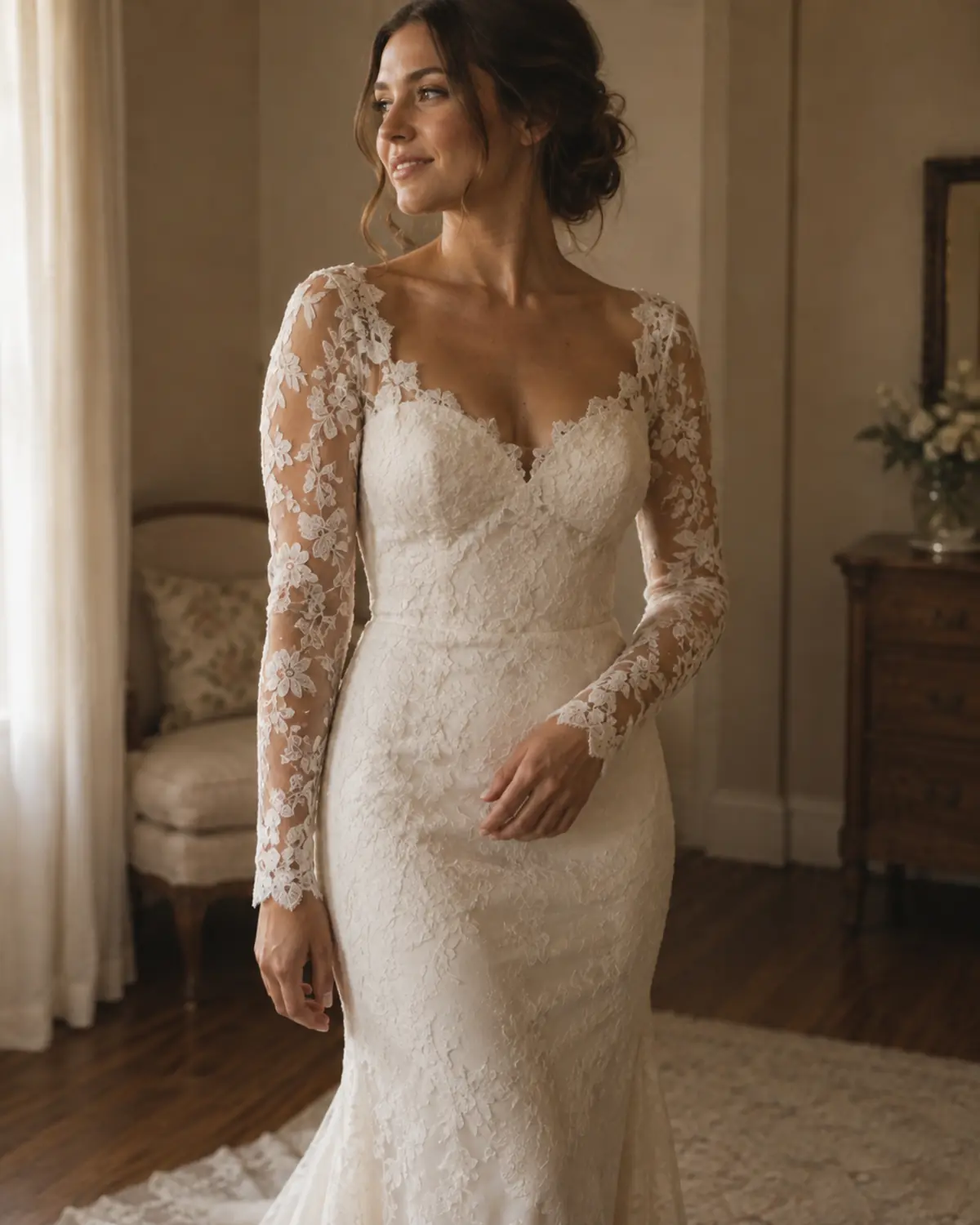
Long fitted sleeves follow the shape of the arm from the shoulder to the wrist. They can appear understated in plain crepe or satin and richly detailed when made from lace or embroidered tulle.
This design works with fitted gowns, A-line dresses and structured ball gowns. The result depends heavily on the material.
Stretch fabrics allow greater flexibility, while heavily embroidered lace may feel firmer. A lined sleeve offers more coverage but can also feel warmer than an unlined illusion design.
Check the sleeve length while your arms are both lowered and bent. The cuff should not pull too far up the wrist when you move.
Also examine the area beneath the arm. Wrinkling is normal when the elbow bends, but excessive pulling may indicate that the sleeve requires adjustment.
Illusion Lace Sleeves
Illusion sleeves use sheer tulle or netting to create the appearance of lace floating across the skin. Appliqués may be concentrated around the shoulders and wrists or distributed across the entire arm.
Because the base is sheer, the color of the tulle matters. Compare it with your skin rather than assuming one standard shade will blend naturally for everyone. Some designers provide several illusion options.
Examine the sleeve in different lighting and from a short distance. The netting that looks invisible in one room may appear more noticeable elsewhere.
Illusion sleeves can be delicate. Jewelry, sharp fingernails and rough embellishments may catch the tulle. Ask the boutique how easily the material can be repaired if it snags.
Movement is another important consideration. The sleeve needs enough flexibility around the elbow and shoulder without becoming loose or wrinkled.
Puff Sleeves
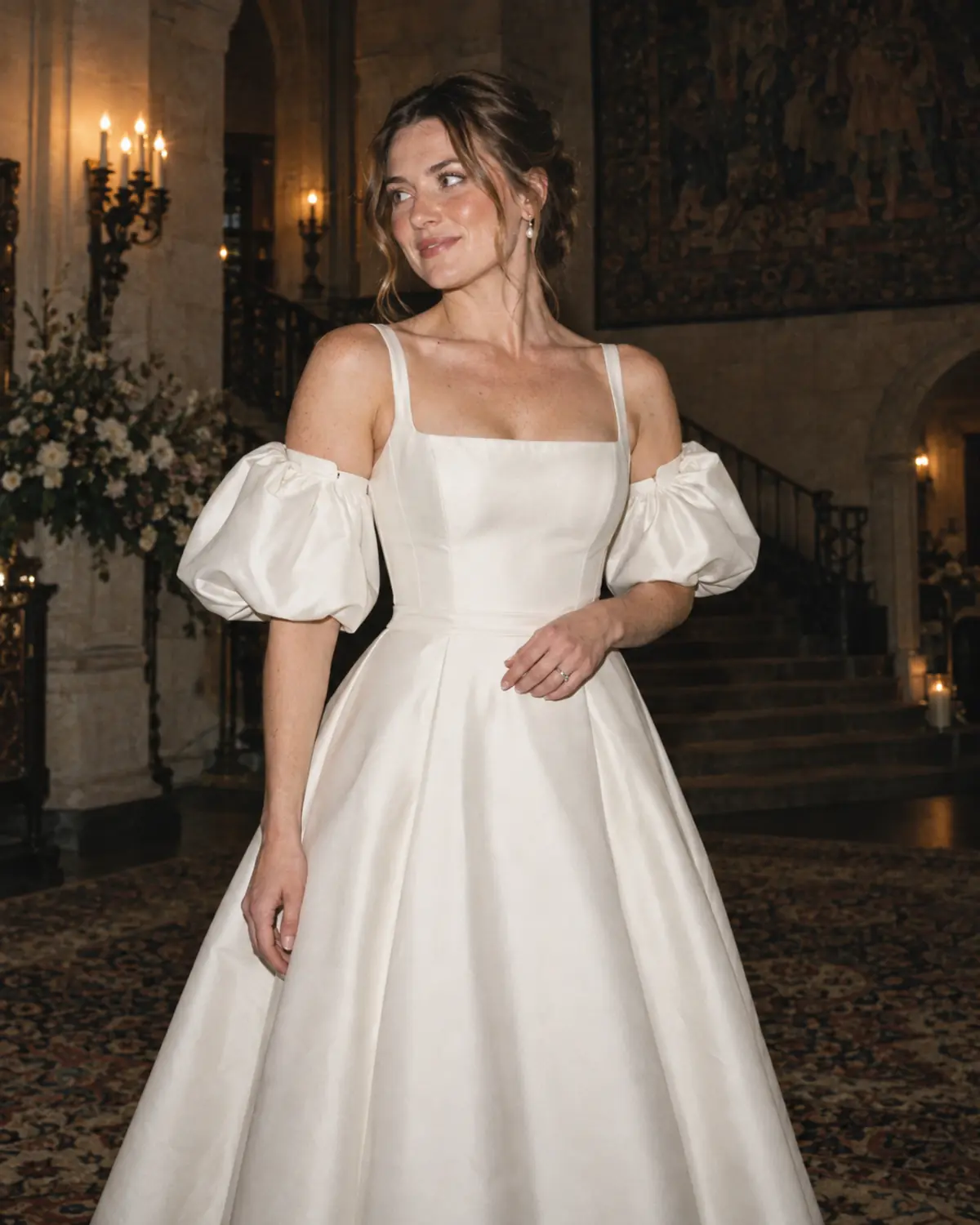
Puff sleeves gather fabric around the shoulder, creating noticeable volume before narrowing around the upper arm, elbow or wrist.
They may be small and controlled or intentionally oversized. The design can feel romantic, playful, vintage-inspired or fashion-forward depending on the gown.
Organza and tulle help the sleeve maintain volume without becoming extremely heavy. Satin creates a more structured shape, while lace softens the outline.
Because puff sleeves already make a statement, they often look most balanced with a relatively simple bodice or skirt. That is not a fixed rule, but it allows the sleeve shape to remain clear.
Check how the sleeve looks from the side and back, not only from the front. Make sure you are comfortable with its volume in photographs and while standing beside other people.
Bishop Sleeves
Bishop sleeves are full and loose through the arm before gathering into a fitted cuff at the wrist. They create movement without the concentrated shoulder volume of a puff sleeve.
Sheer chiffon, tulle and lightweight lace are often used for a soft effect. Satin or crepe can produce a heavier and more structured version.
Bishop sleeves work well when you want long sleeves without having fabric closely fitted around the entire arm. They can feel romantic, relaxed or slightly dramatic depending on their fullness.
Look closely at the cuff. It should feel secure but not tight, and any buttons or loops should be easy to fasten.
Because the sleeve contains extra fabric, test it while eating, holding a bouquet and reaching across a table. You should not feel as though the fabric is constantly in the way.
Bell Sleeves
Bell sleeves are fitted or narrow near the shoulder before widening toward the elbow or wrist. Some versions create a gentle flare, while others form a long and dramatic shape.
They are commonly associated with bohemian and vintage-inspired gowns, but clean fabrics can give them a modern appearance.
The wider opening creates movement and allows the sleeve to become a feature of the dress. However, very long bell sleeves may touch table settings, flowers or food during the reception.
If you love the style but are concerned about practicality, ask whether the sleeves can be shortened or removed after the ceremony. A detachable bell sleeve can offer the visual effect for photographs without requiring you to manage it all evening.
Detachable Wedding Dress Sleeves
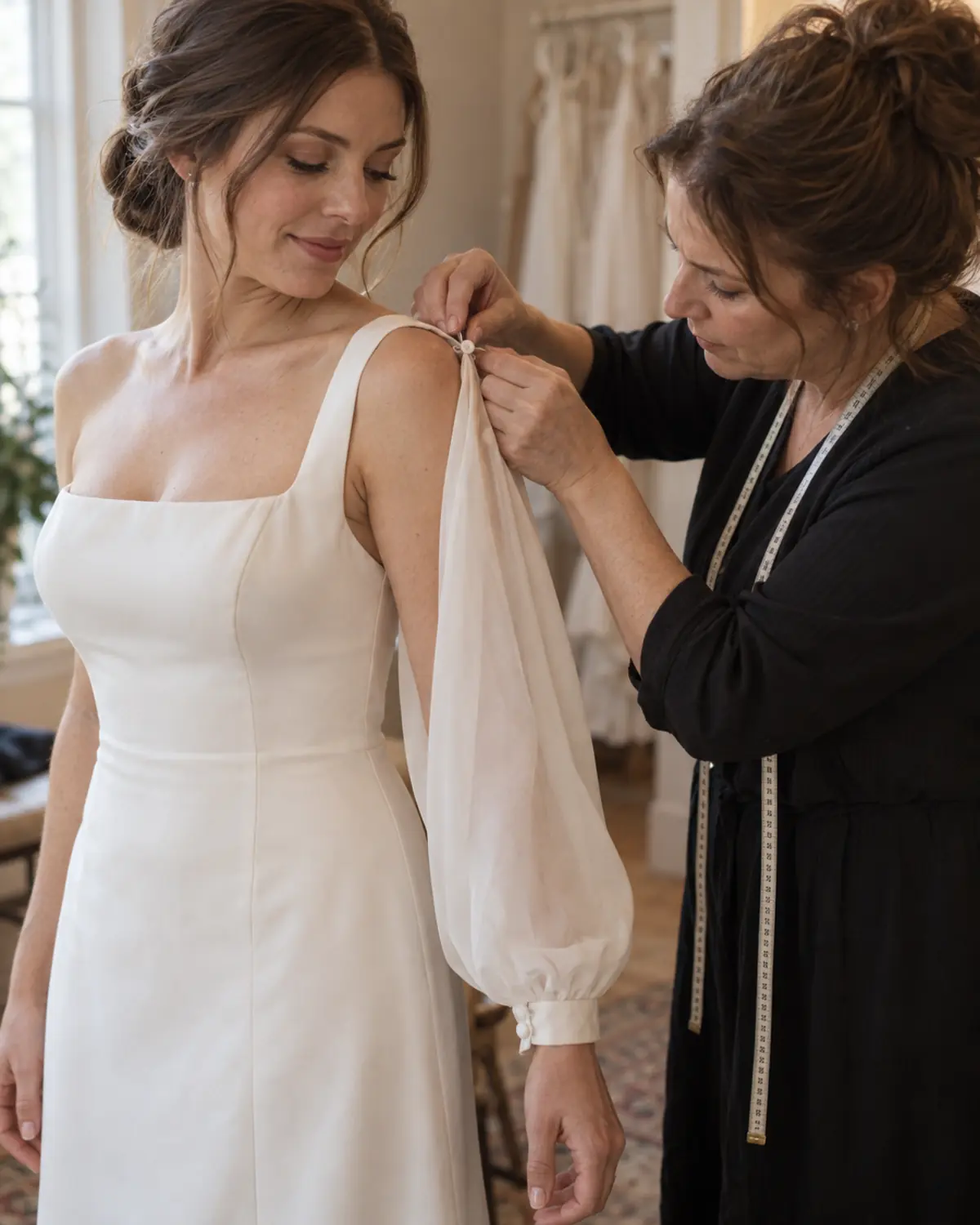
Detachable sleeves allow you to add coverage or detail for one part of the wedding and remove it later.
They may attach beneath the straps, around the arm or along the neckline. Some resemble traditional fitted sleeves, while others take the form of puff sleeves, draped fabric or separate lace pieces.
This option is useful if you want:
- More coverage during the ceremony
- Bare shoulders during the reception
- Two looks without purchasing a second gown
- Flexibility for changing temperatures
- A statement detail that can be removed for dancing
The attachment points should feel secure and remain discreet once the sleeves are removed. Try changing them during a fitting rather than waiting until the wedding day.
Ask someone who will be helping you to practice attaching and removing them. Keep any spare hooks, loops or fasteners with your wedding-day emergency supplies.
Removable Bridal Gloves and Separate Sleeves
Some designs sit independently on the arms and are not attached to the gown. These pieces may resemble long gloves, fitted lace sleeves or soft draped fabric.
They provide a similar effect to detachable sleeves but can be removed without altering the dress. This makes them useful for a minimalist gown that you want to style in more than one way.
Because separate sleeves are not anchored to the bodice, check whether they slide down or twist as you move. The top edge should remain secure without feeling uncomfortably tight.
Make sure the color matches the gown. Two fabrics described as ivory can still appear different when placed next to each other.
Choosing Wedding Dress Sleeve Styles for the Season
The season can influence comfort, although it should not completely control your decision.
For a warm-weather wedding, consider:
- Sleeveless designs
- Thin straps
- Cap sleeves
- Flutter sleeves
- Sheer illusion sleeves
- Detachable sleeves that can be removed
For cooler weather, you might prefer:
- Long fitted sleeves
- Lined lace sleeves
- Bishop sleeves
- Heavier crepe or satin sleeves
- Detachable sleeves combined with a cape or wrap
Indoor temperatures matter as much as the weather outside. A winter ballroom may be heavily heated, while an evening ceremony in spring could become surprisingly cool.
Think about the parts of the day you will spend outdoors and whether you have another layer available.
Match the Sleeves to the Venue
Your venue can help you decide how formal, practical or dramatic the sleeves should feel.
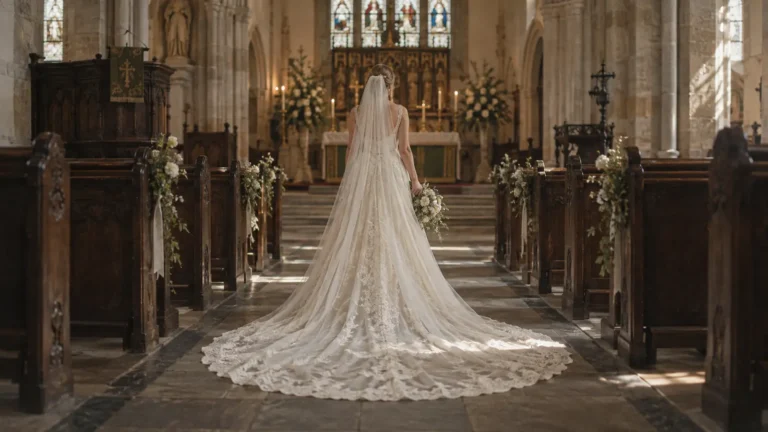
Loose chiffon sleeves can suit a beach or garden ceremony, but they may move constantly in coastal wind. Long lace sleeves can complement a church or historic venue, while clean fitted sleeves may suit a modern hotel, gallery or courthouse.
If the venue has narrow spaces, crowded tables or many candles, consider how very wide sleeves will move through the room.
There is no rule requiring a particular sleeve for a particular venue. The goal is simply to understand how the dress will behave in that environment.
How Sleeves Work With Different Necklines
Sleeves and necklines share the same visual space, so they need to work together.
Long fitted sleeves can balance an open V-neck or support the covered appearance of a high neckline. Cap sleeves often accompany scoop and illusion necklines. Off-the-shoulder sleeves naturally become part of the neckline itself.
Puff sleeves can frame square and straight necklines, while flutter sleeves suit softer V-neck and scoop designs.
Try not to select each detail separately. Look at the complete upper half of the gown and decide whether it feels harmonious.
If both the neckline and sleeves are highly detailed, check that the design still has a clear focal point.
Comfort, Movement and Alterations
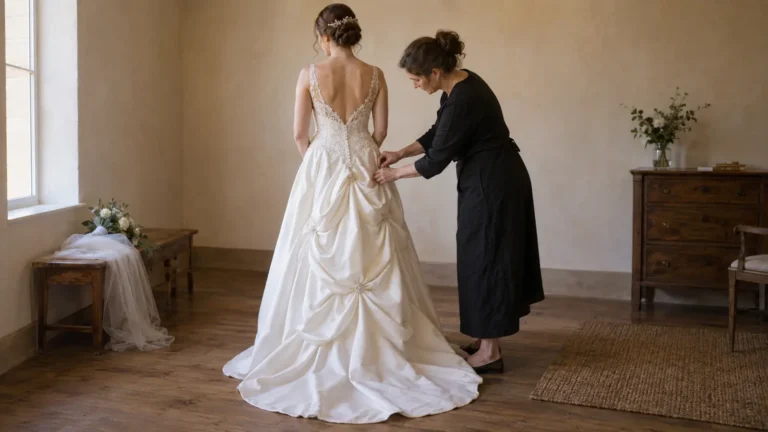
Sleeves require precise alterations because small fit problems can affect your entire range of movement.
If a sleeve is too tight, it can pull the bodice, create wrinkles and make it difficult to raise your arms. If it is too loose, it may twist, sag or slide out of position.
During your fitting:
- Raise your arms gently
- Reach forward
- Bend your elbows
- Hug someone
- Hold your bouquet
- Sit at a table
- Practice a few dance movements
Tell the seamstress immediately if you feel pulling across your shoulders or under your arms.
Do not expect to break in uncomfortable sleeves. Wedding dress fabrics do not always relax in the same way as everyday clothing. The fit should be corrected rather than tolerated.
Can Sleeves Be Added to a Sleeveless Wedding Dress?
Sleeves can sometimes be added, but the result depends on the gown’s construction.
The bodice must provide suitable attachment points and enough support. Adding sleeves to a strapless dress can require more than sewing fabric around the arm because the new sleeves may pull against the neckline.
A seamstress may recommend:
- Adding straps first
- Creating an illusion neckline
- Attaching removable sleeves
- Using a lace topper
- Adding an off-the-shoulder band
- Choosing a detachable cape instead
Discuss the idea before ordering the dress. Ask whether the designer already offers matching sleeves or fabric. Using material from the same collection usually creates a more consistent result.
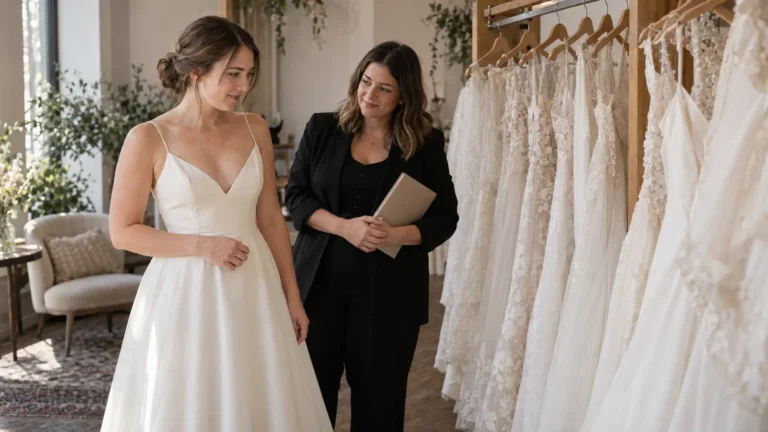
Questions to Ask During Your Bridal Appointment
Before ordering a gown with sleeves, ask:
- Can I raise my arms comfortably?
- Does this fabric stretch?
- Can the sleeves be resized during alterations?
- Are different lining or illusion shades available?
- Can these sleeves be made detachable?
- Can the designer change their length?
- Will the fabric become warmer after lining?
- How should the sleeves be cleaned or steamed?
- Can matching material be ordered for repairs?
- Will adding sleeves change the structure of the bodice?
Take photographs from the front, side and back if the boutique allows it. Sleeves can look very different depending on the angle.
Final Thoughts
Wedding dress sleeve styles range from barely-there cap sleeves to dramatic bishop, puff and bell designs. Each option changes the gown’s appearance, movement and comfort in a different way.
Sleeveless gowns and thin straps create an open look. Flutter sleeves introduce soft movement, while long fitted and illusion sleeves provide more coverage. Puff, bishop and bell sleeves make a stronger statement, and detachable sleeves give you the freedom to change your look during the wedding.
Choose with your real wedding day in mind. Consider the temperature, venue and amount of movement involved, but pay closest attention to how the sleeves feel when you wear them.
You should be able to hold your bouquet, embrace your guests and dance without constantly adjusting the dress. When the sleeves complement the gown and let you move naturally, they are doing exactly what they should.