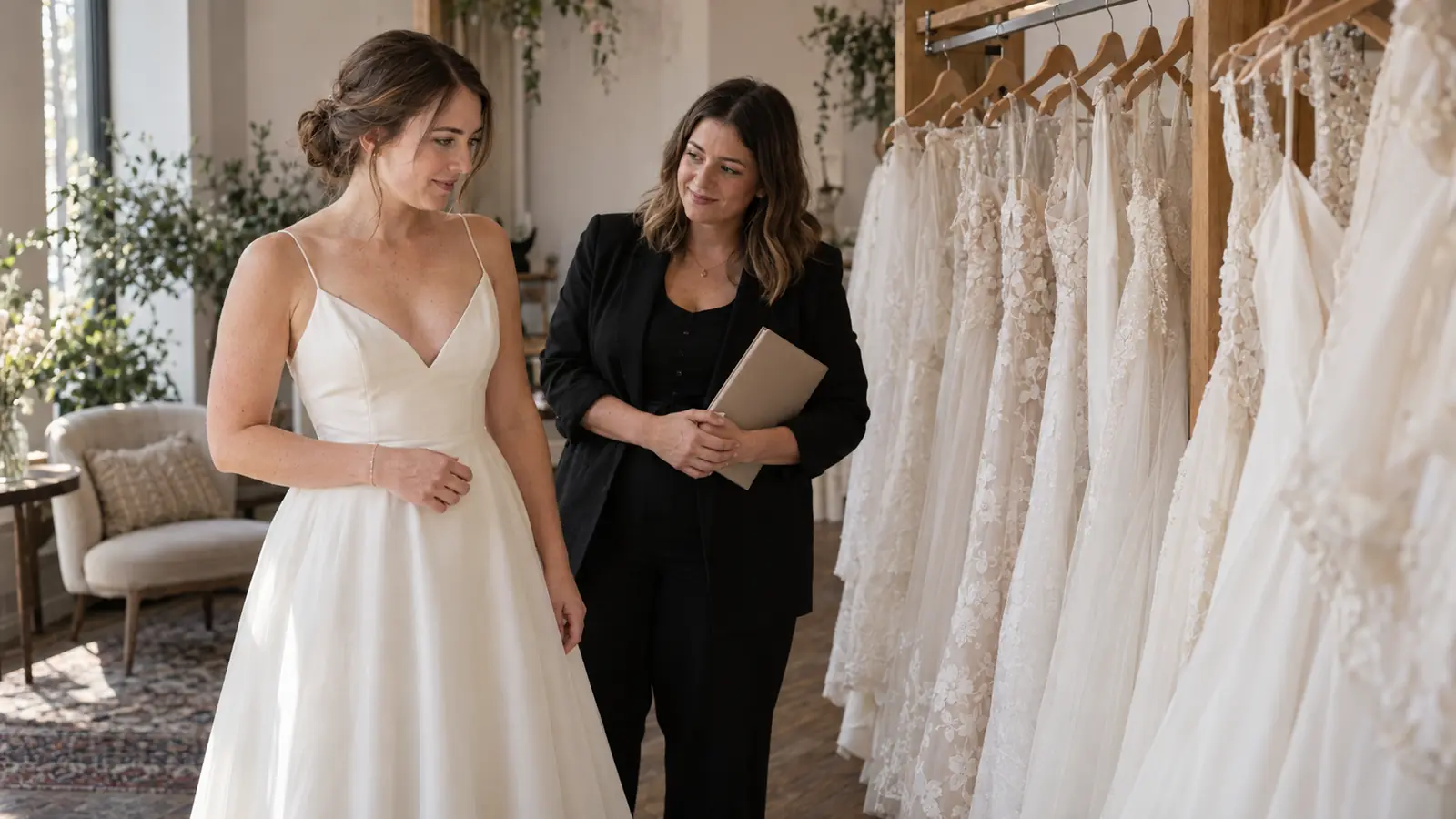
Knowing when to buy a wedding dress can make the entire shopping experience feel calmer and more enjoyable. Start too late, and you may face limited choices, rush fees or a tight alterations schedule. Start too early, and you may begin second-guessing your decision as the rest of your wedding plans develop.
For most brides, the ideal time to begin shopping is around 10 to 12 months before the wedding. This leaves time to visit bridal boutiques, compare different gowns, place an order and complete alterations without feeling rushed.
However, not every bride needs the same schedule. Your wedding dress shopping timeline will depend on whether you want a made-to-order designer gown, a custom dress, an off-the-rack option or something that is ready to ship.
This guide explains when to begin looking, when to place your order and what to do if your wedding is less than six months away.
When Should You Start Wedding Dress Shopping?
A good time to begin visiting bridal shops is around 10 to 12 months before your wedding. If you want a custom gown, a particular designer or extensive changes to the original design, starting 12 to 18 months ahead may be more practical.
Made-to-order gowns are not normally waiting in the boutique in your exact size. After you choose a style, the shop submits an order to the designer. The dress must then be produced and delivered before alterations can begin.
Starting early gives you room for delays, additional fittings and changes to small details. It also allows you to step away and think after an appointment instead of feeling forced to make an immediate decision.
However, an approaching wedding date does not mean you have missed your opportunity. Brides with shorter timelines can find beautiful options among ready-to-wear dresses, boutique samples and off-the-rack gowns.
12–18 Months Before the Wedding: Explore Your Style
If your wedding is more than a year away, you do not have to purchase a dress immediately. Begin by learning what genuinely appeals to you.
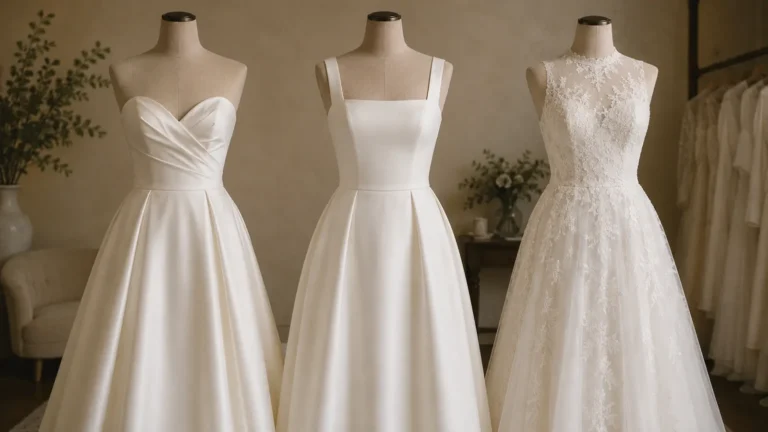
Save photographs of gowns you like and look for details that appear repeatedly. Perhaps you keep choosing square necklines, lightweight skirts or clean satin dresses. You may be drawn to fitted silhouettes in photographs but feel more comfortable in softer A-line gowns once you try them on.
Your early inspiration should guide you, not restrict you. Many brides leave their first appointment interested in something completely different from what they originally imagined.
This is also the right time to create a realistic budget. In addition to the gown, your total may need to cover:
- Alterations
- Wedding shoes
- Undergarments or shapewear
- A veil or headpiece
- Jewelry and other accessories
- Professional cleaning or steaming
- Storage and transportation
Research bridal shops before making appointments. Look at the designers they carry, their typical price range and whether they offer alterations in-house. This helps you avoid appointments at stores that do not match your needs.
10–12 Months Before: Start Trying on Dresses
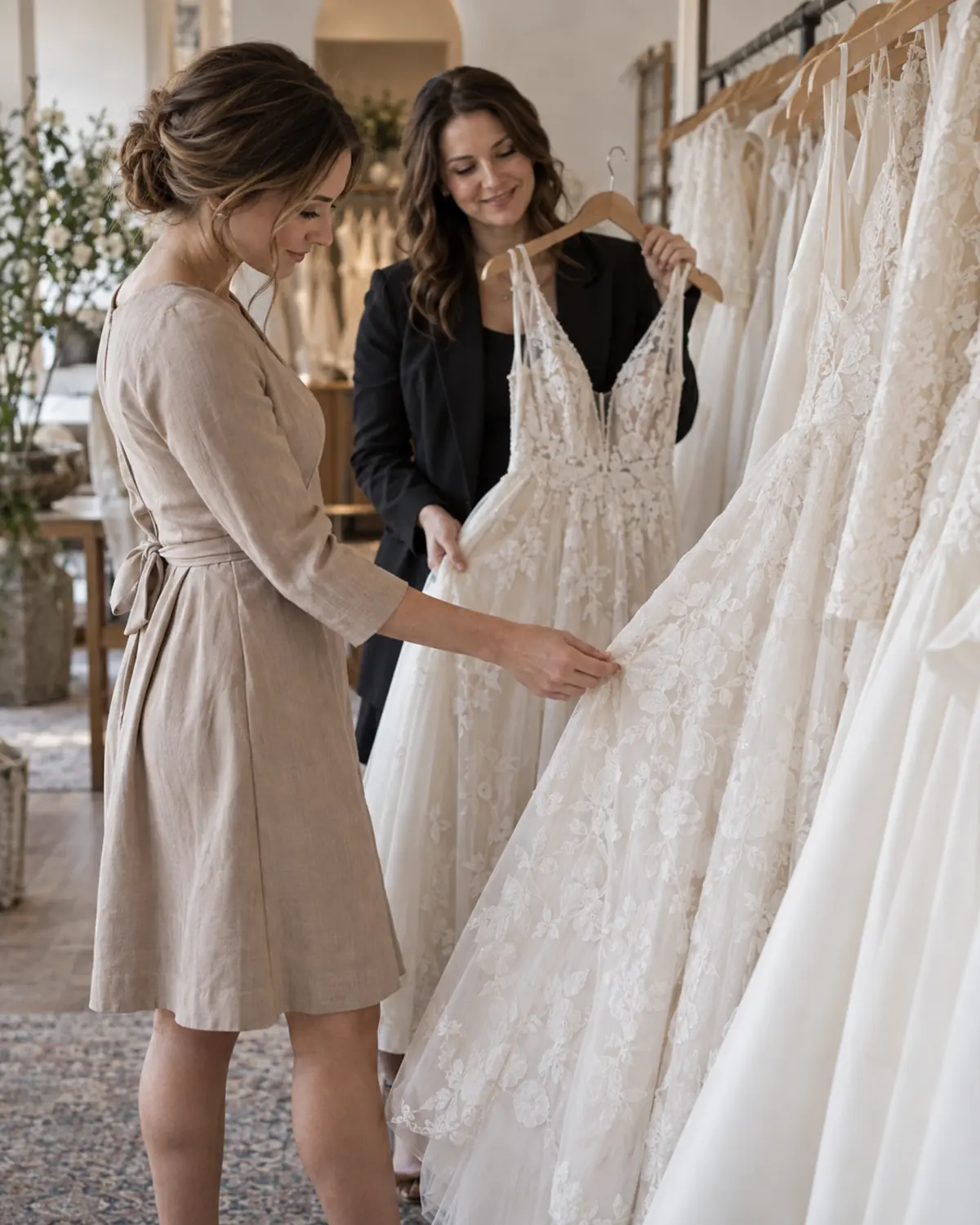
At this stage, you can begin booking bridal appointments and trying different silhouettes.
Your first appointment is not only about finding “the one.” It is also an opportunity to understand how wedding dresses are constructed and how different materials feel on your body.
Pay attention to more than your reflection. Ask yourself:
- Can I breathe comfortably?
- Does the bodice feel supportive?
- Can I sit and walk without fighting the dress?
- Does the fabric suit the season?
- Does the gown make sense for the venue?
- Do I feel like myself while wearing it?
Bring a small group of people whose opinions you trust. Too many guests can turn a useful appointment into a room full of competing preferences. The dress should reflect the bride wearing it, not the loudest person in the boutique.
Wear simple undergarments and bring shoes with a heel height close to what you expect to wear. You do not need to have your final shoes or accessories yet.
Keep an open mind during the appointment. A gown that looks ordinary on a hanger may feel completely different once it is properly clipped and adjusted.
8–10 Months Before: Choose and Order Your Gown
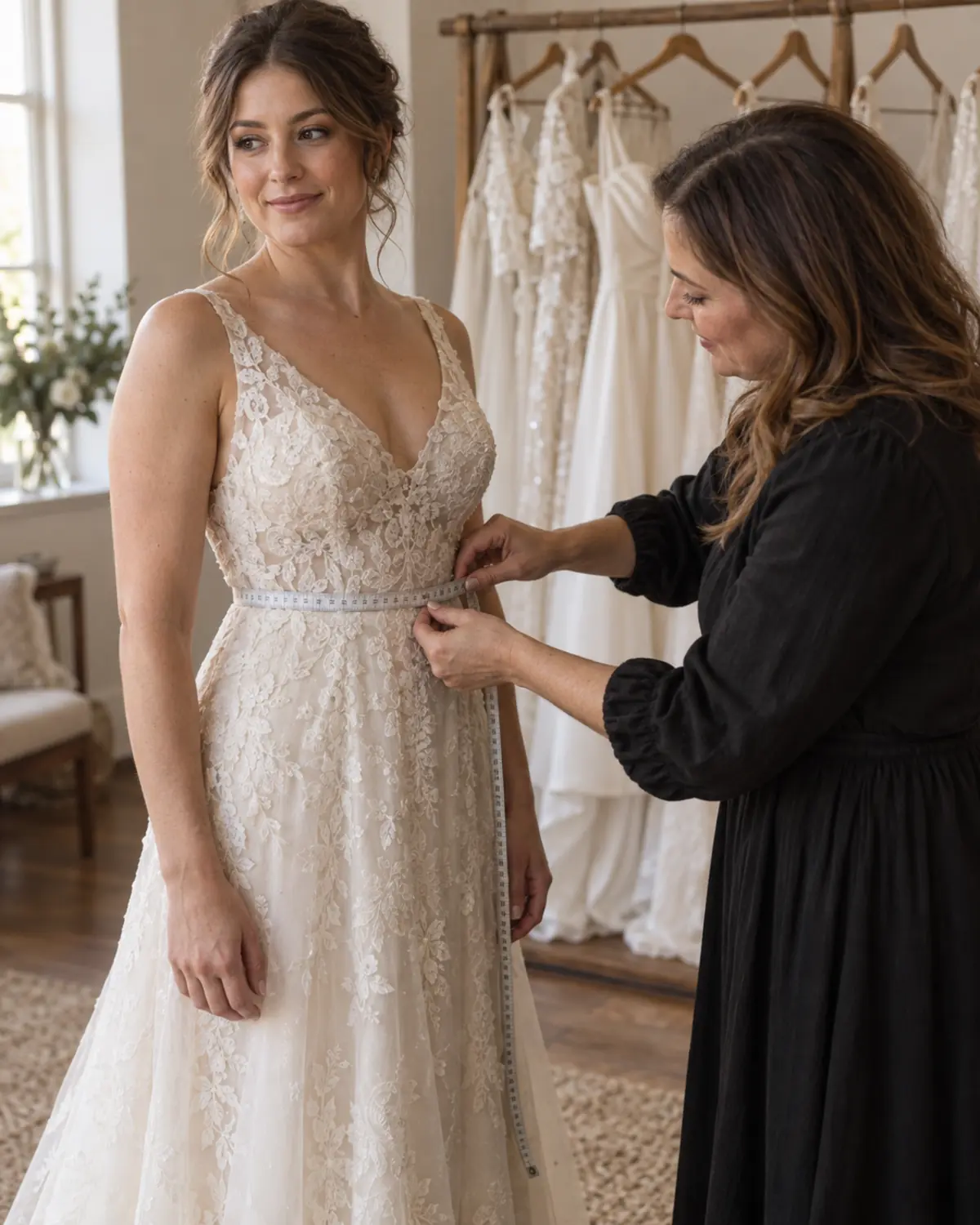
If you are purchasing a made-to-order dress, try to place your order approximately eight to ten months before the wedding.
The boutique will take your measurements and compare them with the designer’s size chart. Bridal sizing often differs from everyday clothing sizes, so do not let the number on the order form worry you. The measurements and the final fit matter much more.
Before paying a deposit, confirm the following details:
- Designer and style name
- Dress size and color
- Fabric and ordered customizations
- Estimated arrival date
- Deposit and remaining balance
- Cancellation or return policy
- Delivery and rush fees
- Whether alterations are included or separate
Ask for everything in writing and keep your receipt or agreement somewhere safe.
It is usually better to order for your current measurements rather than deliberately choosing a smaller size because you plan to lose weight. A seamstress can often take a gown in, but letting it out depends on its construction and the amount of fabric available inside the seams.
5–7 Months Before: Confirm the Order and Choose Your Accessories
There may be a quiet period while your wedding dress is being produced. Even so, it is sensible to check with the boutique and confirm that everything remains on schedule.
This is also a useful time to choose the items you will need during alterations. These may include:
- Wedding shoes
- Your planned bra or undergarments
- Shapewear, if you intend to use it
- Veil
- Hair accessories
- Jewelry
Your shoes are particularly important because the heel height affects the hem. Bring the actual wedding shoes to your fitting whenever possible. If they have not arrived, take another pair with the same heel height.
You do not need to finalize every small accessory at once. Start with anything that could change how the gown fits or falls.
2–3 Months Before: Begin Alterations
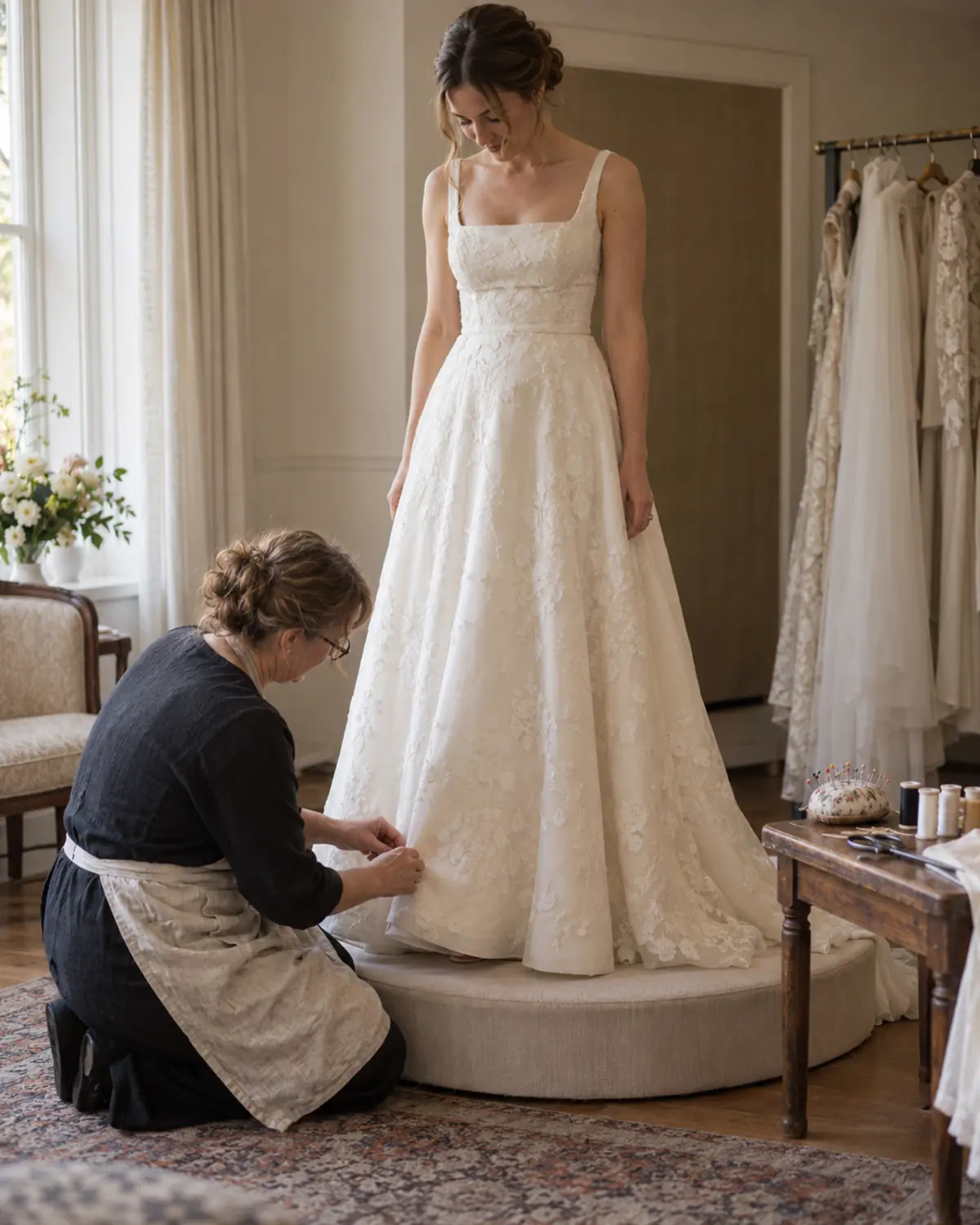
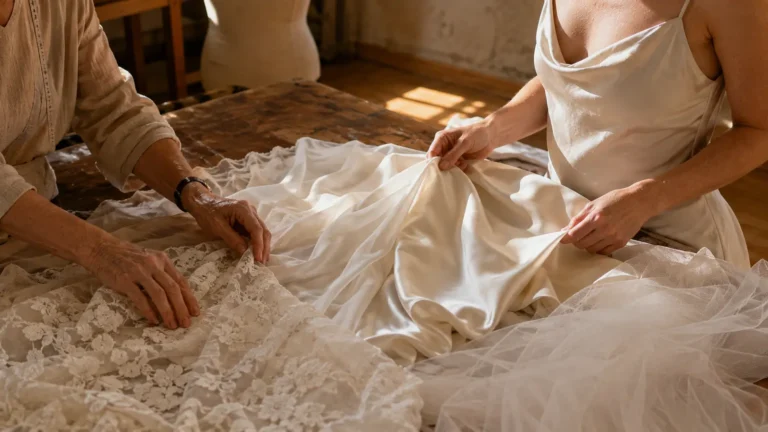
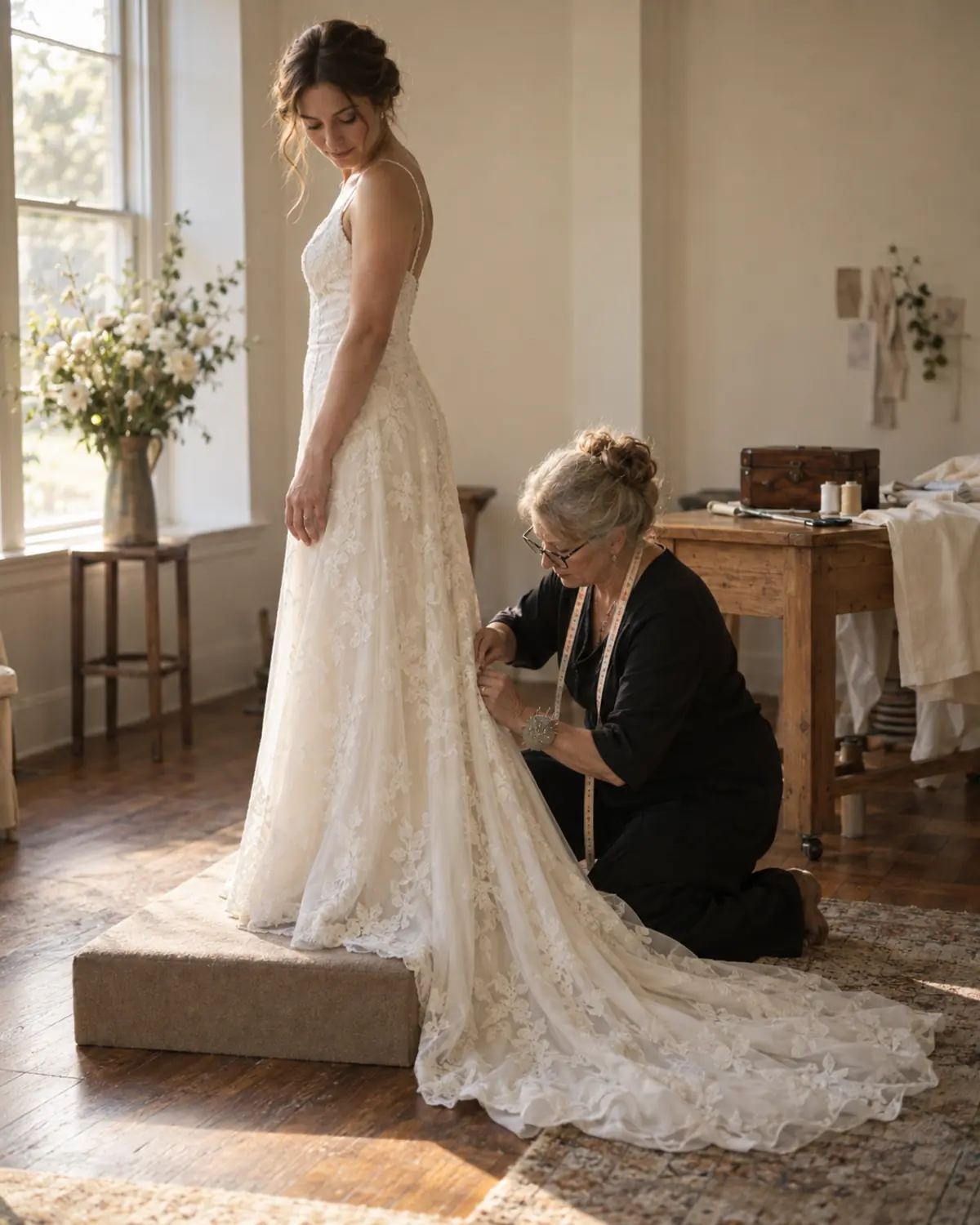
Many brides begin alterations approximately two to three months before the wedding. Your boutique or seamstress may recommend a slightly different schedule depending on the dress and the amount of work required.
The first fitting is usually when the largest adjustments are planned. The seamstress may examine:
- The fit across the bust
- Waist placement
- Bodice support
- Straps or sleeves
- Zipper or button closure
- Skirt length
- Train length
- Bustle placement
Wear the undergarments and shoes you plan to use on the wedding day. Changing either of them later can affect the fit and hem.
Do more than stand still during the appointment. Walk across the room, sit down and raise your arms. Take a few longer steps and check whether the neckline stays in place.
A wedding dress should not only look beautiful in a posed photograph. It needs to remain comfortable through the ceremony, portraits, dinner and dancing.
4–6 Weeks Before: Attend Your Second Fitting
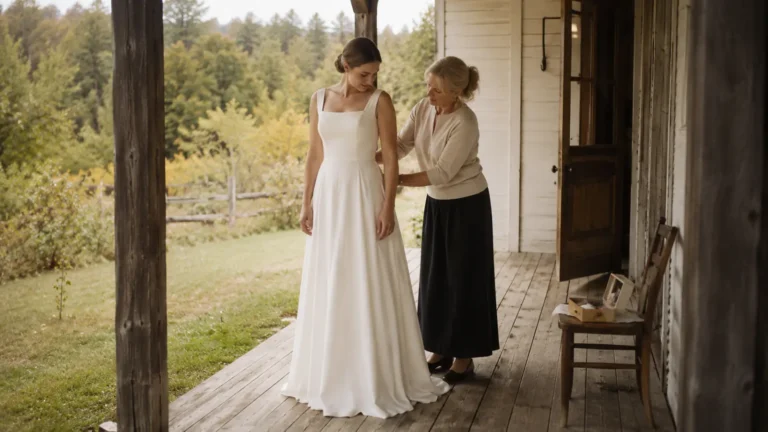
At the second fitting, you will see how the gown looks after the main adjustments.
The bodice should feel secure but not painfully tight. The neckline should remain in position, and the fabric should lie smoothly without unnecessary pulling or gaping. The skirt should fall evenly when you are wearing your wedding shoes.
This is a good time to practice using the bustle. If a friend, relative or wedding-party member will help you on the day, consider bringing that person to the appointment. You can also record the seamstress demonstrating each step.
Look at the dress from the front, back and sides. Walk naturally instead of taking only small, careful steps. If something feels uncomfortable, mention it now rather than hoping you will stop noticing it.
1–2 Weeks Before: Complete the Final Fitting
The final fitting is your opportunity to confirm that every alteration is complete.
Check the neckline, straps, sleeves, zipper, buttons, hem and bustle. Sit and walk in the gown one more time. Make sure nothing has become too tight and that you feel secure without constantly adjusting the dress.
Before taking the gown home, ask the boutique or seamstress:
- How should the dress be stored?
- Can it remain inside its garment bag?
- Should the fabric be steamed?
- Who should handle wrinkles on the wedding day?
- What should you do if a hook or button becomes loose?
- How should the train be arranged before the ceremony?
Keep the dress in a clean, dry and secure room. Protect it from pets, food, moisture, smoke and direct sunlight.
What If Your Wedding Is Less Than Six Months Away?
A shorter timeline changes the type of dress you should look for, but it does not prevent you from finding one you love.
Tell every consultant your wedding date before the appointment begins. They can then avoid showing you gowns that cannot arrive on time.
Several options work well for shorter engagements.
Off-the-Rack Wedding Dresses
An off-the-rack dress can be purchased and taken home without waiting for a new gown to be produced. You will still need time for alterations, but the longest part of the ordering process is removed.
Inspect the dress carefully and ask whether it has been worn as a sample.
Bridal Sample Gowns
Boutiques occasionally sell the gowns brides try on during appointments. A sample dress may be available at a reduced price and can usually be taken home quickly.
Check the fabric, zipper, buttons, lace and hem for signs of wear. Small issues may be repairable, but the cost of cleaning and repairs should be considered before buying.
Ready-to-Wear Bridal Collections
Some retailers sell wedding dresses in standard sizes that are ready to ship. This can be a convenient option, particularly if you know your measurements and have access to a reliable seamstress.
Read the return policy before ordering and leave enough time to exchange the gown if necessary.
Secondhand and Vintage Dresses
A pre-owned dress is already made, so you do not need to wait for production. It may also give you access to discontinued designs or distinctive vintage details.
Ask for accurate measurements and clear photographs before purchasing online. Remember to allow time for cleaning, repairs and alterations.
Rush Orders
Some designers offer faster production for certain gowns, usually for an additional charge. A rush order is only helpful if the estimated delivery still leaves enough time for alterations.
Ask the boutique to confirm the expected arrival date in writing before committing.
Can You Buy a Wedding Dress Too Early?
Buying a wedding dress more than 18 months before the wedding is not automatically a mistake. It simply gives you more time for your plans or preferences to change.
Your venue, season, dress code or body measurements may be different by the time the wedding arrives. New collections may also tempt you to reconsider a dress you once loved.
If you decide to buy very early, make sure the gown fits the wedding you are actually planning—not only the wedding images you are saving for inspiration.
Once you have ordered it, consider stepping away from dress shopping. Continuing to compare your gown with every new design can create doubts that were not there when you made the decision.
You will also need a safe place to store it for an extended period.
Can You Buy a Wedding Dress Too Late?
Buying late reduces some choices, especially among made-to-order designers, but it does not mean you must settle for the wrong dress.
Focus on gowns that are physically available or can be delivered within a confirmed timeframe. Keep alterations realistic, and avoid buying a dress that needs major reconstruction unless a seamstress has already agreed to the work.
A simple gown that fits well will usually look better than an elaborate dress that arrived too late to be altered properly.
A Simple Wedding Dress Shopping Timeline
Here is the full schedule at a glance.
12–18 Months Before
- Gather inspiration.
- Research silhouettes, fabrics and necklines.
- Establish the full dress budget.
- Find suitable bridal boutiques.
10–12 Months Before
- Begin bridal appointments.
- Try several different silhouettes.
- Narrow down your preferred styles.
8–10 Months Before
- Select and order the dress.
- Confirm its size, color and details.
- Review the estimated delivery date and store policies.
5–7 Months Before
- Check the order’s progress.
- Purchase your wedding shoes.
- Choose undergarments and begin planning accessories.
2–3 Months Before
- Attend the first fitting.
- Begin major alterations.
- Decide how the train will be bustled.
4–6 Weeks Before
- Attend the second fitting.
- Check comfort, fit and movement.
- Practice using the bustle.
1–2 Weeks Before
- Complete the final fitting.
- Inspect every detail.
- Take the gown home and store it safely.
Final Thoughts
The best time to buy a wedding dress depends on how the gown is being produced and how much work it will need after it arrives.
Beginning the search around 10 to 12 months before the wedding gives many brides a comfortable amount of time. Those choosing custom designs may need to start earlier, while brides with shorter engagements can focus on samples, ready-to-wear collections and off-the-rack dresses.
Treat this timeline as a planning guide rather than an unbreakable rule. Designers, boutiques and seamstresses all work differently, so confirm their schedules before placing an order.
A thoughtful timeline should make the process easier, but the final decision is still personal. Choose a gown that feels comfortable, secure and unmistakably yours.