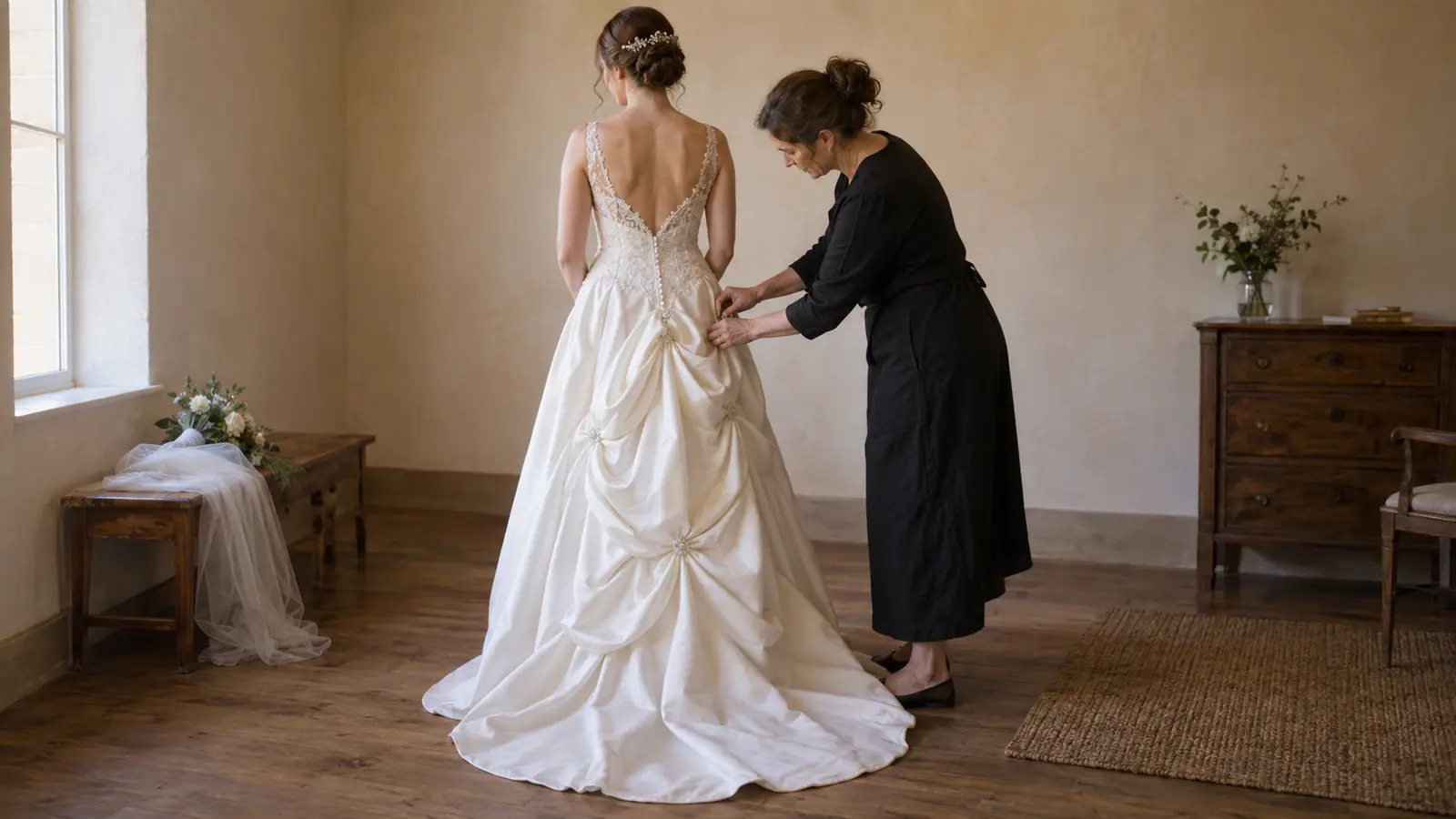
A wedding dress bustle lifts and secures the train of your gown after the ceremony. It allows you to walk, dance and move through the reception without carrying the train over your arm or worrying about someone stepping on it.
It is a small alteration, but it can have a surprisingly large effect on how comfortable you feel during the second half of your wedding day. A good bustle should support the weight of the train, preserve the shape of the skirt and look like a natural part of the dress.
There is no single bustle that works for every gown. The right choice depends on the length of the train, the fabric, the silhouette and the details on the back of the dress. Your seamstress will normally recommend a design after seeing how the gown falls on your body.
This guide explains the most common wedding dress bustle types, what each one looks like and what to consider before choosing yours.
What Is a Wedding Dress Bustle?
A wedding dress bustle is a system of hooks, buttons, loops or ribbons added during alterations. These fastening points lift the train from the floor and attach it to the skirt.
The train remains down for the ceremony and photographs. Before the reception—or whenever you are ready to move more freely—someone fastens the bustle and gathers the train into the back of the gown.
A bustle is rarely included as a functional part of a new wedding dress. Even when a gown appears to have decorative buttons or loops, a seamstress will usually need to create a custom arrangement based on your height and the final hem length.
Does Every Wedding Dress Need a Bustle?
Not every dress needs one. A floor-length gown without a train may already be easy to walk and dance in. A short sweep train may also be manageable without additional support, depending on the fabric and venue.
A bustle is worth considering when your dress has:
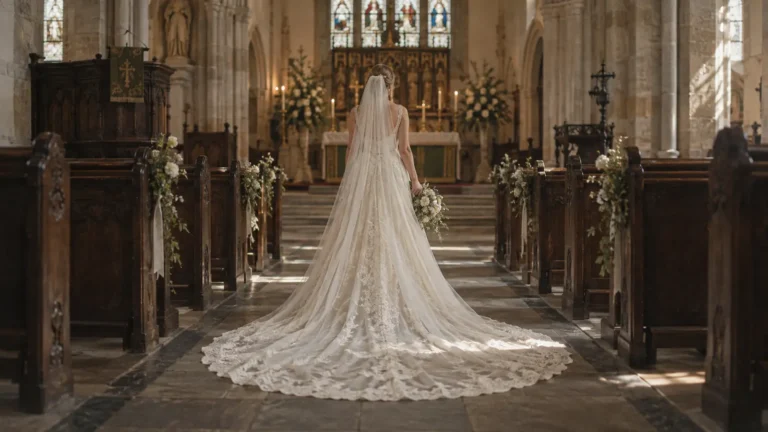
- A court, chapel, cathedral or longer train
- Several layers of heavy fabric
- Lace or embellishments that could catch on the floor
- A fitted skirt that limits how easily you can hold the train
- A reception that involves dancing or moving between spaces
- An outdoor venue where the ground may be wet or uneven
Even a relatively short train can become inconvenient in a crowded reception. Try walking backward, turning and sitting in your dress during a fitting. These movements often reveal whether you need a bustle more clearly than simply standing in front of a mirror.
The Main Wedding Dress Bustle Types
Several bustle designs are commonly used, but each one can be adjusted to suit an individual gown. A seamstress may use one fastening point for a light train or several points to distribute the weight of a longer one.
American Bustle or Over Bustle
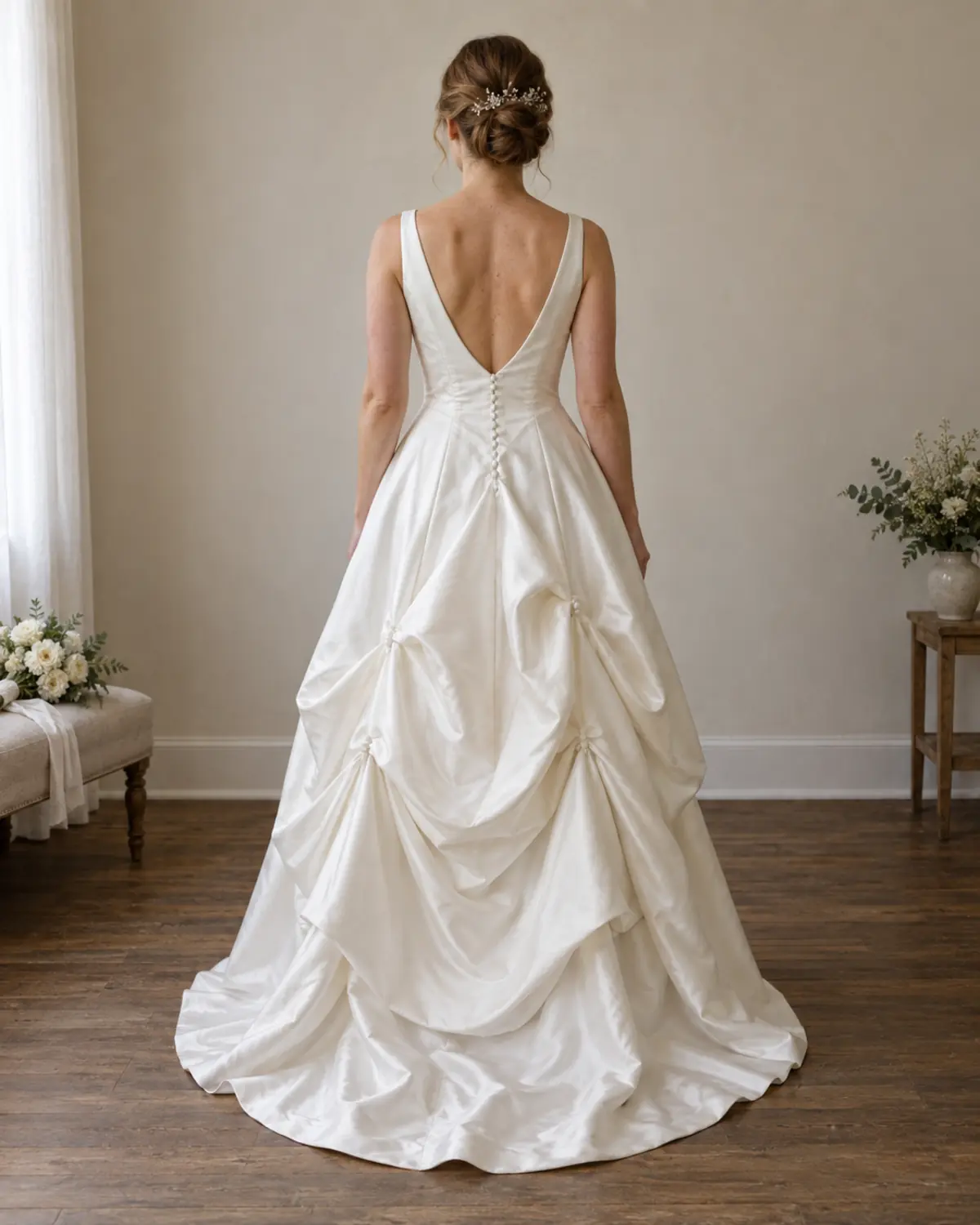
The American bustle lifts the train and attaches it to the outside of the skirt. One or more loops on the train connect to buttons or hooks positioned higher on the back of the gown.
This creates visible folds that fall over the skirt. The effect can be simple and softly draped or more structured, depending on the number and placement of the fastening points.
An American bustle often works well with:
- A-line wedding dresses
- Ball gowns
- Lightweight or moderately structured fabrics
- Dresses with decorative details on the back
- Trains that look attractive when gathered externally
It is usually easy to understand and fasten, which is useful if a bridesmaid or family member will be helping you. However, the outer loops and buttons may be more visible than those used in an under bustle.
French Bustle or Under Bustle
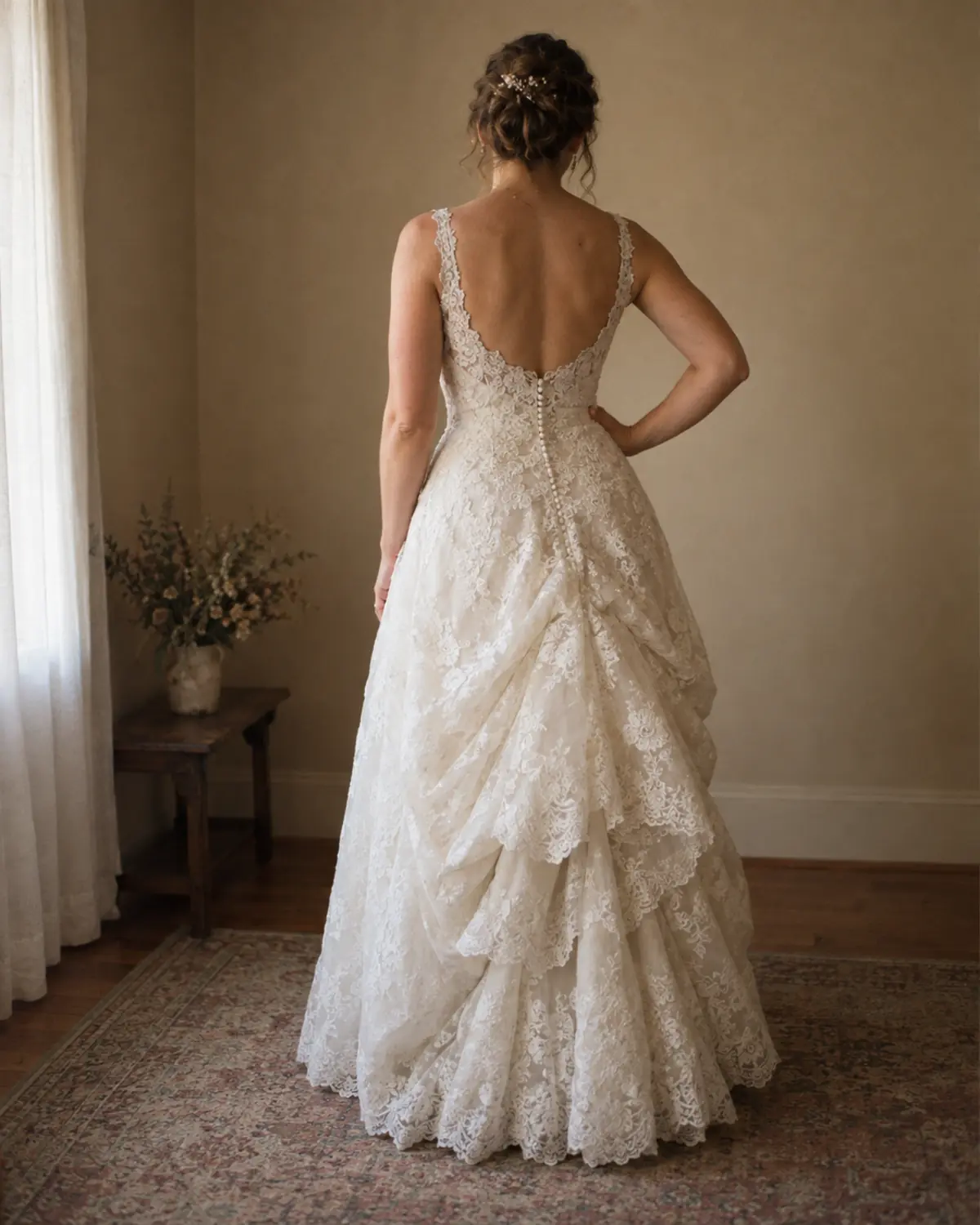
A French bustle gathers the train underneath the skirt rather than folding it over the outside. Ribbons or loops inside the dress are tied together to lift the train and create soft folds below the back of the gown.
The result has a fuller, slightly rounded appearance. Because the fastening system sits inside the skirt, it is usually less visible from the outside.
A French bustle can work particularly well with:
- Romantic A-line gowns
- Ball gowns
- Dresses made from soft or flowing fabric
- Gowns with detailed lace that should remain uninterrupted
- Dresses that benefit from added fullness at the back
The internal ribbons should be clearly labelled because several pairs can look confusing. Your helper needs to know which ribbons belong together and how tightly to tie them.
Ballroom Bustle
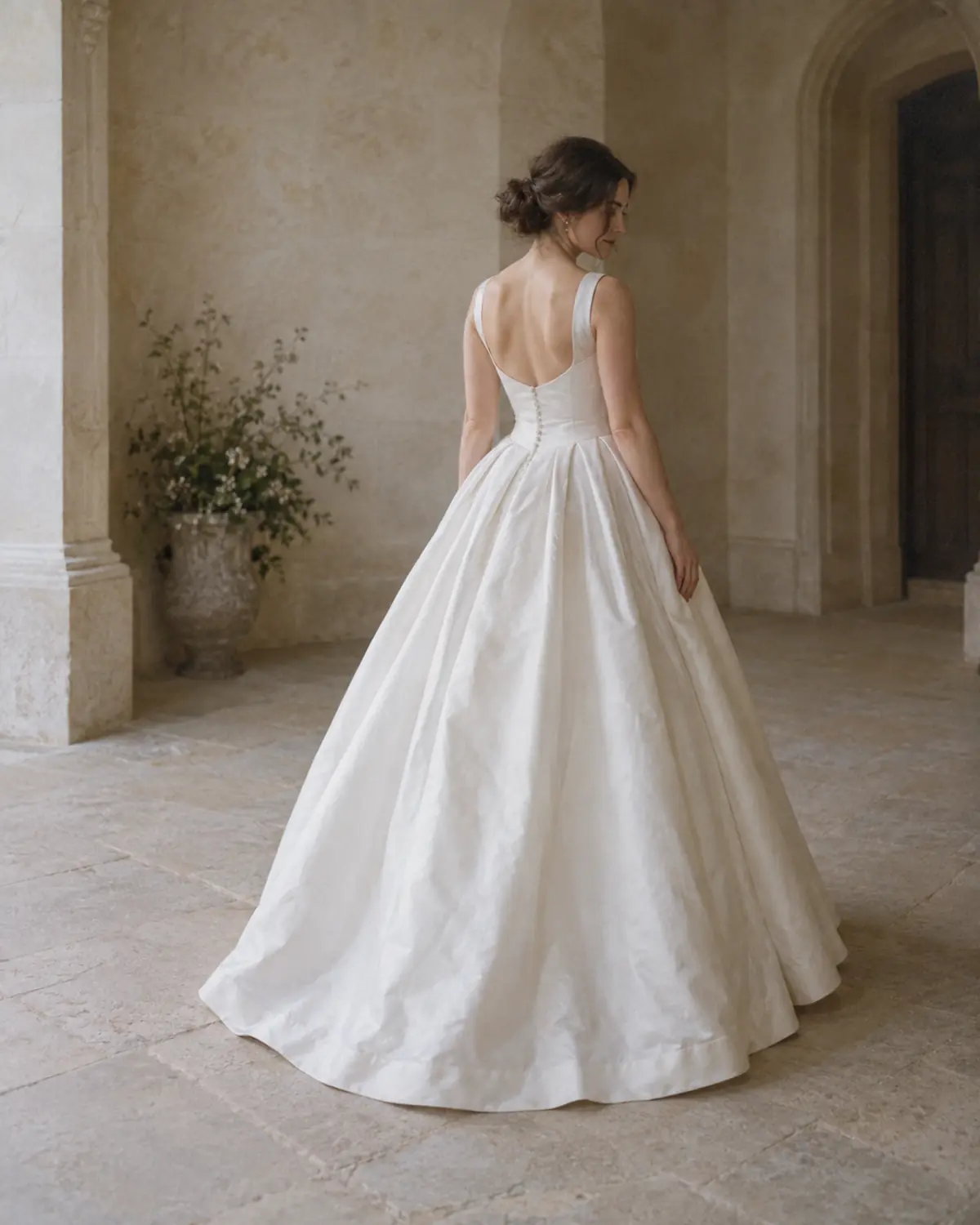
A ballroom bustle makes the train appear to disappear into the skirt. The train is attached underneath the gown at several points, creating an even, floor-length hem around the dress.
Despite its name, this option is not limited to ball gowns. It may work with different silhouettes when the fabric has enough structure to hold the arrangement.
A ballroom bustle is a good option when you want:
- A clean and balanced appearance
- The reception version of the dress to look train-free
- The fullness distributed across the width of the skirt
- A bustle that does not create one large fold at the back
It often requires several fastening points, making it more complex than a simple over bustle. It can also take longer to secure, so the person helping you should practise before the wedding.
Austrian Bustle
An Austrian bustle uses a ribbon or drawstring system that gathers the train vertically. When the ribbons are pulled, the fabric forms a series of ruched folds down the back of the skirt.
This arrangement creates a decorative effect rather than trying to hide the bustle completely. It can complement dresses that already include ruching, draping or other vertical details.
An Austrian bustle may suit:
- Soft gowns with flexible fabric
- Dresses with simple skirts
- Gowns with romantic or vintage-inspired details
- Brides who like the appearance of gathered fabric
It is less common than the American or French bustle. Not every seamstress offers it, and it may not be appropriate for very stiff fabric or heavily embellished trains.
Train-Flip Bustle
A train-flip bustle folds the train underneath the dress and secures it inside the skirt. The goal is to maintain a smooth outer shape without obvious folds or attachment points.
Once fastened, the gown may look as though it was designed without a train. This makes the option attractive for brides who want a streamlined reception look.
It can be suitable for:
- Minimalist wedding dresses
- Clean, structured silhouettes
- Gowns without heavy layers underneath
- Brides who do not want a visibly gathered bustle
The dress needs enough internal space to accommodate the folded train. Heavy fabric or extensive embellishment may make the arrangement bulky.
How to Choose the Right Wedding Dress Bustle
The best bustle is not necessarily the one you liked most in a photograph. It is the one that works with the construction and weight of your own gown.
Consider the following details with your seamstress.
Start With the Dress Silhouette
The shape of the skirt influences where the train can be lifted without distorting the gown.
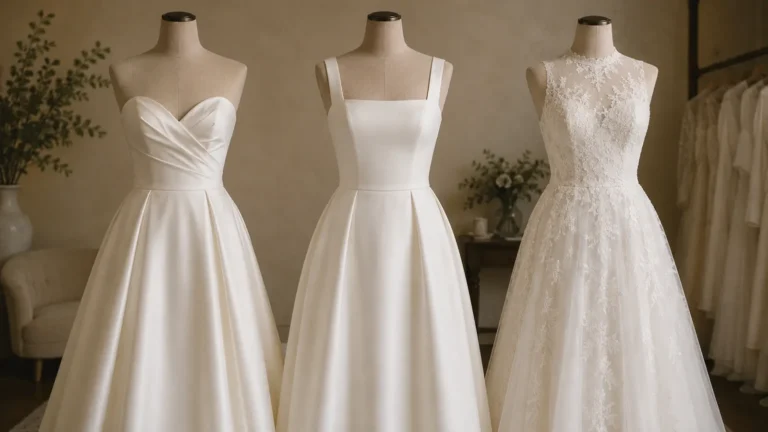
An A-line or ball gown often has enough volume to accommodate several bustle styles. A fitted mermaid or trumpet dress may require more careful placement so the bustle does not hide the shape around the hips and knees.
If you are still deciding between gown shapes, our guide to A-line vs. fit-and-flare wedding dresses can help you understand how the silhouettes behave.
Consider the Train Length
A short train may only need one attachment point. A long cathedral train will usually need several points to distribute its weight.
Using too few points can cause the train to pull heavily on one small section of fabric. It may also create uneven folds or make the bustle more likely to break.
For a closer look at the different lengths, read our guide to wedding dress train types.
Think About the Fabric
Light chiffon, tulle and soft crepe behave differently from satin, mikado or heavily layered lace.
A delicate fabric needs fastening points that provide support without causing visible pulling. A structured fabric may hold a clean fold well but can become bulky when too much material is gathered in one place.
Heavy beading adds another consideration. The weight should be spread across multiple points, and the bustle should not place excessive tension on fragile embellishments.
Our guide to wedding dress fabrics explains how popular bridal materials feel and move.
Protect Important Details
Look closely at the lace motifs, buttons, appliqués and seams on the back of your gown. The bustle should work around these features rather than folding them awkwardly or hiding the most attractive part of the design.
A skilled seamstress can sometimes position fastening points within lace or near decorative buttons so they are less noticeable.
Match It to Your Reception Plans
Think about how you expect to spend the reception. Will you be dancing for several hours? Walking across grass? Moving between indoor and outdoor spaces? Sitting for a long dinner?
A secure, uncomplicated bustle may be more useful than an elaborate arrangement if you expect to move frequently. Comfort and reliability matter more than creating a perfect fold that takes fifteen minutes to fasten.
How Much Does a Wedding Dress Bustle Cost?
The cost of adding a wedding dress bustle varies considerably. It depends on your location, the complexity of the gown, the number of fastening points and the experience of the alterations specialist.
A light train with one simple attachment point will generally cost less than a cathedral train requiring multiple carefully placed hooks or ribbons. Lace, beading and delicate fabrics can also increase the amount of work involved.
Ask about the bustle during your first alterations appointment and request an estimate before approving the work. Do not assume it is included in the basic hemming or fitting price.
The cheapest option is not always the best choice. A properly constructed bustle protects an expensive dress and makes it easier to enjoy the reception without worrying about the train.
When Should the Bustle Be Added?
The bustle is usually planned after the hem and general fit have been established. Your seamstress needs to see the final train length and how the skirt falls while you are wearing your wedding shoes.
Bring the following to your fitting:
- Your wedding shoes or shoes of the same height
- The undergarments you intend to wear
- Any petticoat or underskirt
- A trusted person who can learn the fastening process
- A phone for recording a short demonstration
If you are unsure when to begin alterations, refer to our wedding dress shopping timeline for a broader schedule.
Who Should Learn How to Fasten It?
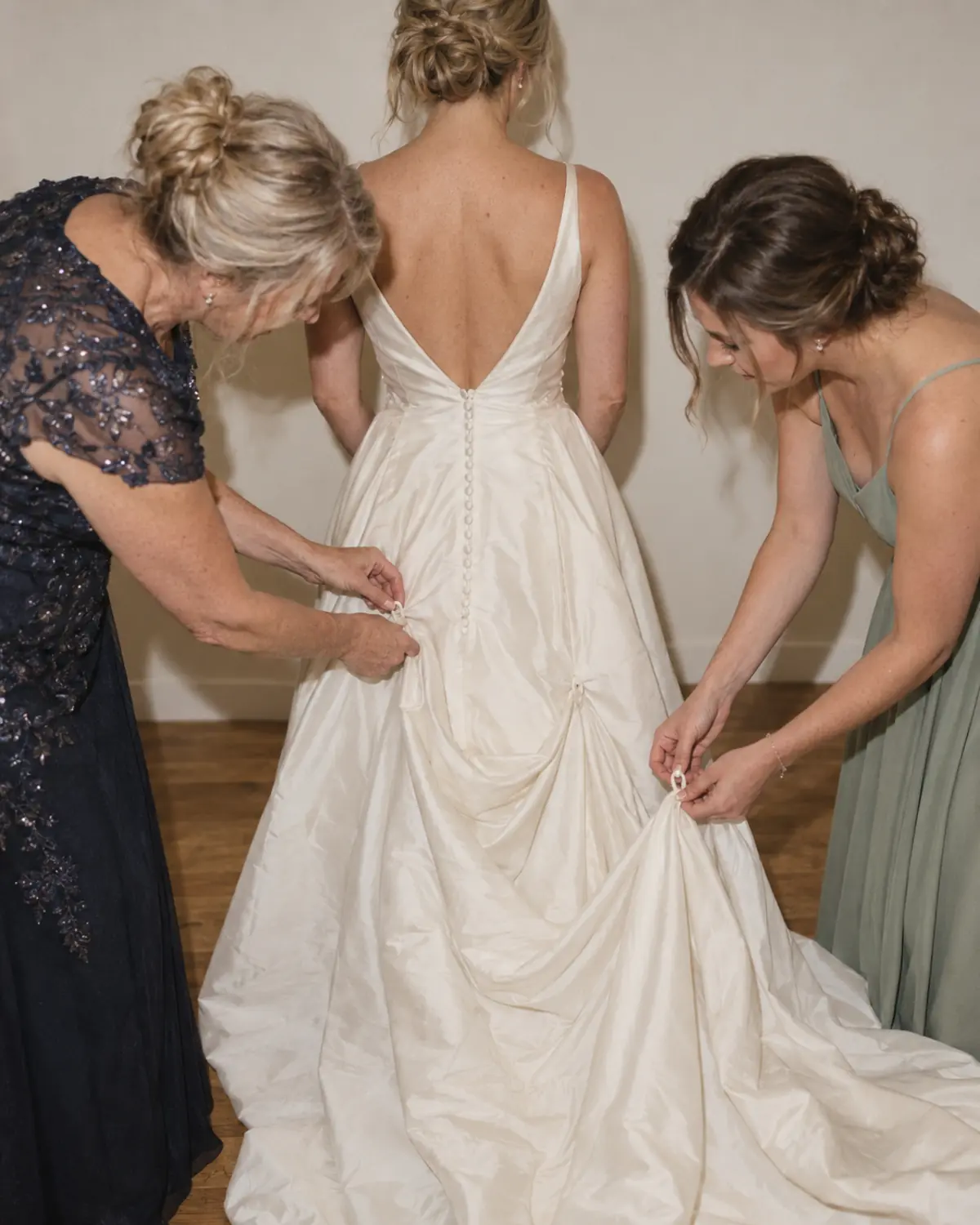
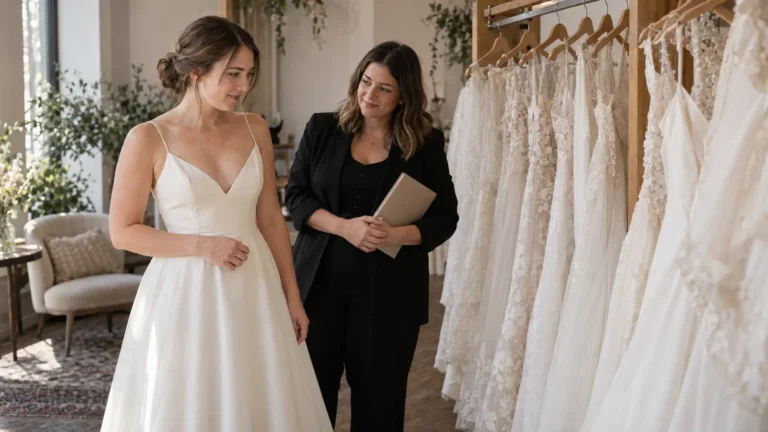
Choose at least one dependable person to attend your final fitting. This might be your maid of honor, a bridesmaid, your mother, another relative or a wedding planner.
Your helper should practise fastening and releasing the bustle while the seamstress is present. If the system uses several ribbons, ask the seamstress to label matching pairs with numbers, colors or another easy method.
Record a close-up video showing every step. Wedding mornings can feel busy, and it is easy to forget instructions that seemed obvious during the fitting.
It is also helpful to choose a second person who can learn the process in case your original helper is temporarily unavailable.
When Should You Bustle the Dress?
Most brides leave the train down for:
- The ceremony
- Formal portraits
- Couple photographs
- The walk into the reception
- Any planned photographs that feature the complete gown
The dress can then be bustled before dinner, the first dance or general dancing. There is no fixed rule. Choose the moment that works with your schedule and allows enough time for someone to fasten it carefully.
Do not wait until guests are already stepping on the train. If your reception begins immediately after the ceremony, arrange a quiet place where your helper can bustle the gown before you enter.
Common Wedding Dress Bustle Problems
Even a well-made bustle can experience problems during a busy wedding day. Understanding the most common issues will help you prepare.
The Loop Is Difficult to Find
Small loops can disappear among layers of tulle or lace. Ask the seamstress to make them easy for your helper to identify without making them obvious from the outside.
A numbered diagram or close-up photograph can save time.
The Bustle Looks Uneven
An uneven bustle may result from attaching the wrong ribbons, skipping a fastening point or pulling one side too tightly.
Practising at the final fitting is the best prevention. Check the gown from the back and both sides before leaving the room.
A Button or Loop Breaks
Long or heavily embellished trains place significant pressure on the fastening points. Keep a small emergency kit containing safety pins, a needle, matching thread and a few clear elastic loops.
A large safety pin can provide a temporary repair, but it should be positioned carefully so it does not damage the fabric or scratch you.
The Bustle Drags on the Floor
If part of the train still touches the floor, the fastening points may be positioned too low or the fabric may have been attached incorrectly.
Test the finished bustle while wearing your wedding shoes. Walk, turn and take a few dance steps before approving the alteration.
The Bustle Feels Too Heavy
A heavy train should not pull painfully against your waist or hips. Tell your seamstress if you feel significant tension while wearing it.
The weight may need to be distributed across additional attachment points or supported differently inside the gown.
Can You Bustle a Wedding Dress Yourself?
It is difficult to bustle your own dress because most fastening points are located behind you, sometimes beneath several layers of fabric.
Even a simple bustle is easier with help. Trying to reach the back of the skirt can twist the gown, strain the fastenings or cause you to attach the wrong points.
Plan for someone else to do it and give that person enough time. It is a practical task, not something that needs to become a rushed performance in front of your guests.
Can a Bustle Be Added to Any Wedding Dress?
A bustle can be added to most gowns with trains, but the solution may need to be customized.
Very delicate fabrics require discreet reinforcement. Heavily beaded trains may need several strong fastening points. A minimalist crepe gown may require a hidden system to preserve its clean appearance.
Some dramatic trains are too heavy or detailed to bustle elegantly. In that case, your seamstress may suggest a wrist loop, a removable train or another way of managing the fabric.
A wrist loop lets you carry the train from a loop around your wrist. It can be useful for photographs or short periods, but holding a heavy train for an entire reception may become uncomfortable.
Questions to Ask Your Seamstress
Bring these questions to your alterations appointment:
- Which bustle works best with this silhouette?
- How many fastening points will the train need?
- Will the bustle cover any lace or decorative details?
- Can the loops and buttons be reinforced?
- How long will it take someone to fasten?
- Can you label the ribbons or attachment points?
- What should we do if one point breaks?
- Will the bustle remain comfortable while sitting?
- Can I walk and dance in it before the final fitting ends?
- Is the bustle included in the alterations estimate?
A good specialist should be able to explain why a particular arrangement suits your dress rather than simply choosing the same bustle for every gown.
Final Thoughts
A wedding dress bustle should make your reception easier without taking away from the character of your gown. The best design will support the train securely, respect the fabric and preserve the shape you loved when you chose the dress.
Discuss the options early in the alterations process, but make the final decision after the hem and fit are established. Bring a trusted helper to the final fitting, record the fastening process and prepare a small repair kit.
Once the bustle is secure, you should be able to move through the reception without constantly thinking about your train. That freedom—not whether every fold looks perfectly symmetrical—is what makes the right bustle worthwhile.