Learning how to choose bridesmaid dresses becomes difficult when one dress is expected to solve several different problems at once.
It must complement the wedding, photograph cohesively, fit the formality of the venue and work for people with different heights, proportions, support needs, budgets and relationships with clothing.
That is why “universally flattering” is usually the wrong goal.
No single neckline, waistline or fabric behaves identically on every person. A better goal is to create visual harmony while giving each bridesmaid enough choice to feel secure, comfortable and recognizably herself.
At Wedding Dress Style, we approach this decision through five practical questions:
- What should remain consistent?
- Where can each bridesmaid have flexibility?
- What does the dress require underneath?
- Can everyone comfortably afford the complete outfit?
- Will it still work after several hours of real wedding movement?
This creates a bridal party that looks intentionally connected—not artificially identical.
Begin With the Wedding, Not the Dresses
Before opening a dress website, define the environment in which the dresses will be worn.
Consider:
- The formality of the wedding
- The ceremony and reception locations
- The expected weather
- The wedding color palette
- The time of day
- The amount of walking, standing and dancing
- The visual character of the bride’s gown
A formal evening wedding in a hotel ballroom creates different requirements from an afternoon garden ceremony. A heavy satin dress may look beautiful in photographs but become uncomfortable during an outdoor August wedding. A delicate chiffon gown may feel natural beside the ocean but too relaxed for a highly formal ballroom.
The bridesmaid dresses do not need to copy the wedding dress. They should simply feel as though they belong at the same event.
If the bridal gown is highly detailed, simpler bridesmaid dresses can give it visual space. If the bride is wearing a minimal gown, the bridal party can carry slightly more texture or movement without competing with her.
Stop Searching for a “Universally Flattering” Dress
The phrase sounds reassuring, but it often hides the real questions bridesmaids need answered.
Can I wear the bra or supportive garment I need?
Will the neckline remain secure when I bend forward?
Does the waist seam sit at a comfortable point on my torso?
Can the dress accommodate my hips without becoming too large at the bust?
Will I spend the ceremony adjusting a strap, pulling up a neckline or covering an area that makes me uncomfortable?
Two women who wear the same numbered size can still need completely different construction. One may prefer a structured bodice, while another needs adjustable straps. One may love a high slit, while another would be more comfortable with a closed skirt.
This is why choosing only by “body type” is rarely enough. Proportions matter, but support, sensory comfort, coverage and personal confidence matter just as much.
Instead of asking whether a dress flatters everyone, ask:
Can this dress—or this collection of dresses—adapt to what each bridesmaid actually needs?
That question produces much better decisions.
Choose Your Non-Negotiables
A flexible bridesmaid plan still needs structure. Without it, “choose any dress you want” can create more anxiety than freedom.
Select two or three elements that must remain consistent. These might include:
- One exact color
- One fabric
- One designer or collection
- One dress length
- A defined color family
- A specific level of formality
Then identify what bridesmaids may choose themselves:
- Neckline
- Sleeve style
- Strap width
- Waist placement
- Skirt shape
- Slit or no slit
- Back coverage
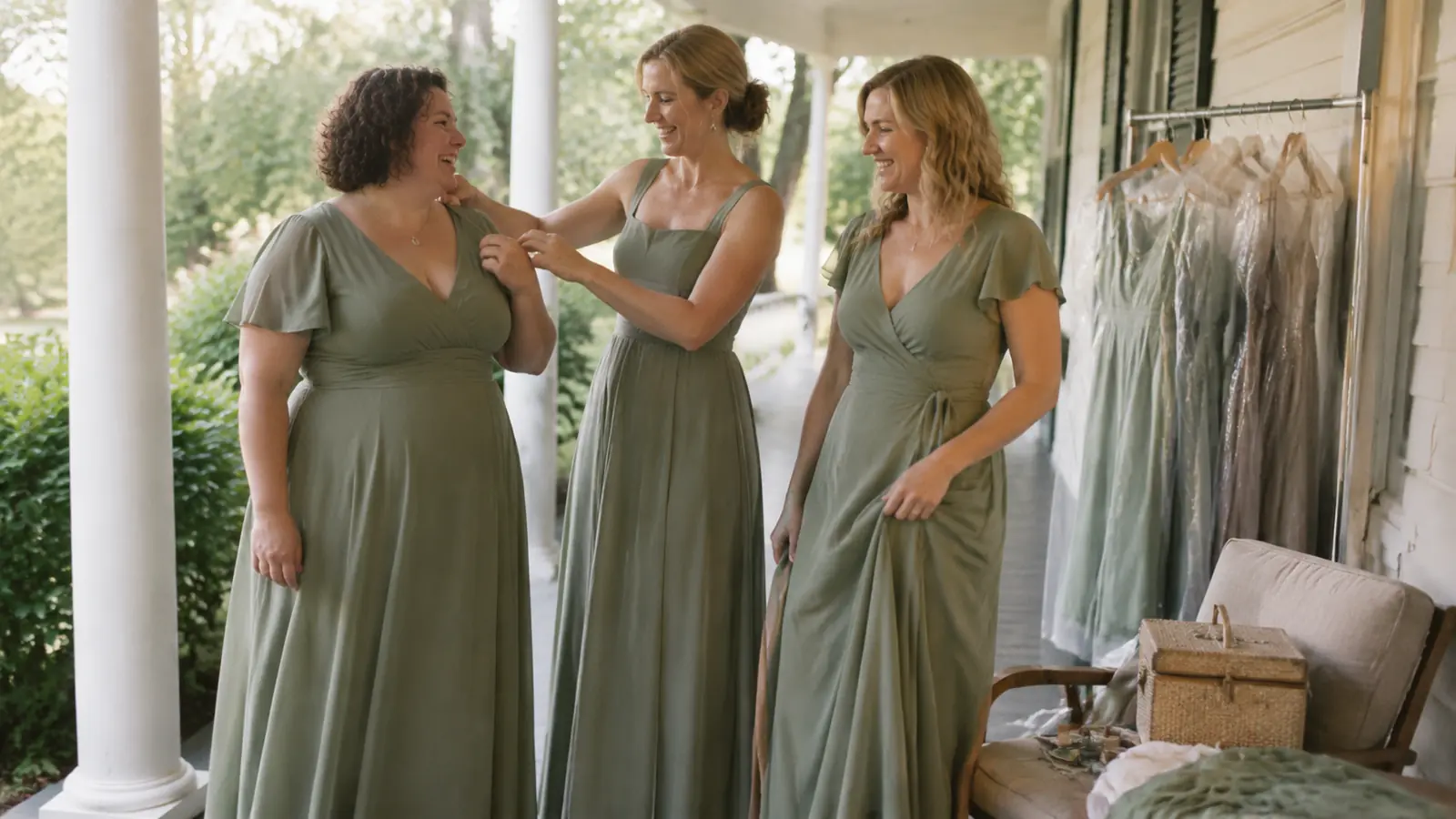
For example, you might select floor-length dresses in one exact shade of dark green and one chiffon collection, while allowing each bridesmaid to choose her own neckline and bodice.
That gives the group a clear visual relationship while leaving room for individual fit.
Matching and Mix-and-Match Dresses
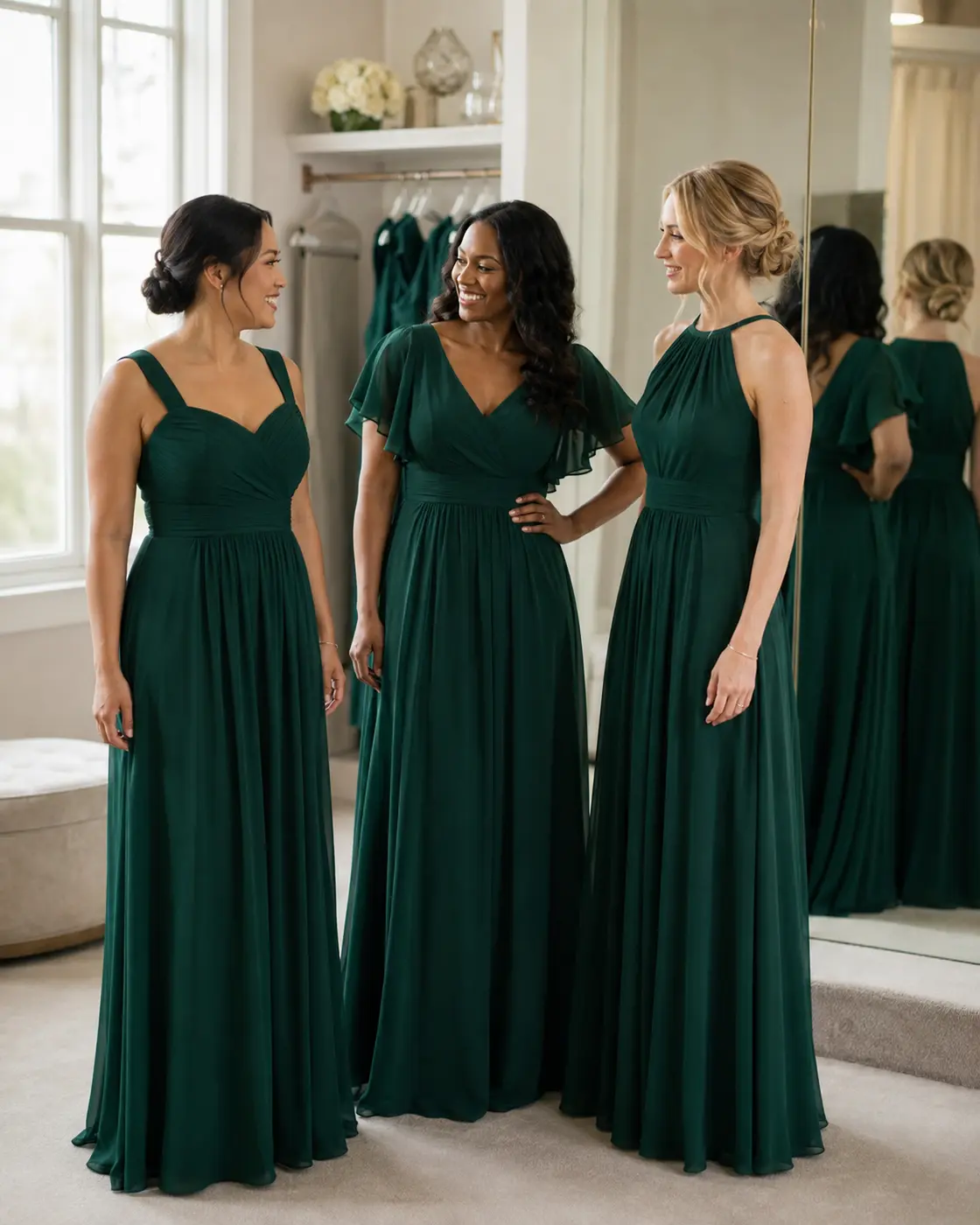
There are three dependable ways to coordinate a bridal party.
The Same Dress for Everyone
This creates the most uniform appearance and can work well when the group genuinely likes the same dress.
However, do not approve the style after seeing it on only one bridesmaid. A sample that works beautifully for one person may create support or coverage problems for another.
If possible, let every bridesmaid try the exact dress—or at least a dress with similar construction—before the group orders.
The Same Color and Fabric With Different Styles
This is often the most practical option.
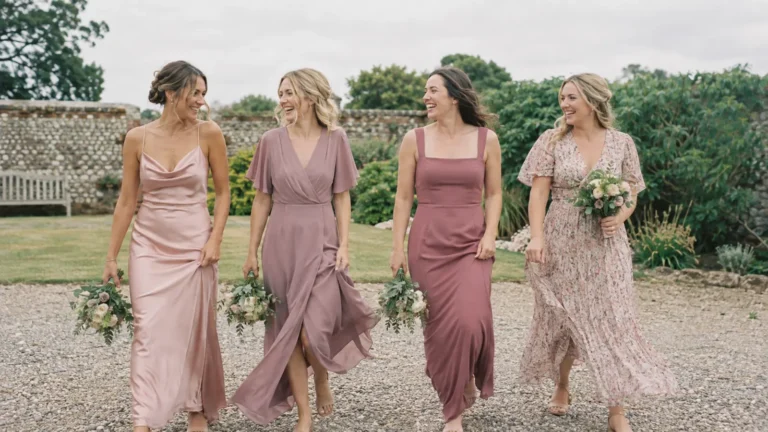
The designer controls the color and fabric, while each bridesmaid chooses from a selected group of silhouettes. Photographs remain cohesive, but everyone receives more control over neckline, straps, sleeves and fit.
The important detail is to use the same designer and official color whenever an exact match matters. Two companies can use the same color name while producing noticeably different shades.
A Coordinated Color Palette
This creates a softer, more editorial appearance, but it requires more direction.
Do not simply tell everyone to buy “something blue.” Give bridesmaids:
- Approved color swatches
- Examples of acceptable tones
- Fabric guidance
- Dress-length requirements
- A deadline for approval
The dresses should look intentionally varied rather than accidentally mismatched.
A useful test is to place screenshots or fabric swatches beside one another before anything is ordered. If one dress immediately dominates the group because it is much brighter, shinier or more casual, the palette needs adjustment.
Let Support Needs Influence the Style
Support should be discussed before the final style is chosen—not after dresses arrive.
A low back, narrow strap or deep neckline can limit bra options. Built-in cups may provide shape, but they do not automatically provide enough support for every bust.
Ask each bridesmaid privately whether she has any non-negotiable requirements involving:
- Bra coverage
- Strap width
- Neckline depth
- Back height
- Sleeves
- Shapewear
- Mobility
- Pregnancy or postpartum changes
- Religious or personal modesty
These conversations should not happen as a group evaluation of anyone’s body. Give each person a private way to explain what she needs.
A dress is not inclusive merely because it is offered in many sizes. The sample availability, construction, alterations and styling choices must also allow each person to participate comfortably.
Discuss the Real Budget Privately
The advertised dress price is not the complete cost.
A bridesmaid may also need to pay for:
- Shipping
- Sales tax
- Alterations
- Shoes
- Undergarments
- Accessories
- Hair and makeup
- Travel and accommodation
A $150 dress can become a much larger commitment after hemming and bodice alterations.
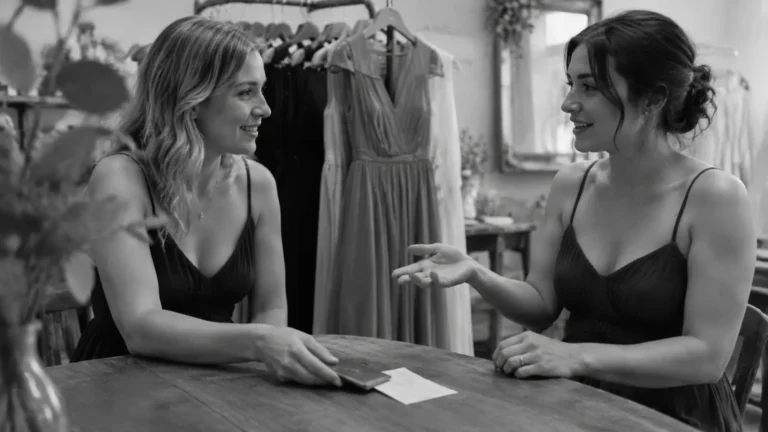
Before selecting a collection, ask each bridesmaid privately what dress budget feels manageable. Private conversations are important because people may not want to explain their finances to the group.
Use the lowest comfortable budget—not the average—as your working limit.
If the bride chooses an outfit that exceeds the budget previously discussed, covering the difference is the most considerate solution.
Measure Bodies, Not Clothing Labels
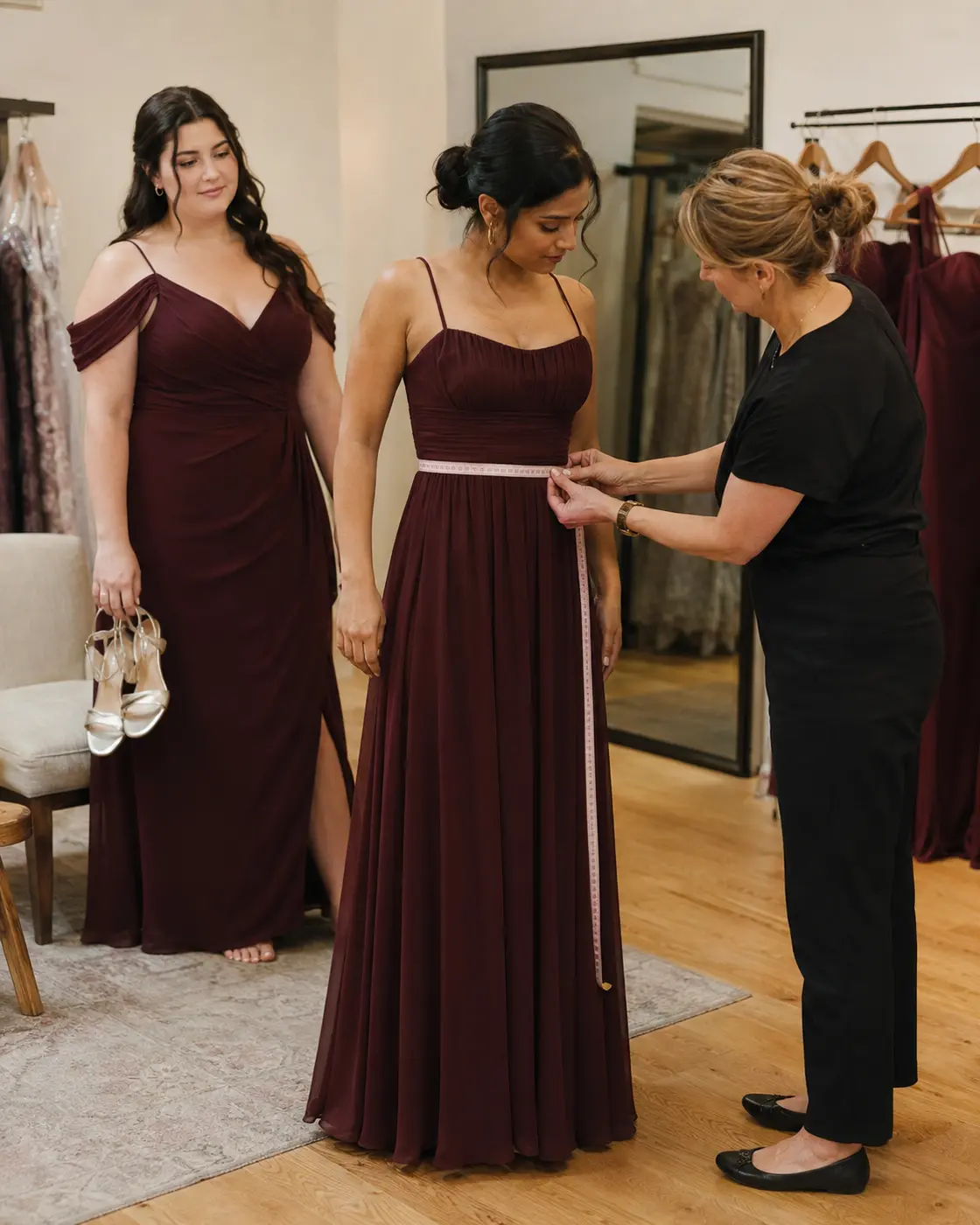
Bridal and occasion sizing may not match the size a person normally buys.
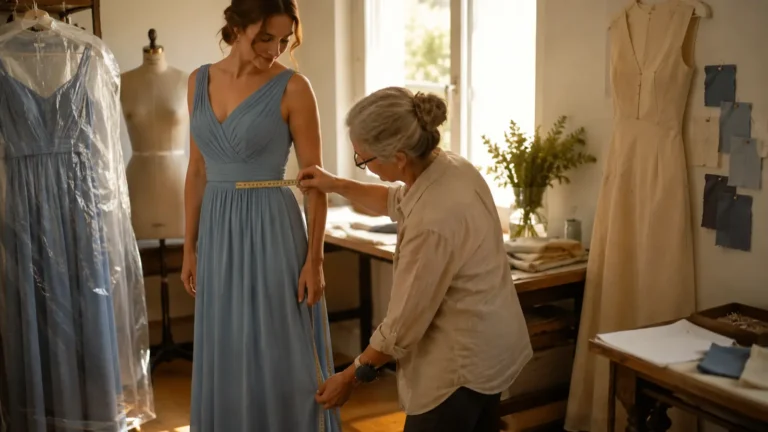
Each bridesmaid should use a soft measuring tape and compare her current bust, waist and hip measurements with the specific designer’s size chart. Do not choose a size based only on a favorite dress already in the closet.
When measurements fall across several sizes, the dress construction matters. A tailor can commonly take in an area that is too large, but adding room may be difficult when little seam allowance is available.
Custom sizing can help bridesmaids who fall between standard measurements, but it should not be presented as a guarantee that alterations will be unnecessary. Bodies, posture, shoe height and individual fit preferences can still affect the final result.
Measure close to the ordering date and follow the brand’s instructions carefully.
Use the Sitting Test Before Approving a Dress
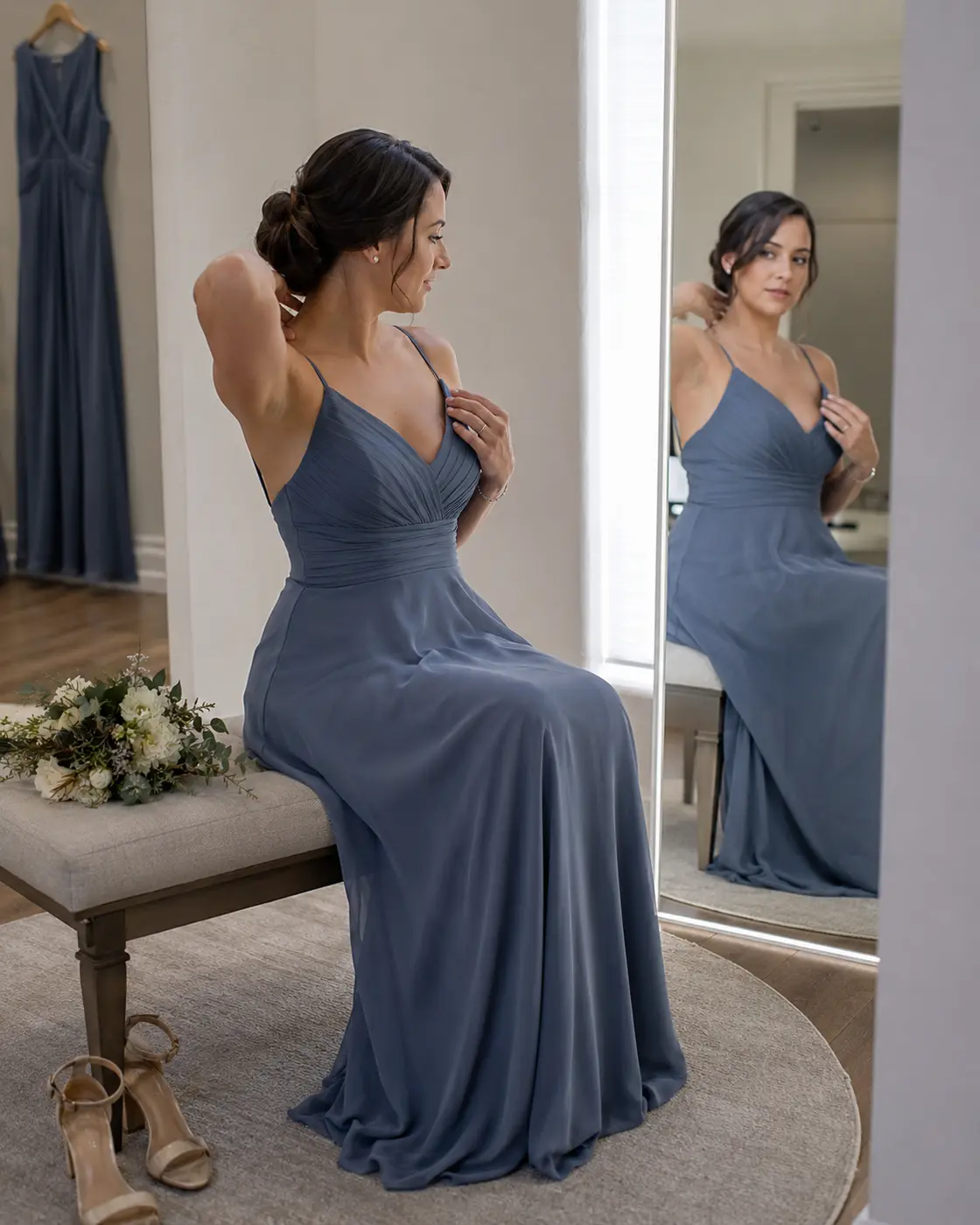
A bridesmaid dress should not be judged only while standing still in front of a mirror.
When trying it on, test the activities the wedding will actually require:
- Sit for several minutes
- Walk at a normal pace
- Climb a few stairs
- Raise both arms
- Bend forward
- Hug another person
- Take a long stride
- Dance briefly
- Carry a bouquet-sized object
Watch what happens to the neckline, straps, waist and slit.
A dress can look perfect for a photograph and still become exhausting when the wearer has to monitor it all day.
Our simplest rule is this:
If a bridesmaid must continually adjust the dress during the fitting, she will probably adjust it even more during the wedding.
That is a construction problem, not a confidence problem.
Choose Fabric for the Actual Conditions
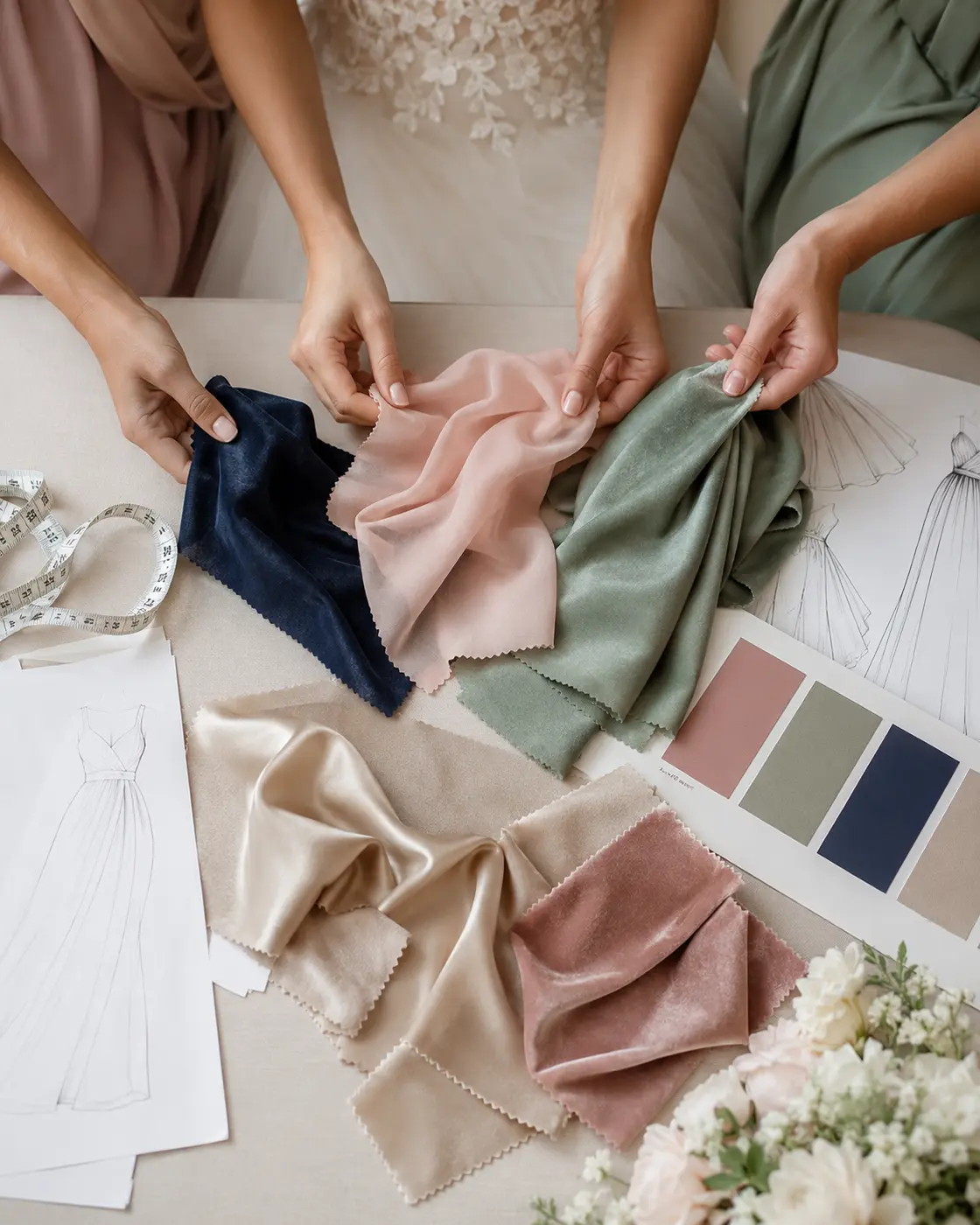
Color receives most of the attention, but fabric determines how a dress feels and moves.
Chiffon
Chiffon is light and creates soft movement. It works especially well for outdoor or warm-weather weddings, although multiple layers can still feel warmer than expected.
Satin
Satin creates a polished, formal appearance and photographs beautifully when it fits correctly. Because it reflects light and can show tension or wrinkles, precise fit is especially important.
Crepe
Crepe usually offers a clean, modern look with less shine. Depending on its weight and construction, it can either skim the body or reveal the lines of undergarments.
Velvet
Velvet feels rich and appropriate for colder seasons, but it can become uncomfortable in warm venues or under strong reception lighting.
Order fabric swatches before making the final color decision. Screens display colors differently, and a fabric’s finish can change dramatically between daylight, indoor lighting and flash photography.
Give Bridesmaids Enough Time
Bridesmaid dresses should not be treated like ordinary last-minute purchases.
A practical schedule is:
- Eight to nine months before: Discuss budgets, colors and support requirements.
- Six to eight months before: Select the collection and place orders.
- Two to three months before: Receive dresses and begin alterations.
- Three to four weeks before: Complete the final fitting.
- One week before: Try on the complete outfit with shoes and undergarments.
Some ready-to-ship dresses arrive much faster, but delays, exchanges and alteration schedules still need room.
David’s Bridal recommends shopping approximately six months ahead, while other bridal retailers commonly recommend ordering six to eight months before the wedding. The safest timeline is always the one provided by the specific designer or store.
Do Not Make One Bridesmaid the Fit Test for Everyone
Imagine that the bride chooses a narrow-strap satin dress after seeing it on her maid of honor. The color is beautiful, the waist sits correctly and the dress looks polished.
The other bridesmaids order it without trying anything similar.
When the dresses arrive, one bridesmaid cannot wear her preferred supportive bra. Another discovers that the waist seam sits directly against her rib cage when seated. A third needs extensive alterations because the bust and hip measurements place her in different sizes.
The problem was not that their bodies failed the dress.
The group treated one successful fitting as proof that the construction would work for everyone.
A better approach would have been to preserve the satin color and floor length while offering two or three approved bodices with different straps, necklines and back heights.
The photographs would still look coordinated, but the dresses would serve the people wearing them.
The Wedding Dress Style Group Test
Before approving the bridesmaid plan, ask these five questions:
1. The Identity Test
Does each bridesmaid have at least one option she would willingly choose for herself?
2. The Support Test
Can everyone wear the support or undergarments she needs without complicated last-minute solutions?
3. The Budget Test
Can the person with the smallest comfortable budget afford the dress, alterations and required accessories?
4. The Movement Test
Can everyone sit, walk, bend, hug and dance without repeatedly adjusting the outfit?
5. The Group Test
When the dresses are viewed together, do they share enough color, fabric, length or formality to look intentional?
If the plan fails one of these tests, adjust it before ordering. Changing one neckline or widening the approved selection is easier than solving several fit problems weeks before the wedding.
A Clear Message to Send Your Bridesmaids
Once the decision is made, send one message containing all the important information:
- Approved designer or store
- Exact color name
- Fabric
- Approved styles
- Required length
- Maximum budget
- Ordering deadline
- Expected delivery period
- Alteration reminder
- Shoe and accessory instructions
- Who to contact with private fit concerns
Clear instructions prevent bridesmaids from searching through old group messages and reduce the chance of someone ordering the wrong shade or fabric.
Avoid sending a stream of changing ideas. Make the final decision, organize the information and then give everyone enough time to act.
Our Final Perspective
The best bridesmaid dresses do not erase the differences between the women wearing them.
They create a shared visual language while leaving room for different bodies, budgets and comfort needs.
Choose a few elements that unite the group. Give bridesmaids meaningful control over the parts that affect fit. Discuss money privately. Measure carefully. Test every dress through real movement, not just mirror poses.
Your bridal party can look cohesive without looking identical.
More importantly, the people standing beside you can spend the wedding participating fully instead of thinking about straps, seams, shapewear or a dress they never felt comfortable wearing.