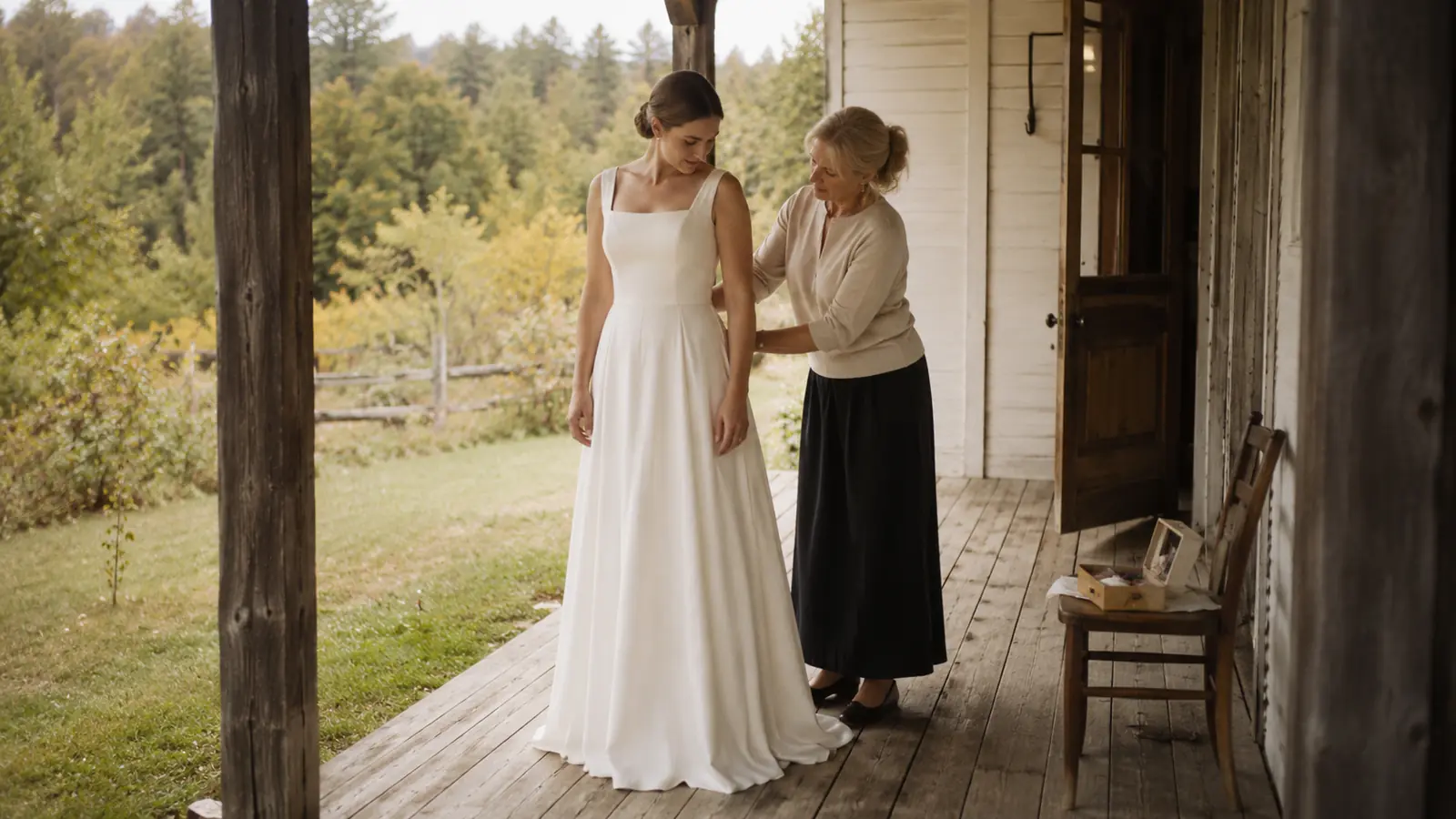
A wedding dress can zip completely and still fit incorrectly.
That is one of the most important things to understand before a bridal appointment or alterations fitting. Closing the zipper only proves that the dress can close. It does not tell you whether the bust is supported, the waist is correctly positioned or the gown will remain comfortable after several hours.
A good wedding dress fit should create security without demanding stiffness. You should be able to breathe, walk, sit and hug someone without continually checking whether the neckline moved or the skirt twisted.
At Wedding Dress Style, we recommend judging the fit after the initial mirror moment. Stop posing, allow your shoulders to relax and observe what the dress does when your body returns to normal.
These nine signs will help you recognize when the fit is working—and when the dress is asking your body to compensate for a problem in the garment.
1. The Bodice Stays in Place Without Your Help
A properly fitted bodice should remain in position when you move.
You should not need to pull up a strapless neckline every few minutes, push cups back into place or repeatedly smooth the dress downward. If the bodice moves every time you raise your arms, the problem is not necessarily your posture. It may be too loose, too long through the torso or inadequately supported inside.
To test it, stand naturally and mark where the neckline sits. Raise your arms, lower them and take several steps. Then check the neckline again.
A small amount of movement can be normal, particularly with soft or unstructured gowns. A significant shift means the dress may need adjustment.
Remember that support should come from the dress’s construction—not simply from making the top as tight as possible. Boning, cups, lining, seams and the waist fit can all help hold a bodice in place.
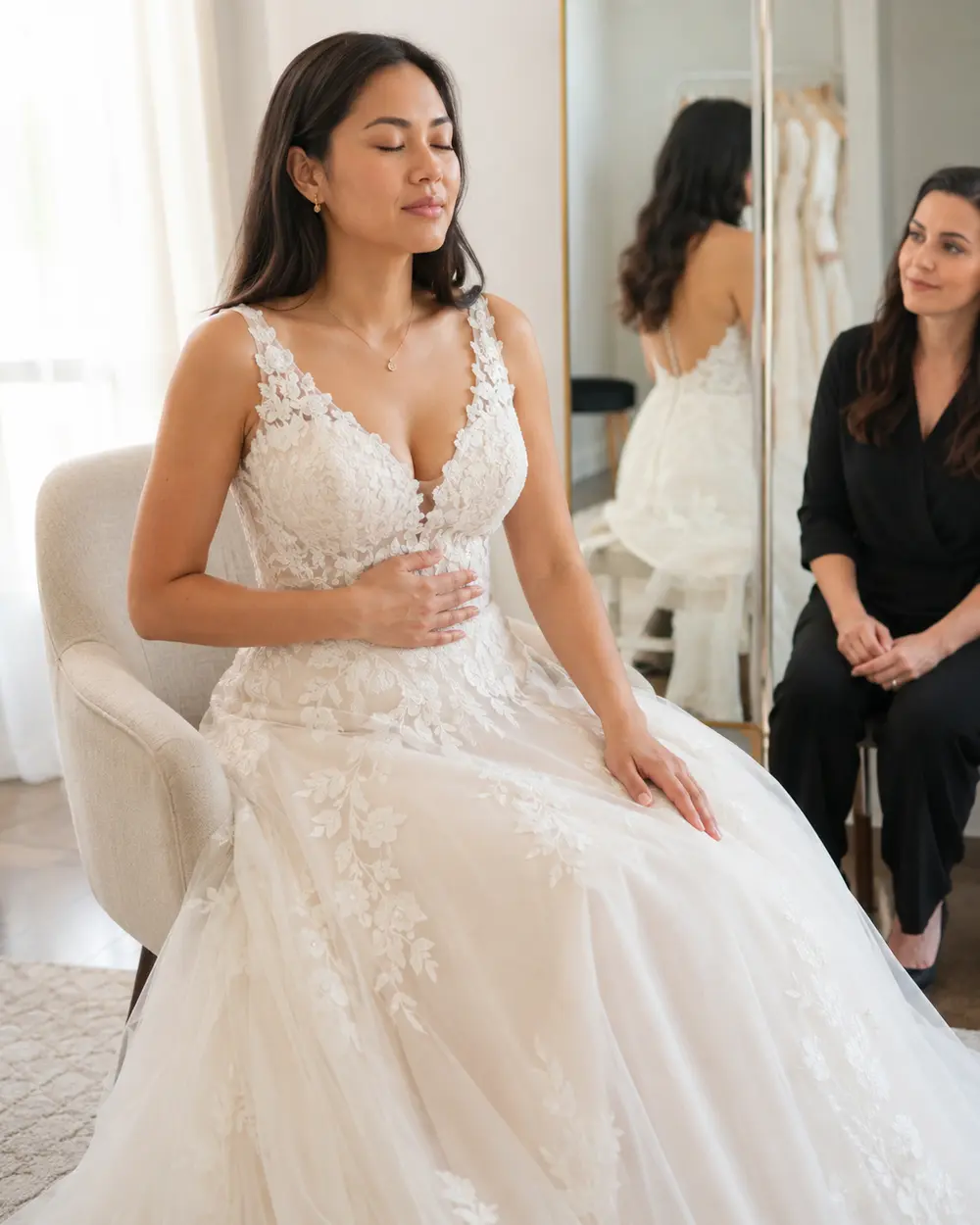
2. You Can Take a Full Breath
A secure wedding dress will often feel closer to the body than everyday clothing. That does not mean breathing should become a deliberate activity.
Take a slow, full breath into your ribs and abdomen. You should feel the gown around you, but you should not experience sharp pressure, panic or the sense that the zipper is carrying all the tension.
Then speak a full sentence. Sit down and breathe again.
A common fitting-room mistake is judging tightness only while standing very straight with the stomach held in. That posture may last for a photograph, but it will not last through a ceremony, dinner and reception.
The right fit should support your body as it naturally changes while you breathe and move.
3. The Neckline Lies Smoothly Against Your Body
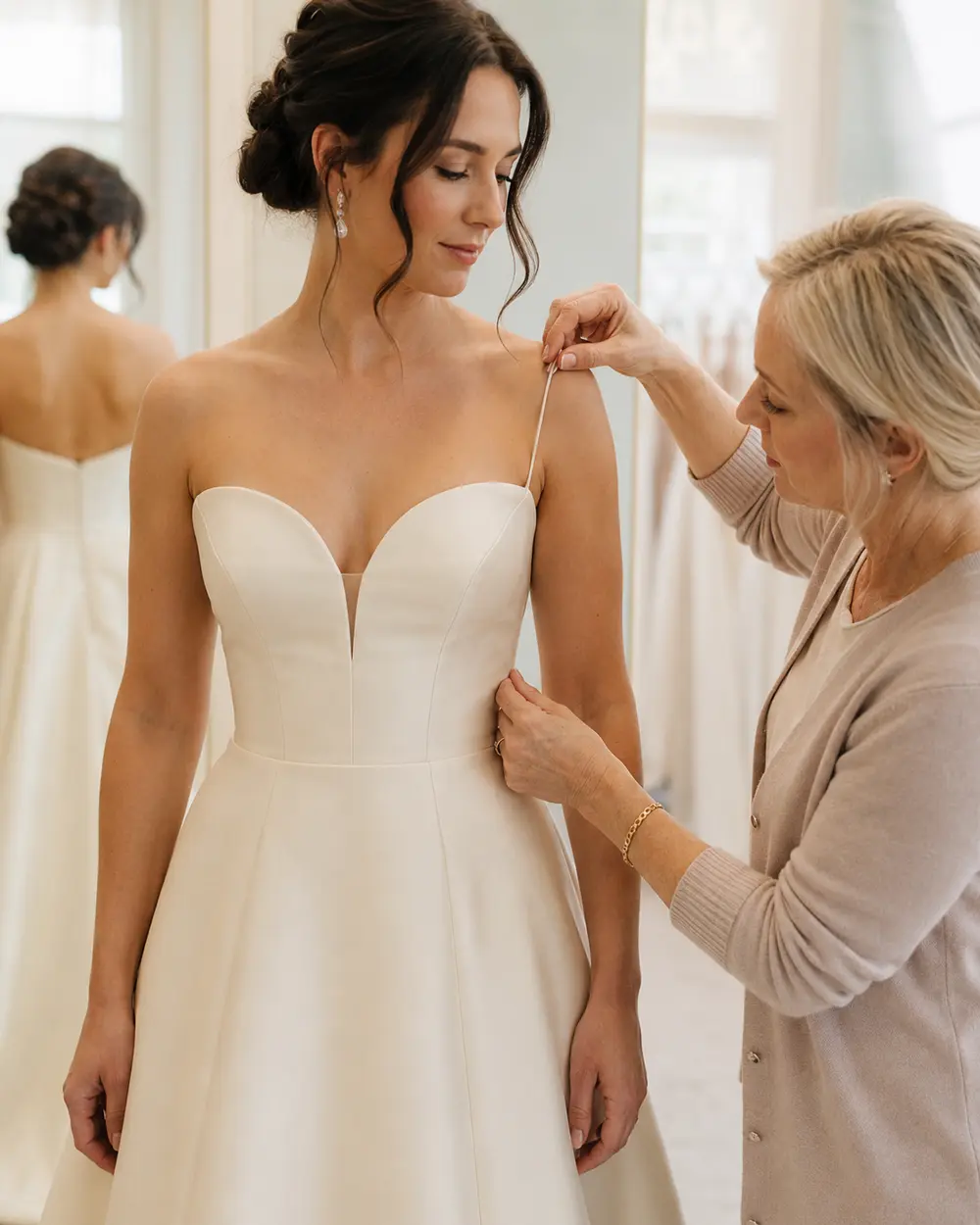
Look closely at the neckline from the front and side.
It should follow the intended shape of the dress without standing noticeably away from the body, folding inward or cutting sharply into the skin.
Gaping does not always mean the entire dress is too large. The cups may have the wrong shape, the straps may be too long or the bodice may not match your torso length.
Pulling does not always mean you need a larger dress either. The bust may need more internal space, the boning may be positioned incorrectly or the neckline may require reshaping.
This is why tightening every available seam is not always the answer. A skilled bridal alterations specialist should identify where the imbalance begins before removing fabric.
Check the neckline while your arms are relaxed—not while you are holding the dress in its ideal position.
4. The Waistline Sits Where the Dress Designed It to Sit
Not every wedding gown uses the natural waist. Some have a basque, empire, dropped or asymmetrical waistline.
Whatever the design, that seam or transition point should land intentionally on your body.
When it sits too high or too low, the entire silhouette can appear slightly wrong even when you cannot immediately explain why. The bodice may wrinkle, the skirt may begin opening at an unflattering point or your torso may appear visually shortened.
Place your hands around your natural waist and compare it with the gown’s waist seam. If they are not aligned, ask the stylist whether the difference is intentional.
Torso length is often the hidden issue. Two brides with the same bust and waist measurements may still need different bodice adjustments because their proportions between the shoulder, bust and waist are different.
The waist seam should not look as though it is searching for its correct position.
5. The Fabric Does Not Show Persistent Stress Lines
Fabric often reveals a fitting problem before discomfort becomes obvious.
Horizontal lines across the bust or hips can indicate tension. Diagonal lines moving toward a seam may reveal that the fabric is being pulled from the wrong location. Bunching at the lower back can suggest excess length, excess width or an imbalance elsewhere in the bodice.
However, not every wrinkle means that the dress is too tight.
Soft fabrics naturally move and fold. Crepe can reveal subtle underlayers and body contours. Satin reflects light in a way that makes small areas of tension more visible. Lace motifs can also create shadows that resemble wrinkles in photographs.
The useful question is whether the same lines remain after you change posture and the dress is correctly arranged.
If a wrinkle disappears when you relax, it may be normal movement. If it repeatedly points toward the same seam, zipper or pressure point, show it to the alterations specialist.
Do not immediately assume the solution is shapewear. The dress should be fitted to your body before your body is asked to correct the dress.
6. You Can Walk Without Changing Your Natural Step
Take at least ten normal steps in the gown.
Do not use the tiny, careful fitting-room steps people instinctively take around a sample dress. Walk as naturally as the space allows.
An A-line gown should provide room for your legs without forcing you to kick the skirt forward. A fit-and-flare dress will naturally feel closer through the hips and thighs, but it should not reduce every step to a shuffle.
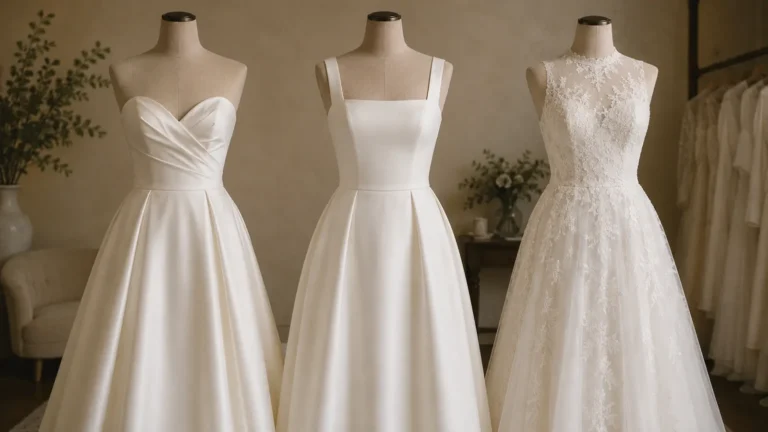
If you are comparing these shapes, read our guide to A-line vs. fit-and-flare wedding dresses to understand how their release points change movement.
Also test:
- Turning in both directions
- Walking backward several steps
- Stepping onto a low platform
- Climbing a stair, if the boutique allows it
- Taking a few simple dance steps
Your wedding walk may be slower and more deliberate than your everyday walk, but it should still feel like movement—not garment management.
7. The Straps and Sleeves Move With You
Straps should lie securely on the shoulders without falling, digging deeply or carrying the entire weight of the dress.
If shortening a strap dramatically lifts the bust or changes the waist position, the bodice may require additional work. Straps can stabilize the neckline, but they should not be used to pull an incorrectly fitted bodice into place.
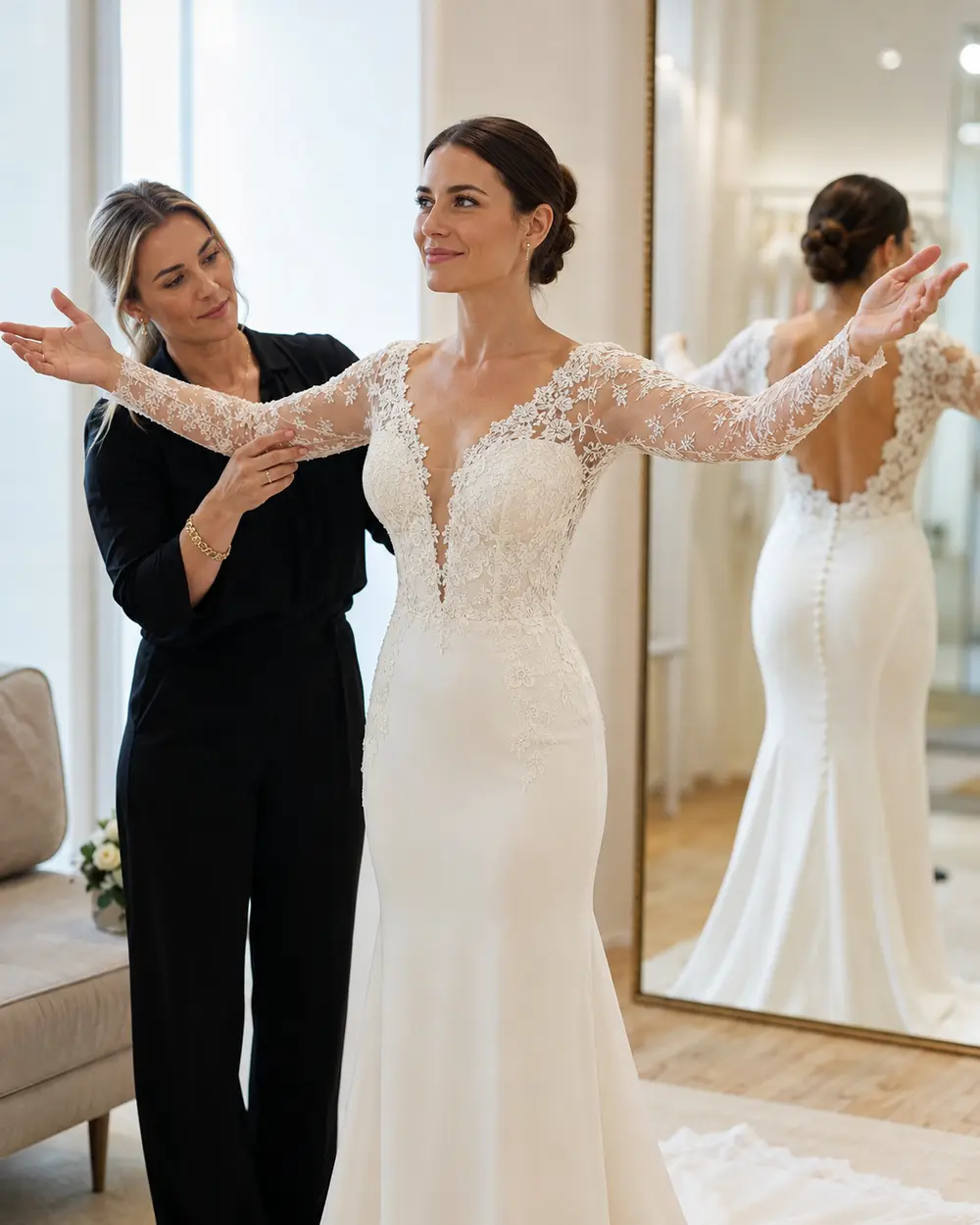
Sleeves require a separate test.
Reach forward as though you are hugging someone. Lift your arms to approximately shoulder height and gently move them backward. Notice whether the sleeve pulls the entire bodice upward or creates uncomfortable pressure around the armhole.
Some structured or off-the-shoulder designs naturally limit the highest point your arms can reach. The question is whether that restriction is acceptable during your real wedding.
Imagine hugging guests, holding a bouquet, eating dinner and dancing. If the dress requires you to keep your elbows permanently close to your sides, decide whether the visual effect is worth that limitation.
8. The Hem Works With Your Actual Wedding Shoes
The hem cannot be evaluated accurately without the correct shoe height.
Even a small difference between your fitting shoes and wedding shoes can change where the gown meets the floor. Bring the exact pair whenever possible. If you plan to change into flats or sneakers for the reception, discuss that before the hem is finalized.
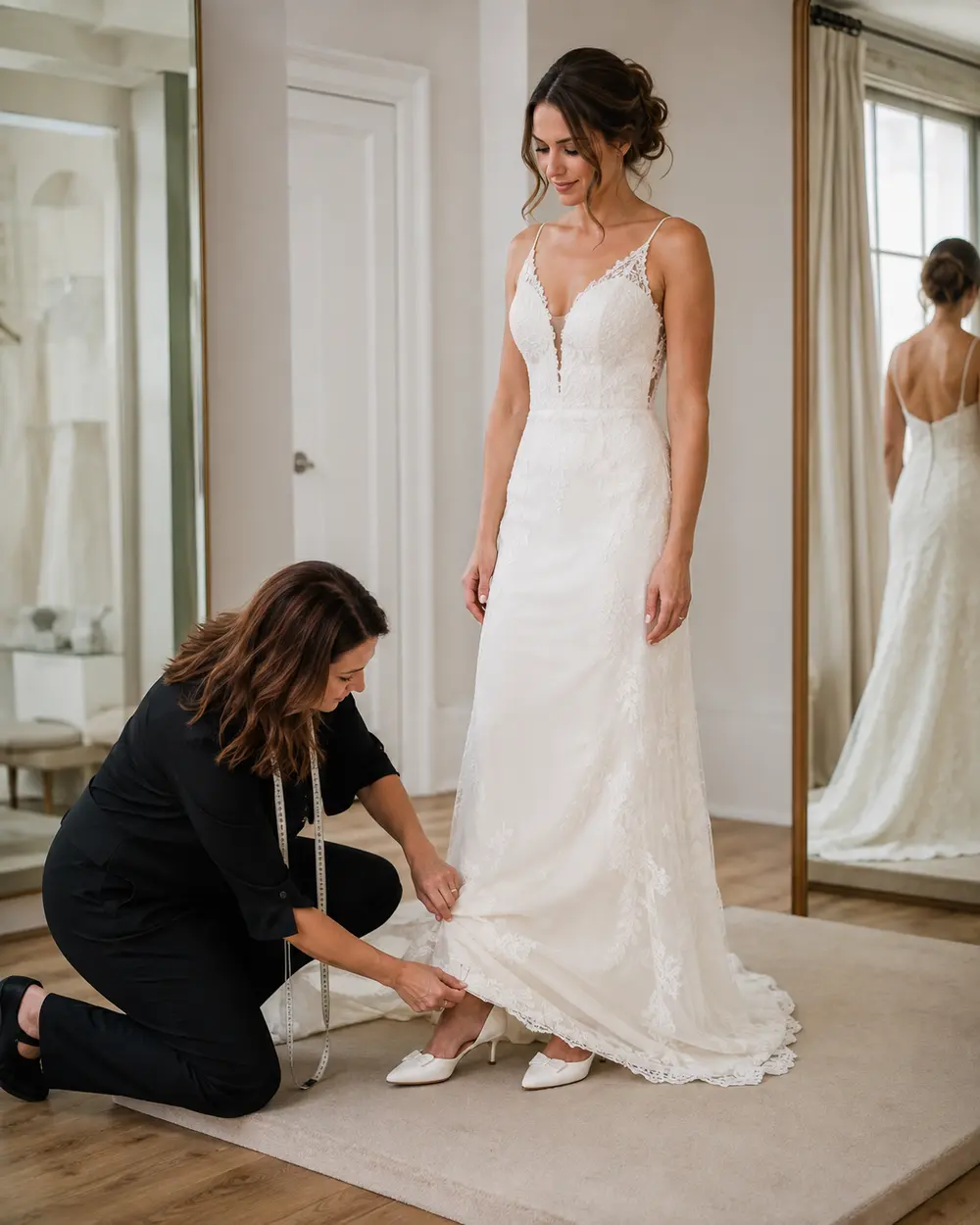
For a floor-length gown, the front should appear long and elegant without repeatedly catching beneath your shoes.
Walk forward, turn and stop. If you must lift the entire front of the dress for every step, the hem may still be too long—or the layers may not have been balanced correctly.
Check each layer rather than only the visible outer fabric. Linings and underskirts can cause tripping even when the top layer looks correct.
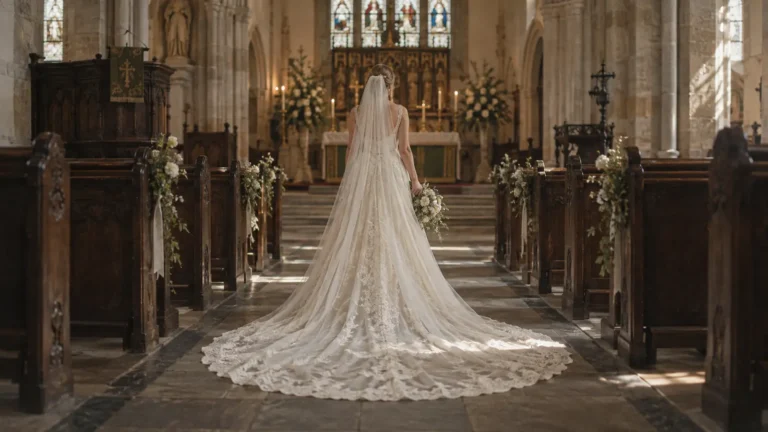
The train is different from the front hem. It is designed to extend behind you during the ceremony, but it should have a practical bustle arrangement for later movement.
Ask someone who will attend the wedding to learn how the bustle works before the final fitting ends. A beautiful bustle is not helpful if nobody can reconstruct it on the wedding day.
9. You Stop Adjusting the Dress
This is the sign brides often overlook.
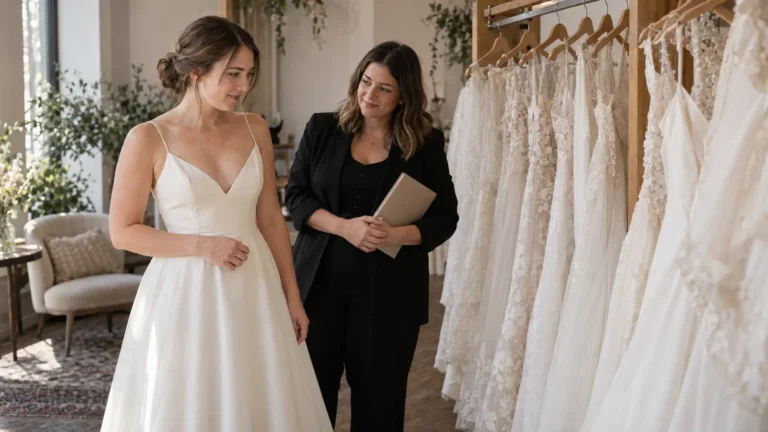
Stand in the gown for several minutes while speaking with the stylist. Do not deliberately test anything. Simply notice what your hands do.
Are you repeatedly:
- Pulling the neckline upward?
- Pushing the waist seam downward?
- Moving the straps back onto your shoulders?
- Smoothing the same wrinkle?
- Holding the stomach unnaturally tight?
- Rearranging the skirt after every step?
One adjustment may be habit. Repeatedly touching the same area is information.
A well-fitted wedding dress does not have to feel like comfortable loungewear, but it should eventually become quiet. Once it is correctly positioned, your attention should be able to move away from the garment.
We call this the quiet-dress test: when the fitting is right, you stop managing the gown and begin thinking about the wedding.
Sample Fit Is Not Final Fit
Most boutique samples were not made for the individual bride trying them on.
A stylist may use clips or temporary panels to approximate the fit. The sample may have stretched from repeated wear, and its cups, straps or hem may sit differently from a newly ordered gown.
Clipping can help you imagine the silhouette, but it cannot perfectly demonstrate how the correct size will feel.
When a sample is significantly larger, the clips may pull fabric backward and make the front look smoother or tighter than the actual gown will. When it is too small, an open back can alter the position of the bust and side seams.
Use the sample to judge the design, general proportions and emotional reaction. Treat precise fit predictions with caution.
Before ordering, ask the stylist:
- Which body measurement determines my recommended size?
- Where am I between sizes?
- How will ordering for my largest measurement affect other areas?
- Which expected alterations are straightforward?
- Does this design have enough seam allowance for adjustment?
- Will lace, beading or boning make alterations more complex?
Bridal sizing is only a label. Choose the size that gives the alterations specialist enough garment to create the correct final fit.
What Alterations Can Usually Improve
Many common fit issues can be adjusted by an experienced bridal alterations specialist, including:
- Strap length
- Bodice width
- Bust support and cup placement
- Waist shaping
- Hem length
- Sleeve fit
- Skirt fullness
- Train and bustle arrangements
The difficulty depends on the gown’s construction.
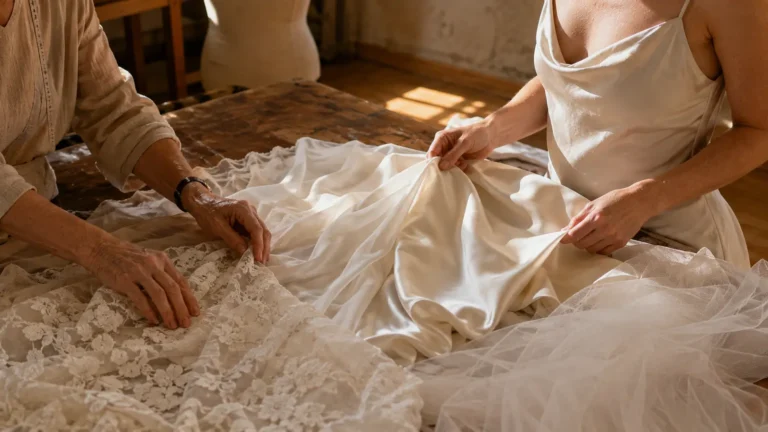
Plain seams are generally easier to access than seams covered with lace appliqués or dense beading. Letting a gown out also depends on how much fabric exists inside its seam allowances. Significant changes to the neckline, waist position or internal structure may be possible, but they are closer to reconstructing the dress than making a small adjustment.
Ask about feasibility and estimated cost before purchasing if you already know the gown needs major changes.
The Wedding Dress Style Five-Minute Fit Test
Before approving the final fit, spend five uninterrupted minutes doing the following:
- Stand with your normal posture.
- Take ten full-length steps.
- Sit completely for one minute.
- Take three slow, full breaths.
- Raise and move your arms.
- Hug the person who came with you.
- Look at the dress from the front, side and back.
- Stop posing and notice whether you adjust anything.
Wear the undergarments and shoes planned for the wedding. If you are using fashion tape or added cups, test the gown with those items in place.
Do not allow embarrassment to keep you silent. A fitting is exactly where pressure, gaping, restricted movement or uncertainty should be discussed.
“It will probably be fine” is not a fitting solution.
How the Right Fit Should Feel
The right wedding dress fit is not defined by how tightly the gown follows your body.
It is defined by balance.
The bodice stays in position without being constantly pulled upward. The waistline lands intentionally. The fabric lies smoothly without persistent stress. The hem works with your shoes, and the gown allows the movement your wedding will require.
Most importantly, you can return to your natural posture inside it.
If you are still deciding which overall shape gives you the support and movement you want, begin with our guide on how to choose the right wedding dress silhouette.
Our Final Perspective
A wedding dress should fit the bride who breathes, sits, eats, hugs and dances—not only the bride standing perfectly still on a fitting-room platform.
Look beyond the zipper. Watch the neckline, waist and fabric. Test your full stride. Sit long enough for your body to relax, and notice whether your hands keep returning to the same problem.
When the fit is right, the gown feels secure—but your body still feels like your own.
That is the standard worth waiting for.