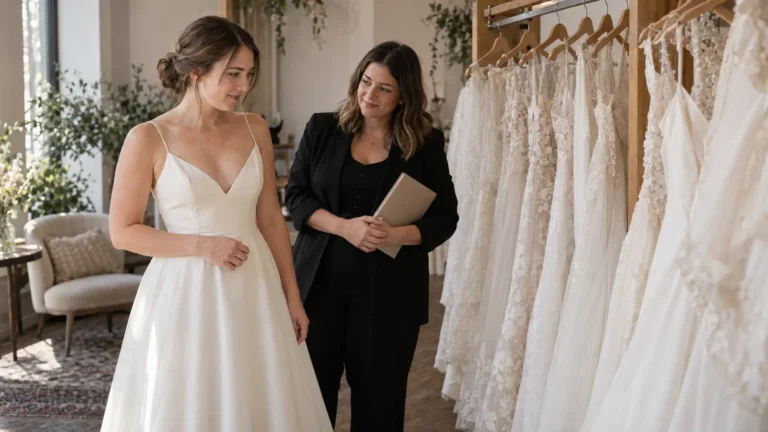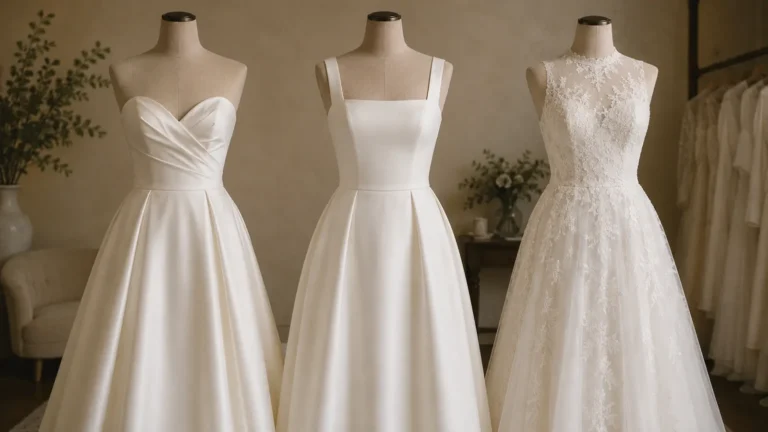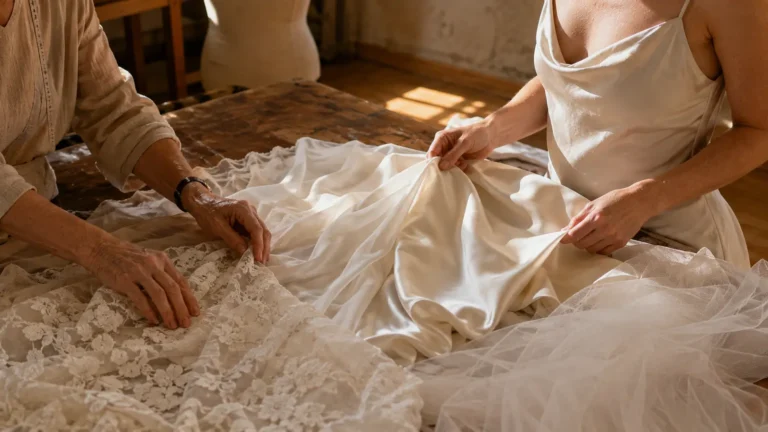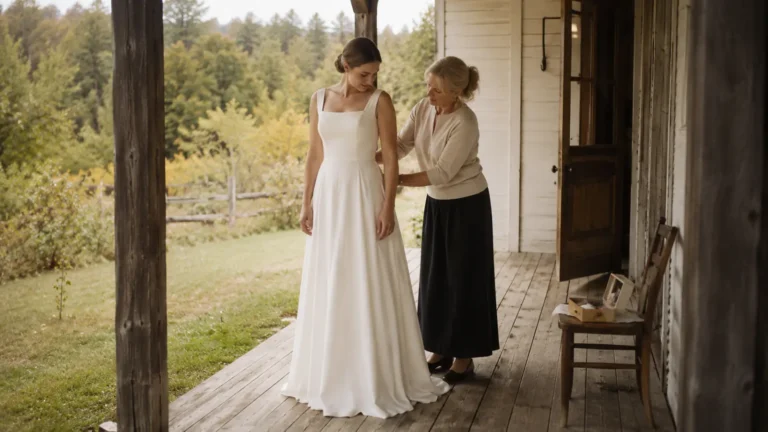
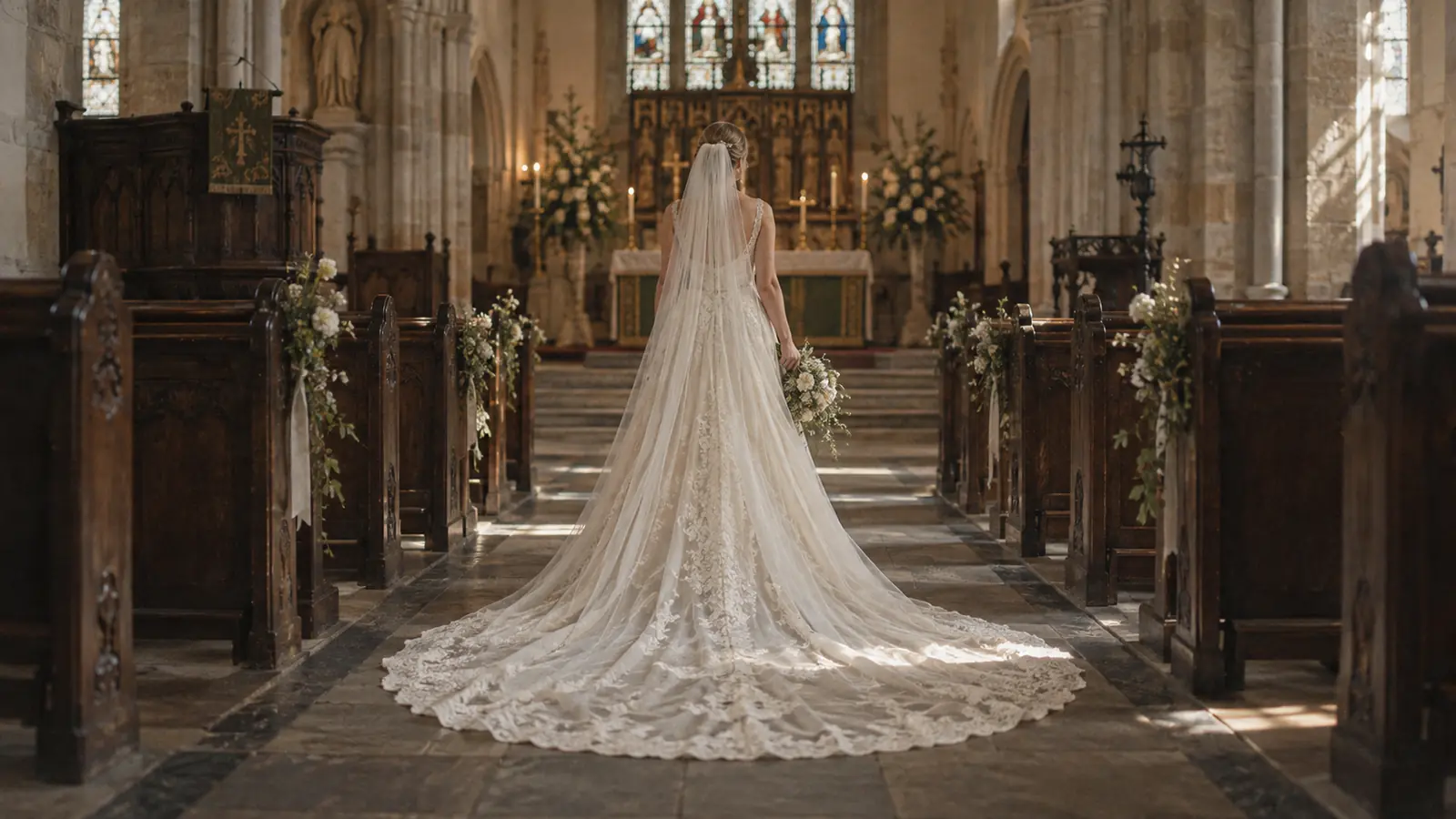
Wedding dress trains can transform even the simplest gown. A small sweep of fabric adds movement and polish, while a long cathedral train creates a dramatic entrance that naturally draws every eye toward the bride.
The beauty of a train is easy to notice in photographs, but choosing one involves more than deciding how dramatic you want your dress to look. You also need to think about the venue, the fabric, the aisle, the weather and how freely you want to move after the ceremony.
There is no train length that every bride should choose. The right one is the train that complements your gown and still allows you to enjoy the wedding you are actually planning.
This guide explains the most common wedding dress trains, how each one feels and what to consider before choosing yours.
What Is a Wedding Dress Train?
A wedding dress train is the section of the skirt that extends behind the gown and trails along the floor. It may begin at the waist, lower back or hem, depending on how the dress is constructed.
Trains range from subtle extensions that barely touch the floor to several feet of fabric designed for a formal entrance. Some are permanently attached to the gown, while others can be removed after the ceremony.
The train influences more than the back of the dress. It can change how the entire silhouette moves and how much visual weight the gown carries. A fitted crepe dress with a sweep train feels very different from a structured ball gown with a cathedral-length train, even if both dresses appear simple from the front.
Understanding the different options will make it easier to communicate what you want during a bridal appointment.
Sweep Train
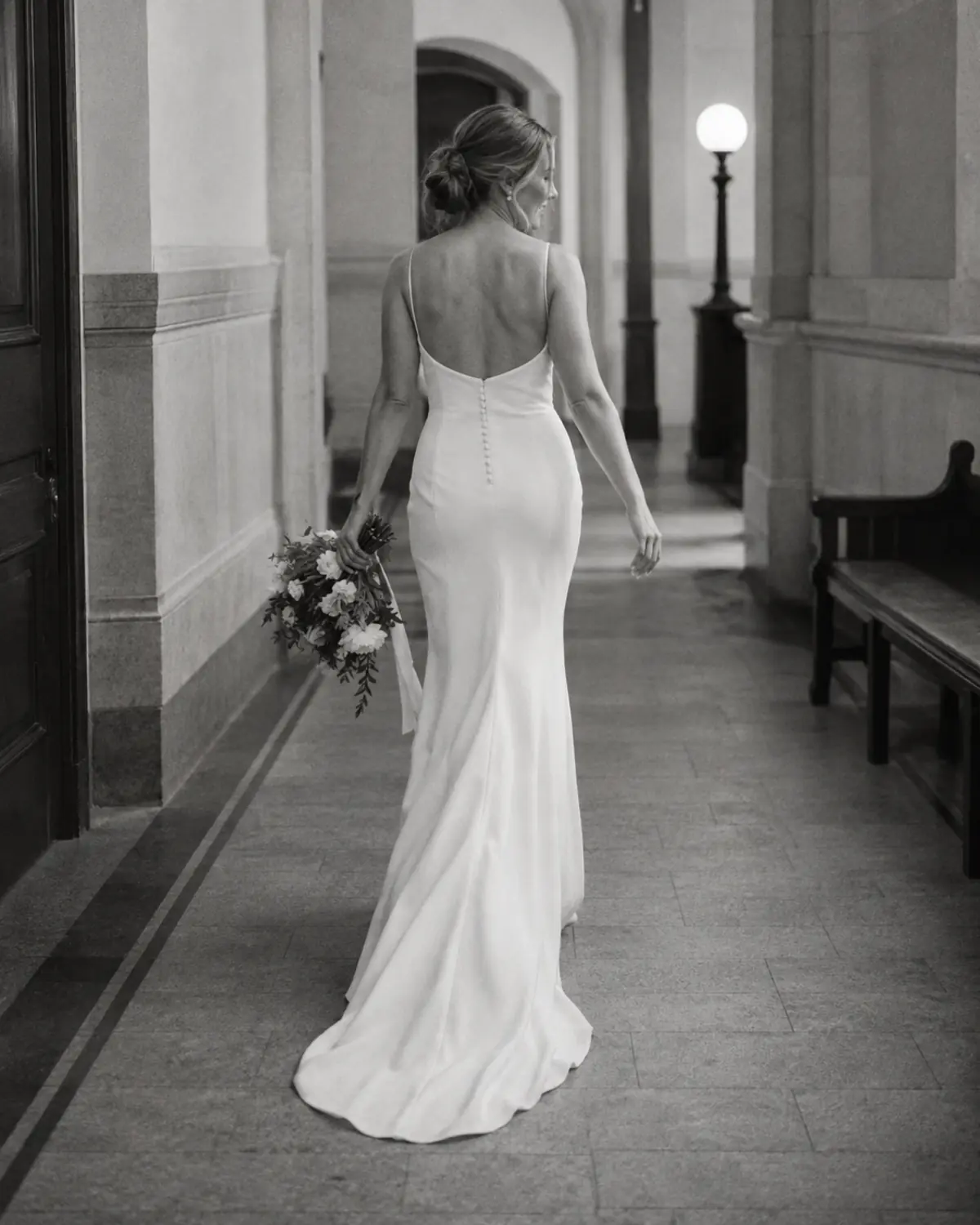
A sweep train, sometimes called a brush train, is the shortest traditional option. It extends only slightly beyond the hem and appears to brush the floor behind the bride.
This length adds a finished bridal detail without creating a large amount of fabric to manage. It works especially well with slim A-line, sheath, column and fit-and-flare dresses.
A sweep train may be right for you if you want:
- A subtle extension rather than a dramatic train
- More freedom to walk and turn
- A dress for a civil, casual or outdoor wedding
- Less fabric touching the ground
- A train that may not require an elaborate bustle
Although it is easier to manage than longer styles, a sweep train can still collect dirt outdoors. Ask how the fabric should be cleaned and whether a small wrist loop or bustle would be useful.
Court Train
A court train falls between a sweep and a chapel train. It normally extends from the waist or lower part of the skirt and trails a short distance behind the gown.
This style provides more presence than a sweep train without becoming highly formal. It can complement A-line gowns, fitted dresses and softer ball gowns.
A court train is worth considering when you want the dress to look noticeably bridal from the back but still feel manageable throughout the day. It can suit indoor venues, garden ceremonies and smaller churches where an extremely long train might feel out of proportion.
The additional fabric will probably require some attention when you turn, walk through narrow spaces or pose for photographs. However, it is usually easier for an attendant to arrange than a cathedral or royal train.
Chapel Train
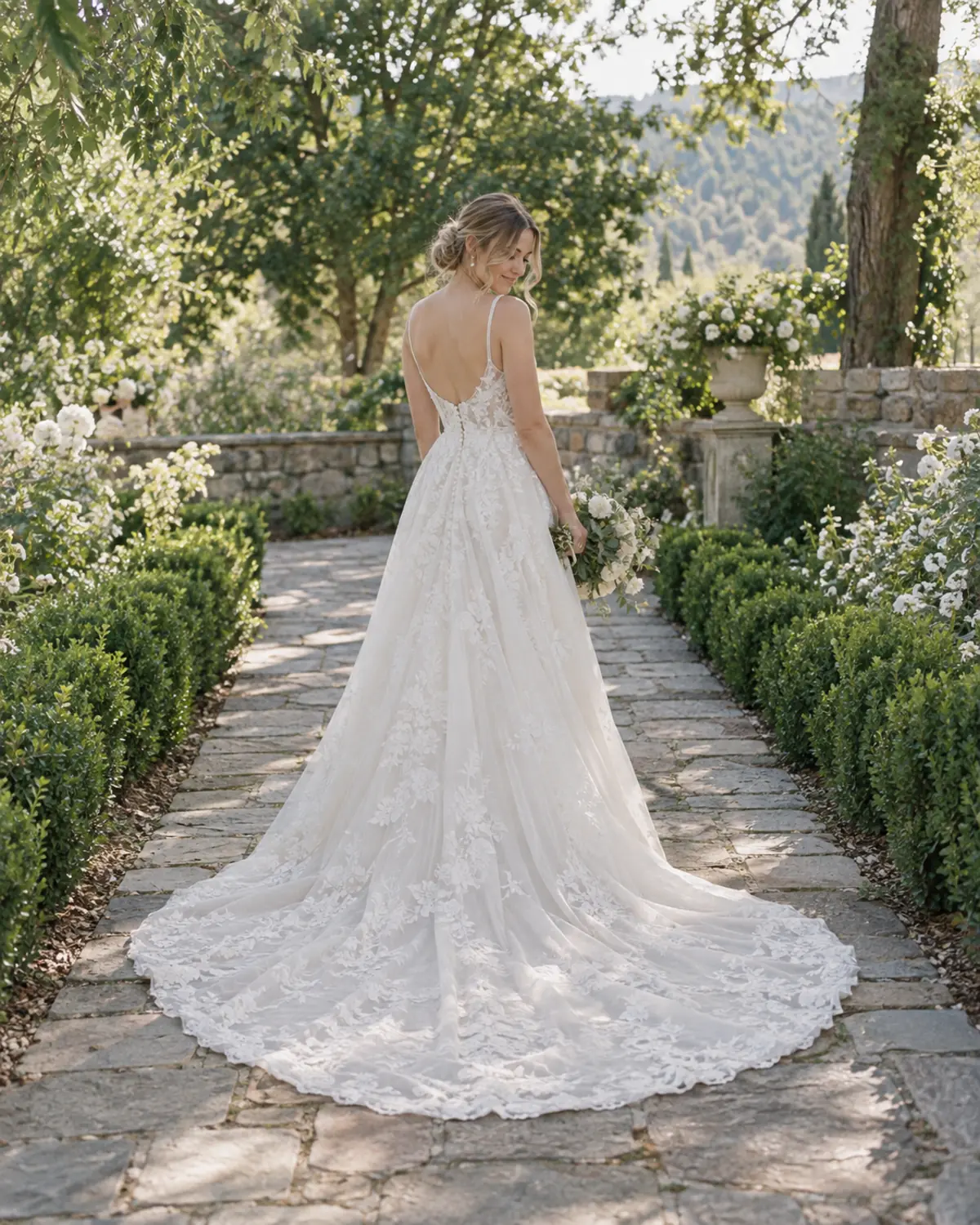
The chapel train is one of the most versatile and familiar wedding dress trains. It extends farther than a court train but remains shorter and easier to handle than a cathedral train.
This length creates a clear bridal statement without overwhelming most venues. It works with many silhouettes, including A-line, ball gown, mermaid and fit-and-flare dresses.
A chapel train can be a good choice if you want:
- A traditional bridal appearance
- Enough length to show lace or embroidery
- A train that photographs beautifully
- A balance between drama and practicality
- A style suitable for both formal and semi-formal weddings
Because a chapel train contains more fabric, you will probably want a bustle for the reception. Your seamstress can recommend a bustle based on the train’s weight, construction and decorative details.
Before deciding, walk in the sample gown and practice turning. The train should follow your movement rather than feel as though it is constantly pulling against you.
Cathedral Train
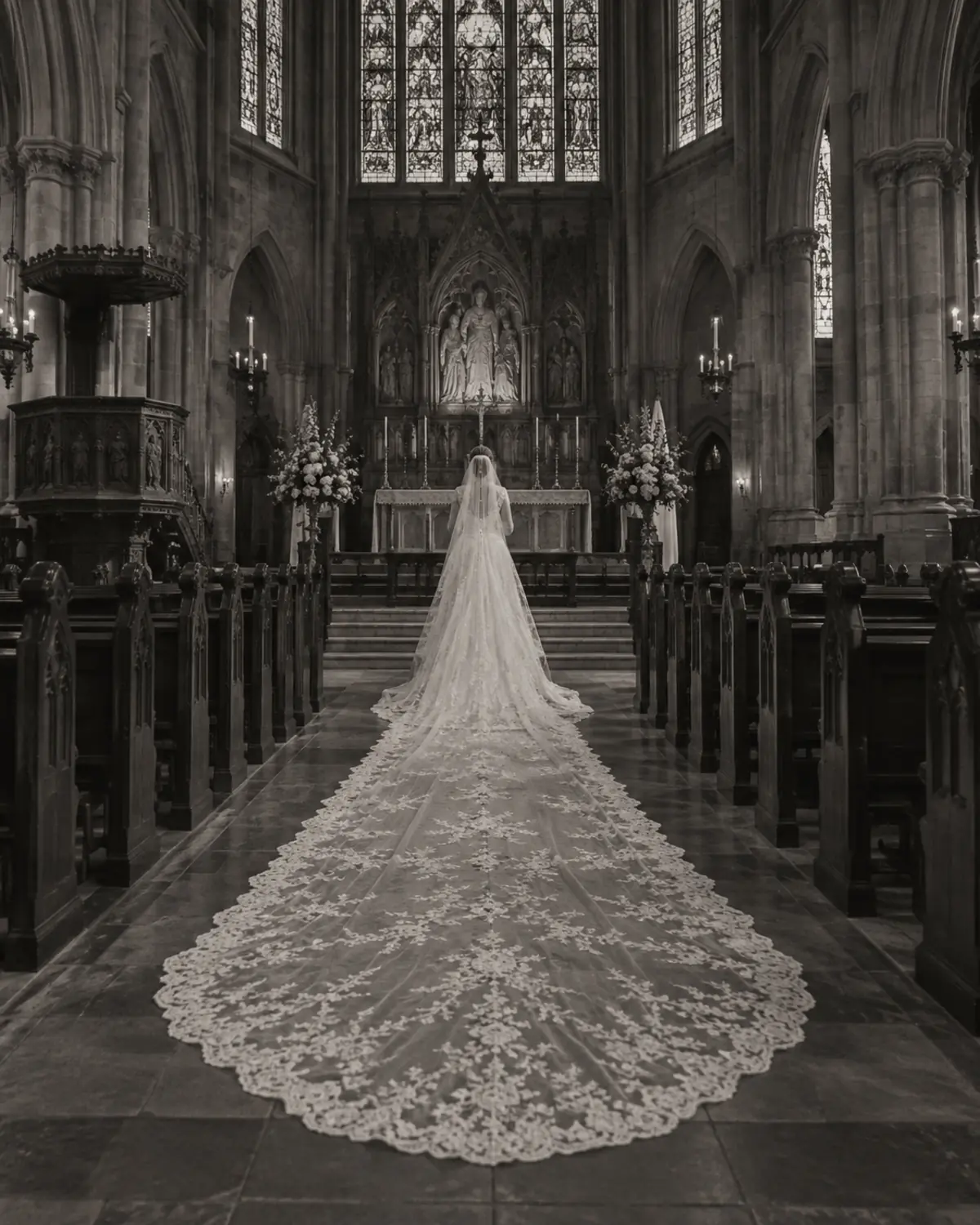
A cathedral train creates a more dramatic and formal effect. It extends several feet behind the bride and is designed to make an impact during the ceremony.
The style is often associated with large churches, historic buildings, ballrooms and other spacious venues. It can also look beautiful in outdoor settings when there is a clean, even aisle and enough room to arrange the fabric.
Cathedral trains frequently appear on structured ball gowns, lace dresses and fitted gowns with detailed backs. Their generous length provides space for appliqués, embroidery, buttons and scalloped lace edging.
The visual impact comes with practical considerations. A cathedral train may require:
- Help arranging it before the ceremony
- A wide and clear aisle
- Extra time when moving between locations
- Protection from wet or uneven ground
- A secure bustle for the reception
- Additional attention during transportation
If you love this length, ask someone in your wedding party to learn how to position it. That person can straighten the train before you walk down the aisle and arrange it again for portraits.
Royal or Monarch Train
A royal train, also known as a monarch train, is the longest and most theatrical option. It extends well beyond a cathedral train and creates a grand, ceremonial appearance.
This train is most at home in very large formal venues where there is enough space to display it properly. It often accompanies structured gowns with full skirts, intricate embroidery or dramatic lace.
A royal train can produce unforgettable photographs, but it requires planning. It is not a style that can be ignored once the ceremony begins. Several people may be needed to arrange and carry it, and the fabric will need protection while you move between spaces.
Before choosing a royal train, consider the full journey of your wedding day. Think about getting into a car, walking through doorways, using stairs and moving between the ceremony and reception.
If you want the ceremony drama without managing the length all evening, look for a detachable version.
Watteau Train
A Watteau train attaches at the shoulders or upper back rather than extending directly from the skirt. It falls behind the bride like a cape and can range from a soft, short layer to a dramatic floor-length panel.
This option changes the outline of a gown without adding traditional volume around the waist or hips. It can complement minimalist dresses, column gowns and simple A-line silhouettes.
Watteau trains may be made from:
- Chiffon
- Tulle
- Organza
- Lace
- Soft netting
- Lightweight satin
A sheer Watteau train can introduce movement while allowing the shape of the dress to remain visible beneath it. A heavier version creates more structure and ceremony.
Some Watteau trains are detachable, making them useful for brides who want two looks. You can wear the train for the ceremony and portraits, then remove it before dinner or dancing.
Detachable Wedding Dress Trains
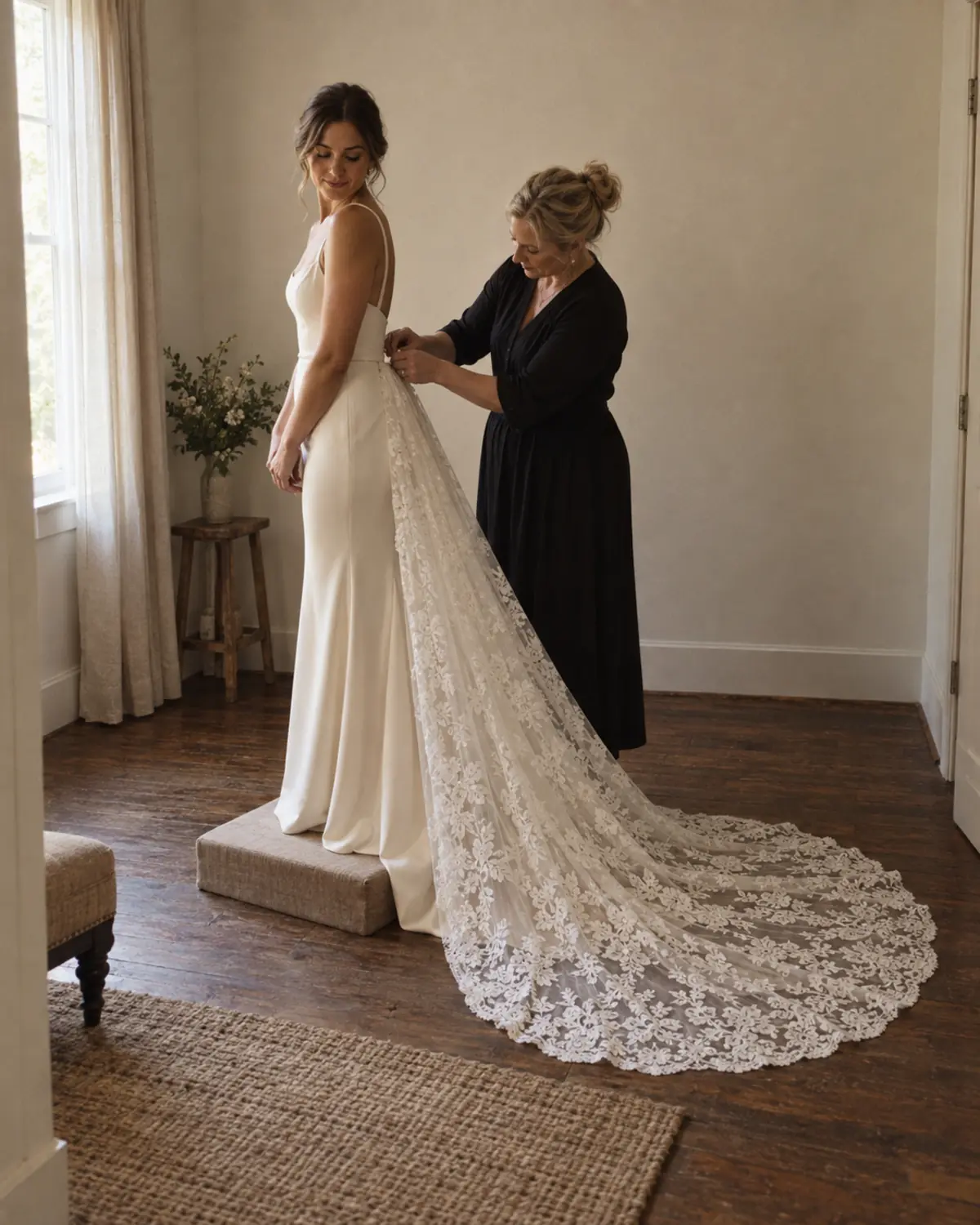
A detachable train allows you to add length and drama without committing to it for the entire wedding day.
Depending on the design, it may attach at the waist, back, shoulders or sides of the gown. Some versions resemble an overskirt, while others look like a cape or a traditional train connected by discreet hooks.
This option can be especially helpful if you want:
- A dramatic ceremony entrance
- A simpler dress for the reception
- Easier movement while dancing
- Two different looks without buying a second gown
- To protect an elaborate train after photographs
Try attaching and removing the train during your fitting. The connection should feel secure, and the attachment points should not look unfinished once the train is removed.
Ask the boutique whether the detachable train was designed specifically for the dress. A train made for another gown may not match the waistline, fabric color or proportions correctly.
How to Choose Between Wedding Dress Trains
Begin with the overall feeling you want from the gown. A train can support that vision, but it should not become the only reason you choose a dress.
Think about the complete outfit from every angle. The neckline, waistline, silhouette, fabric and train should feel like parts of the same design.
The following considerations can help you narrow the options.
Consider Your Wedding Venue
Your venue has a direct effect on how practical a train will be.
A long cathedral train can look perfectly at home in a large church or ballroom. The same amount of fabric may feel difficult inside a small restaurant, courthouse or narrow ceremony room.
For an outdoor wedding, inspect the surfaces you will walk across. Grass, sand, gravel, stone and damp soil can catch or mark delicate fabric.
A sweep, court or detachable train may be easier for a beach, garden or destination wedding. That does not mean you must avoid a long train outdoors, but you will need a clear plan for protecting and arranging it.
Also consider stairs, doorways and transportation. Walk through the day in your mind from the moment you get dressed until you arrive at the reception.
Match the Train to the Dress Silhouette
The silhouette and train should work together rather than compete.
A sweep train continues the clean line of a sheath or column gown. A chapel train adds movement to an A-line dress without making it feel excessively formal. Cathedral trains can balance the scale of ball gowns and emphasize the shape of fitted mermaid dresses.
These are possibilities, not strict rules. The best combination depends on the gown’s construction and proportions.
Look at the dress from the side and back during your appointment. Notice where the train begins and how smoothly it continues from the skirt. A well-designed train should appear intentional rather than attached as an afterthought.
Think About the Fabric
Fabric affects how a wedding dress train falls, moves and responds to the floor beneath it.
Lightweight materials such as chiffon and soft tulle create gentle movement, but they may shift easily in the wind. Satin and mikado produce a more defined shape, although the extra fabric can feel heavier. Lace trains display intricate details beautifully but may catch on rough surfaces.
Crepe creates a smooth, flowing line and works well for understated trains. Organza can provide volume without the full weight of heavier satin.
When trying on the gown, lift the train and feel its weight. Ask how much heavier it may become after the bustle is secured at the back of the dress.
Think About Walking, Sitting and Dancing
A train may look effortless while you stand on a bridal platform, but your wedding will involve constant movement.
Walk at your normal pace and make several turns. Sit in a chair if the boutique allows it. Ask how the dress will feel after the train is bustled.
Consider whether your wedding includes:
- A long walk to the ceremony
- Stairs
- Outdoor portraits
- A receiving line
- A crowded cocktail hour
- A choreographed first dance
- Several hours of dancing
You do not have to choose the shortest train simply because you want to move. You need a reliable plan for managing the train once the formal photographs are finished.
Consider the People Helping You
Longer wedding dress trains often need another person’s attention.
A bridesmaid, relative or wedding planner may need to straighten the fabric before the ceremony, lift it over wet ground or secure the bustle before the reception.
Choose one or two people for this job rather than assuming someone will notice when help is needed. Invite them to the final fitting so the seamstress can demonstrate exactly what to do.
Take a video of the bustle instructions. Small loops and buttons can be difficult to identify during a busy reception, especially when several layers of fabric are involved.
What Is a Wedding Dress Bustle?
A bustle lifts and secures the train after the ceremony, preventing it from dragging while you walk or dance.
The bustle is usually created during alterations rather than included as a finished feature when the gown is purchased. Your seamstress will choose a method that supports the train’s fabric, weight and decoration.
Common bustle arrangements include:
- An over-bustle that lifts the train onto the outside of the skirt
- An under-bustle that folds the train beneath the dress
- Multiple attachment points for wide or heavy trains
- A simple loop for a very short, lightweight train
There is no single bustle that works for every gown. Heavy satin may need several strong attachment points, while a lightweight sweep train may need only a small loop.
Practice sitting and walking with the bustle completed. Make sure it feels secure and that the skirt still falls evenly.
Do You Need a Train at All?
A wedding dress does not need a train to feel bridal.
Floor-length gowns with an even hem can look clean, modern and intentional. A train-free dress may be ideal for a courthouse ceremony, restaurant reception, destination wedding or bride who wants complete freedom of movement.
You can create ceremony drama in other ways through a veil, cape, overskirt or detachable train. These additions can be removed later without changing the main dress.
If you repeatedly worry about managing the train while trying on a gown, listen to that reaction. The right dress should allow you to imagine enjoying the day, not spending it protecting fabric.
Questions to Ask at Your Bridal Appointment
Before ordering a gown with a train, ask the consultant:
- What type and length is this train?
- Is it available in a shorter or longer version?
- Can it be customized?
- Is a detachable option available?
- What kind of bustle will it require?
- Will the train’s decoration complicate alterations?
- How heavy will it feel after being bustled?
- How should it be stored and transported?
- Can damaged lace or appliqués be repaired?
- How should the fabric be cleaned after the wedding?
These questions help you understand the practical side of the design before making a final decision.
Final Thoughts
Wedding dress trains range from a quiet sweep of fabric to a dramatic royal length, and each one changes how a gown looks and moves.
A sweep or court train offers subtle movement and easier handling. A chapel train provides a traditional balance of beauty and practicality. Cathedral and royal trains create greater drama but need more space, assistance and planning. Watteau and detachable trains offer flexibility for brides who want to change their look during the day.
Try not to choose based only on a perfectly arranged photograph. Walk in the gown, feel the weight of the fabric and ask how the train will be handled after the ceremony.
The right train should add something meaningful to the dress without taking your attention away from the wedding itself. If you can move comfortably, trust the bustle and feel excited when you see the gown from behind, you have probably found the right balance.