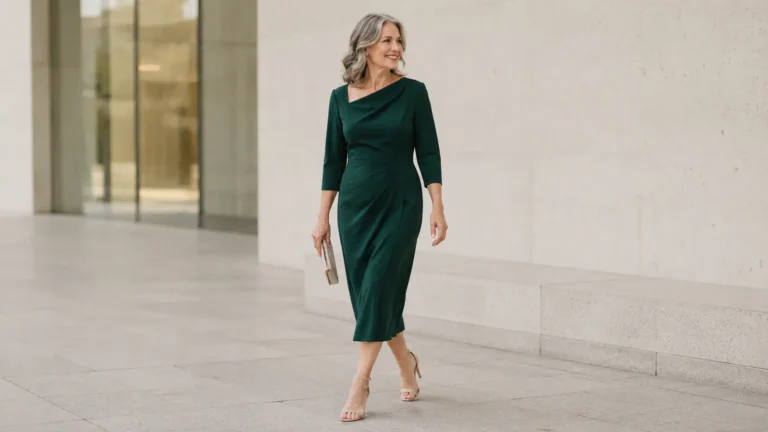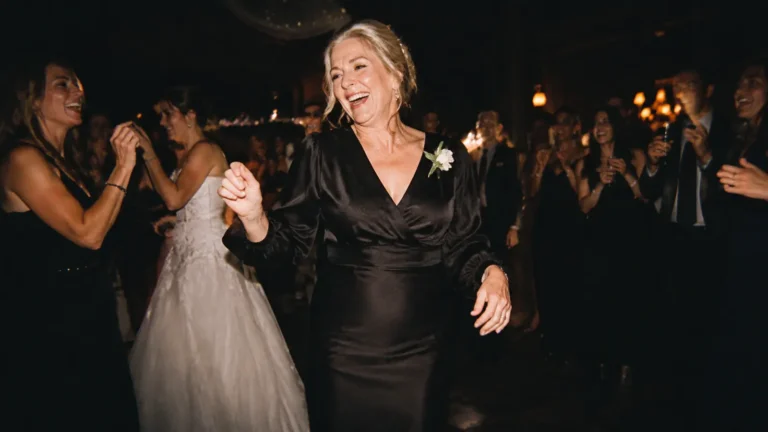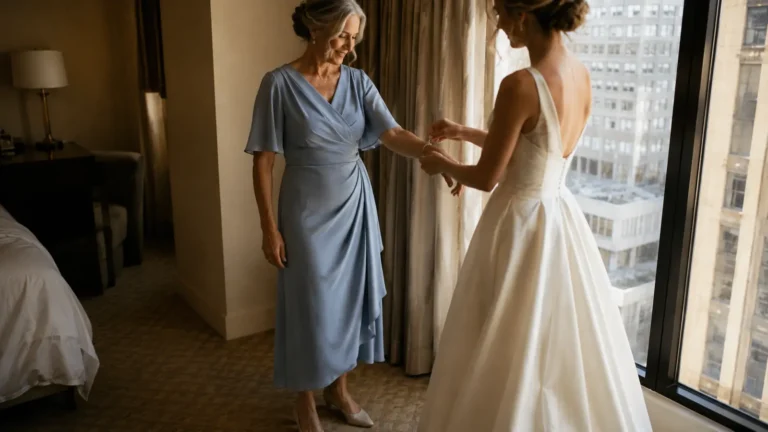
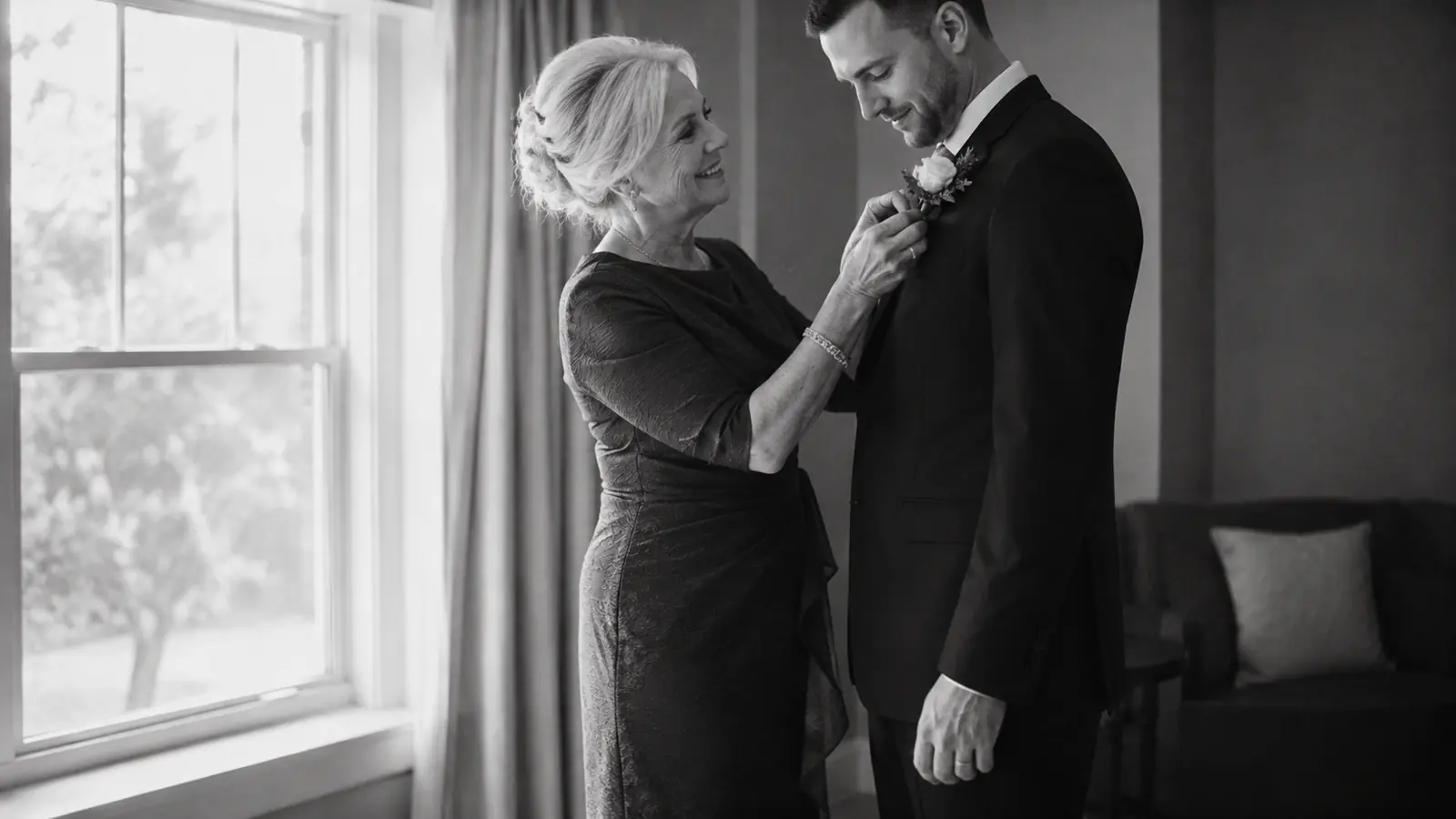
Mother of the groom dress etiquette once came with a rigid instruction: wait for the mother of the bride to buy her outfit, ask what she selected and choose something quieter.
That tradition still explains why many mothers hesitate to start shopping, but it should not leave anyone waiting indefinitely or feeling like a secondary guest.
Modern etiquette is more practical. Both mothers should respect the couple’s dress code, coordinate enough to look harmonious in family photographs and still wear outfits that reflect their individual style.
At Wedding Dress Style, we use a simple three-part rule:
Coordinate the formality, separate the identities and communicate before alterations make a change difficult.
Does the Mother of the Bride Still Choose First?
Traditionally, the mother of the bride selects her outfit first. She then shares its color, length and formality with the mother of the groom.
This custom was never meant to give one mother authority over the other. Its purpose was to prevent two avoidable problems:
- One mother arriving in a formal floor-length gown while the other wears a casual daytime dress.
- Both mothers unintentionally purchasing nearly identical outfits.
The tradition can still be helpful when communication is easy and the mother of the bride plans to shop early.
It becomes unhelpful when the mother of the groom is expected to wait without a deadline.
A modern approach is to give the mother of the bride an initial opportunity to choose, but not unlimited control over the shopping timeline. If no information has arrived, the mother of the groom can politely ask the couple for direction and begin shopping.
When Should the Mother of the Groom Start Shopping?
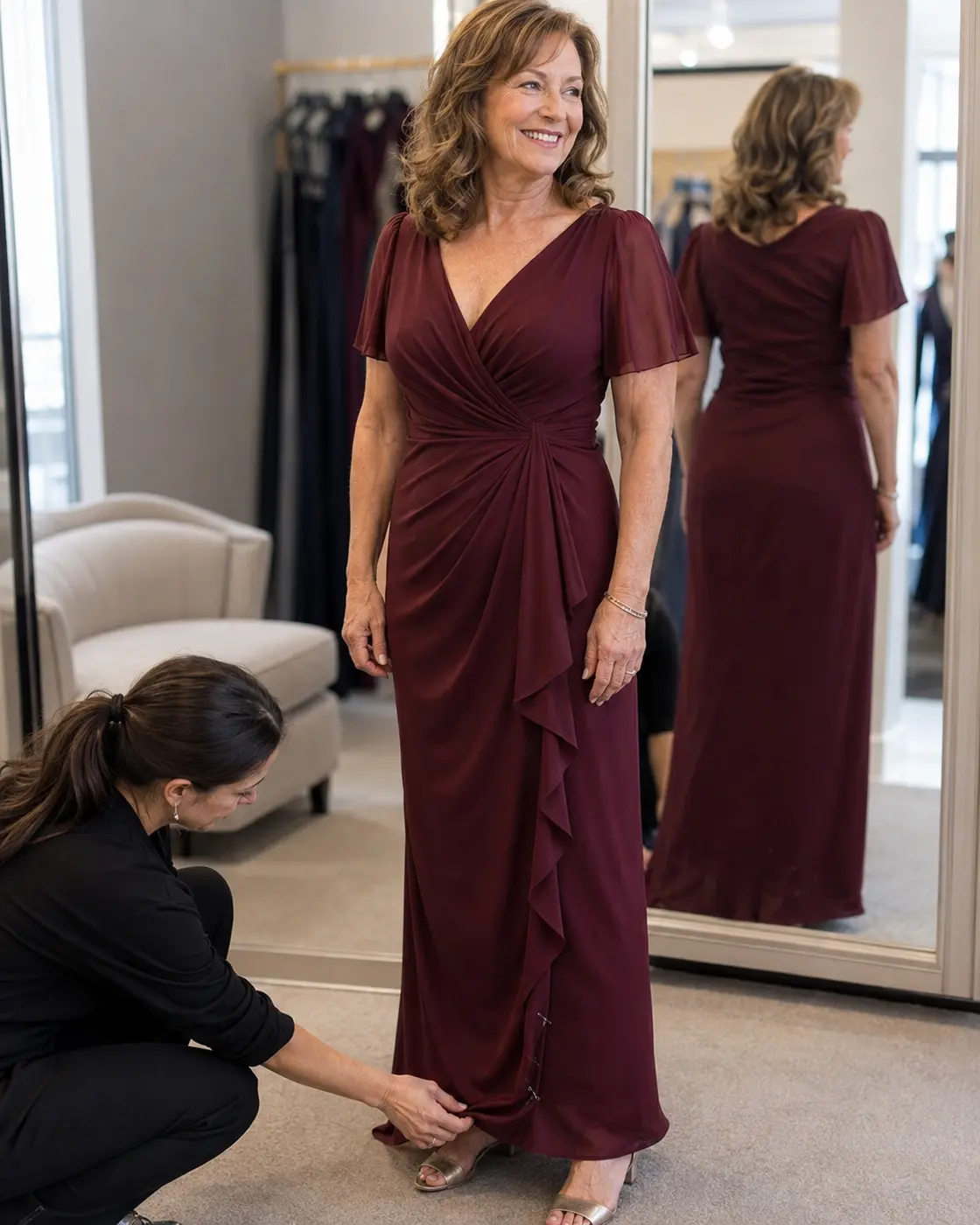
For most U.S. weddings, begin looking approximately four to six months before the wedding.
Start earlier when:
- The dress will be made to order.
- Significant alterations may be needed.
- The wedding falls during a busy formalwear season.
- Extended or petite sizing must be ordered.
- The wedding is black-tie.
- The mother wants a specific designer, color or fabric.
- Travel makes fittings difficult to schedule.
An off-the-rack dress may require less time, but leaving the purchase until the final month creates unnecessary pressure. Even a dress that technically fits may need adjustments at the shoulders, hem, waist or sleeves.
The goal is not merely to have a dress delivered. It is to have a finished outfit that has been fitted, photographed, tested while sitting and paired with comfortable shoes.
What If the Mother of the Bride Has Not Chosen Her Dress?
Do not wait silently while suitable dresses sell out.
Send a friendly, specific message rather than asking an open-ended question that creates more delay:
“I’m planning to begin looking for my wedding outfit next week. Have you chosen a color or level of formality yet? I’m considering navy, plum or deep teal and would love to make sure our outfits coordinate without matching.”
This message works because it communicates a real timeline and offers useful information.
If the mother of the bride has not decided, the mothers can agree on broad boundaries instead:
- Long or midi length
- Formal, cocktail or casual
- Solid colors or prints
- Colors either mother wants to reserve
- Whether either outfit will include metallic embellishment
They do not need complete dresses before coordination can begin.
Start With the Couple, Not the Other Mother
Before discussing colors with each other, both mothers need the same information from the couple.
Ask:
- What is the official dress code?
- What colors will the wedding party wear?
- Are any colors reserved or discouraged?
- How formal is the venue in practice?
- Will family photographs be taken indoors, outdoors or both?
- Does the ceremony include cultural attire expectations?
The invitation provides a starting point, but it may not explain the entire visual plan.
For example, “formal” can describe an evening hotel wedding or an afternoon ceremony at a historic estate. Both are formal, yet the most natural fabrics, colors and accessories may differ.
The couple should establish the boundaries. The mothers can then make their own choices within them.
How Formal Should the Mother of the Groom Dress Be?
Her outfit should match the wedding—not simply the mother of the bride.
For a black-tie wedding, a floor-length gown in an evening fabric is generally appropriate. For cocktail attire, a sophisticated midi, tea-length dress or dressy jumpsuit may work. A garden or destination wedding may allow a lighter maxi dress or polished separates.
The mothers do not need the same hemline, but their outfits should appear to belong at the same event.
Imagine one mother in a heavily beaded evening gown and the other in a cotton sundress. The problem is not that one woman looks better. The problem is that the outfits communicate two different dress codes.
At Wedding Dress Style, we call this the same-room test:
Place photographs of both outfits beside a photograph of the venue. If all three appear to belong in the same room, the formality is probably coordinated well enough.
Should the Mothers Wear the Same Color?
They can, but they do not have to.
Two mothers wearing the same general color family can look intentional when the dresses have different silhouettes, textures or shades. An emerald crepe gown and a softer sage chiffon dress will not usually appear identical.
The risk increases when both dresses share:
- The exact same shade
- A similar neckline
- The same hem length
- Matching lace or beadwork
- Nearly identical sleeves
- Accessories in the same color
If both mothers genuinely love the same color, one should not automatically surrender it. Compare the actual dresses before deciding.
Sometimes two navy dresses look completely different. Sometimes a navy gown and a dark teal gown look almost identical under ballroom lighting.
Photographs are more useful than color names.
Which Colors Can the Mother of the Groom Wear?
There is no required mother-of-the-groom color.
Appropriate possibilities include:
- Navy
- Deep teal
- Emerald
- Burgundy
- Plum
- Slate blue
- Mauve
- Rose
- Silver
- Charcoal
- Black
- Soft botanical prints
Seasonal suggestions can provide inspiration, but they are not rules. Jewel tones can work in spring, and pale blue can work in winter when the fabric and formality suit the event.
The strongest color is usually one that:
- Complements the wearer’s complexion.
- Works with the wedding atmosphere.
- Remains distinct from the bridal party.
- Photographs well in the venue’s lighting.
- Is available in a dress that fits properly.
Do not choose a difficult color in an unflattering dress simply because it matches a wedding flower.
Which Colors Require Extra Care?
White, Ivory and Bridal Neutrals
Avoid white, ivory and any shade that may appear bridal unless the couple specifically requests it.
Champagne, pale blush, light beige and very light silver can photograph much closer to white than they appear in a store. Always perform a flash test before keeping a pale outfit.
The Bridesmaids’ Exact Color
The mother of the groom does not normally need to match the bridesmaids. Wearing the exact same dress color can make her look like an additional attendant rather than a parent being honored in her own role.
A related shade is usually more effective.
If the bridesmaids wear dusty rose, the mother might consider plum, burgundy, mauve or navy rather than repeating dusty rose exactly.
Black
Black is acceptable at many modern American weddings, especially formal evening and black-tie celebrations.
However, the couple should be consulted when the family has strong cultural or personal associations between black and mourning.
Red
Red is not universally forbidden. A deep wine, cranberry or muted brick dress can look sophisticated.
Extra consideration is appropriate when red is culturally used for bridal attire or when an extremely bright red dress would dominate the wedding palette.
How Should the Two Mothers Coordinate?
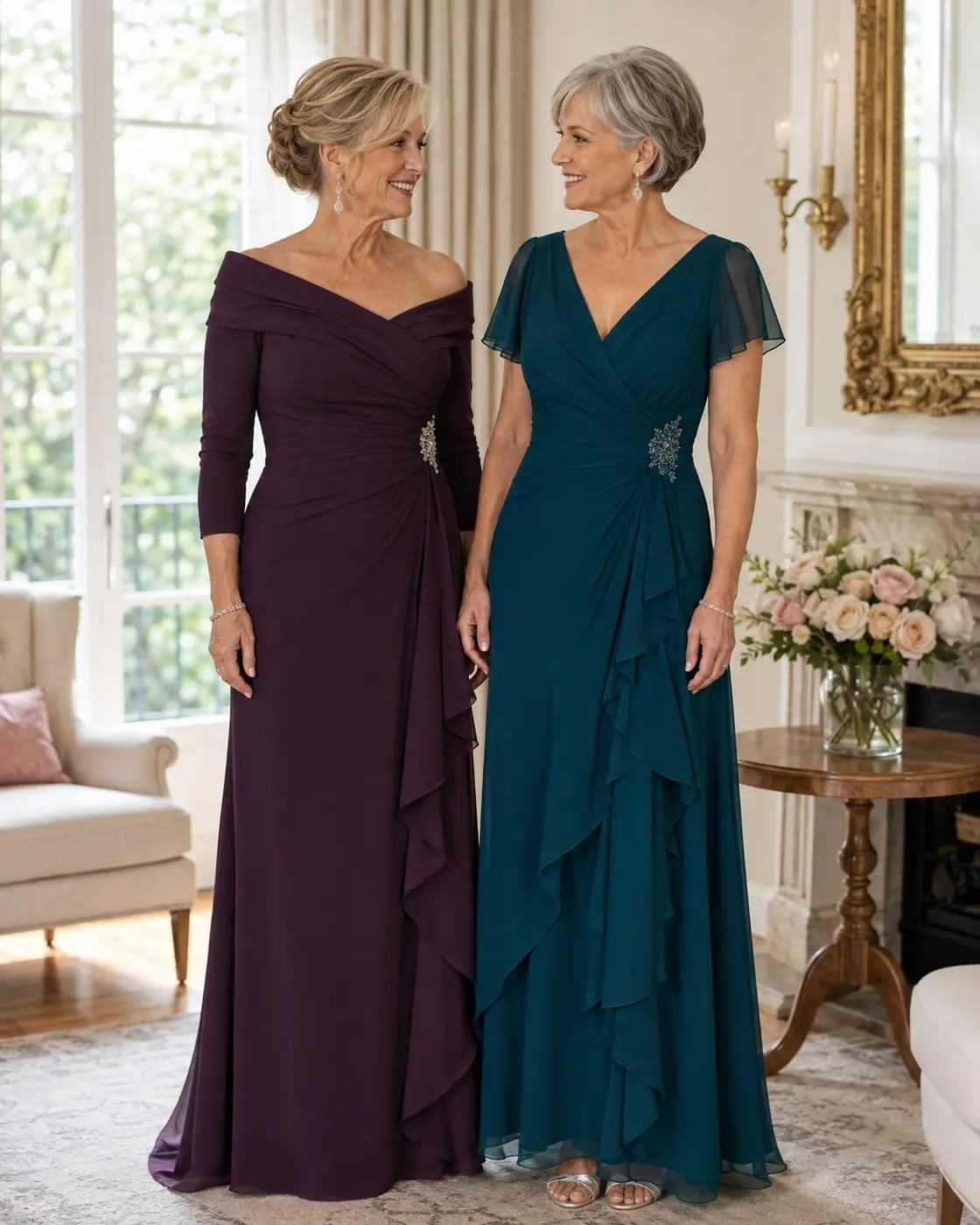
Coordination does not mean matching.
They only need to exchange four pieces of information:
- Color
- Length
- Formality
- Overall visual weight
Visual weight describes how much attention an outfit naturally attracts.
A simple navy crepe gown and a navy gown covered in crystals may share a color, but they do not have the same visual weight. The same is true of a delicate floral midi dress beside a dramatic satin ball gown.
Sharing full-length photographs is the easiest solution. Product-page links are less reliable because retailers may brighten colors or show a dress on a different body shape.
The mothers should ideally photograph their actual outfits in natural light.
What If Both Mothers Want the Same Dress?
This situation is uncommon, but it can happen when both shop at the same national retailer.
First, confirm that the dresses are genuinely identical. Similar product photographs can make different designs look alike.
If they are the same dress, discuss the situation without turning it into a question of rank.
Possible solutions include:
- One mother selecting another available color.
- Exchanging one dress for a different neckline or fabric.
- Keeping both dresses but styling them distinctly.
- Allowing the mother who purchased first to keep it.
- Asking the couple whether similarity actually concerns them.
If one mother has already paid for alterations or cannot return the dress, that practical limitation matters more than an old rule about who has priority.
The objective is family harmony, not winning ownership of a gown.
What If Communication Feels Difficult?
Dress coordination can expose tension that has little to do with clothing.
One mother may feel excluded. Another may feel pressured. A bride may be overwhelmed and slow to answer. A short message about navy versus teal can begin carrying the emotional weight of two families joining together.
When communication becomes tense, return to facts:
- The established dress code
- The venue
- The wedding colors
- The purchase deadline
- The return policy
- The couple’s stated preferences
Avoid language such as:
- “I was told I have to wait for you.”
- “My dress is more appropriate.”
- “The groom’s side always does this.”
- “I already chose, so you cannot wear that.”
Use language such as:
- “I want us both to feel comfortable.”
- “These dresses seem different enough to me.”
- “Would you like to exchange photographs?”
- “Let’s confirm the dress code with the couple.”
Etiquette should reduce tension, not become a weapon inside it.
The Mother of the Groom Movement Test
A dress is not ready simply because it looks good while standing still.
Before the return period ends, wear the complete foundation garments and shoes, then test whether you can:
- Sit through a ceremony without the waist folding painfully.
- Walk up and down stairs.
- Raise both arms comfortably.
- Hug someone without restricting the shoulders.
- Bend to adjust a shoe.
- Dance without pulling the neckline out of position.
- Use the restroom without assistance.
- Wear the outfit for several hours without constantly adjusting it.
Check the back of the dress as carefully as the front. Family photographs, greetings and dancing will capture the outfit from every direction.
If a dress requires perfect posture and no movement to look right, it does not fit the actual job.
Perform a Family-Photograph Test
Take a full-length photograph in daylight and another with flash.
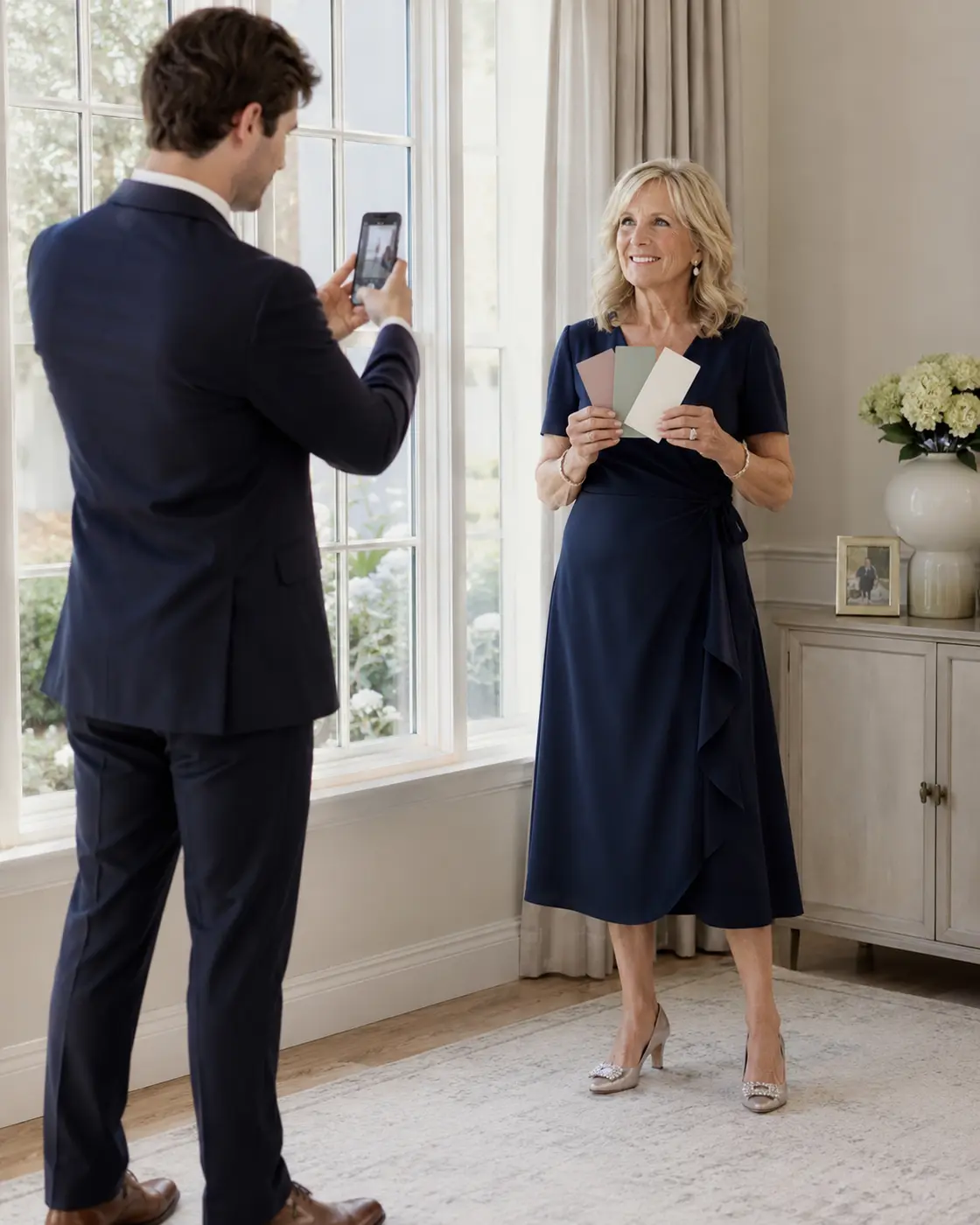
Then place it beside photographs or color swatches representing:
- The mother of the bride’s outfit
- The bridesmaids’ dresses
- The groom’s suit or tuxedo
- The venue
- The wedding palette
Look for harmony rather than a perfect color match.
Also check whether:
- A pale dress turns white under flash.
- Dark fabric loses all visible detail.
- Sequins create excessive reflections.
- The dress blends completely into the wedding party.
- Undergarment lines become visible.
- The hem and sleeves look balanced in photographs.
This ten-minute test can reveal problems that are difficult to notice in a fitting-room mirror.
Mother of the Groom Dress Etiquette for Different Weddings
Black-Tie Wedding
Choose a floor-length gown or equally formal evening outfit. Rich crepe, satin, velvet, chiffon and restrained embellishment can all work.
Cocktail Wedding
A polished midi or tea-length dress is appropriate. A dressy jumpsuit can also work when its fabric and tailoring feel formal enough.
Garden Wedding
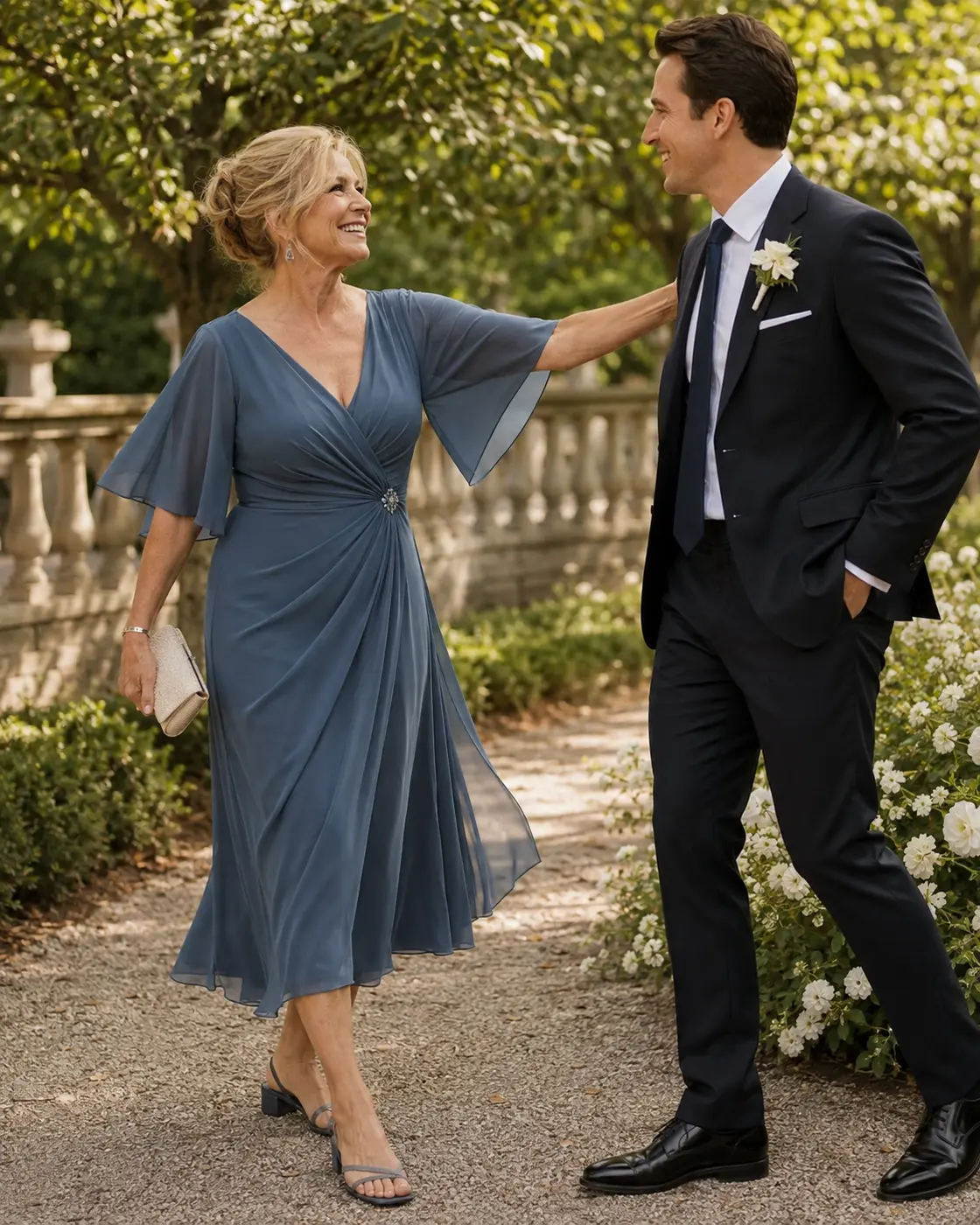
Look for breathable fabric, controlled movement and shoes suitable for grass. Florals, soft jewel tones and elegant prints can feel natural in this setting.
Beach or Destination Wedding
Consider heat, wind, travel and uneven ground. A dress that is technically beautiful but wrinkles severely or requires difficult shapewear may become exhausting.
Cultural or Religious Ceremony
Ask the couple about color symbolism, shoulder coverage, head coverings and expected formality. General American wedding advice should never override the requirements of a specific ceremony.
Who Pays for the Mother of the Groom’s Dress?
The mother of the groom traditionally purchases her own outfit, including shoes, alterations and accessories.
The couple may offer to pay or request a specific outfit, but that should be discussed clearly before shopping.
When the couple requires a particular designer or expensive custom dress, it is reasonable to have a direct conversation about budget. Etiquette should not quietly create a financial obligation someone cannot comfortably meet.
Our Final Perspective
Modern mother of the groom dress etiquette is not about making the groom’s mother wait, fade into the background or dress in a color she dislikes.
It is about consideration.
The mother of the bride may choose first, but she does not own the wedding palette. The mother of the groom should coordinate, but she does not need to become visually invisible. Both women should respect the couple’s celebration without losing their identities.
Choose an outfit that belongs at the venue, works beside the other family attire, survives real movement and still feels recognizably yours.
When the communication is respectful and the formality is aligned, the dresses do not need to match for the family to look beautifully connected.