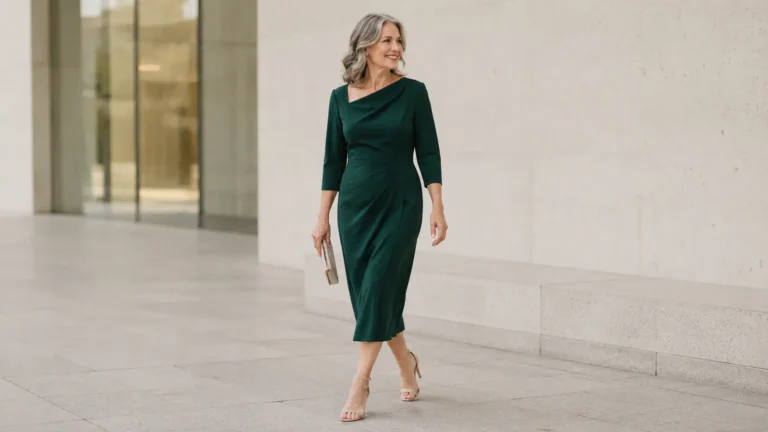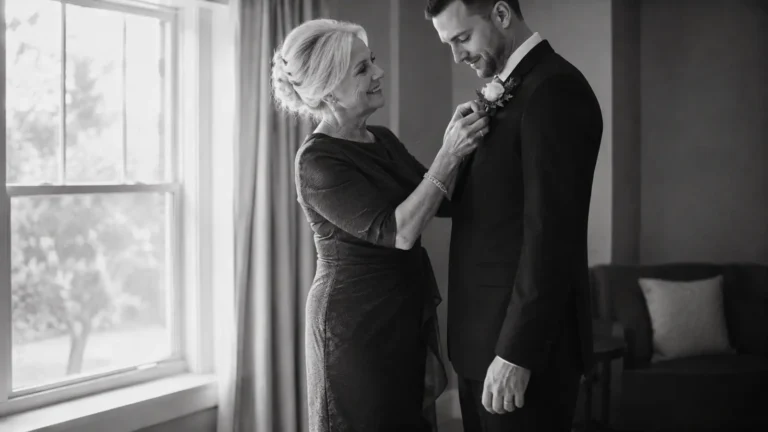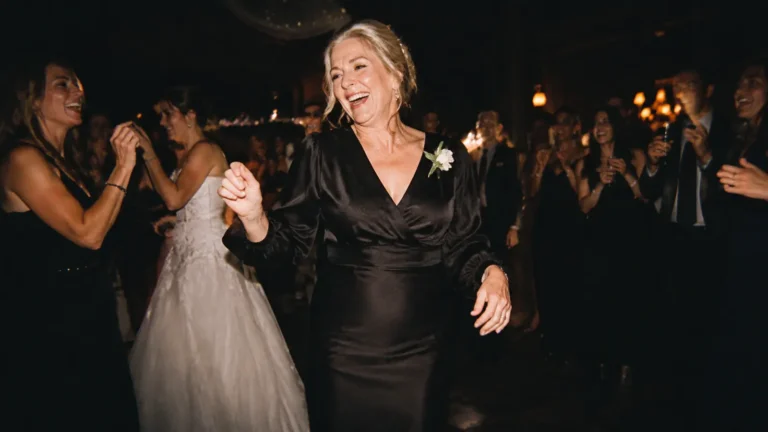
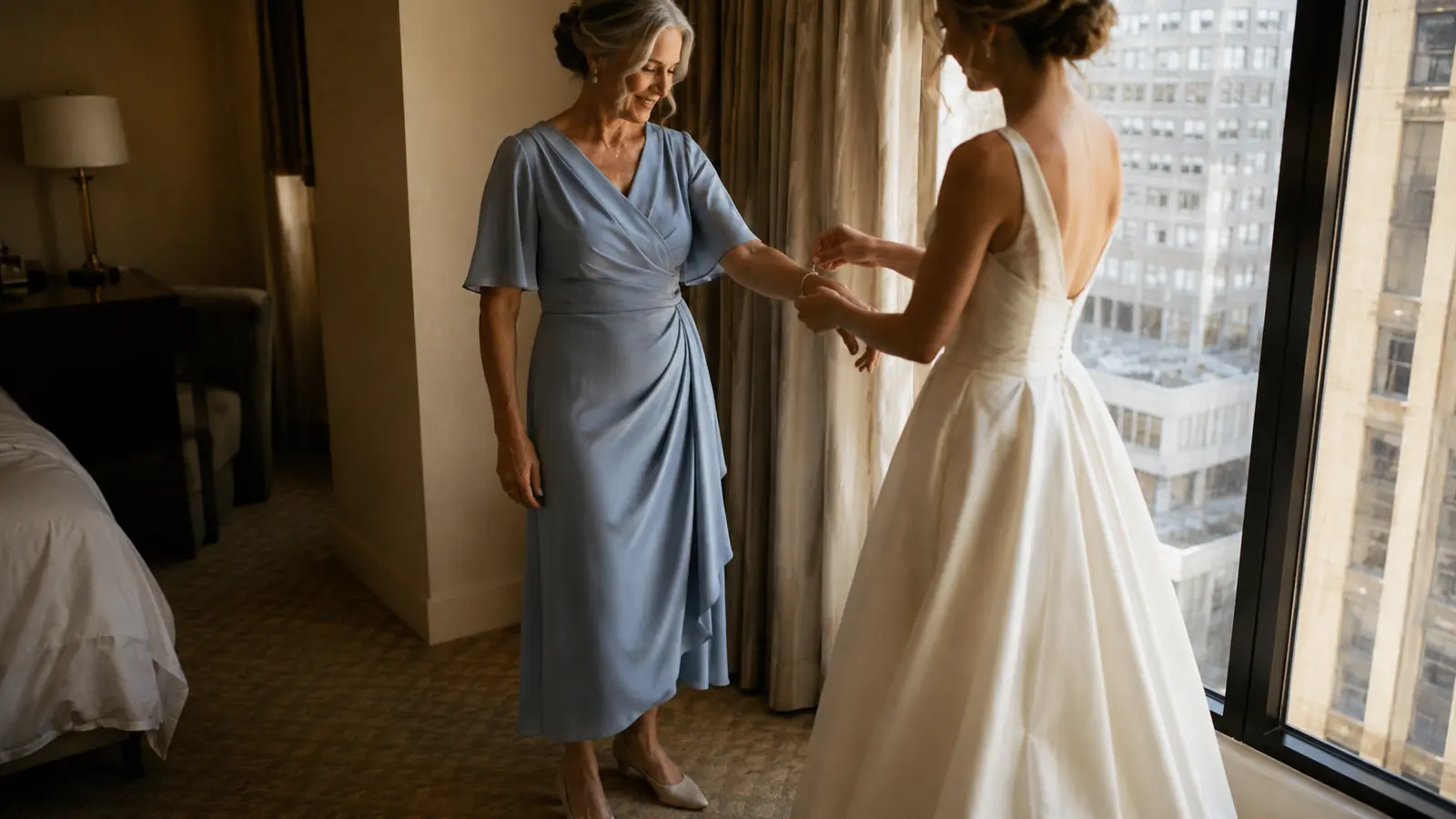
What should the mother of the bride wear when she wants to look special, respect the wedding vision and still feel like herself?
The answer is not automatically beige, lace or a conservative matching set.
The mother of the bride should dress for the wedding’s formality, location, season and color story—but she is not another bridesmaid. Her outfit can have its own shape, texture and personality.
At Wedding Dress Style, we use one simple principle:
The mother of the bride should look connected to the wedding without being disguised as part of the bridal party.
She has an important role in the day and in the photographs. Her outfit should acknowledge that importance without becoming bridal or competing for attention.
The Short Answer
A mother-of-the-bride outfit should:
- Match the wedding’s level of formality
- Coordinate with the color palette
- Avoid looking bridal unless the bride specifically requests it
- Feel distinct from the bridesmaid dresses
- Work for the venue and weather
- Provide the support and coverage the mother wants
- Remain comfortable through photographs, the ceremony and reception
- Reflect her real personal style
She does not need to match the bridesmaids exactly. She does not need to dress according to outdated age rules, and she does not need to disappear into a neutral color she dislikes.
Begin With the Dress Code
The invitation’s dress code is the first boundary.
Black Tie
A floor-length gown is usually the clearest option. Formal fabrics such as satin, crepe, chiffon, velvet and tasteful beading can work well.
A sophisticated formal jumpsuit may also be appropriate when its fabric, construction and styling equal the formality of an evening gown.
Formal or Black-Tie Optional
A floor-length gown, elegant tea-length dress, formal midi dress or polished evening jumpsuit may work.
The venue and time of day help determine whether the outfit should lean more traditional or relaxed.
Cocktail or Semi-Formal
A knee-length, tea-length or midi dress is often appropriate. A refined jumpsuit or coordinated separates can also work when the fabric and construction feel celebratory rather than professional.
Garden, Beach or Destination Wedding
Lighter fabrics, softer structure and practical shoes become more important.
Relaxed surroundings do not mean everyday clothing. The outfit should still feel intentional and elevated.
Do not choose the dress only because the product page labels it “mother of the bride.” Judge whether it belongs at this particular wedding.
Should the Bride Choose Her Mother’s Dress?
The bride can provide direction, but the mother should participate in the decision.
A useful division of responsibility is:
- The bride explains the dress code, colors and any important boundaries.
- The mother identifies her fit, comfort and style requirements.
- They review the final option together before purchasing.
The bride should not treat her mother like a decorative component who can be assigned any outfit. The mother should also avoid presenting a nearly final, nonreturnable dress that ignores the wedding’s established formality or colors.
A simple conversation can prevent weeks of tension:
I want you to feel beautiful and comfortable. The wedding is formal, the bridesmaids are wearing dusty blue, and I would prefer that you avoid white or the exact bridesmaid color. Would you like to look at navy, plum, silver or another color you love?
This gives meaningful direction without removing the mother’s identity.
What Color Should the Mother of the Bride Wear?
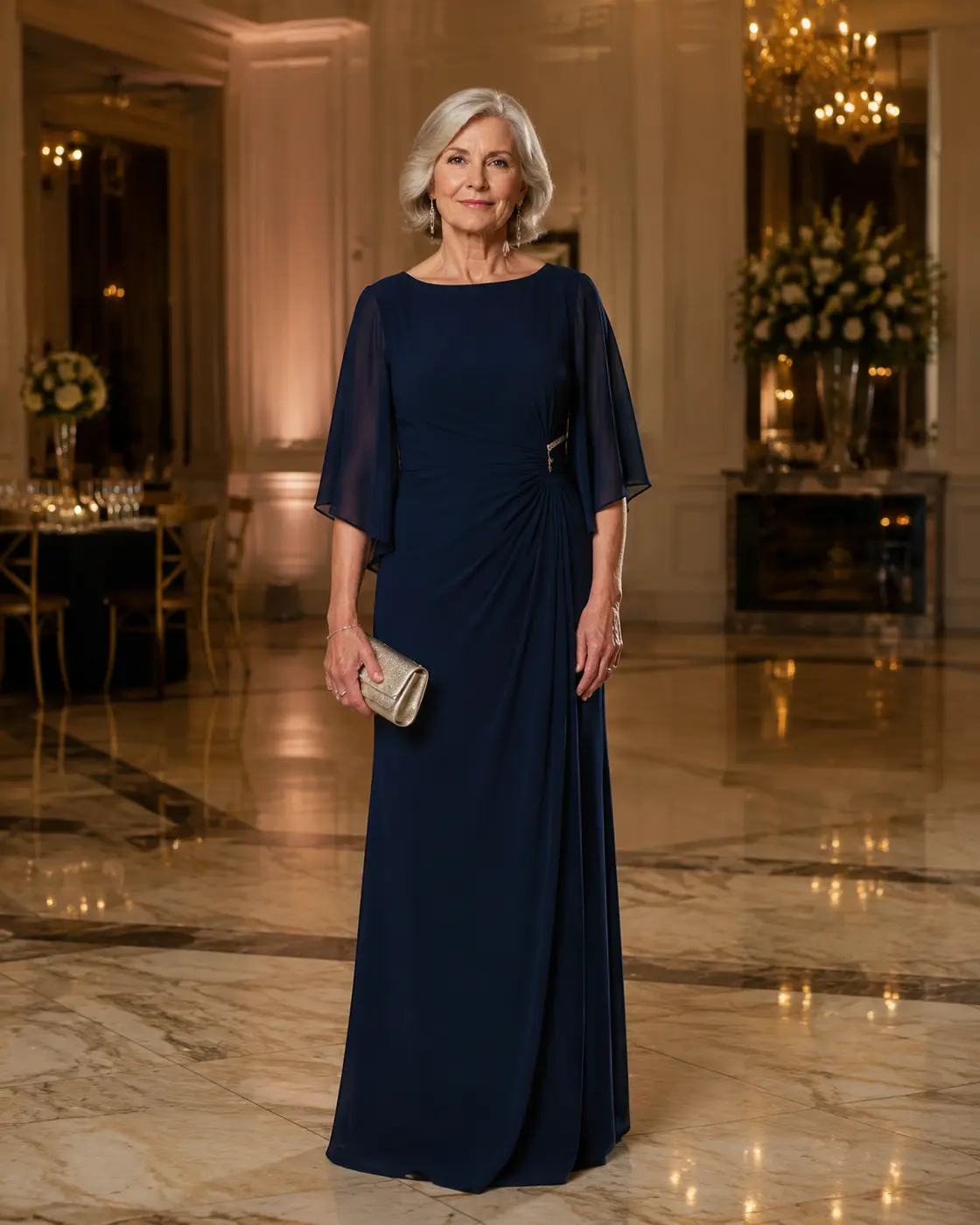
There is no single required color.
Strong options often include:
- Navy
- Slate or dusty blue
- Emerald or forest green
- Plum
- Burgundy
- Mauve
- Silver
- Charcoal
- Bronze
- Soft rose
- Deep teal
- Chocolate or espresso
- Tasteful prints connected to the palette
The best color is one that works with the wedding and feels good on the person wearing it.
If the bridesmaids are wearing sage, the mother might choose navy, deep teal, plum or a floral print containing a controlled touch of sage.
If the bridesmaids are in burgundy, she might wear navy, charcoal, rose, bronze or a complementary jewel tone.
Coordination does not require matching.
Should the Mother of the Bride Match the Bridesmaids?
Usually, no.
An exact match can make the mother appear as though she is another member of the bridesmaid lineup. That may be intentional in some weddings, but it should be a deliberate decision.
A more natural approach is to coordinate through one element:
- A deeper or lighter related shade
- A complementary color
- Similar formality
- Repeated metallic accents
- A print containing a bridal-party color
- Accessories that connect to the palette
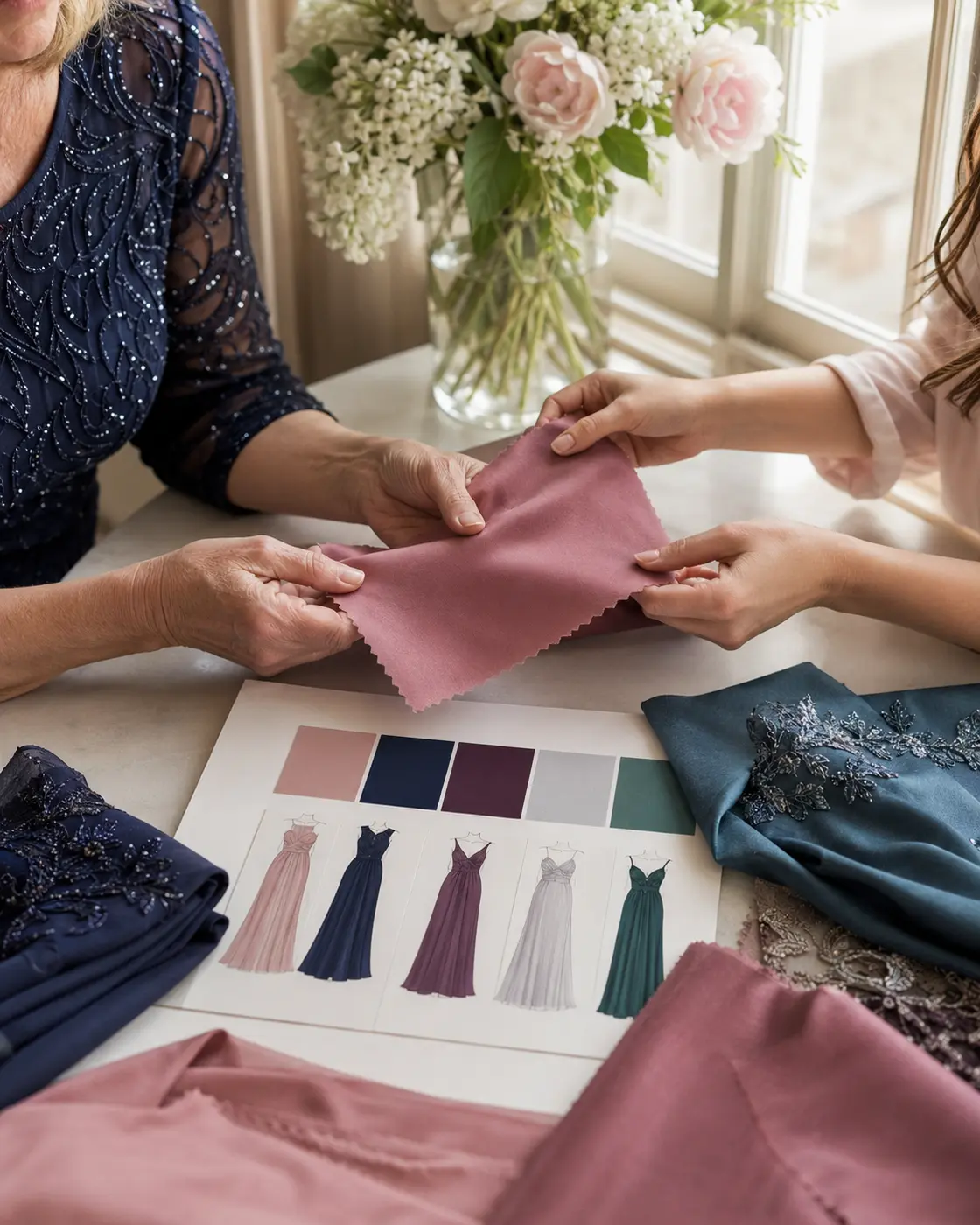
For example, if the bridesmaids wear dusty rose chiffon, the mother might choose a plum crepe gown with rose-toned earrings.
The fabrics and colors communicate with each other without becoming identical.
Bring a physical bridesmaid swatch when shopping. Website screenshots can distort color, and two fabrics carrying the same color name may look different in person.
Can the Mother of the Bride Wear Black?
Yes, unless the couple has specifically asked guests to avoid it.
Black is widely accepted at modern U.S. weddings, especially for formal evening celebrations. It can look elegant rather than funereal when the fabric, silhouette and accessories feel festive.
To soften or personalize black, consider:
- Metallic jewelry
- A colored wrap
- Textured fabric
- Embroidery
- A floral accessory
- An evening clutch
- A neckline or sleeve with visual interest
For a bright daytime garden wedding, black may feel heavier than the setting. For a formal hotel ballroom, it may be ideal.
Context matters more than an outdated universal prohibition.
Can She Wear Champagne, Beige or a Pale Neutral?
Possibly—but the color must be checked beside the bride’s gown and photographed in realistic lighting.
Champagne, pale gold, blush and silver can become much lighter under flash photography. A dress that looks beige in the store may appear ivory in wedding photographs.
Before purchasing a pale neutral:
- Place it beside a swatch or photograph of the bridal gown.
- Examine it in daylight.
- Photograph it with and without flash.
- Ask the bride directly.
- Avoid bridal construction, trains or heavy white lace.
If the bride is comfortable with the color and it remains visually distinct from her gown, a pale neutral can work beautifully.
Approval is especially important here. “It technically isn’t white” is not the standard. The question is whether it could reasonably look bridal.
What Colors Should She Avoid?
Unless the couple requests otherwise, avoid:
- White
- Ivory
- Cream
- A very pale neutral that photographs white
- The exact bridesmaid color
- A color specifically reserved by the couple
- A culturally significant bridal color when relevant
Bright red, vivid pink and bold prints are not automatically forbidden. Their suitability depends on the wedding, culture and styling.
A dramatic color can work when the silhouette and accessories remain balanced. A quiet color can still attract excessive attention if the outfit is covered in sequins, feathers or bridal detailing.
Judge the entire outfit—not only its color.
Choose Formality Before Choosing Length
Dress length alone does not determine formality.
A floor-length cotton dress may be less formal than a structured satin midi dress. A long gown with a casual elastic bodice may not suit a black-tie ballroom, while a polished tea-length jacquard dress might work beautifully for a formal daytime ceremony.
Consider:
- Fabric
- Construction
- Embellishment
- Neckline
- Sleeve treatment
- Skirt volume
- Accessories
- Venue
- Time of day
The outfit should look like it belongs in the same world as the wedding—not necessarily like the bride’s gown.
Do Not Use Age as the Dress Code
The mother of the bride does not need to hide her arms, avoid fitted silhouettes or wear a jacket simply because she is a mother.
Sleeves should be a choice based on comfort, weather and style.
A fitted dress can be entirely appropriate when it remains secure and suits the formality of the wedding. A high slit or low neckline can also work when the wearer feels comfortable and the complete outfit remains balanced.
Avoid rules such as:
- Women over a certain age should not wear sleeveless dresses.
- Mothers must wear muted colors.
- A mother cannot wear a modern silhouette.
- Sparkle is only for younger women.
- Plus-size mothers should cover themselves.
These statements are not fit guidance. They are restrictions presented as advice.
The better question is:
Does this outfit provide the support, movement, coverage and presence she wants for this wedding?
Support Should Be Planned Before Purchase
A beautiful neckline is not useful when it prevents the mother from wearing the support she needs.
Before choosing the dress, consider:
- Preferred bra style
- Strap coverage
- Back height
- Built-in structure
- Neckline security
- Sleeve mobility
- Shapewear compatibility
- Ease of dressing
- Bathroom practicality
- Any medical or mobility needs
Bring the intended undergarments to the fitting whenever possible.
Do not assume built-in cups provide sufficient support for every bust. Do not purchase a low-back dress while hoping an invisible solution will solve everything later.
The dress should work with the body and support system—not require the wearer to negotiate with it all day.
The Mother of the Bride Movement Test
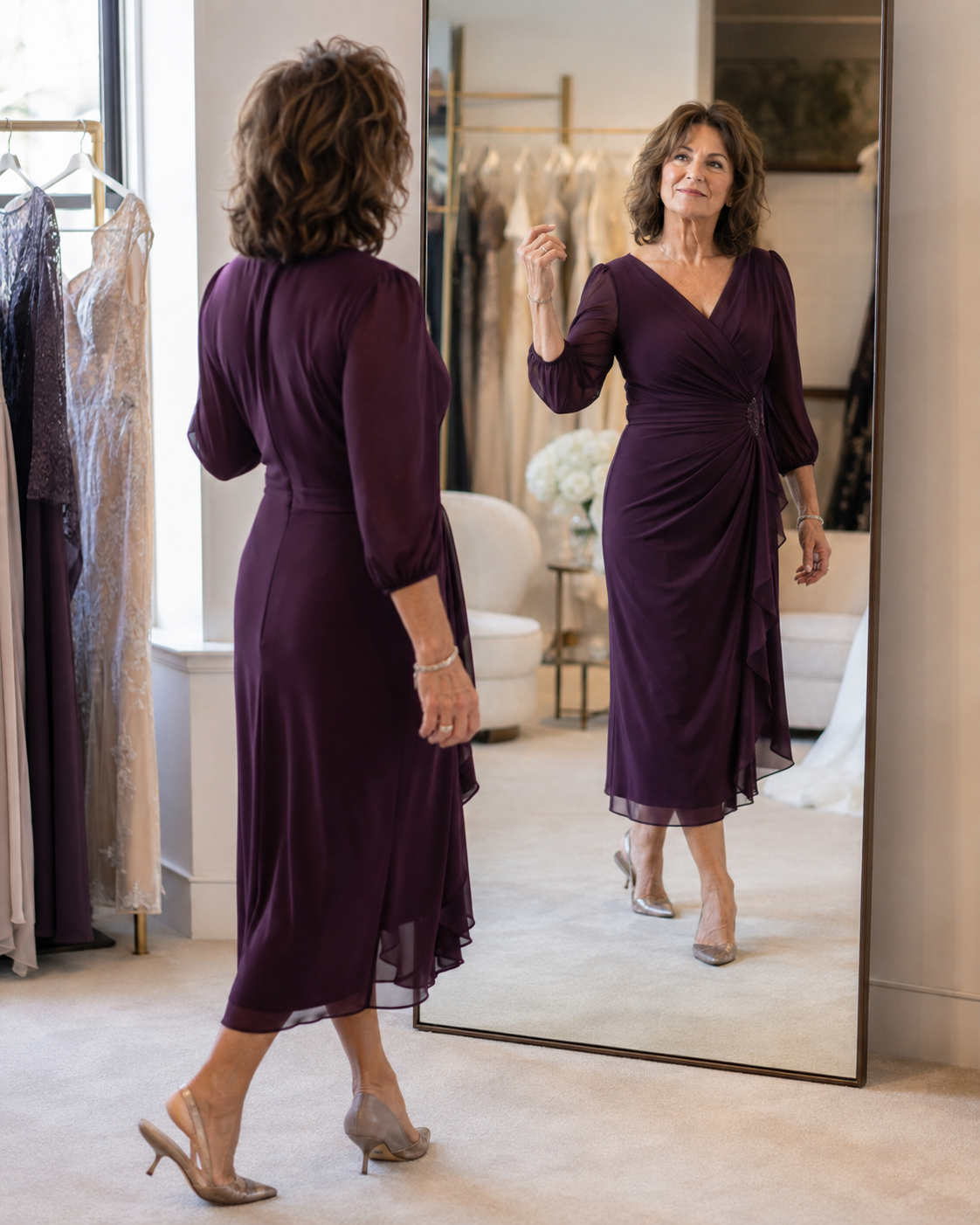
A mother-of-the-bride dress must do more than survive a fitting-room pose.
Test it through the movements the wedding will require:
- Sit for several minutes
- Stand without pulling the skirt
- Walk at a normal pace
- Climb stairs
- Raise both arms
- Bend forward
- Hug another person
- Turn from side to side
- Dance briefly
- Enter and exit a car
- Use the restroom without complicated assistance
Pay particular attention to:
- Neckline movement
- Armholes
- Sleeve tightness
- Waist pressure when seated
- Slit height during walking
- Hem and shoe interaction
- Zippers and closures
- Fabrics that wrinkle immediately
If the dress requires constant adjustment in the fitting room, it will probably require even more during the wedding.
Dress for the Venue, Not the Product Photograph
Retail photographs are created under controlled conditions. Weddings are not.
Garden Wedding
Choose shoes that will not sink into grass. Consider a stable heel, wedge, dressy flat or heel protector.
Lightweight fabrics and practical hems can make outdoor movement easier.
Beach Wedding
Avoid heavy trains and fabrics that trap heat. Consider wind, sand and the possibility of walking on uneven ground.
Ballroom Wedding
Formal fabrics, floor-length gowns, structured silhouettes and evening accessories can work naturally.
Historic or Religious Venue
Ask whether the ceremony location has expectations involving shoulders, neckline or head covering. A removable wrap or jacket can provide flexibility without changing the reception outfit.
Destination Wedding
Choose a fabric that travels well and confirm how the dress will be steamed. Keep the outfit in carry-on luggage whenever possible.
A beautiful dress that cannot function in the venue is not the right dress.
Consider the Photographs From Every Angle
The mother of the bride appears in important photographs:
- Helping the bride prepare
- Family portraits
- Ceremony entrances
- Parent dances
- Toasts
- Candid embraces
- Reception photographs
Photograph the outfit from the front, side and back before removing the tags.
Use daylight and flash.
Check whether:
- The color changes under flash
- The fabric becomes transparent
- Undergarment lines appear
- The neckline remains secure
- The back feels appropriate
- Sequins create excessive glare
- The dress coordinates with the bridal party
This is not about finding flaws in the mother’s body. It is about understanding how the garment and fabric behave through a camera.
How Should the Mothers Coordinate?
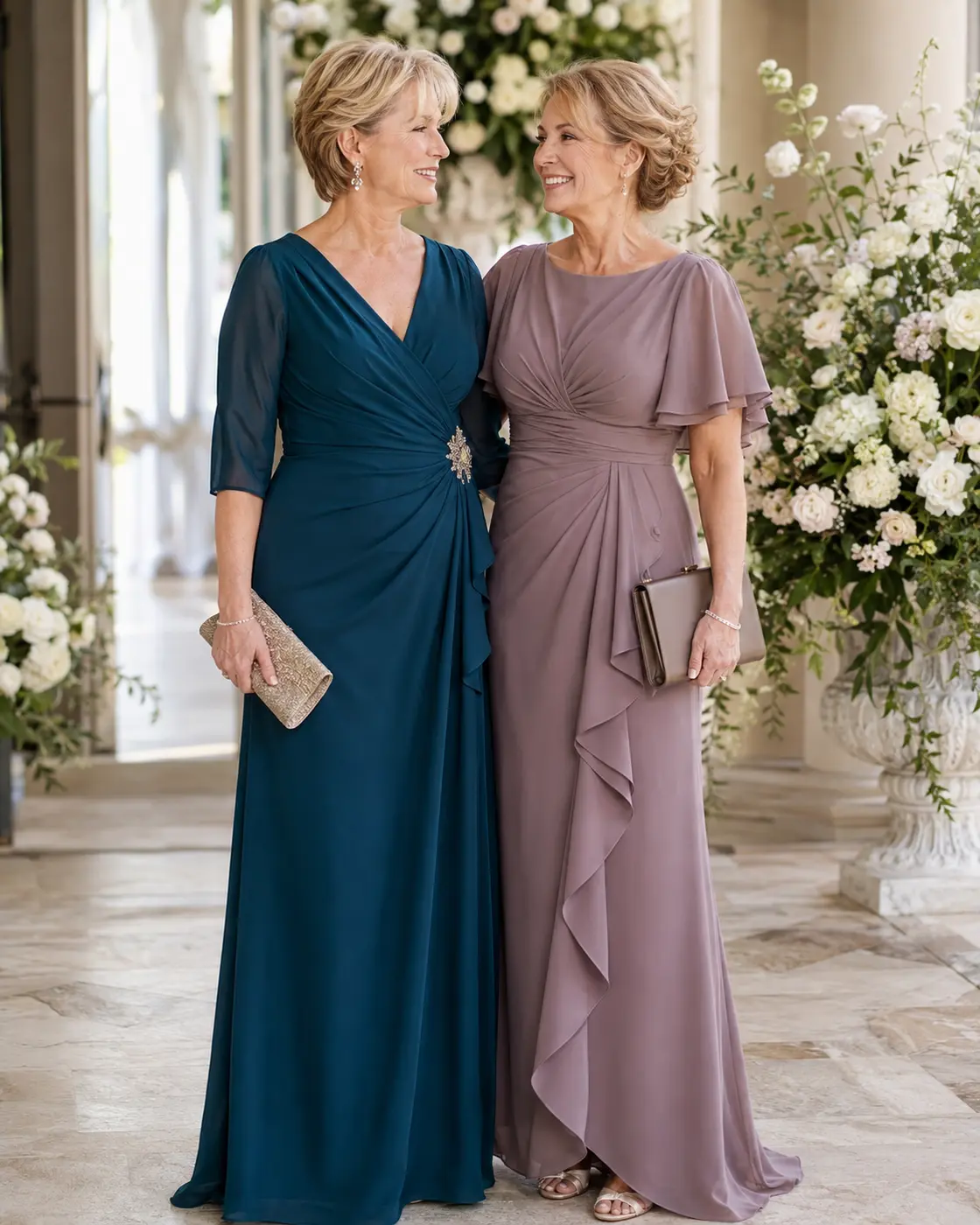
The mother of the bride and mother of the groom do not need matching outfits. They should simply avoid accidental duplication or obvious conflict.
Share:
- Dress code
- General color direction
- Dress length
- Level of formality
- Whether either mother plans to wear a print
- Final color selections
The old rule that the mother of the bride must shop first and formally “give permission” to the mother of the groom is unnecessary.
Courtesy is still useful. Once one mother selects her outfit, sharing a photograph or color swatch can help the other make an informed choice.
Coordination should feel like communication—not hierarchy.
When Should She Buy the Dress?
A practical target is approximately four to six months before the wedding.
This allows time to:
- Understand the completed wedding vision
- Compare options
- Order a size or color
- Exchange an unsuitable dress
- Schedule alterations
- Select shoes and accessories
- Complete a final fitting
David’s Bridal currently recommends booking many mother-of-the-bride appointments four to six months before the wedding and notes that alterations may require approximately six to eight weeks.
Custom garments, specialty sizes and international orders may need more time. Ready-to-wear purchases may need less, but alteration schedules still matter.
Do not wait until the bridesmaid dresses arrive to begin looking if that would leave too little time. A physical color swatch and confirmed wedding plan are usually enough.
Accessories Should Complete the Outfit, Not Rescue It
Select the dress before purchasing jewelry, shoes and wraps.
Accessories can connect the mother’s outfit to the wedding palette through:
- Metal tone
- Gemstone color
- Clutch fabric
- Shawl or wrap
- Hair accessory
- Shoe color
Avoid using several statement accessories at once.
If the dress includes beading or a dramatic neckline, quieter jewelry may be enough. If the dress is minimal, one stronger accessory can add personality.
The shoes should be chosen early enough for hemming and broken in before the wedding.
A second pair of comfortable reception shoes is practical, but confirm that changing heel height will not make a floor-length hem unsafe.
A Dress Can Be Special Without Competing With the Bride
“Do not upstage the bride” is often interpreted so strictly that mothers feel they must make themselves invisible.
That is unnecessary.
A mother can wear:
- Rich color
- Beautiful tailoring
- Beading
- A modern neckline
- Statement earrings
- A formal jumpsuit
- A sophisticated print
- A fitted silhouette
The outfit becomes competitive when it imitates bridal clothing, ignores a clear request or appears designed to redirect attention.
Looking polished and important is not the same as competing.
The mother of the bride is allowed to look memorable.
The Wedding Dress Style Mother-of-the-Bride Test
Before purchasing, ask five questions.
1. The Wedding Test
Does the outfit suit the wedding’s dress code, venue, season and time?
2. The Identity Test
Does the mother recognize herself in the outfit?
3. The Coordination Test
Does it work with the wedding palette without copying the bridesmaids?
4. The Movement Test
Can she sit, walk, hug, dance and participate without constant adjustment?
5. The Photograph Test
Does the color and fabric behave well in daylight and flash photographs?
If one answer is no, identify the exact problem. The solution might be another color, improved tailoring, different shoes or a more supportive neckline—not an entirely different style identity.
An Example: The Dress That Was “Appropriate” but Wrong
Imagine a mother who normally wears clean, modern tailoring.
She is encouraged to purchase a pale beige lace dress with a matching jacket because it looks traditionally “mother of the bride.” The dress follows every old rule, but she feels uncomfortable and unlike herself.
The color washes out under flash. The jacket restricts her arms when she hugs her daughter. She removes it at the reception, revealing a bodice that was never tailored to be worn alone.
The outfit was technically traditional but practically wrong.
A deep teal crepe gown or tailored formal jumpsuit might have coordinated equally well while giving her better movement, stronger color and a recognizable sense of self.
The lesson is not that lace jackets are outdated.
The lesson is that the role label should not choose the outfit.
Our Final Perspective
The mother of the bride should not be dressed as an older bridesmaid or placed quietly in the background.
Her outfit should acknowledge the wedding’s formality and colors while respecting her body, comfort and personal style.
Begin with the dress code. Coordinate without matching. Avoid bridal colors unless the bride explicitly approves them. Test the outfit through movement, venue conditions and real photography.
Most importantly, let the mother look like herself on one of the most photographed and emotionally significant days of her life.
The right mother-of-the-bride dress does not make her disappear.
It helps her remain fully present.