Can the mother of the bride wear black? Yes, at most modern American weddings, she absolutely can. A thoughtfully selected black dress can be elegant, celebratory and perfectly appropriate for the occasion.
The dress code, fabric, silhouette, accessories and the couple’s preferences matter much more.
The old belief that black always communicates mourning has largely faded from modern American weddings. Black is now common at formal evening celebrations, city weddings and black-tie events.
At Wedding Dress Style, our rule is simple:
Do not ask only, “Is black allowed?” Ask, “Does this particular black outfit feel like it belongs at this particular wedding?”
Can the Mother of the Bride Wear Black? The Short Answer
Yes, the mother of the bride can wear black to most modern U.S. weddings.
Black is especially suitable when:
- The wedding is formal or black-tie.
- The celebration takes place during the evening.
- The venue is a ballroom, hotel, museum or upscale city location.
- Black appears in the wedding palette.
- The mother regularly wears black and feels confident in it.
- The bride and couple are comfortable with the choice.
Black may require more consideration for a casual daytime wedding, a colorful tropical celebration or a family with strong cultural associations between black and mourning.
The safest step is not to abandon the dress—it is to show it to the bride before purchasing it.
Why the Old Black-Dress Rule Has Changed
Traditional etiquette sometimes treated black as a message of mourning or disapproval. That interpretation made families particularly cautious about a mother wearing it to her child’s wedding.
Modern weddings are different.
Couples now marry in art galleries, converted warehouses, gardens, restaurants and destination resorts. Dress codes range from cocktail to creative black-tie. Black eveningwear has become a standard part of formal fashion rather than a color reserved exclusively for funerals.
Even highly visible wedding families have worn it. Carole Middleton changed into a floor-length black gown for the evening reception following the wedding of Catherine Middleton and Prince William.
That does not mean every family has abandoned the old association. Etiquette evolves faster in some communities than others. A black gown that feels sophisticated to one family may still feel somber to another.
That is why conversation remains more useful than any universal rule.
Ask the Bride These Three Questions
The mother of the bride does not need permission to have personal style. However, a short conversation can prevent an avoidable misunderstanding.
Ask:
- Are you comfortable with me wearing black?
- Does black work with the atmosphere and dress code you are planning?
- Would you prefer that I add color through accessories or choose another shade?
Whenever possible, show the actual dress rather than asking about black in the abstract.
A soft chiffon gown with floral embroidery creates a different impression from a severe black business sheath. The bride may dislike the idea initially but feel completely different after seeing the neckline, fabric and styling.
Avoid presenting the question after the dress has been purchased and altered. At that point, an honest answer becomes more difficult for everyone.
When Black Works Particularly Well
Black-Tie and Formal Evening Weddings
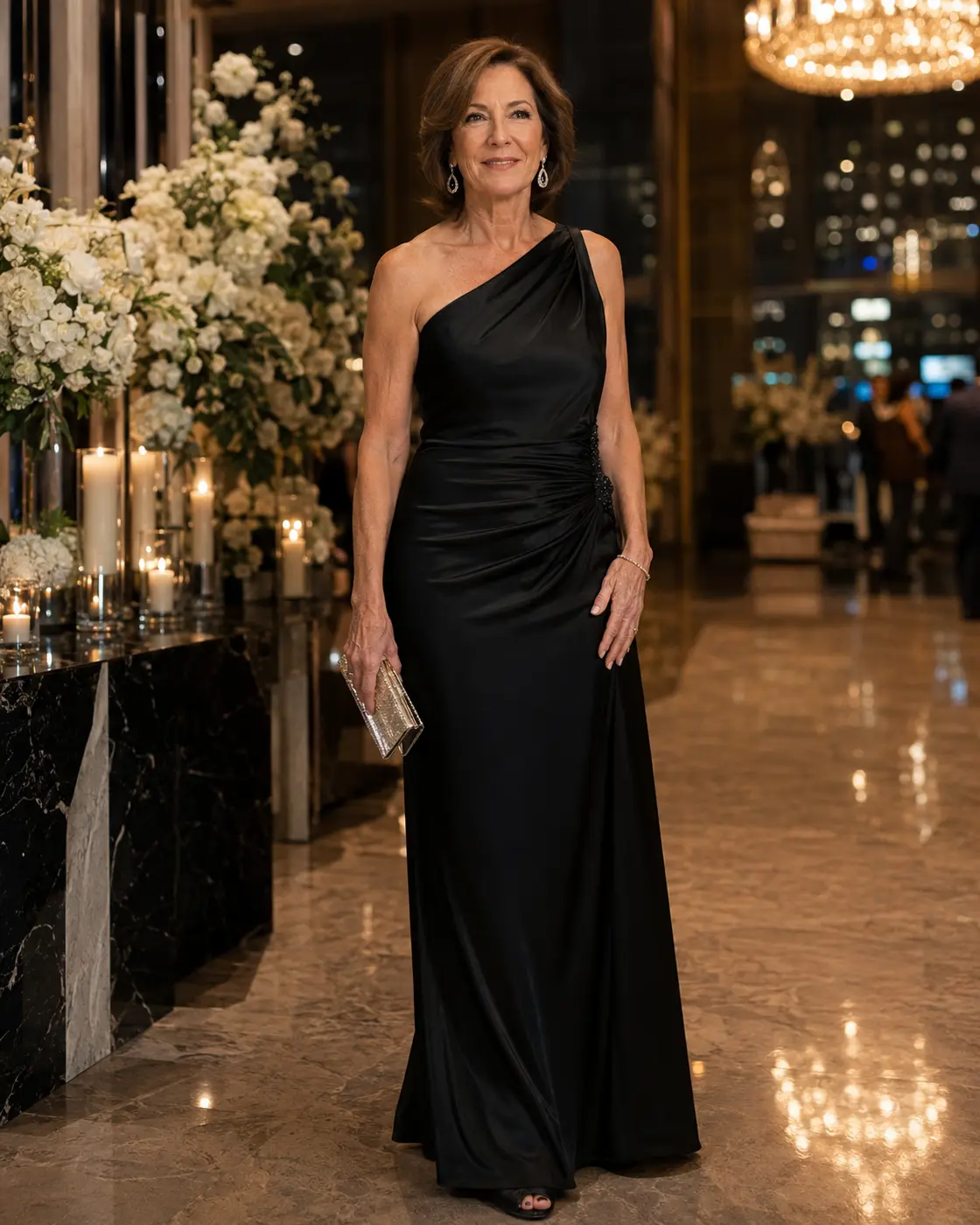
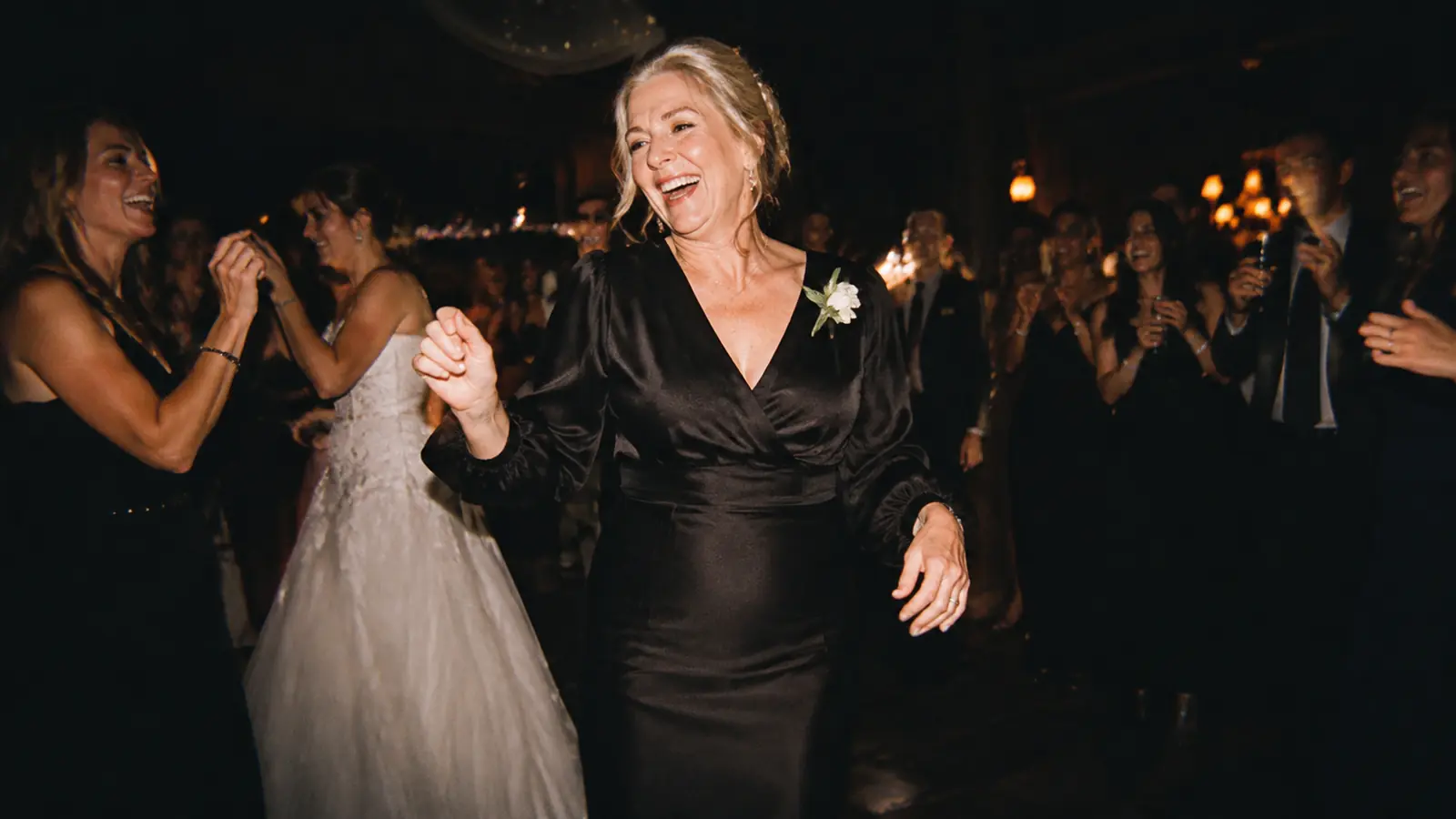
Black is naturally at home in an evening setting. A floor-length gown in crepe, chiffon, satin or lace can feel polished without competing with the bride.
The important distinction is between formal black and office black.
A tailored work dress may be black, but that does not make it wedding attire. Look for movement, depth and an intentional evening detail—a draped neckline, dimensional fabric, elegant sleeves, delicate beading or a graceful skirt.
Modern City Weddings
Black works beautifully in hotels, museums, rooftop venues and sophisticated restaurants. It complements the architectural environment and often photographs cleanly beside tuxedos and dark suits.
Weddings With a Neutral Palette
If the wedding uses black, white, champagne, metallics or deep jewel tones, a black mother-of-the-bride dress can support the visual direction without copying the bridesmaids.
When Black Is Truly Her Color
Some women feel unmistakably themselves in black. They know which necklines work, already own appropriate accessories and do not spend the entire event wondering whether an unfamiliar pastel suits them.
That confidence matters.
A mother who feels poised in a thoughtfully chosen black gown will usually look more celebratory than a mother wearing a “correct” color she dislikes.
When Another Color May Be Better
Black is not automatically the strongest choice simply because it is safe and familiar.
Consider another color when:
- The bride has expressed discomfort with black.
- The wedding has a very light, colorful or tropical atmosphere.
- The ceremony is culturally associated with avoiding black.
- Most members of the wedding party will already wear black.
- The outfit looks more appropriate for work or a memorial service.
- The mother chose black mainly to disappear or hide her body.
That final point deserves attention.
Many women have been taught that black is the only color capable of making them look slimmer. This can lead them toward a shapeless, overly covered dress selected from fear rather than preference.
Black does not correct poor fit. A well-fitted navy, plum, emerald or deep teal dress may create a much stronger silhouette than an uncomfortable black gown.
How to Make a Black Dress Feel Celebratory
The difference between somber and celebratory styling is rarely one brightly colored necklace. It comes from the complete outfit.
Choose Fabric With Dimension
Flat, heavy black fabric can absorb light and lose detail in photographs. Fabrics with movement or texture help the dress retain its shape.
Consider:
- Chiffon overlays
- Soft crepe
- Satin details
- Lace
- Velvet for cooler seasons
- Beading or tonal embroidery
- Pleating and draping
The entire gown does not need to sparkle. One area of texture is often enough.
Let the Silhouette Create Interest
Because black is visually quiet, the cut can carry more of the design.
An asymmetric neckline, softly draped waist, cape sleeve, portrait collar or flowing skirt can give the outfit presence without making it theatrical.
The strongest black mother-of-the-bride dresses usually have one memorable feature—not five competing ones.
Add Light Near the Face
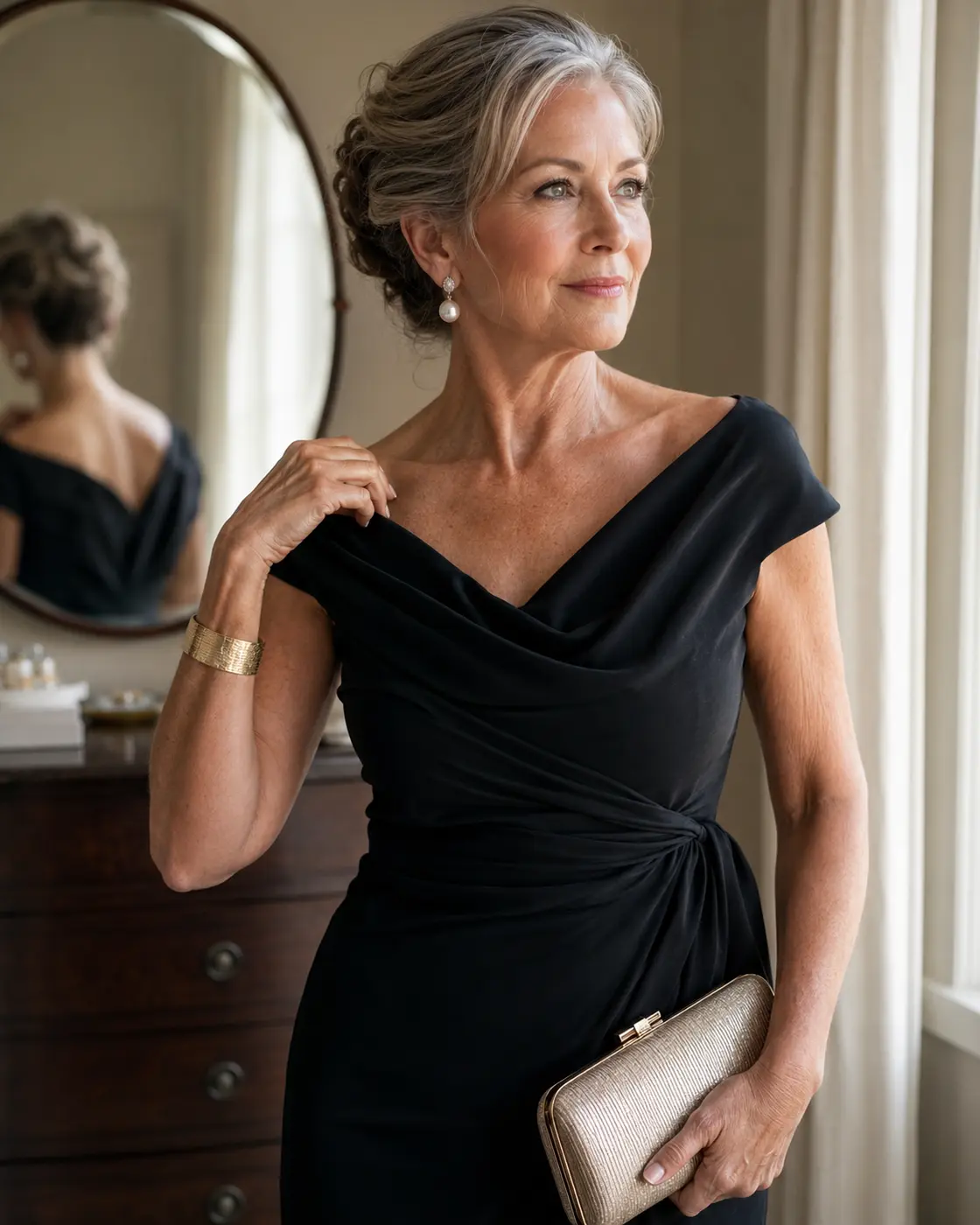
Black can cast shadows around the face, particularly in indoor lighting. Earrings, a softly luminous neckline or a warm makeup palette can restore brightness.
Good options include:
- Pearl or crystal earrings
- Gold or silver jewelry
- A metallic clutch
- A soft rose, berry or warm neutral lip color
- A wrap with subtle texture
- Shoes in metallic, nude, burgundy or another coordinated shade
Avoid adding every accessory simultaneously. The goal is light and intention, not decoration for its own sake.
The Daylight and Flash Test
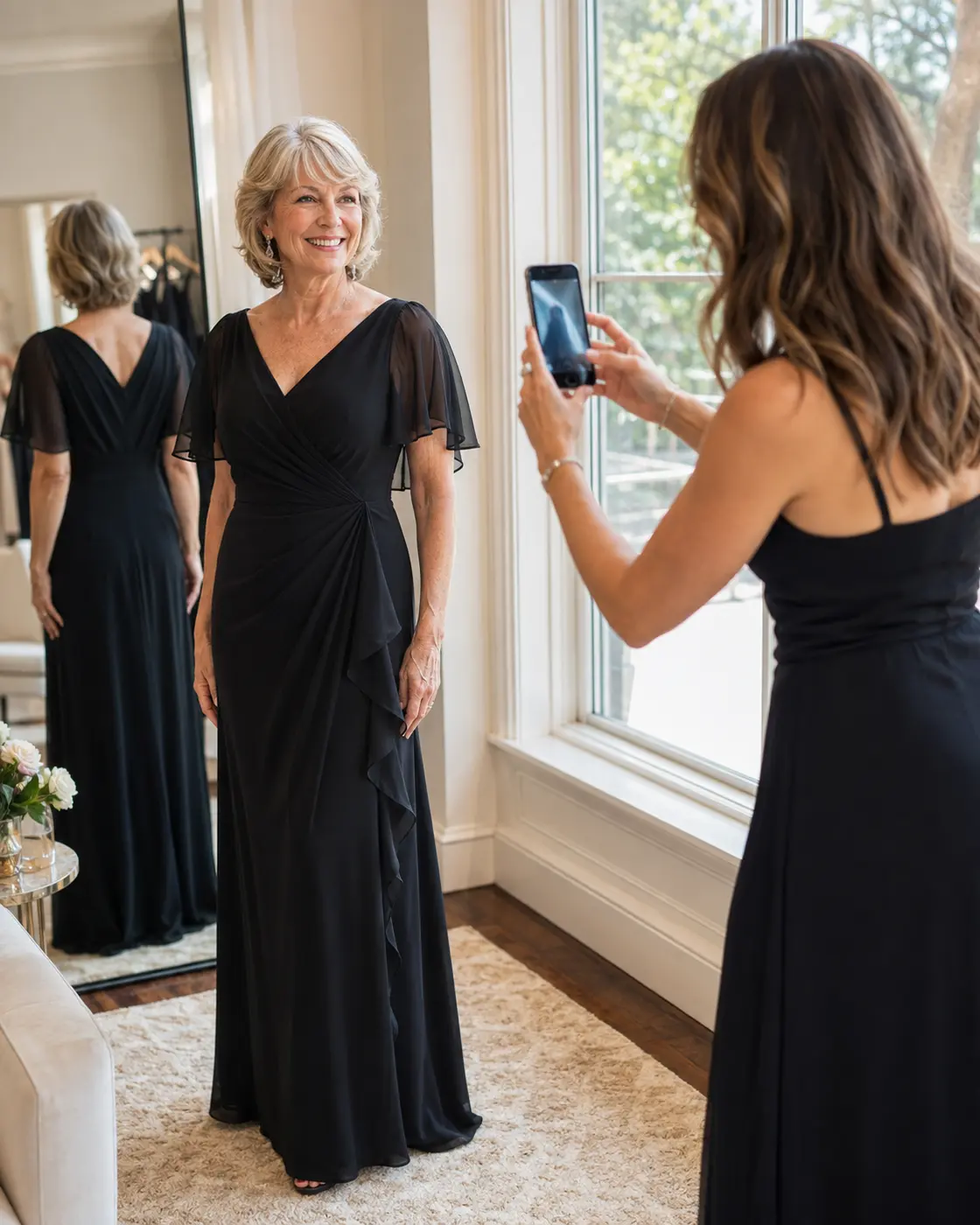
A dress can look refined in a softly lit fitting room and become visually heavy under different lighting.
Before removing its tags, test it in three conditions:
- Stand beside a window during daylight.
- Take a full-length photograph without flash.
- Take another photograph with flash.
Examine the photographs later rather than deciding while still wearing the dress.
Check whether:
- The bodice and waist remain visible instead of becoming one dark shape.
- The lining becomes transparent under flash.
- Sequins or beading create distracting reflections.
- The neckline frames the face.
- The fabric looks rich rather than flat.
- The dress coordinates with the expected suits and wedding colors.
This test is especially useful for black because cameras can lose detail in very dark fabric.
Should the Mother Match the Bridesmaids?
Usually, no.
The mother of the bride should coordinate with the wedding rather than appear to be another bridesmaid. If the bridesmaids wear black, the mother can still wear it, but her outfit should be visibly distinct.
She might choose:
- A more formal fabric
- A different neckline
- A longer or more structured silhouette
- Tonal embroidery
- Metallic accessories
- A black gown with subtle navy, plum or champagne details
If everyone else will also wear black, consider whether another deep neutral would give the mother a clearer role in photographs. Midnight navy, charcoal, aubergine and deep teal can provide the same sophistication while creating separation.
Can Both Mothers Wear Black?
Yes. The mothers of the bride and groom may both wear black.
They do not need identical dresses, nor must one change simply because the other purchased black first.
They should aim for a comparable level of formality. A floor-length beaded gown beside a simple knee-length daytime dress can look unbalanced, even when both are black.
Sharing photographs of the outfits helps the mothers coordinate their formality without turning the process into a competition.
Black Dresses for Different Wedding Settings
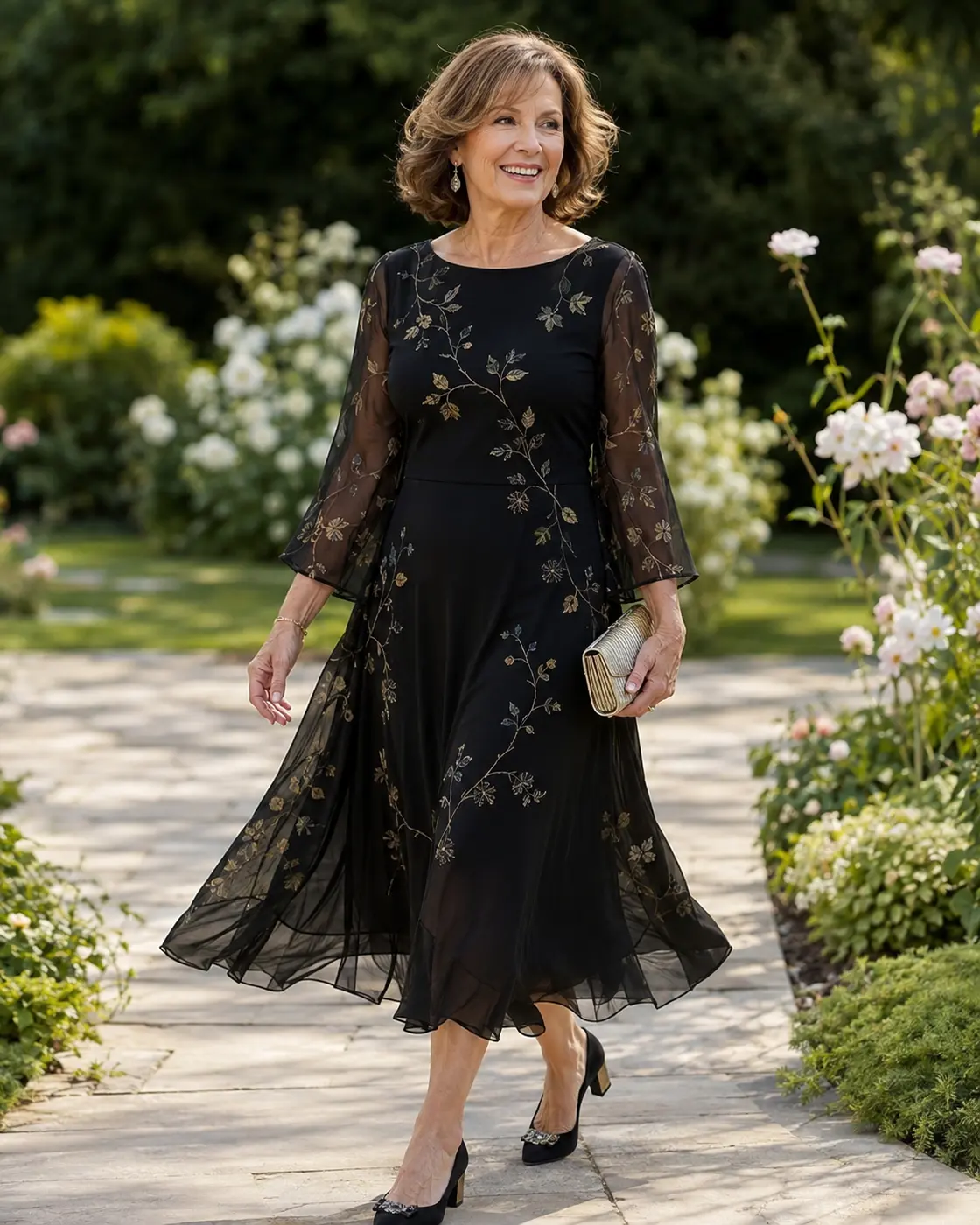
Daytime Wedding
Choose a lighter construction such as chiffon, lace or a black floral print. A midi dress can feel more natural than a dramatic evening gown.
Garden Wedding
Black can work, but introduce softness through botanical embroidery, flowing sleeves or muted accessories. Remember to choose shoes that can handle grass.
Beach Wedding
Prioritize breathable fabric and movement. Heavy satin, dense beading and long trains can look and feel out of place.
Cocktail Wedding
A polished midi or tea-length dress works well. Look for an interesting neckline or fabric rather than relying on extreme embellishment.
Formal Evening Wedding
A floor-length black gown is an easy fit. Refined draping, lace sleeves or restrained beading can create enough visual interest.
Black-Tie Wedding
Black is completely at home here. Concentrate on formal fabric, impeccable alterations and accessories that feel intentional.
What the Mother Should Avoid
Even when the color is appropriate, the outfit can still miss the mark.
Avoid:
- A dress that resembles office clothing
- An outfit that is noticeably less formal than the dress code
- Excessive cutouts or sheer areas that make movement uncomfortable
- A dramatic train that competes with bridal attire
- White or ivory jackets that photograph like a bridal look
- Uncomfortable shapewear that cannot be worn for the entire celebration
- Buying a dress solely because black is believed to hide everything
The mother will sit, stand, hug guests, pose for photographs and possibly give a speech or dance. Her dress needs to work through all of those moments.
The Wedding Dress Style Black-Dress Test
Before keeping the dress, answer these five questions:
- Does it match the wedding’s formality?
- Does it look celebratory in daylight and photographs?
- Can I sit, walk, hug and dance comfortably?
- Does the bride feel good about it?
- Would I still choose this dress if it came in another flattering color?
The fifth question reveals a great deal.
If the answer is yes, black is probably an intentional style choice. If the answer is no, the dress may have been selected primarily as camouflage.
A mother deserves an outfit that does more than help her disappear.
Our Final Perspective
The mother of the bride can absolutely wear black. Modern etiquette does not require her to dress in pastel, match the bridesmaids or choose an outfit labeled specifically for mothers.
But black should not become an automatic decision.
The best black dress respects the couple’s preferences, suits the wedding setting, photographs with visible detail and allows the mother to participate fully in the day.
If the dress feels sophisticated, celebratory and recognizably hers, black is not a negative message.
It is simply an elegant color worn for a joyful reason.