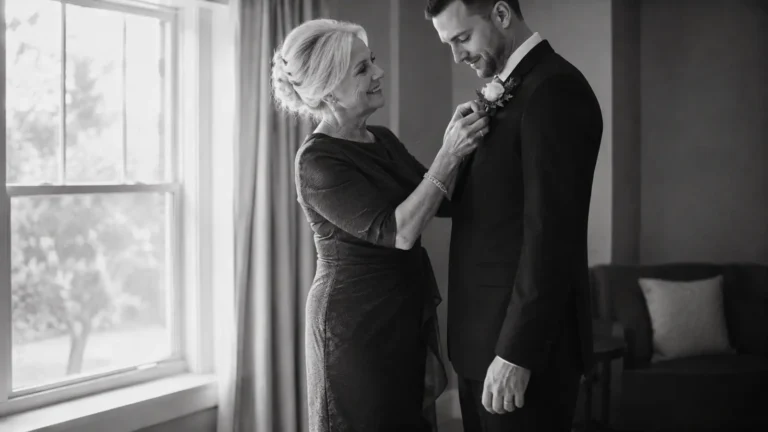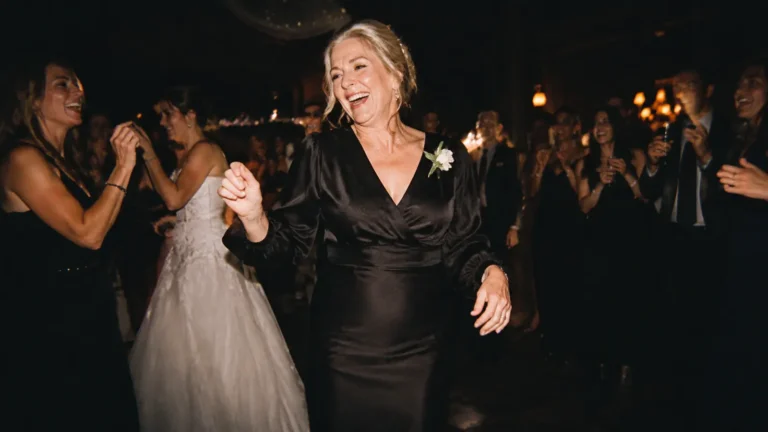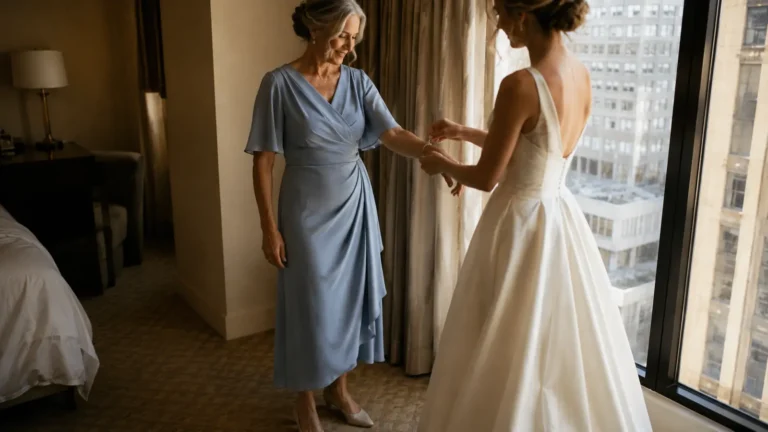
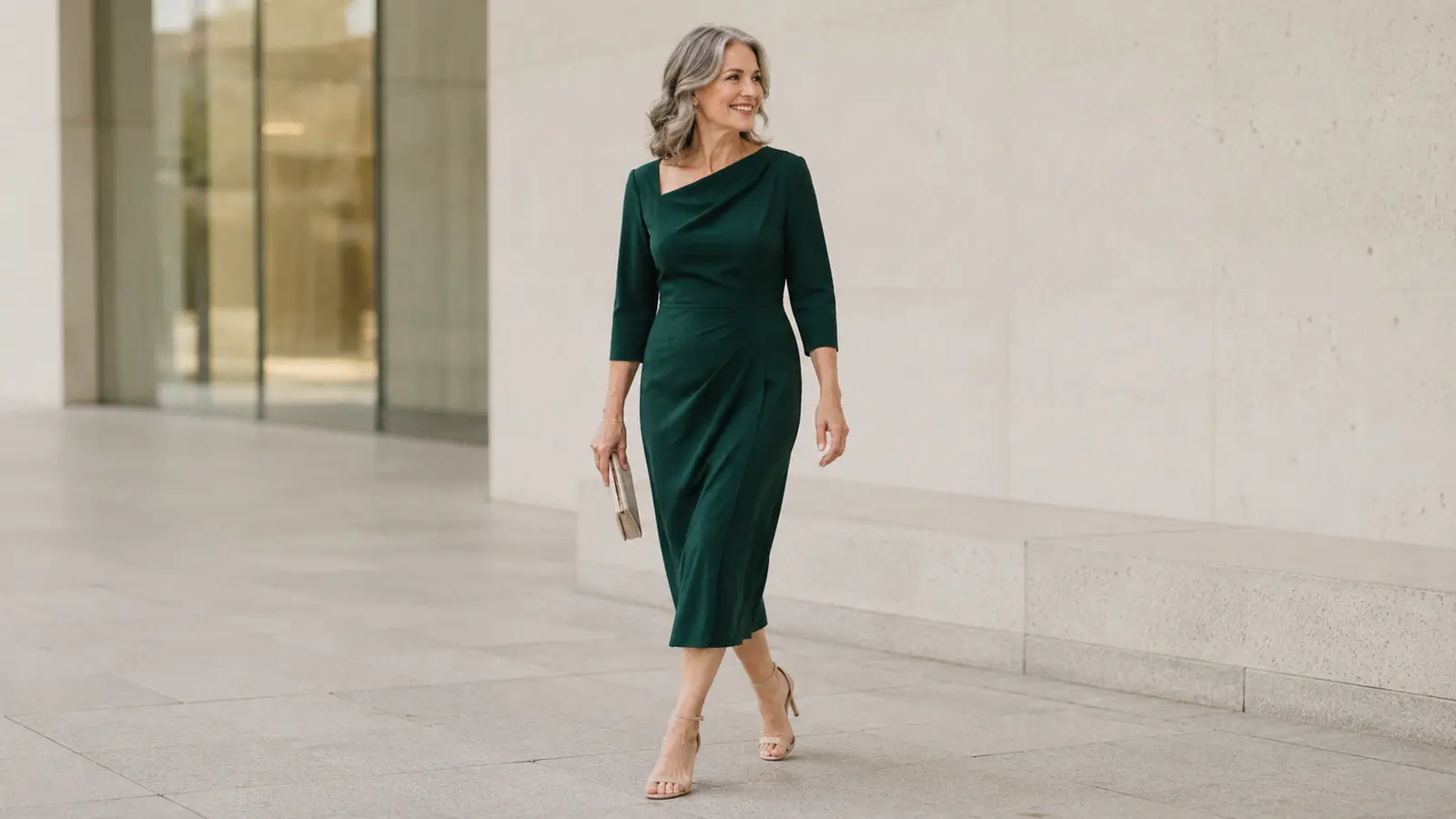
Modern mother of the bride dresses are not defined by how much skin they reveal, how closely they follow trends or whether they make a woman appear younger.
A dress feels modern when its shape is intentional, its details have a clear purpose and the woman wearing it still recognizes herself.
The problem is that many mothers begin shopping inside a category that seems to offer only two extremes: heavily embellished dresses with matching jackets or glamorous gowns designed for a completely different event.
At Wedding Dress Style, we take a different approach:
Do not shop for the youngest-looking dress. Shop for the dress that removes the most apologies.
You should not need to apologize for your arms, your waist, your age, your personal style or your desire to look important at your child’s wedding.
What Does “Matronly” Actually Mean?
“Matronly” is often used carelessly as another word for mature. That is neither useful nor fair.
Age is not what makes a dress feel dated.
A dress usually begins to feel dated when several cautious design elements appear together:
- A shapeless matching jacket
- Heavy lace covering the entire outfit
- Dense beading at every edge
- An undefined waist
- A stiff fabric that does not move
- A high neckline combined with long sleeves and a long skirt
- A muted color selected only to avoid attention
- Shoes and accessories that match too perfectly
None of these features is automatically wrong.
A beautifully cut jacket can look architectural. Lace can feel contemporary. Full sleeves can be dramatic. A long skirt can be exceptionally elegant.
The problem is accumulation.
When every detail is chosen to conceal, soften or minimize the wearer, the outfit can lose its personality.
Modern style is not about removing all coverage. It is about allowing each design decision to look deliberate.
Stop Limiting the Search to “Mother of the Bride”
One of the most useful shopping changes is also one of the simplest.
If the mother-of-the-bride section feels uninspiring, stop searching only within that category.
Try searching for:
- Formal evening gowns
- Cocktail dresses
- Black-tie gowns
- Wedding guest dresses
- Gala dresses
- Occasion dresses
- Elegant jumpsuits
- Dressy pantsuits
- Tea-length formal dresses
A label describes the retailer’s merchandising system. It does not determine who is allowed to wear the garment.
A sophisticated one-shoulder evening gown does not become inappropriate because the product page fails to call it a mother-of-the-bride dress.
The correct questions are:
- Does it fit the wedding’s dress code?
- Does it respect the couple’s preferences?
- Can it be worn comfortably through the event?
- Does it feel like the woman wearing it?
If the answers are yes, the department label does not matter.
Begin With Personal Style, Not Age
Before opening a shopping website, look at the clothing already worn most confidently.
Does the mother usually prefer:
- Clean tailoring
- Soft romantic details
- Bold color
- Minimal neutral clothing
- Vintage-inspired silhouettes
- Artistic prints
- Classic structure
- Relaxed movement
The wedding outfit should be an elevated version of that style.
A woman who normally wears simple, architectural clothing may feel disguised in floral lace and scattered sequins. A woman who loves color may feel invisible in gray simply because someone called it sophisticated.
Personal style should not disappear when a child gets married.
At the same time, familiarity should not become fear. A wedding can be an opportunity to try a new neckline, richer fabric or stronger color while remaining recognizable.
We call this the one-step rule:
Move one step beyond your usual style—not five steps into someone else’s wardrobe.
Choose Structure Without Stiffness
Many women look for a structured dress because they want support, definition and a smooth silhouette.
Structure can be extremely helpful. Stiffness is different.
Good structure may include:
- Well-placed seams
- A defined waist
- A properly fitted bodice
- Internal support
- Strategic draping
- A fabric with enough weight to hold its shape
- A skirt that falls cleanly from the body
Stiffness often appears as:
- A bodice that restricts breathing
- Sleeves that prevent the arms from lifting
- A jacket that rises when seated
- Thick fabric gathering at the waist
- Boning that presses painfully into the ribs
- A skirt that moves as one solid piece
A dress can look polished without feeling armored.
During a fitting, do not judge the garment only while standing straight in front of a mirror. Sit, turn, walk and raise both arms. Structure should support movement rather than punish it.
Let the Dress Have One Clear Idea
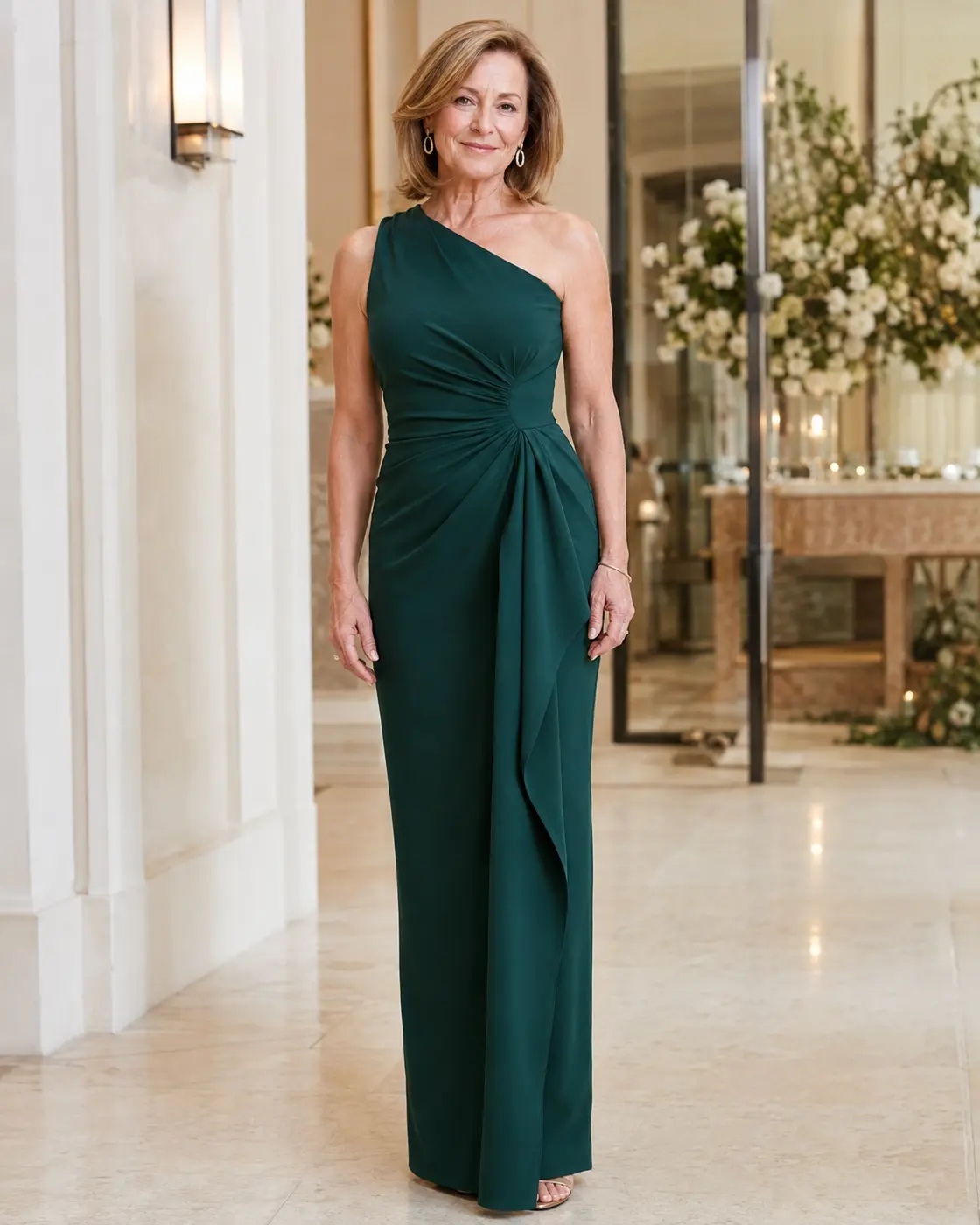
Some outfits feel dated because too many formal details compete for attention.
The dress may include lace, sequins, ruching, a brooch, a sheer jacket, scalloped edges and a decorative neckline—all at once.
A modern dress often communicates one strong idea:
- A one-shoulder neckline
- A sculpted draped waist
- A beautiful cape sleeve
- A clean column silhouette
- A bold floral print
- A rich jewel tone
- A softly pleated skirt
- A focused area of beadwork
The remaining elements support that idea instead of competing with it.
Before buying, finish this sentence:
“The best thing about this dress is ______.”
If the answer requires listing six unrelated details, the design may be doing too much.
Sleeves Should Look Intentional
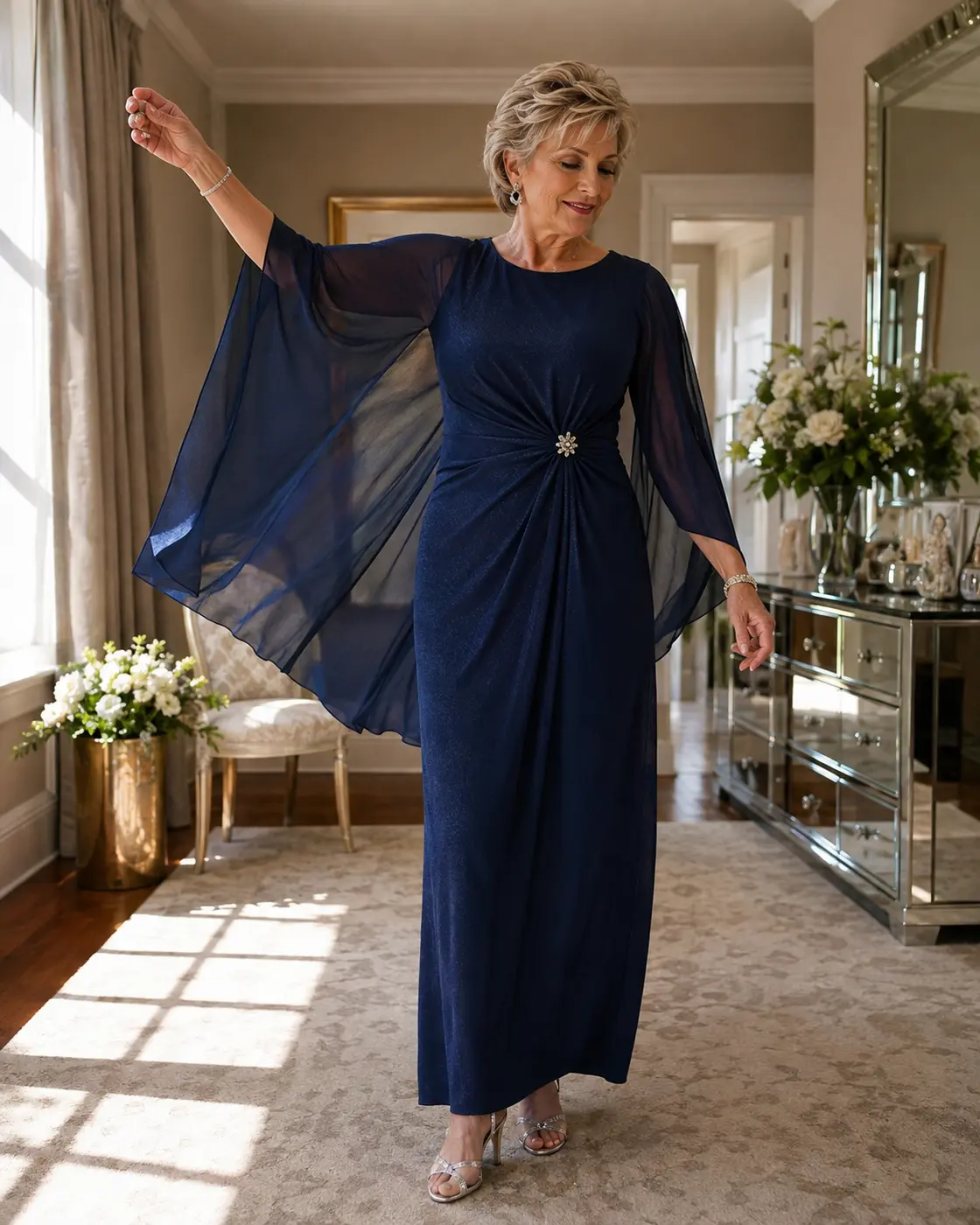
Many mothers want arm coverage. There is nothing outdated about that preference.
The difference is whether the sleeves appear to belong to the dress or look like they were added because the wearer was expected to hide.
Contemporary sleeve options include:
- Soft flutter sleeves
- Sheer fitted sleeves
- Cape sleeves
- Split sleeves
- Bracelet-length sleeves
- Draped sleeves
- A clean three-quarter sleeve
- An asymmetric single sleeve
Consider how the sleeve behaves rather than simply how much it covers.
Test whether it:
- Allows comfortable hugging
- Fits smoothly around the arm
- Remains in place when sitting
- Works beneath a coat if needed
- Feels appropriate for the temperature
- Photographs clearly against the dress
A poorly fitted sleeve can make an otherwise beautiful gown uncomfortable. A thoughtfully designed sleeve can become its strongest feature.
Rethink the Matching Jacket
The matching jacket became common because it provided coverage and allowed an outfit to move between ceremony and reception.
The idea is practical. The execution is not always modern.
A short boxy jacket in the exact same fabric can divide the body at an unhelpful point and conceal the shape of the dress beneath it.
Before rejecting jackets completely, consider alternatives:
- A long tailored jacket
- A softly draped wrap
- A sheer cape
- A cropped jacket with a clearly defined waist
- A tuxedo-style blazer
- A light coat designed as part of the outfit
- A detachable shoulder drape
If the jacket is necessary only for the ceremony, photograph the outfit both with and without it. Make sure both versions feel complete.
The jacket should transform the look—not rescue a dress that does not work on its own.
Modern Necklines Are About Proportion
There is no single neckline that makes every mother look modern.
A neckline succeeds when it creates balanced proportions, stays secure during movement and frames the face.
Options worth trying include:
- Soft V-neck
- Portrait neckline
- Square neckline
- Boat neck
- One-shoulder neckline
- Asymmetric draping
- Off-the-shoulder neckline
- Draped cowl neckline
- Elegant halter
Do not reject a neckline based solely on the hanger.
A wide boat neck may balance one person’s proportions beautifully and overwhelm another. A V-neck can look elegant when properly fitted but become distracting if it shifts every time the wearer bends forward.
Test the neckline while sitting and leaning in for a hug.
The goal is not maximum coverage or minimum coverage. It is visual balance without constant adjustment.
Color Should Do More Than Avoid Attention
Beige, gray and navy can all look contemporary. They can also look uninspired when selected only because they seem safe.
Modern mother of the bride dresses can include:
- Deep teal
- Emerald
- Aubergine
- Burgundy
- Cobalt
- Slate blue
- Terracotta
- Rose
- Metallic neutrals
- Graphic florals
- Black
- Rich monochromatic combinations
Look at how a color affects the face before deciding whether it is appropriate.
Hold the fabric close to the neckline in daylight. Check whether it brightens the complexion or creates shadows. Then photograph it with flash to see whether a pale shade becomes white or a dark shade loses all detail.
The dress does not need to match the bridesmaids. It should coordinate with the wedding without making the mother look like another attendant.
Fabric Changes the Entire Message
Two dresses with the same silhouette can feel completely different because of their fabric.
Soft crepe can make a simple gown feel sophisticated. Satin can add formality and light. Chiffon can create movement. Jacquard can give a clean silhouette visual depth.
Consider:
- How the fabric responds to daylight
- Whether it wrinkles during sitting
- How it photographs with flash
- Whether it reveals every undergarment line
- How it behaves in heat or humidity
- Whether embellishment catches on chairs or jewelry
- How much physical weight it adds
Heavy fabric and heavy beadwork are not the same as luxury.
A gown should still feel wearable after several hours. The mother will not spend the wedding standing beneath boutique lighting. She will sit through the ceremony, greet guests, pose for photographs, eat dinner and dance.
Alterations Can Modernize an Ordinary Dress
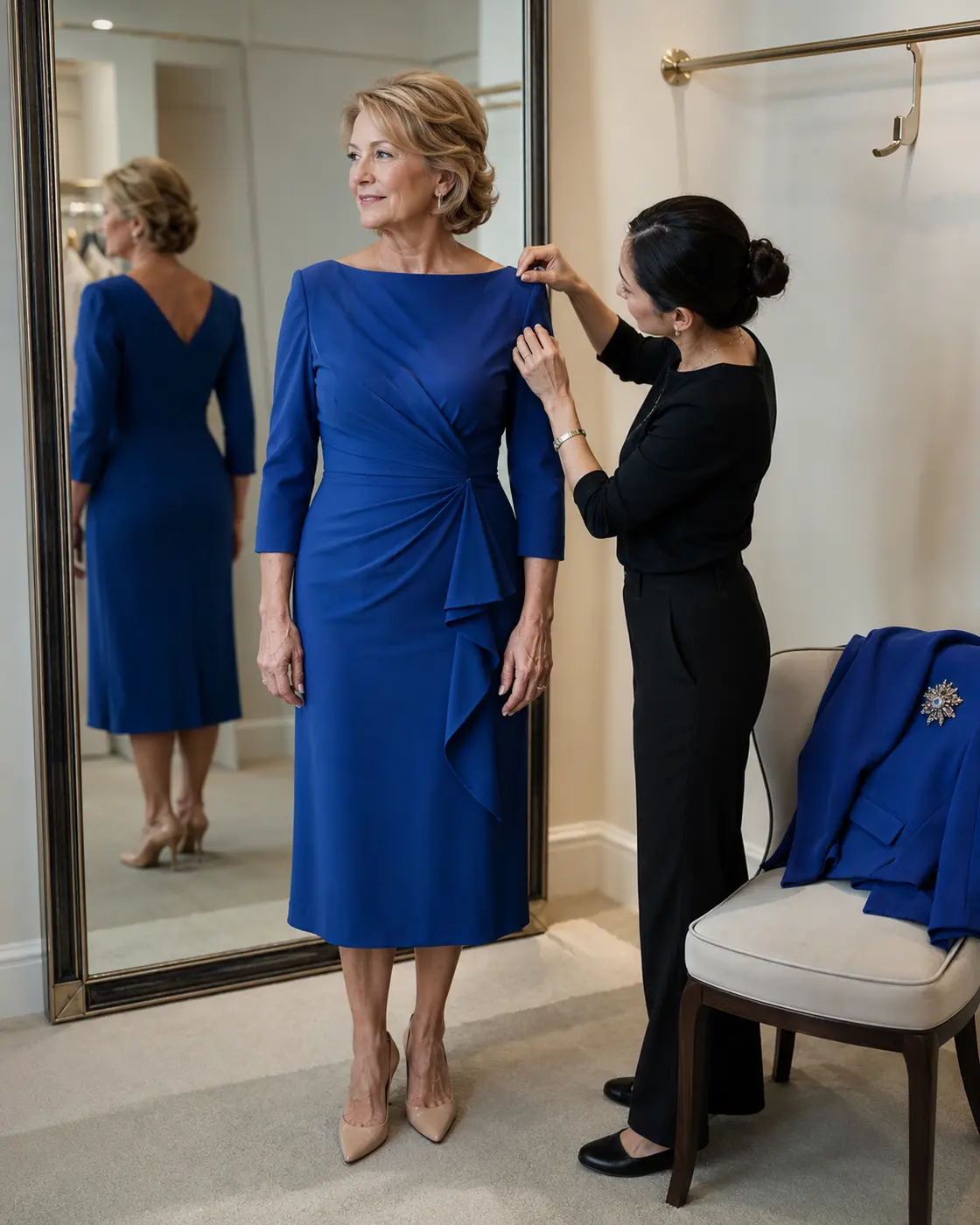
A dress does not always need to be replaced. Sometimes it needs to be edited.
Useful alterations may include:
- Shortening an awkward hem
- Removing unnecessary embellishment
- Refining oversized sleeves
- Adjusting the waist position
- Improving the shoulder fit
- Opening a neckline slightly
- Removing a matching jacket
- Adding internal support
- Changing dated buttons
- Correcting the length for the actual shoes
The shoulder line deserves special attention.
When shoulders fit poorly, the entire dress can look borrowed. A small correction can make the neckline sit cleanly, improve the sleeves and restore the intended waist position.
Do not ask a seamstress to make a dress two sizes smaller everywhere without understanding how that will affect its proportions. Some garments can be transformed; others are constructed in ways that make extensive alteration expensive or unreliable.
Obtain an alteration estimate before the return window closes.
Do Not Use Black Shapewear as a Universal Solution
Shapewear can create a smoother foundation, but it should not compensate for an incorrectly fitted dress.
If the shapewear:
- Restricts breathing
- Rolls at the waist
- Shows beneath the neckline
- Creates new lines at the legs
- Makes using the restroom difficult
- Cannot be worn comfortably for several hours
then it is not solving the practical problem.
Bring the intended foundation garments to fittings. A seamstress needs to see the dress over the same bra and shapewear that will be worn at the wedding.
Comfort is not a minor concern. Physical discomfort changes posture, expression and participation.
Use Accessories to Update Not Overload the Dress
Accessories can make a classic dress feel current, but they cannot all be the focal point.
Choose one or two purposeful elements:
- Sculptural earrings
- A modern metallic clutch
- An elegant cuff
- Refined shoes in an unexpected color
- A clean evening wrap
- A contemporary hair accessory
Avoid matching the shoes, clutch, jewelry and jacket perfectly unless that precise coordination is part of a deliberate monochromatic look.
Slight variation often feels more natural.
If the gown has significant beadwork, simplify the jewelry. If the dress is minimal, the accessories can carry more personality.
The Wedding Dress Style Four-View Test
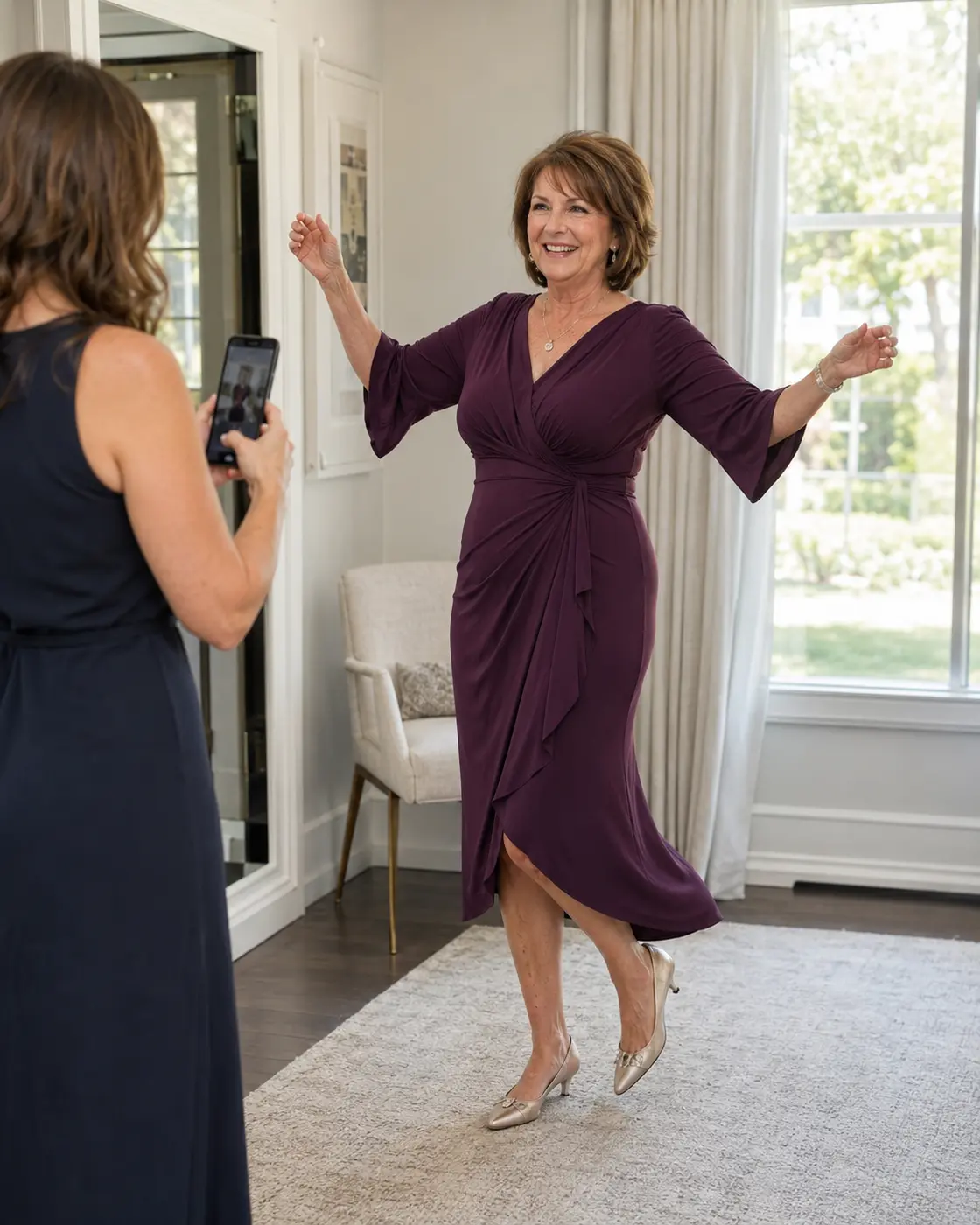
A fitting-room mirror shows only one controlled version of the outfit.
Before keeping the dress, evaluate four views:
1. The Standing View
Does the dress create proportions you enjoy? Are the shoulders, neckline and waist sitting correctly?
2. The Seated View
Does the waist remain comfortable? Does the skirt rise excessively? Does the jacket or bodice fold awkwardly?
3. The Movement View
Can you walk, hug, raise your arms and dance without adjusting the dress?
4. The Photograph View
Does the fabric retain detail? Does the color flatter the face? Does the dress look appropriate beside the venue and wedding party?
A dress must succeed in all four views.
If it looks beautiful only while standing motionless, it is not finished.
Signs the Dress Is Trying Too Hard to Make You Look Younger
Looking modern and looking younger are not the same goal.
Be cautious when a dress relies on:
- Uncomfortable cutouts
- A neckline that cannot remain secure
- A skirt length that changes the wearer’s normal movement
- Trend details that feel unfamiliar
- Transparent fabric requiring constant monitoring
- Styling that resembles the bridesmaids too closely
A woman does not need to imitate a younger guest to look contemporary.
The strongest outfit reflects confidence, not age denial.
Signs the Dress Is Trying Too Hard to Make You Disappear
The opposite problem is equally common.
Watch for:
- A shapeless silhouette selected only for concealment
- A color that drains the complexion
- Excess fabric around every part of the body
- A jacket that remains closed because the dress beneath feels unfinished
- Shoes chosen only to avoid being noticed
- A style that has no relationship to the wearer’s normal personality
The mother of the bride is not an anonymous guest.
She should not compete with the bride, but she is allowed to look significant, joyful and beautifully dressed.
Our Final Perspective
Modern mother of the bride dresses are not defined by one neckline, sleeve length or fashionable color.
Modernity comes from intention.
It is visible in a shoulder seam that sits correctly, a sleeve that moves, a color that brings life to the face and an outfit that reflects the person wearing it.
Coverage can be modern. Lace can be modern. Jackets can be modern. Long sleeves and classic silhouettes can be modern.
What feels dated is not maturity—it is clothing built entirely around fear.
Choose a dress that respects the wedding, supports real movement and gives the mother a visible sense of self.
She does not need to look younger.
She needs to look unmistakably present.