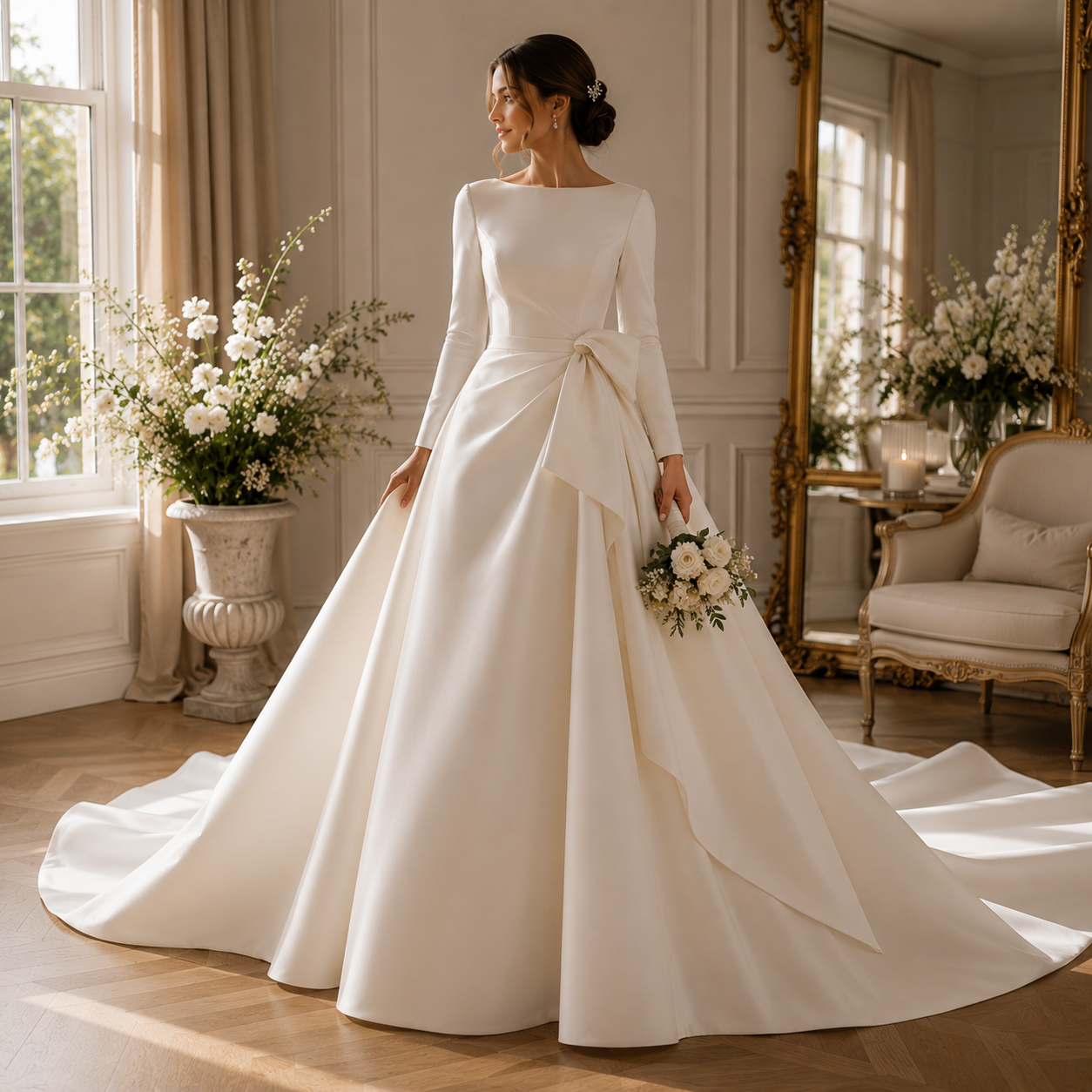
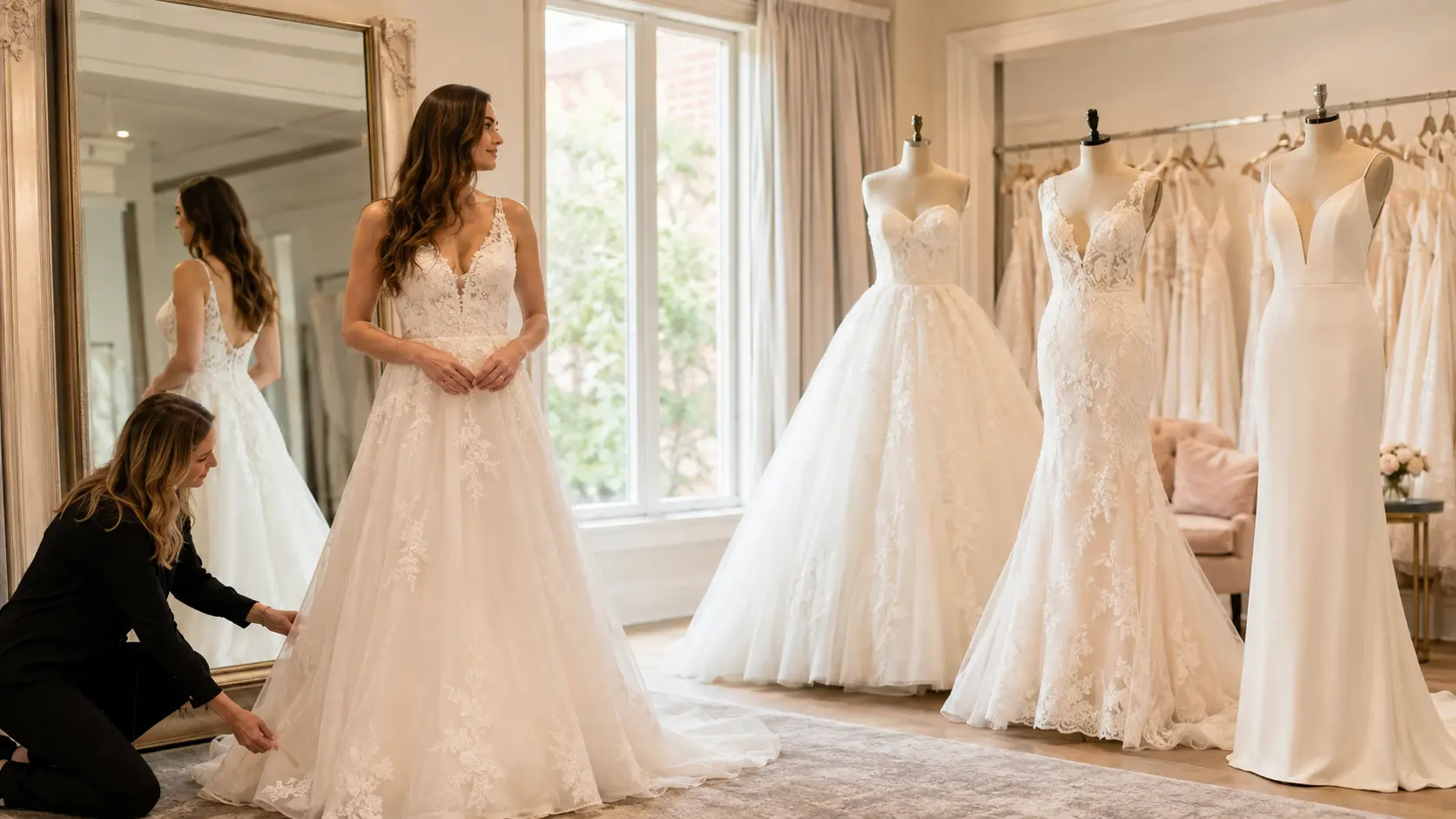
You can arrive at a bridal appointment completely certain that you want an A-line gown and leave thinking about the fitted dress you almost refused to try.
That does not mean you failed to understand your body. It means wedding dresses behave differently on a real person than they do in a saved Pinterest photo.
After reviewing bridal-stylist guidance and candid fitting-room experiences shared by real brides, one pattern became clear: choosing a silhouette is not simply about finding the shape that makes your waist appear smallest. It is about finding the dress that supports your body, suits your wedding, and still feels like you once the initial mirror moment has passed.
At Wedding Dress Style, we use a more practical approach: Shape, Support, Setting, and Self.
First, Forget the “Perfect Dress for Your Body Type” Rule
Traditional guides often prescribe one silhouette for each body shape: A-line for pear shapes, mermaid for hourglass figures, empire waist for apple shapes.
These suggestions can provide a starting point, but they are not reliable enough to make the decision for you.
One plus-size bride shared that the supposedly “universally flattering” A-line silhouette made her feel larger, while other brides regularly report choosing a wildcard dress suggested by a stylist. The useful lesson is not that A-line dresses are unflattering. It is that no silhouette is universal. Read the bride discussion.
Your height, torso length, bust support, fabric, seam placement and the exact point where the skirt begins all affect the result. Two dresses carrying the same “fit-and-flare” label can create entirely different proportions.
Treat silhouette names as fitting-room categories—not rules about what your body is allowed to wear.
The Wedding Dress Style Four-S Test
1. Shape: Look at Where the Dress Creates Its Lines
Do not evaluate only whether the dress is fitted or full. Look more closely:
- Where does the waistline sit?
- Where does the skirt begin to widen?
- Does the bodice lengthen or shorten your torso?
- Does the fabric skim, stand away from, or cling to your body?
- Where does your eye naturally land first?
The waistline is often more influential than the general silhouette name. A natural waist, basque waist and dropped waist can make three ball gowns look completely different on the same bride.
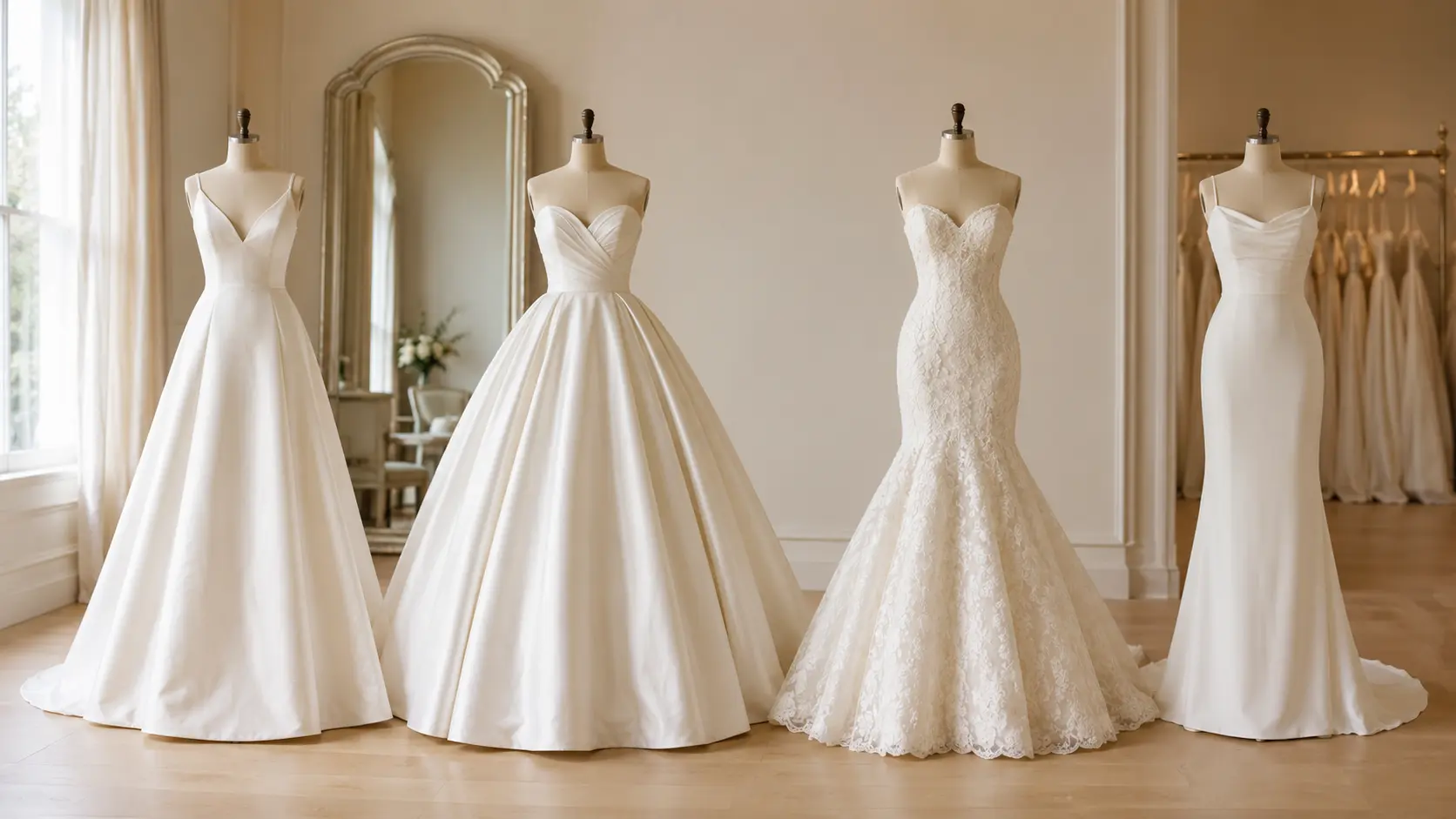
Start your appointment by trying three contrasting shapes:
- An A-line or soft ball gown
- A fitted style such as fit-and-flare or mermaid
- A straighter sheath or column dress
This gives you real comparisons. Do not spend the entire appointment trying slightly different versions of the first shape you requested.
2. Support: Notice What the Dress Is Doing for You
A beautiful sample gown may be clipped tightly at the back during an appointment. Those clips can temporarily create support and proportions that the ordered gown will not automatically have.
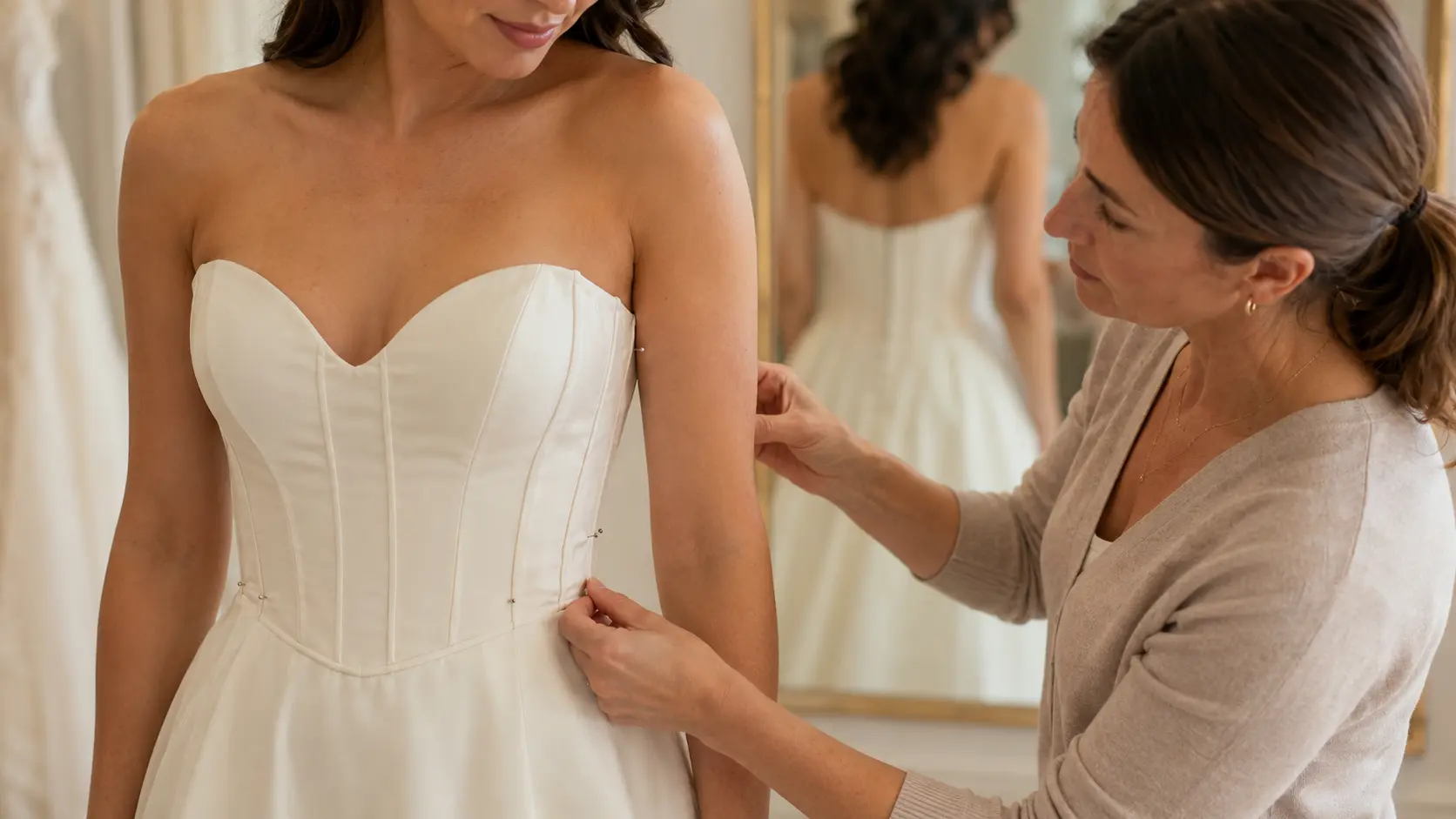
Ask your stylist:
- What internal structure does the bodice contain?
- Will cups, boning or additional support be needed?
- Is the sample being clipped differently from how my size will fit?
- Can this neckline remain secure while I move?
- Which alterations are expected rather than optional?
Alterations are part of the dress—not a minor detail added at the end. Professional estimates cited by Vogue place many wedding-dress alterations between approximately $650 and $1,200, although complexity and location can change the cost considerably. See the alteration guidance.
A lower-priced gown requiring major structural changes may ultimately cost more than a better-fitting dress with a higher initial price.
3. Setting: Test the Dress Against Your Actual Wedding
A dress can look extraordinary on a bridal-store pedestal and still be wrong for the day you are planning.
Consider the real setting:
- Will you walk over grass, sand, stairs or city pavement?
- Is the ceremony indoors or exposed to heat and wind?
- Will the reception involve hours of dancing?
- Are you entering a small restaurant or a large ballroom?
- How much help will you have managing the train?
- Will you need to sit in a car while wearing the dress?
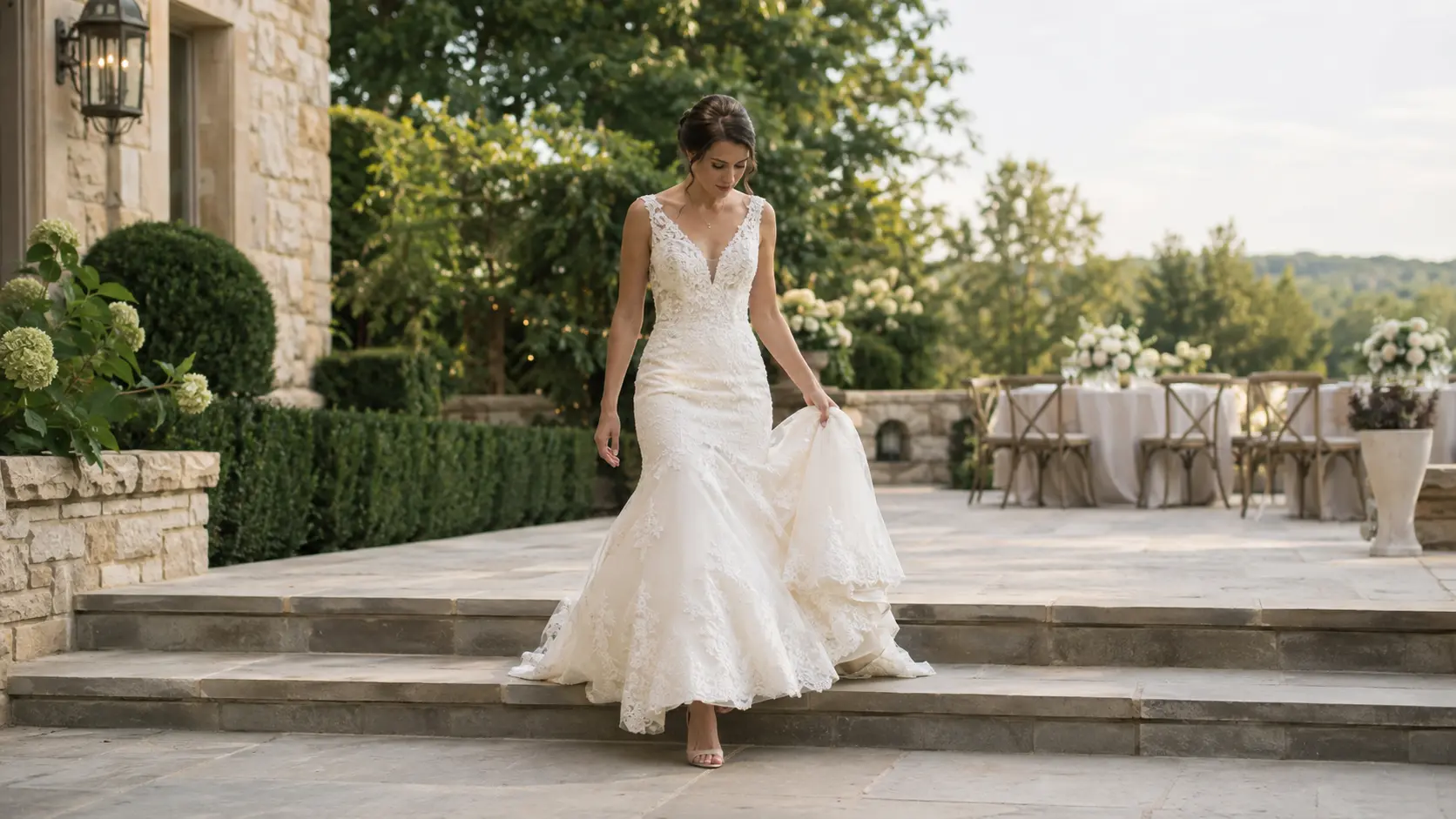
A fitted gown may feel comfortable while standing but restrictive when sitting. A dramatic ball gown may suit a cathedral beautifully but become difficult between closely arranged reception tables. A light sheath may feel effortless at a beach ceremony but provide less structure than you expected.
The goal is not to choose the most practical dress in the store. It is to understand the tradeoff you are making.
4. Self: Ask Whether You Recognize Yourself
Many brides wait for an emotional “this is the one” moment. Real fitting experiences suggest that this reaction is far from universal. Some brides feel calm rather than overwhelmed; others decide through comparison, photographs, comfort and price. A bridal stylist participating in one discussion explained that most of her clients do not experience the dramatic reaction shown on television. Read the fitting-room perspectives.
Instead of asking, “Does this make me look bridal enough?” try asking:
- Do I recognize myself in this dress?
- Am I standing naturally, or am I posing to make it work?
- Would I still like it without the veil?
- Am I responding to the dress or to my family’s reaction?
- Do I want to keep wearing it, or do I only want to photograph it?
A wedding dress may be more formal than anything you have worn before, but it should not feel like a costume chosen for someone else’s wedding.
Know What Each Major Silhouette Actually Does
A-Line
An A-line gown is fitted through the bodice and gradually widens toward the hem. Its popularity comes from its flexibility: fabric, waist placement and skirt volume can make it appear relaxed, romantic or formal.
Choose it if you like definition without having the skirt closely follow your hips. Do not choose it only because someone called it universally flattering.
Ball Gown
A ball gown combines a fitted bodice with a distinctly full skirt. It creates a strong waist-to-skirt contrast and brings visual presence to large or formal spaces.
Before committing, test its weight, sitting space and movement between tables.
Fit-and-Flare
A fit-and-flare follows the body through the bodice and hips before widening. The flare usually begins higher than it does on a mermaid gown, which can provide more walking room.
Pay attention to where the flare begins. Moving that point by only a few inches can change both your proportions and comfort.
Mermaid
A mermaid gown stays closely fitted farther down the thighs or toward the knees before flaring dramatically.
Do not test it by standing still. Walk, sit and take a full-length step. A beautiful front view is not enough if the dress changes how you move throughout the wedding.
Sheath or Column
A sheath falls in a relatively straight line and usually has less skirt volume. It can feel modern and effortless, but its simplicity makes fabric drape, seam placement and tailoring especially visible.
Empire Waist
An empire-waist gown begins flowing below the bust rather than at the natural waist. It can create softness and movement, although the exact fabric and fullness determine whether it feels light or voluminous.
The Five-Minute Fitting-Room Test
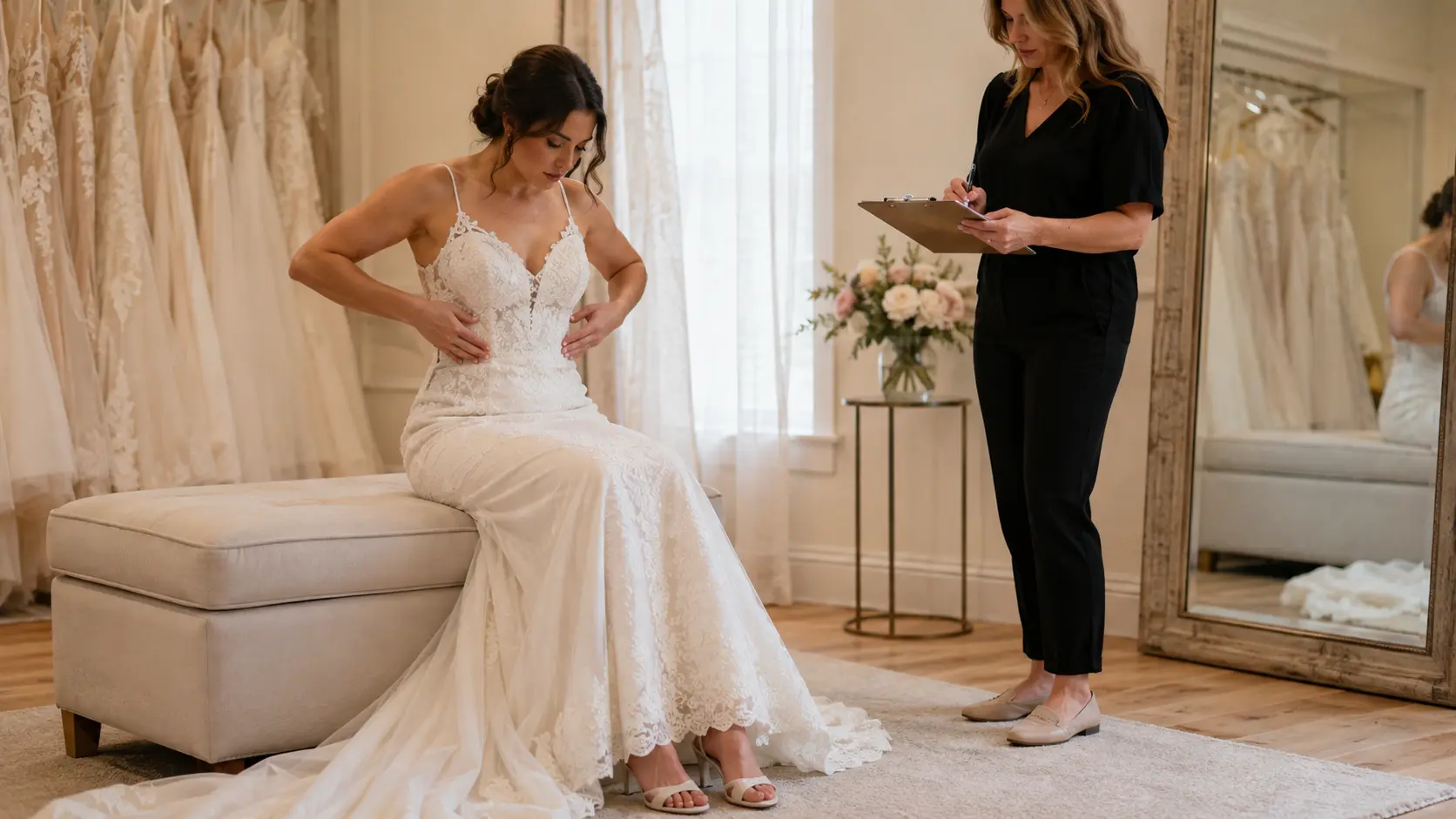
Before saying yes, spend five minutes doing something other than looking in the mirror.
- Walk normally. Do not take tiny bridal-store steps.
- Sit for at least one minute. Notice pressure around the ribs, waist and thighs.
- Raise both arms. Imagine hugging guests and dancing.
- Turn without holding the skirt. See whether the dress follows you comfortably.
- Take one unposed photo and a short video. Movement often reveals more than a carefully arranged mirror image.
Lighting and styling also affect perception. Brides have reported feeling completely different about similar dresses depending on the boutique’s lighting, atmosphere and how carefully the sample was fitted. See the fitting discussion.
If possible, review your photos later—after the appointment’s excitement and other people’s opinions have quieted.
Our Final Perspective
The right silhouette is not the one a chart assigns to your body. It is the one that creates proportions you enjoy, offers the support you need, works in your real wedding setting and still feels recognizably yours.
Go into your first appointment with preferences, but leave room for evidence. Try the silhouette you saved, its opposite and one wildcard chosen by a knowledgeable stylist.
You are not looking for a dress that proves your body is flattering.
You are looking for a dress that deserves to be worn by you.