What to Wear to a Wedding as a Guest: A Practical Dress Code Guide
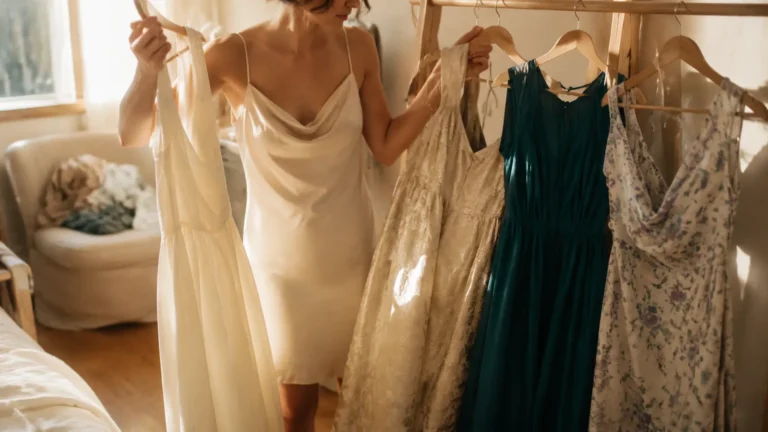
Deciding what to wear to a wedding as a guest sounds simple until the invitation says “garden formal,” the ceremony begins at four, the reception is inside a historic hotel and the weather forecast predicts 88 degrees.
A dress code gives you a category. It does not choose the actual outfit for you.
The most successful wedding guest outfits solve several problems at once. They respect the couple’s requested formality, work at the venue, survive the weather and allow you to sit, walk, eat and dance without spending the evening adjusting your clothes.
At Wedding Dress Style, we use four clues before choosing an outfit:
- Words: What does the invitation actually say?
- Place: Where will the ceremony and reception happen?
- Time: Is it a daytime or evening celebration?
- Conditions: What will the weather, ground and movement be like?
The dress code comes first. The other three clues help you interpret it.
Start With the Invitation – Not the Venue’s Instagram Page
Read the entire invitation and wedding website before shopping.
Couples sometimes place the dress code beneath the location, inside the FAQ page or under a heading such as “What should I wear?” The website may also mention grass, gravel, religious customs, required colors or a change of clothes for another event.
Do not assume that a barn means casual or that a beach means a sundress and flip-flops. A couple can hold a formal wedding in a field or a black-tie celebration beside the ocean.
The location changes which fabrics, shoes and layers will work. It does not automatically cancel the stated dress code.
If no dress code appears anywhere, consider:
- The formality of the invitation
- The ceremony and reception venues
- The starting time
- The couple’s usual style
- Any cultural or religious setting
When the evidence conflicts, ask. A short question is better than an expensive guess.
White-Tie Wedding Attire
White tie is the most formal dress code and is uncommon at American weddings.
For dress wearers, the expected choice is a full-length evening gown rather than a cocktail or midi dress. This is the occasion for formal fabric, refined accessories and a deliberately finished appearance.
For suit wearers, white tie traditionally requires a black tailcoat, white formal shirt, white waistcoat and white bow tie.
Do not try to make an existing casual outfit look white-tie by adding more jewelry. The structure and fabric of the clothing create the formality.
If you receive a genuine white-tie invitation and do not own suitable clothing, renting or borrowing can be more sensible than purchasing something you are unlikely to wear regularly.
Black-Tie Wedding Attire
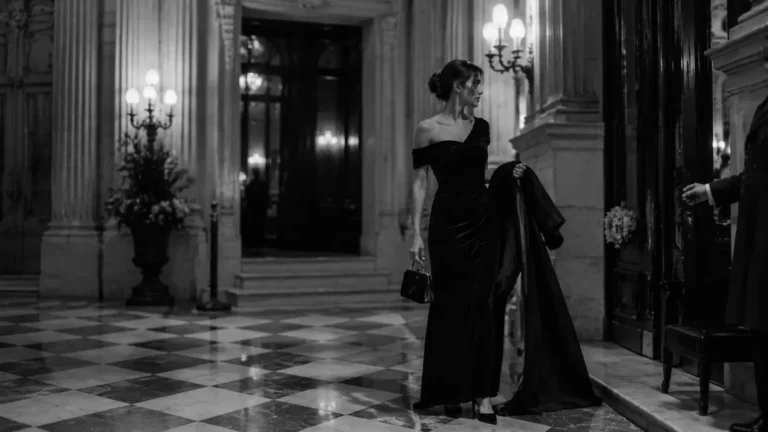
Black tie usually indicates an elegant evening wedding.
A floor-length gown is the safest choice. Look for fabric and construction that appear formal in person, such as satin, silk, velvet, chiffon, crepe, taffeta or structured jacquard.
A formal jumpsuit or women’s tuxedo can also work when its tailoring, fabric and accessories match the event’s level of formality.
The important distinction is not simply length. A casual cotton maxi dress is still casual, while a beautifully structured gown can feel formal without excessive decoration.
Consider how the outfit will look after several hours of use. A dramatic neckline that works while standing still may become difficult during dinner. A heavy beaded gown may feel wonderful for twenty minutes and exhausting by the reception.
Before committing, sit in the outfit and remain seated for at least five minutes. Formality matters, but so does being able to breathe through dinner.
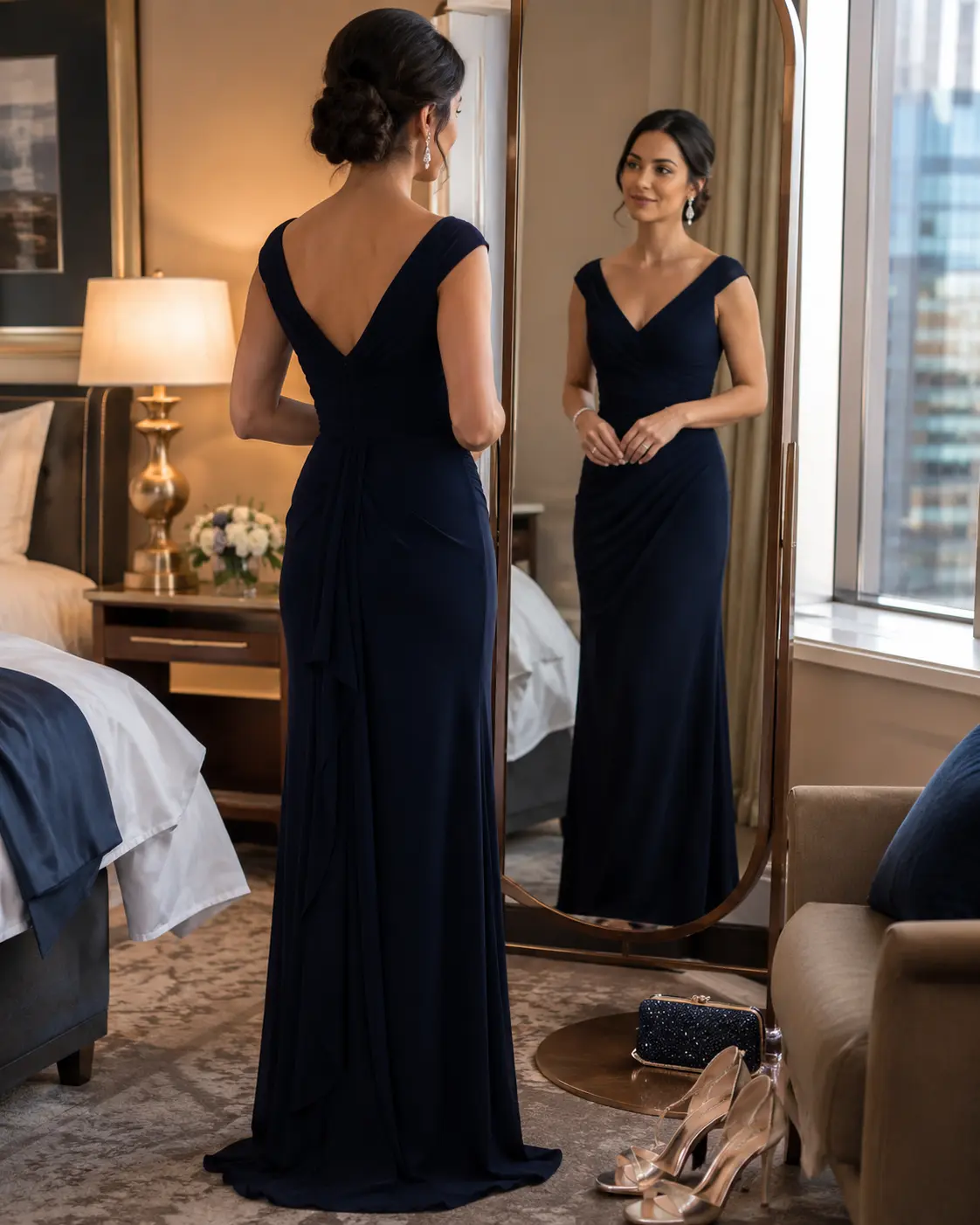
Formal or Black-Tie Optional Wedding Attire
“Black-tie optional” does not mean that half the wedding is black tie and the other half is casual. It means guests have more than one appropriate formal option.
Suitable choices can include:
- A floor-length gown
- An elevated midi dress
- A refined cocktail dress
- A dressy pantsuit or formal jumpsuit
- A tuxedo or dark formal suit
When choosing between two outfits, use the time and venue as the deciding clues.
For an evening wedding at a luxury hotel, choose the more polished option. For an early-afternoon formal wedding, an elegant midi dress may feel better connected to the setting than a heavily embellished evening gown.
If your outfit would also look appropriate at an ordinary dinner reservation, it may not be formal enough. If it looks ready for a red carpet while every detail of the invitation feels restrained, it may be doing too much.
The goal is not to attract the most attention. It is to look comfortably present at the level of celebration the couple created.
Cocktail Wedding Attire
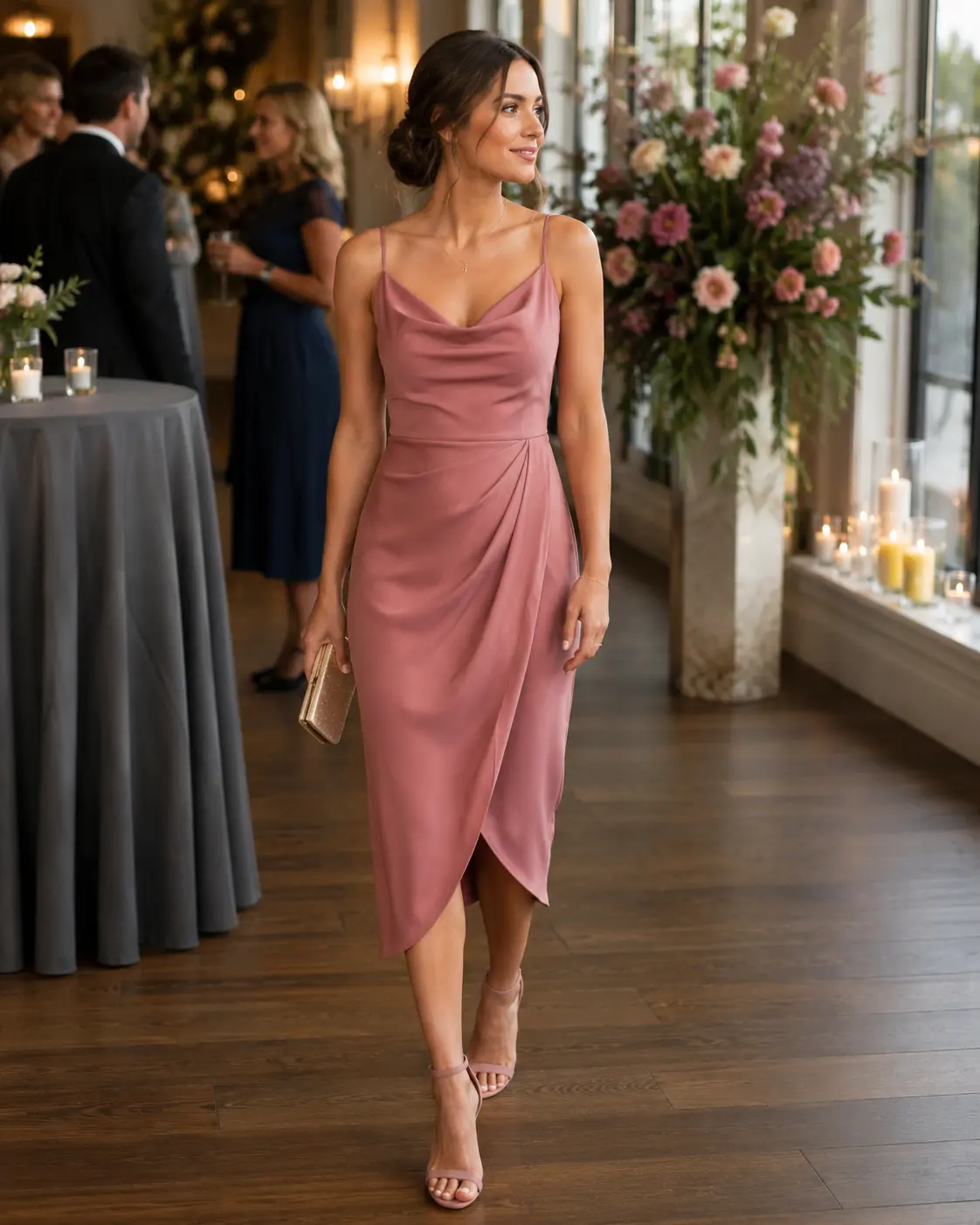
Cocktail is one of the most common—and most misunderstood—American wedding dress codes.
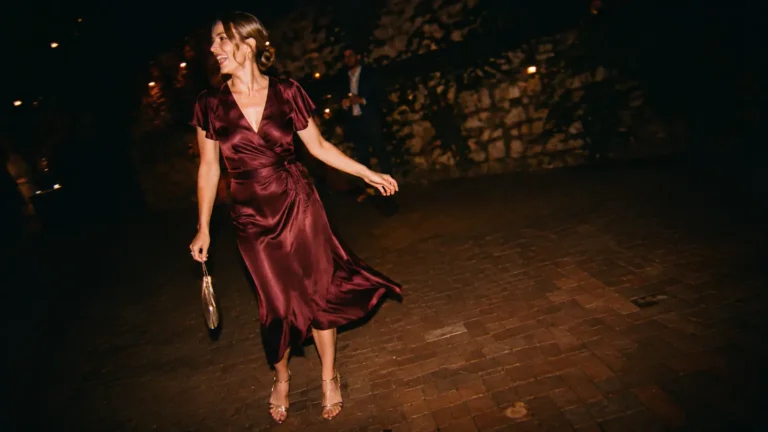
It usually calls for a polished knee-length, tea-length or midi dress. A tailored jumpsuit, dressy separates or a smart suit can also be appropriate.
Cocktail attire lives between casual daytime clothing and a formal evening gown. This is why fabric and styling matter so much.
A simple midi dress can become wedding-ready with:
- A defined or carefully draped shape
- A refined fabric
- Dress shoes or polished flats
- A small structured bag
- Intentional jewelry
- A suitable jacket, wrap or coat
A short dress is not automatically cocktail attire. If the fabric, cut and styling feel like a nightclub outfit or an everyday summer dress, the length alone will not make it appropriate.
Similarly, a floor-length dress may feel unnecessarily formal unless the couple’s wording, venue or evening schedule suggests a more elevated interpretation.
Semi-Formal or Dressy-Casual Wedding Attire
Semi-formal gives guests flexibility, but it is not another word for everyday clothing.
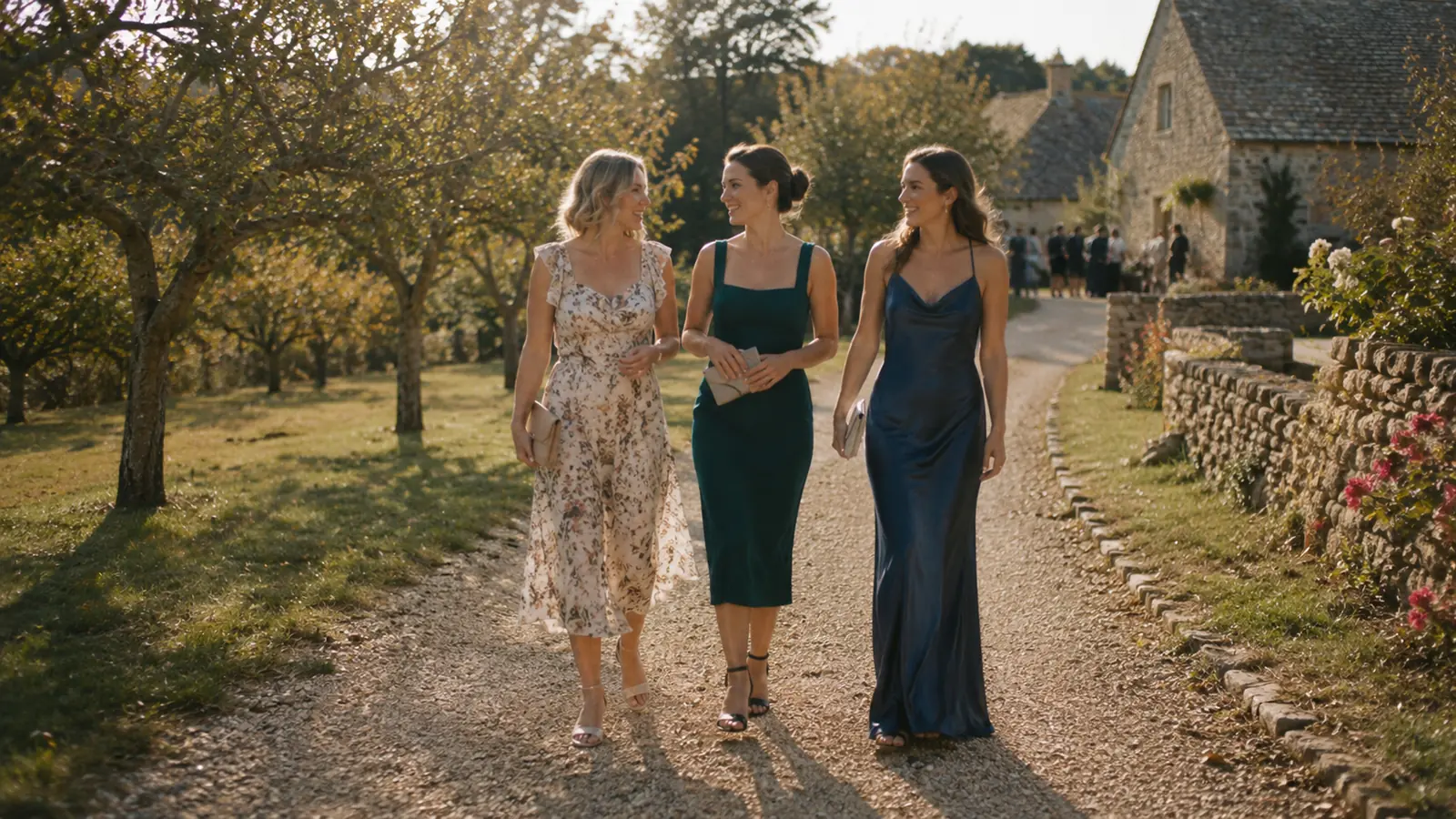
A polished midi dress, knee-length dress, dressy jumpsuit, skirt-and-blouse combination or coordinated suit can work well. Prints and lighter fabrics are often easier to use here than at a formal evening wedding.
Let the time of day guide the styling.
For a daytime ceremony, lighter colors, gentle prints and breathable fabrics often feel natural. For an evening celebration, richer colors and more structured accessories can make the same degree of formality feel appropriate after dark.
Imagine meeting the couple’s extended family and appearing in the professional wedding photographs. Your outfit should feel intentional from both perspectives.
“Dressy casual” can be especially confusing. Our practical translation is:
Wear something relaxed enough for the setting but polished enough that nobody could mistake it for an ordinary weekend outfit.
Casual Wedding Attire
A casual wedding is still a wedding.
Depending on the venue, appropriate choices could include a polished sundress, relaxed midi dress, jumpsuit, dressy separates, chinos with a button-down shirt or an unstructured jacket.
Casual gives you permission to reduce the formality. It does not automatically give permission to wear ripped denim, athletic clothes, beach flip-flops or anything you would normally use for errands.
Jeans should only be considered when the couple specifically says they are welcome or the event has a clearly communicated theme that includes them.
The easiest mistake is focusing on comfort while forgetting ceremony. Choose an outfit that feels easy to wear but still acknowledges that the day matters.
Beach and Destination Wedding Attire
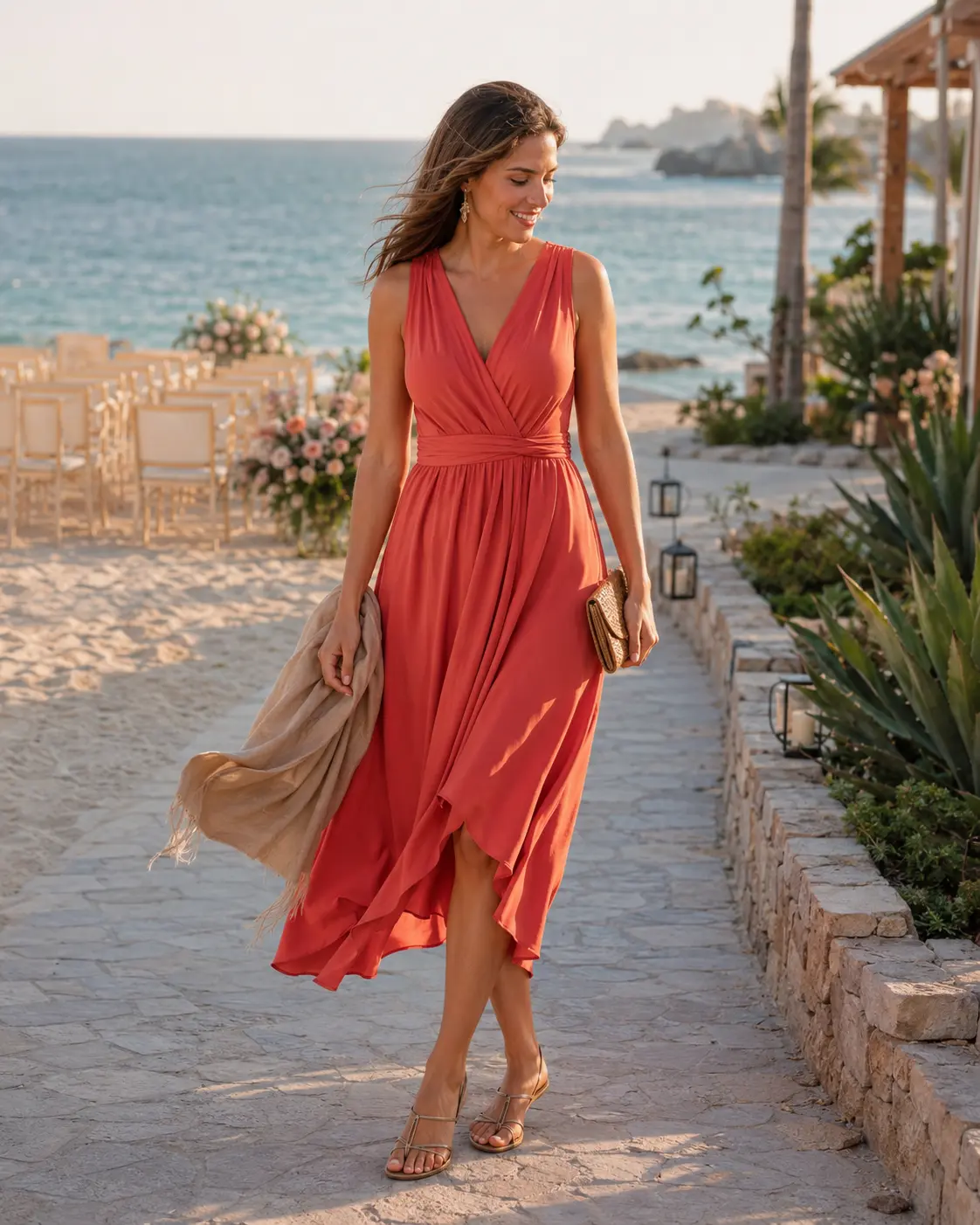
A destination wedding is not necessarily a casual wedding.
First follow the dress code. Then adapt the materials and accessories to the climate.
For a warm beach ceremony, consider breathable fabrics, lighter construction and shoes that can manage sand. For a tropical formal wedding, that could still mean a floor-length dress—but perhaps in lightweight chiffon or silk rather than heavy velvet.
Outdoor photographs can also reveal more than the fitting-room mirror. Thin fabrics may become transparent in strong sunlight, while pale colors can photograph much closer to white than expected.
Test the outfit beside a window during the brightest part of the day. Photograph both the front and back. If you can clearly see undergarments, seams or pockets, solve the problem before traveling.
Destination weddings may also include several events with different expectations. The welcome party, ceremony and farewell brunch should not automatically be treated as one continuous dress code.
The Color Question: White, Black, Red and Wedding-Party Colors
For most Western weddings, the safest rule is to avoid an outfit that is predominantly white, ivory or bridal-looking unless the couple explicitly requests it.
The question is not only, “Does this contain any white?”
Ask instead:
Could this reasonably look like a bridal outfit in photographs or from across the room?
A colorful print with a small amount of white is different from a pale ivory dress with tiny flowers. When you have to repeatedly convince yourself that an outfit is “technically not white,” choose another option.
Black is widely accepted at modern U.S. weddings, particularly evening and formal celebrations. The styling should still feel celebratory rather than funereal.
Red is not universally forbidden. However, cultural traditions can give red, white, black or other colors specific meanings. At some South Asian weddings, for example, red may be associated with bridal attire.
Never apply one culture’s color rules to every wedding. Check the couple’s guidance and ask respectfully when you are unfamiliar with the tradition.
Matching the wedding party is not automatically an etiquette violation either. If the invitation makes the palette obvious and you are concerned about appearing to be a bridesmaid or attendant, ask someone in the wedding party or choose another shade.
Let the Ground Choose Your Shoes
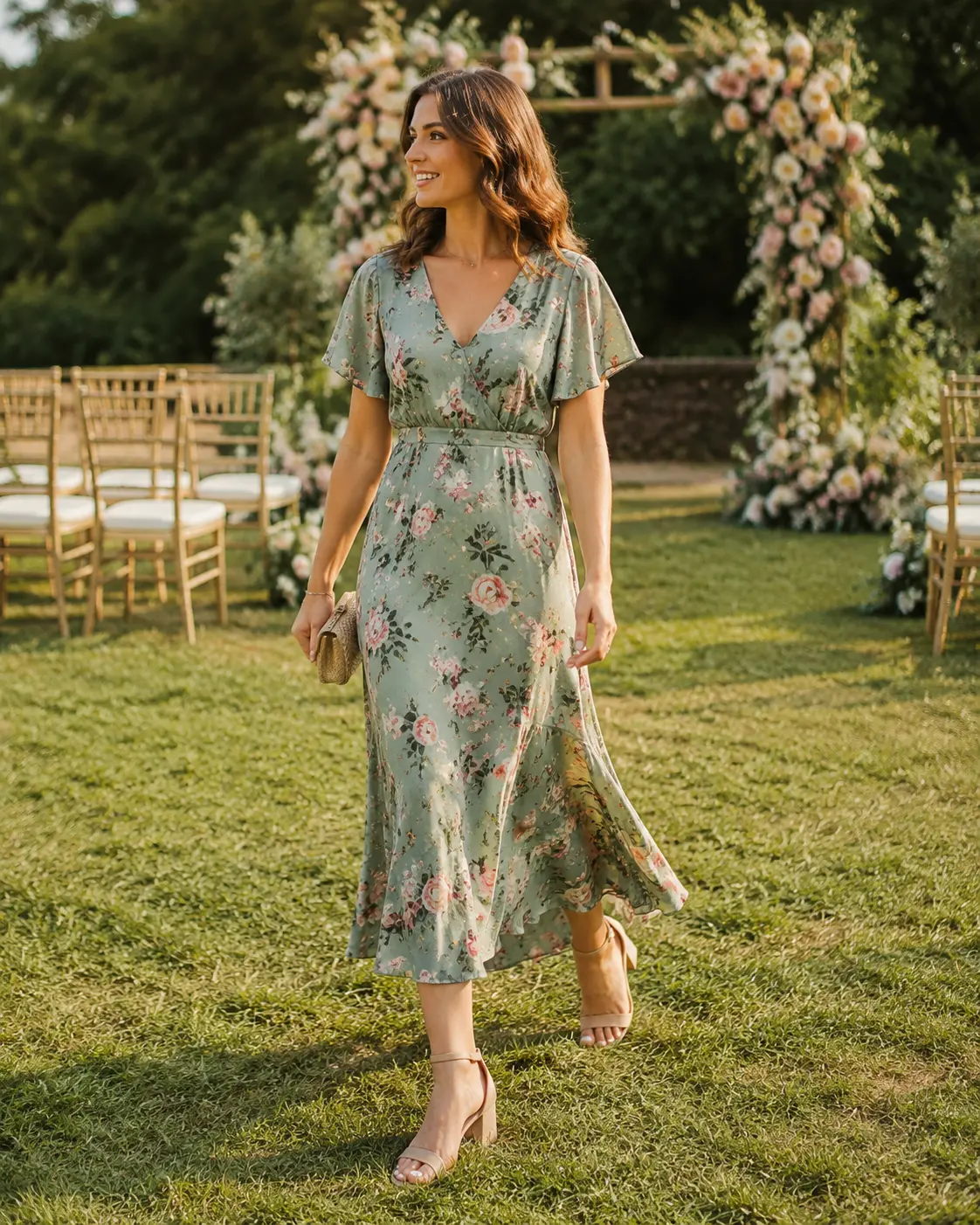
Guests often choose shoes while looking at the dress and forget to look at the floor.
Before deciding, find out whether you will be walking on:
- Grass
- Gravel
- Sand
- Cobblestones
- Wooden decking
- Carpet
- Polished tile
- Stairs
A narrow heel can sink into soft grass. A smooth sole can become unstable on stone. Brand-new shoes may feel acceptable at home but painful after the ceremony, cocktail hour and first hour of dancing.
If you want to wear heels, consider a block heel, supportive sandal or heel protector for outdoor venues. Dressy flats are also appropriate when they suit the outfit.
Bring backup shoes only if they are genuinely wearable with your clothing. Old running shoes may rescue your feet, but they can also leave you feeling unfinished for the rest of the reception.
The best wedding shoe is not the one you can tolerate while standing in front of a mirror. It is the one you can still walk in at the end of the evening.
Plan for the Temperature You Will Actually Experience
“Indoor wedding” does not guarantee a consistent indoor temperature.
Churches can be cool. Historic buildings may have limited air conditioning. Tents hold heat during the day and lose it quickly after sunset. Hotel ballrooms can feel cold even during summer.
Instead of treating a layer as an emergency object to carry, make it part of the outfit.
Depending on the formality, consider:
- A tailored jacket
- An evening wrap
- A fine cardigan
- A dress coat
- A lightweight shawl
- A structured blazer
A layer that belongs with the outfit is more useful than one you remove for every photograph.
Use the Wedding Dress Style Ten-Minute Outfit Test
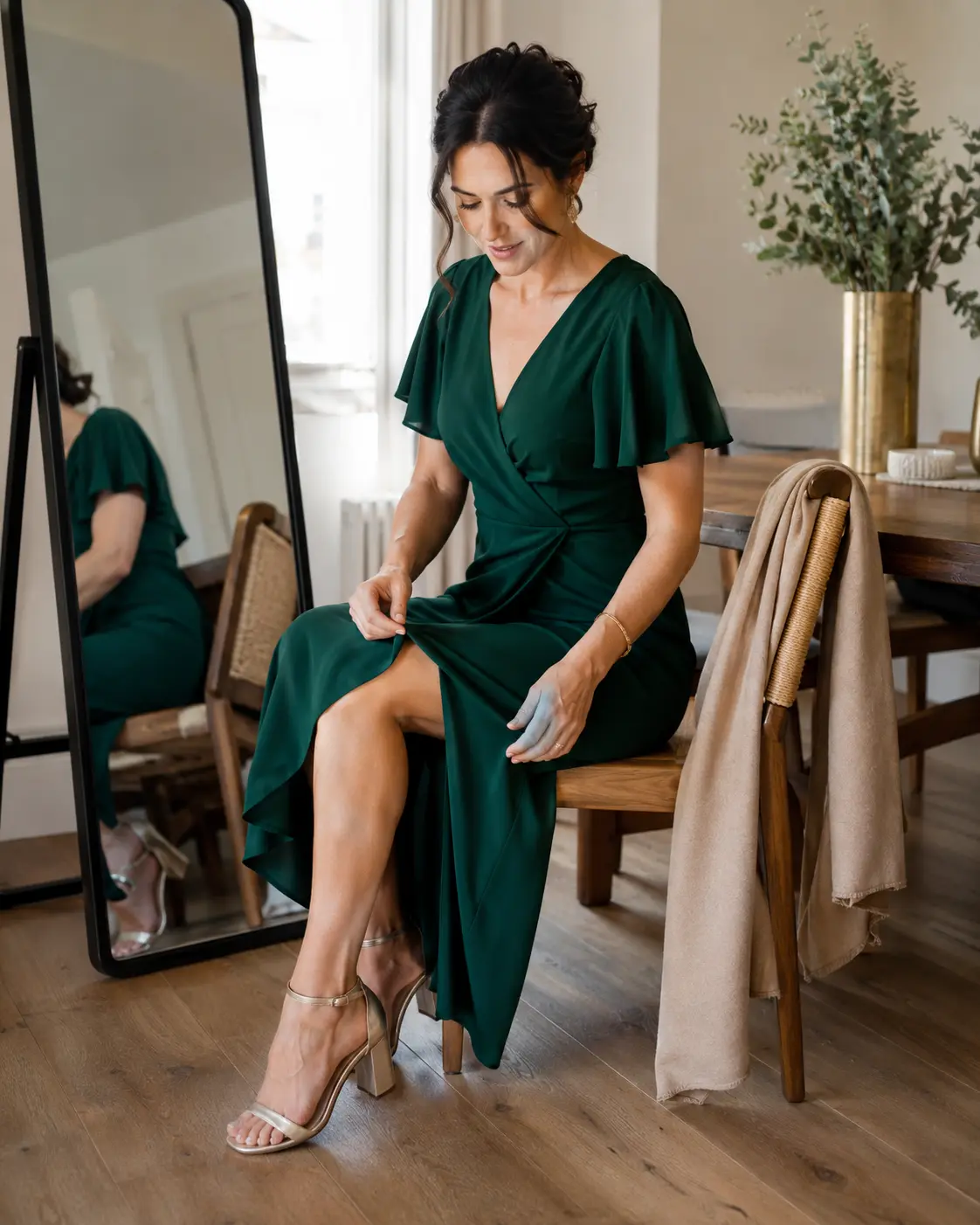
A wedding outfit should be tested in motion, not approved from one mirror angle.
Put on the complete outfit, including the intended undergarments, shoes, jewelry and layer. Then:
- Sit in a dining chair.
- Cross and uncross your legs.
- Raise both arms as if greeting someone.
- Bend down as if picking up a bag.
- Walk quickly across the room.
- Climb a flight of stairs if possible.
- Stand in natural daylight.
- Take a photograph with flash.
- Wear the shoes continuously for ten minutes.
- Check whether anything requires constant adjustment.
Pay attention to straps that slip, shapewear that rolls, buttons that pull and necklines that change when you sit.
These are small problems at home. During a six-hour celebration, they become the outfit.
What If the Invitation Does Not Include a Dress Code?
Start with the wedding website. Then examine the location and time.
An evening ceremony at a luxury hotel usually calls for a more formal outfit than a midday ceremony in a public garden, even when neither invitation states a dress code.
Still uncertain? Contact the couple or someone close to them with a specific question:
“I’m choosing between an elevated midi dress and a floor-length gown. Which feels closer to what you have planned?”
A specific question is easier to answer than “What should I wear?”
You can also send a photograph if you know the person well. The goal is not to request personal styling from a busy couple. It is to confirm the level of formality.
Common Wedding Guest Outfit Mistakes
Most unsuccessful guest outfits are not scandalous. They are simply disconnected from the event.
Common examples include:
- Ignoring a clearly stated dress code
- Assuming every outdoor wedding is casual
- Wearing something that looks white in photographs
- Choosing shoes that cannot manage the venue
- Forgetting a layer for an evening temperature change
- Wearing an untested outfit for an all-day celebration
- Treating cultural or religious customs as optional
- Choosing an outfit that requires constant pulling or readjustment
- Buying a dramatic dress without checking whether you can sit in it
- Prioritizing a trend over comfort, setting and personal confidence
You do not need to disappear into the background. Personal style is welcome. It simply needs to operate inside the event’s level of formality and respect for the people being celebrated.
Our Final Perspective
The best wedding guest outfit is not necessarily the newest, most expensive or most photographed option.
It is the outfit that lets you arrive without uncertainty, participate without discomfort and appear in the couple’s memories looking like yourself—only thoughtfully prepared for the occasion.
Begin with the words on the invitation. Confirm them with the place, time and conditions. Then test the complete outfit in real movement.
Once those decisions are solved, stop searching.
You are not attending the wedding to spend the evening thinking about your clothes.
You are choosing clothes that allow you to fully attend the wedding.