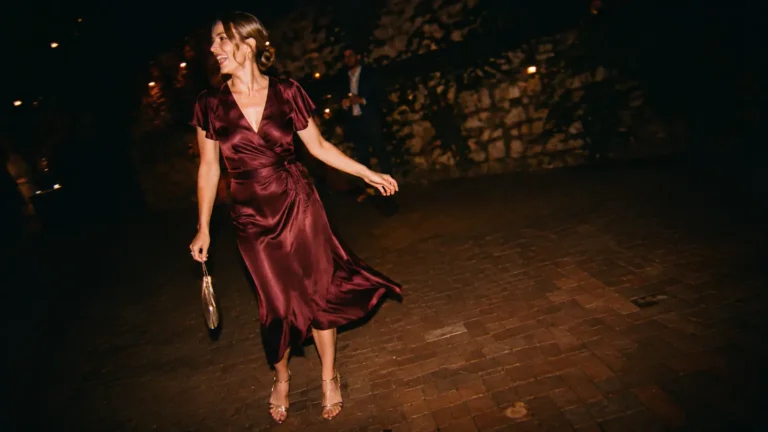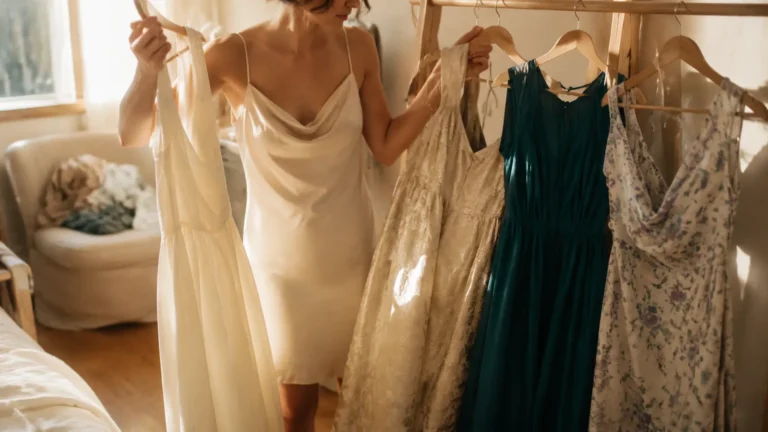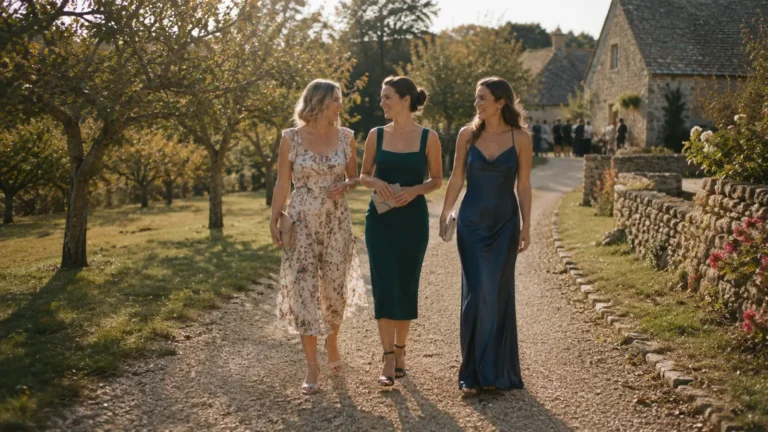
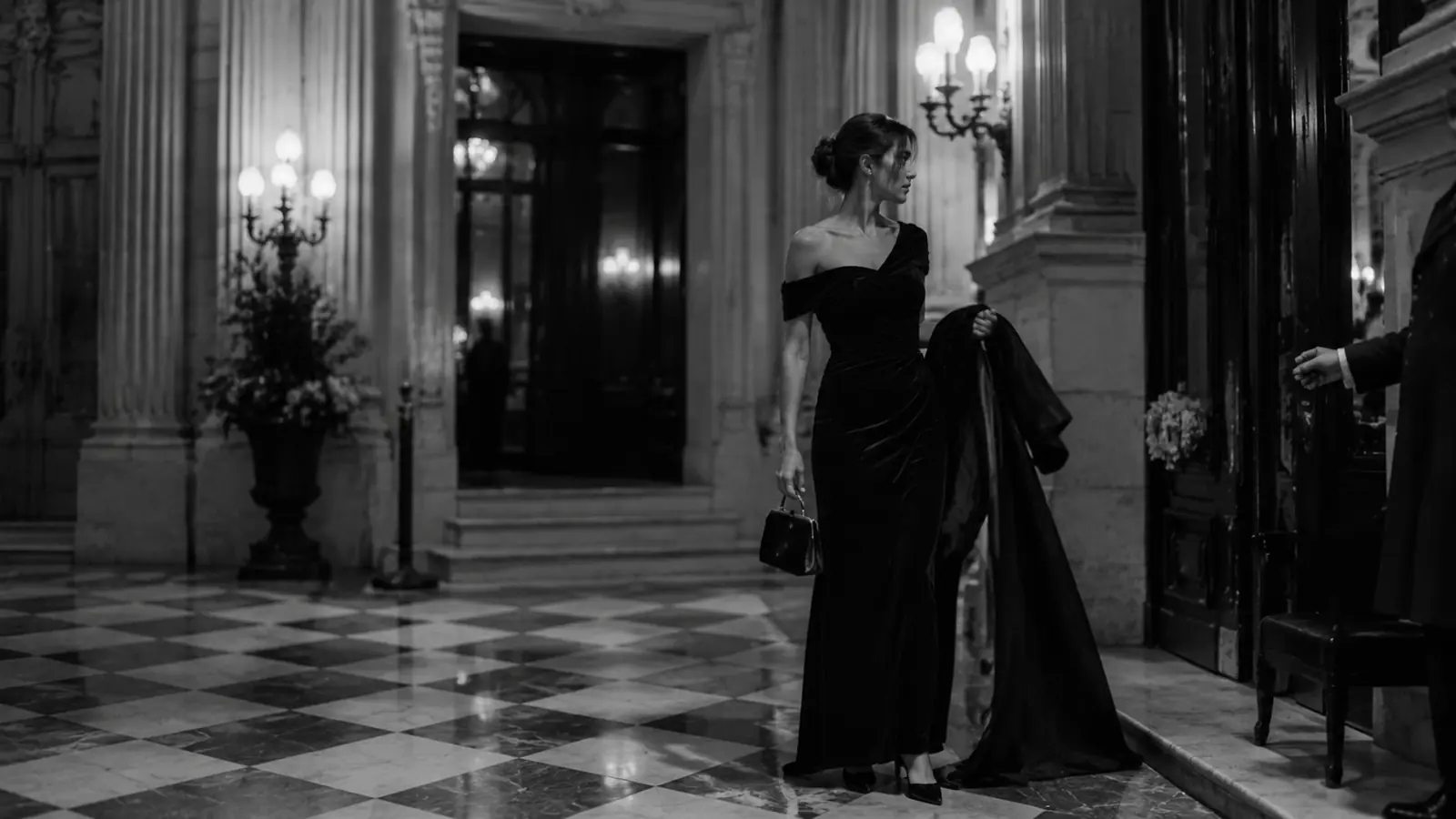
Black-tie wedding attire for women usually means a floor-length evening gown, formal shoes and intentionally elegant accessories.
That is the safest starting point—but it is not the complete answer.
A dress does not become black-tie simply because its hem touches the floor. A casual cotton maxi dress remains casual. A beautifully tailored formal jumpsuit may be more appropriate than a poorly constructed gown. A heavily beaded dress can appear impressive in photographs yet become exhausting after one hour of standing.
Black tie describes the level of the entire event. Your clothing should acknowledge that level without preventing you from sitting, walking, eating or enjoying the reception.
At Wedding Dress Style, we evaluate black-tie outfits using four elements:
- Length: Does the silhouette carry enough visual formality?
- Fabric: Does the material look and move like eveningwear?
- Finish: Do the tailoring, shoes and accessories complete the outfit?
- Reality: Can the complete look survive the actual wedding?
The first three create elegance. The fourth determines whether you will still appreciate the outfit several hours later.
What Does Black Tie Mean at a Wedding?
Black tie is one of the most formal dress codes commonly used for American weddings.
For women, the traditional and most dependable choice is a floor-length evening gown. Formal jumpsuits, women’s tuxedos and exceptionally elegant pantsuits can also work when their construction and styling match the occasion.
Black-tie weddings are commonly held in the evening at venues such as:
- Luxury hotels
- Historic estates
- Formal ballrooms
- Museums
- Private clubs
- Upscale city venues
- Grand outdoor estates
However, the venue does not replace the dress code. A couple can request black tie for a garden, coastal or destination wedding.
The location changes the practical version of your outfit—its fabric, shoes and layers—but not the requested level of formality.
Black Tie Versus Black-Tie Optional
These dress codes are related but not identical.
Black Tie
A floor-length evening gown is the safest and most traditional choice. The expectation is formal eveningwear.
A shorter dress should be exceptionally refined and supported by the venue, couple’s style or specific invitation wording. If you are deciding between a sophisticated midi and a genuine evening gown, choose the gown.
Black-Tie Optional
A floor-length gown is appropriate, but guests have more flexibility. An elevated midi dress, formal cocktail dress, tailored jumpsuit or dressy pantsuit can work.
“Optional” does not mean casual. It means you may dress at the black-tie level or one carefully controlled step below it.
For an evening black-tie-optional wedding at a grand ballroom, it is sensible to lean formal. For an earlier celebration at a less traditional venue, a highly polished midi dress may feel completely connected to the event.
If your invitation says cocktail rather than black tie, read our guide to cocktail wedding attire for women before choosing a floor-length gown.
Is a Floor-Length Gown Required?
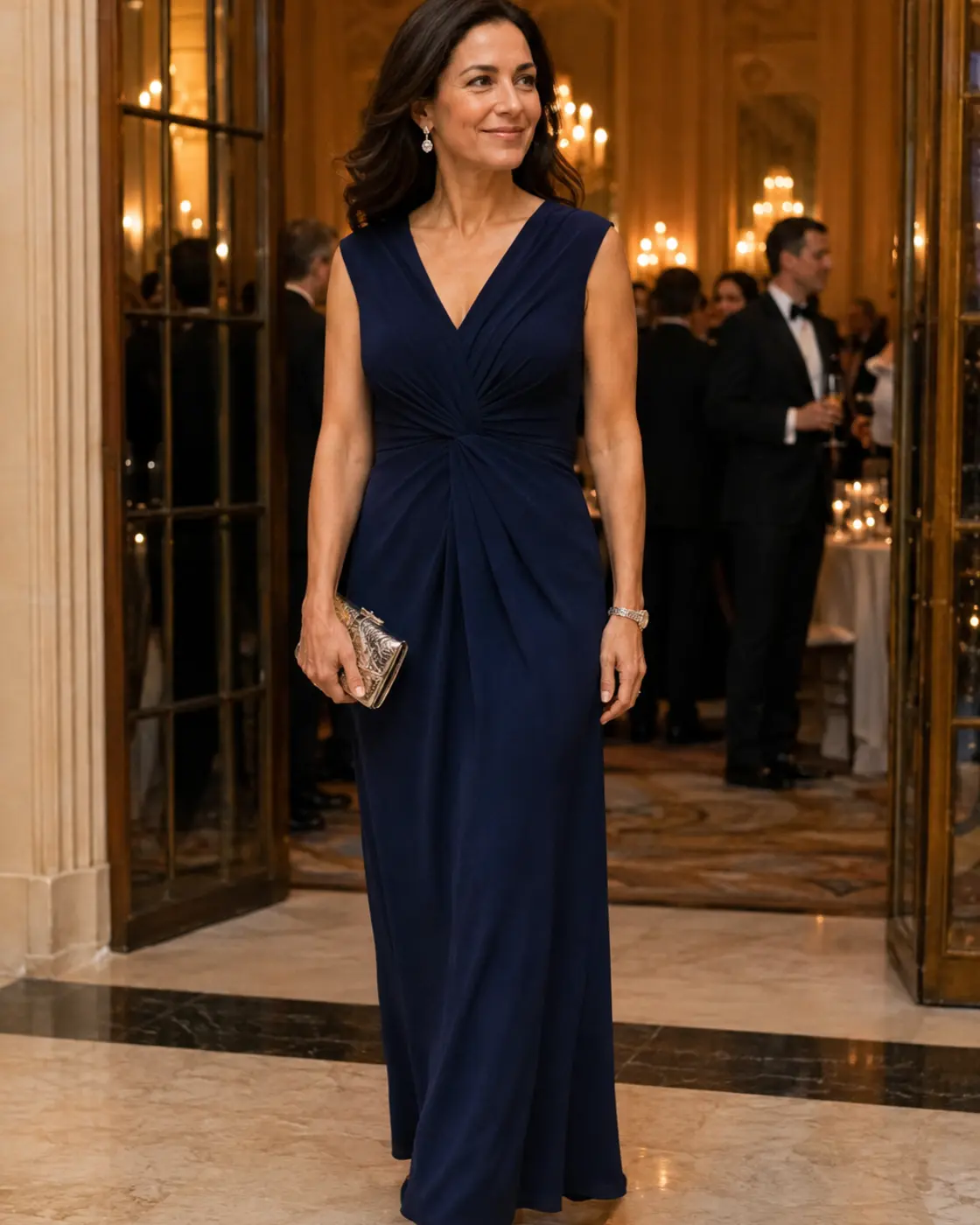
For a traditional black-tie wedding, treat a floor-length gown as the default.
The hem should generally reach the floor or the top of your shoes without creating a dangerous amount of excess fabric.
There is a difference between:
- Floor-length
- Ankle-length
- Maxi
- Midi
- Tea-length
Retailers sometimes use “maxi dress” for everything from beach dresses to evening gowns. The product category does not determine formality.
A black-tie gown usually combines length with an elevated fabric, intentional shape and refined finish.
Examples include:
- A silk column gown
- A structured jacquard A-line
- A velvet wrap gown
- A crepe dress with architectural draping
- A chiffon gown with formal lining
- A satin gown with controlled movement
The gown does not need a train, corset, sequins or heavy embellishment. Simplicity can look extremely formal when the fabric, fit and construction are strong.
When Can a Shorter Dress Work?
Some etiquette guidance allows a dressy cocktail dress for black-tie events, especially when the wedding is less traditional or the hosts communicate flexibility.
However, not every cocktail dress is formal enough.
A shorter option has a better chance of working when it is:
- Tea-length or midi rather than very short
- Made from luxurious evening fabric
- Carefully tailored
- Supported by refined shoes and accessories
- Appropriate for the venue
- Clearly more formal than ordinary cocktail clothing
A knee-length office dress does not become black-tie because you add glittering earrings.
Likewise, an extremely short party dress may feel visually disconnected from floor-length gowns and tuxedos.
When the invitation simply says “black tie” and provides no additional guidance, the floor-length gown remains the lower-risk decision.
Fabric Determines Whether the Length Feels Formal
Fabric carries much of the visual work in black-tie clothing.
Materials that frequently suit the dress code include:
- Silk
- Satin
- Velvet
- Crepe
- Chiffon
- Organza
- Taffeta
- Jacquard
- Brocade
- Lace
- Formal sequined fabrics
- Heavier refined jersey
The material should have enough quality, structure or movement to look intentional under both natural and artificial light.
Be careful with thin satin. It can photograph beautifully in controlled product images but reveal seams, undergarments and every wrinkle in daylight.
Unlined chiffon may become transparent. Heavy velvet may be uncomfortable in a warm ballroom. Dense beading can create significant weight across the shoulders.
Before keeping a gown, wear it at home for at least thirty minutes.
Sit. Walk. Stand. Notice whether the fabric pulls, wrinkles, overheats or becomes heavier than expected.
The dress will not become easier to wear after several hours.
Can You Wear a Formal Jumpsuit?
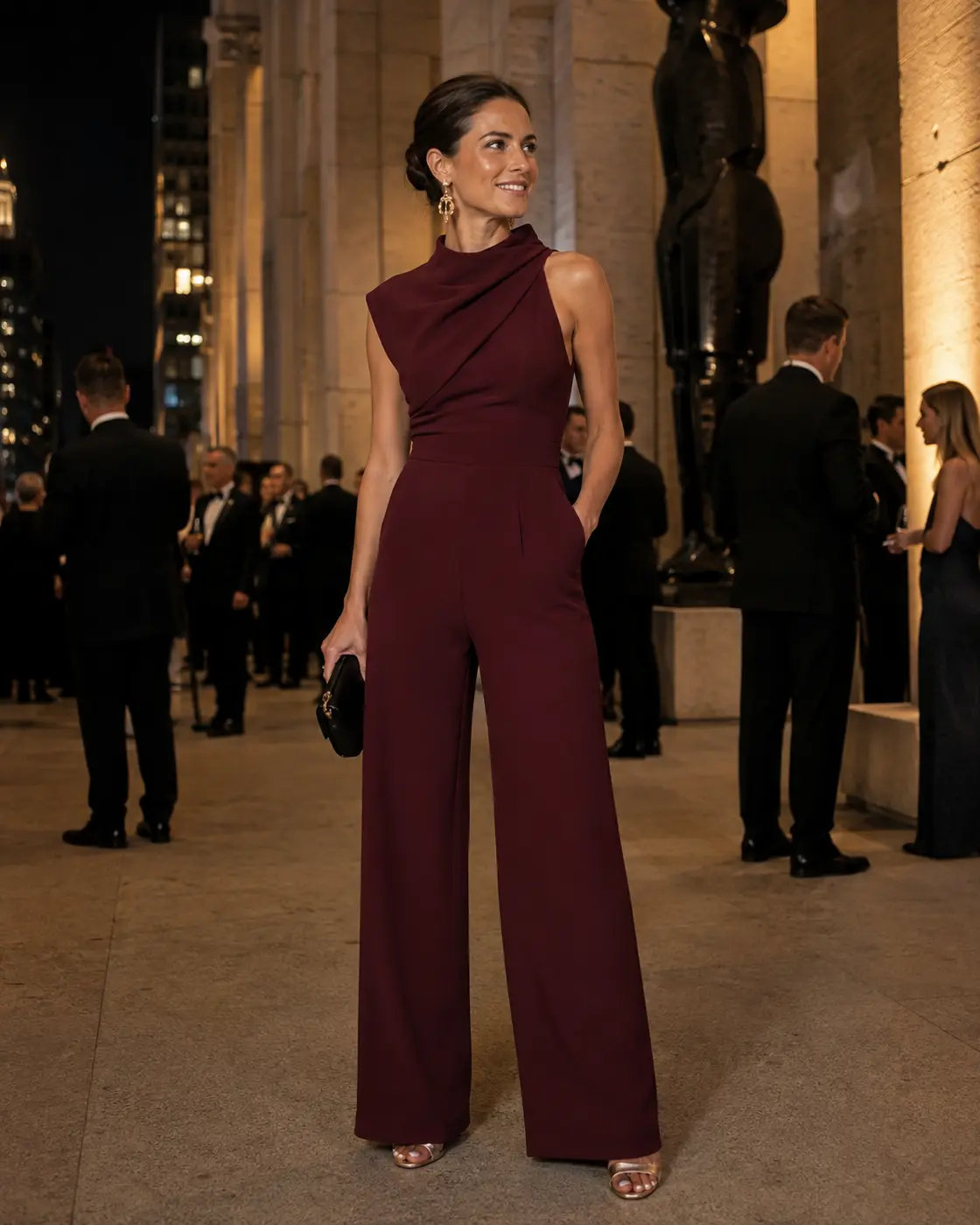
Yes. A formal jumpsuit can satisfy a black-tie dress code when it has the presence and finish of eveningwear.
Look for:
- Luxurious fabric
- Precise shoulder and torso fit
- Intentional waist shaping
- Full-length trousers
- Properly tailored hems
- An elevated neckline
- Formal shoes
- Refined accessories
A dark emerald, navy, burgundy or black jumpsuit in satin, crepe, velvet or jacquard can feel elegant and modern.
The trouser length is critical. Wide legs that pool excessively can become dangerous, while cropped casual trousers may reduce the formality.
Have the jumpsuit hemmed while wearing the exact shoes you plan to use.
A women’s tuxedo can also work beautifully, especially for a modern urban celebration. Satin lapels, elegant tailoring and formal footwear help distinguish it from professional suiting.
What Colors Work for a Black-Tie Wedding?
Black is a classic and reliable choice, but it is not the only option.
Black-tie-friendly colors include:
- Navy
- Emerald
- Burgundy
- Aubergine
- Plum
- Deep teal
- Cobalt
- Chocolate brown
- Metallic bronze
- Rich seasonal colors
Pastels, vivid colors and formal prints can also work, particularly for spring and summer celebrations. The fabric and silhouette must still communicate evening formality.
Avoid white, ivory and bridal-looking pale neutrals unless the couple explicitly requests them.
A pale champagne gown deserves extra caution because its length, shine and color may resemble bridal attire in photographs.
For a full explanation of black, red, white and pale neutral clothing, see our guide to colors not to wear to a wedding.
Can a Printed Gown Be Black-Tie?
Yes. A printed gown can be completely appropriate.
The most successful formal prints usually have:
- Rich or intentional colors
- A sophisticated scale
- High-quality fabric
- A structured or elegant silhouette
- Limited casual detailing
- A clearly non-bridal background color
A dramatic floral jacquard can look more formal than a plain dress in a thin material.
Be careful with prints that resemble daytime sundresses, beachwear or casual resort clothing. Small ditsy florals on lightweight cotton usually create less formality than large botanical designs on silk or jacquard.
Examine the dress from across the room. Does it read as an evening gown first and a print second?
That is usually the stronger black-tie balance.
Summer Black-Tie Wedding Attire
A summer black-tie wedding still requires formal clothing. The solution is not to reduce the formality but to select a seasonally intelligent version of it.
Useful fabrics include:
- Silk chiffon
- Lightweight crepe
- Organza
- Silk blends
- Properly lined lightweight satin
- Airy formal jacquard
Look for construction that provides airflow:
- Open but secure necklines
- Sleeveless designs
- Controlled slits
- Lightweight linings
- Movement through the skirt
- Fabrics that do not show moisture immediately
Avoid choosing a gown solely because it feels thin. Extremely lightweight fabric may become transparent outdoors or cling once you begin to perspire.
Test the dress in daylight and stand in front of both a light and dark background.
A light summer color should remain clearly distinct from white in photographs.
Outdoor Black-Tie Weddings
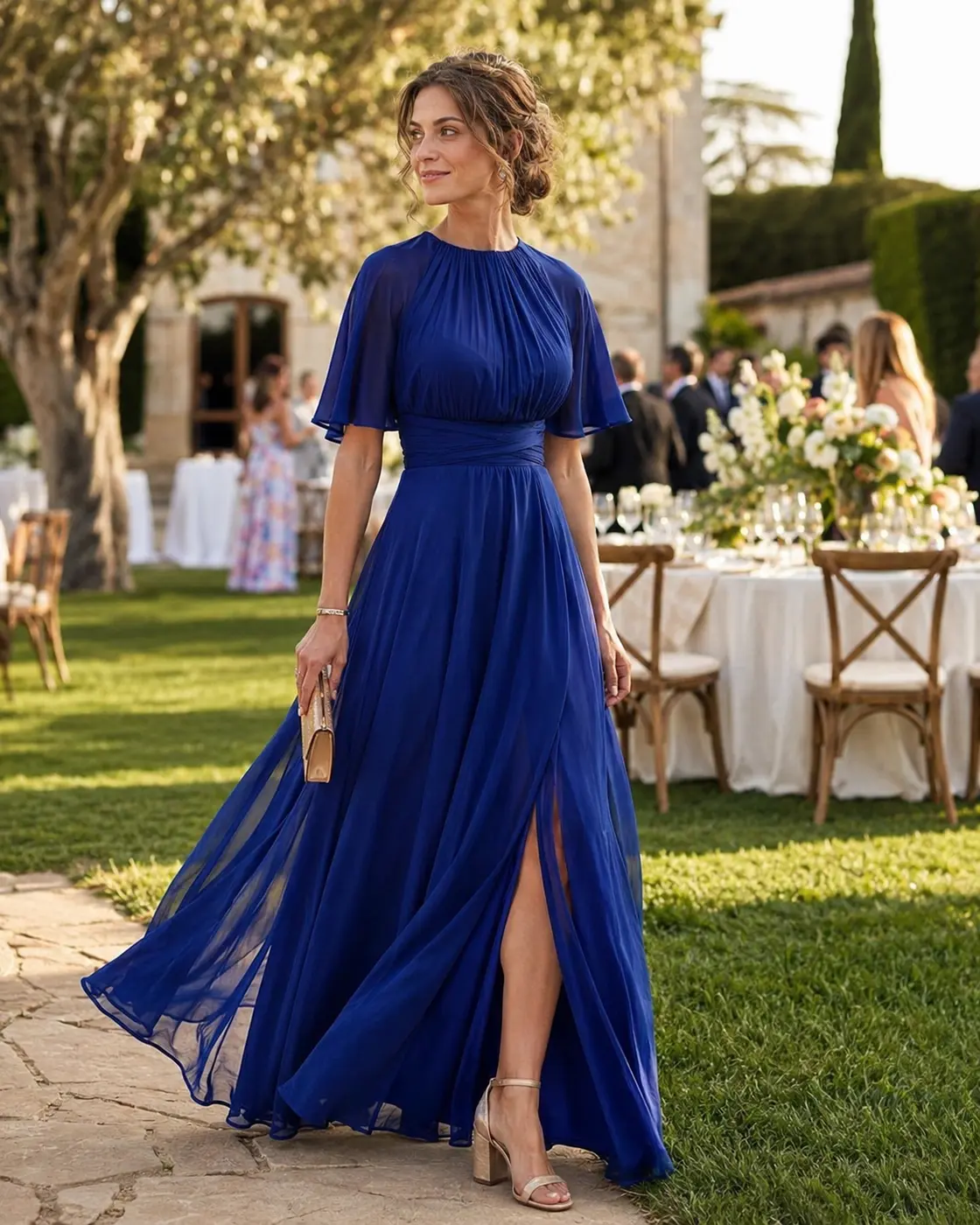
An outdoor black-tie wedding creates one of the most difficult combinations: formal clothing on unpredictable ground.
Before selecting shoes and hem length, determine whether the venue includes:
- Grass
- Gravel
- Sand
- Wooden decking
- Stone paths
- Stairs
- A long walk from parking
- A tented reception
A floor-length hem should clear the ground enough to prevent constant lifting. If you must hold the skirt with one hand during every step, the dress is not functioning well for the venue.
Block heels, wedges and formal flats can be more practical than stilettos. The shoes should still appear connected to the gown.
Wind also matters. Lightweight skirts, wrap fronts and high slits can behave differently outdoors than in a fitting room.
Stand in front of a fan while wearing the complete outfit. This simple test reveals problems before the ceremony aisle does.
Winter Black-Tie Wedding Attire
Winter supports richer materials and more substantial construction.
Consider:
- Velvet
- Heavy crepe
- Brocade
- Jacquard
- Long-sleeved satin
- Formal lace
- Structured gowns
- Dark jewel tones
Do not rely on the gown itself to provide enough warmth.
Plan your outerwear as part of the outfit:
- A formal wool coat
- An evening cape
- A faux-fur wrap
- An elegant shawl
- A structured long coat
A casual puffer may be necessary for severe weather, but if possible, arrange coat check quickly and bring a polished layer for photographs or transitions.
Also remember that ballrooms can become warm once they fill with guests. Choose a gown that remains wearable after your coat is removed.
Shoes for a Black-Tie Wedding
Black tie requires formal-looking shoes, not necessarily high heels.
Appropriate choices include:
- Elegant pumps
- Slingbacks
- Refined block heels
- Formal sandals
- Dressy flats
- Pointed-toe flats
- Formal wedges for suitable outdoor venues
The gown’s hem must be adjusted for the actual shoe height.
Do not have a dress altered while wearing four-inch heels if you expect to switch into flats during the reception. The hem will drag after the change.
If you plan backup shoes, take both pairs to the fitting. Ask whether the gown can work safely with both.
Wear the primary shoes continuously at home for at least thirty minutes. A black-tie wedding can involve several hours of standing before dancing even begins.
Pain is not a requirement of formal dressing.
Jewelry, Bags and Accessories
Black-tie accessories should look deliberate, but they do not all need to make a statement.
Choose one primary point of emphasis:
- Earrings
- Necklace
- Bracelet
- Embellished bag
- Distinctive shoes
- Hair accessory
If the gown has a dramatic neckline or heavy embellishment, restrained jewelry may create a stronger result.
A small clutch or evening bag is generally the easiest choice. Confirm that it can actually hold your phone, identification, cards, keys, medication and necessary personal items.
An elegant bag that cannot close becomes another object to manage all evening.
Avoid bringing a large everyday tote into the ceremony if another storage option is available.
Support and Undergarments Matter
A black-tie gown often uses smoother, lighter or more structured fabric than everyday clothing. The wrong undergarment can change the entire fit.
Test:
- Bra straps
- Cup placement
- Shapewear edges
- Waistband rolling
- Visible seams
- Fabric transparency
- Static
- Support while moving
Wear the exact undergarments during alterations.
Do not purchase shapewear after the gown has been fitted and assume nothing will change. Compression garments can alter the waist, bust position and way the fabric hangs.
The goal is not to make your body smaller. It is to give the garment the foundation it was fitted over.
If the gown includes a low back, open sides or complex neckline, solve the support question before the return period ends.
Check the Gown While Seated
A gown that looks perfect while standing can change significantly when you sit.
Before deciding, sit in a dining chair for several minutes.
Check whether:
- The neckline opens
- The bodice becomes restrictive
- Boning presses into the ribs
- The slit exposes more than expected
- The zipper strains
- The waistband rolls
- The skirt becomes difficult to arrange
- Beading scratches your arms
- The fabric pulls across the hips
You will spend part of the wedding seated during the ceremony and dinner. Sitting is not a minor technical detail—it is one of the gown’s required functions.
Avoid Looking Bridal
Formality and bridal appearance can overlap.
A floor-length gown may become too bridal when it combines several of these features:
- White, ivory or champagne color
- Lace over a pale lining
- Tulle
- A train
- Corseted bodice
- Bridal-style appliqué
- Pearls or crystals
- Romantic sleeves
- A highly bridal silhouette
One element alone may be harmless. A pale blue gown with a structured bodice is not automatically bridal. A champagne lace gown with a train creates a different impression.
Evaluate the complete outfit, not each feature separately.
If the dress requires a long explanation about why it is not actually a wedding dress, choose another color or silhouette.
Common Black-Tie Attire Mistakes
Common problems include:
- Wearing a casual maxi dress because it reaches the floor
- Choosing thin fabric that becomes transparent
- Wearing a gown that cannot be comfortably seated
- Allowing the hem to drag dangerously
- Selecting very casual shoes
- Wearing an elevated cocktail dress to a highly traditional black-tie event
- Assuming expensive means appropriate
- Choosing a gown that looks bridal
- Ignoring the weather or walking surface
- Wearing every dramatic accessory at once
- Changing into athletic shoes that do not work with the hem
- Forgetting cultural or religious expectations
- Waiting until the final week to arrange alterations
Most of these problems are not visible in the first fitting-room photograph. They appear when the gown enters real conditions.
The Wedding Dress Style Black-Tie Reality Test
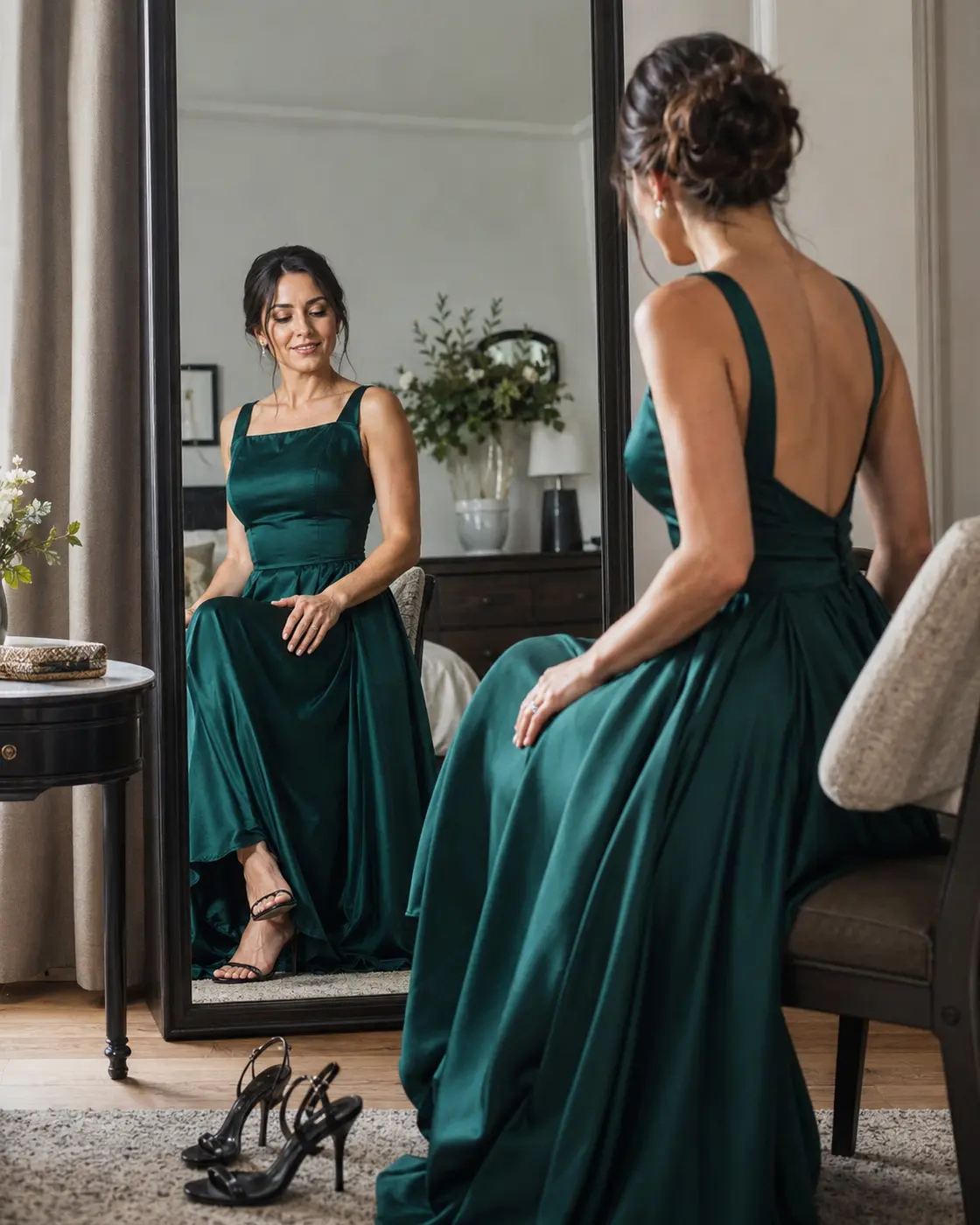
Put on the complete outfit, including undergarments, shoes, jewelry, bag and planned outerwear.
Then complete these four checks.
1. The Entrance Check
Stand across the room and look at the whole outfit.
Does it immediately read as eveningwear, or does it resemble an ordinary maxi dress?
Black-tie formality should be visible without explaining the label, price or designer.
2. The Light Check
View the outfit in daylight, warm indoor light and camera flash.
Check color, transparency, shine and visible undergarments.
A gown can look entirely different under ballroom lighting than beside a window.
3. The Movement Check
Walk, sit, raise your arms, climb stairs and turn quickly.
Confirm that the hem, slit, neckline and support remain manageable.
4. The Duration Check
Wear the complete outfit for thirty minutes.
Notice pressure, heat, weight, itching, slipping and shoe discomfort.
A small irritation during minute five can become the only thing you remember by hour five.
Five Practical Black-Tie Outfit Formulas
Formula One: The Classic Evening Gown
- Navy or black floor-length crepe gown
- Pointed pumps or slingbacks
- Metallic clutch
- Refined earrings
- Formal wrap
This works for traditional hotels, ballrooms and private clubs.
Formula Two: The Jewel-Tone Column
- Emerald or burgundy column gown
- Tonal or metallic shoes
- Small structured bag
- One statement jewelry piece
- Tailored evening coat
This provides color without reducing formality.
Formula Three: The Summer Chiffon Gown
- Colorful floor-length chiffon gown
- Stable formal sandals
- Lightweight wrap
- Delicate jewelry
- Proper lining and support
This works for warm-weather estates and destination venues.
Formula Four: The Formal Jumpsuit
- Dark tailored full-length jumpsuit
- Formal heels or dressy flats
- Evening clutch
- Sculptural earrings
- Precisely tailored trouser hem
This is a strong modern alternative to a gown.
Formula Five: The Winter Velvet Look
- Deep-colored velvet gown
- Closed formal shoes
- Small embellished bag
- Restrained jewelry
- Formal wool coat or faux-fur wrap
This works naturally for cold-weather evening celebrations.
Our Final Perspective
Black-tie wedding attire for women begins with formality but succeeds through practicality.
A floor-length gown is the safest traditional choice. A formal jumpsuit or tuxedo can also work when its tailoring, fabric and styling carry genuine evening presence.
Do not judge the outfit only by its length or by the photograph on the retailer’s website.
Test the fabric in daylight. Sit in the gown. Walk in the actual shoes. Consider the ground, temperature and duration of the event. Make sure the outfit remains formal without becoming physically distracting.
The right black-tie look should make the occasion feel special.
It should not make the entire occasion feel like a test of how long you can tolerate your clothes.