Colors Not to Wear to a Wedding: A Guest Guide
The main colors not to wear to a wedding are white, ivory and cream—but photography, cultural traditions and the couple’s requested palette make the complete answer more nuanced.
A pale champagne dress may appear gold in your bedroom and almost white in outdoor photographs. A red dress can be completely appropriate at one wedding and culturally significant at another. Black may feel elegant at an evening celebration but unusually somber at a traditional daytime ceremony.
Color etiquette is not simply about following an old rule. It is about understanding how your outfit will be perceived by the couple, their families, their culture and the camera.
At Wedding Dress Style, we use three questions:
- Could this color resemble the couple’s wedding attire?
- Does it respect the cultural and religious context?
- Will it attract attention for the wrong reason?
If the answer to any of those questions concerns you, another color will probably let you enjoy the wedding with less uncertainty.
The Safest Rule: Avoid Predominantly White Outfits
At most contemporary Western weddings, guests should avoid outfits that are predominantly:
- Pure white
- Ivory
- Cream
- Off-white
- Ecru
- Very pale champagne
- Bridal-looking shades of beige
The purpose of this rule is not to measure the exact percentage of white fabric in an outfit. It is to prevent a guest from being mistaken for the bride or another person being honored.
This is why the silhouette and fabric matter alongside the color.
An ivory linen pantsuit may be interpreted differently from an ivory lace maxi dress, but both can still create unnecessary uncertainty. A pale champagne satin gown may technically be gold, yet its color, sheen and length can make it appear bridal.
When evaluating an outfit, do not ask only:
Is this technically white?
Ask:
Could someone reasonably describe this as a white or bridal-looking outfit?
If the second answer might be yes, choose something else.
Can You Wear a Printed Dress With White in It?
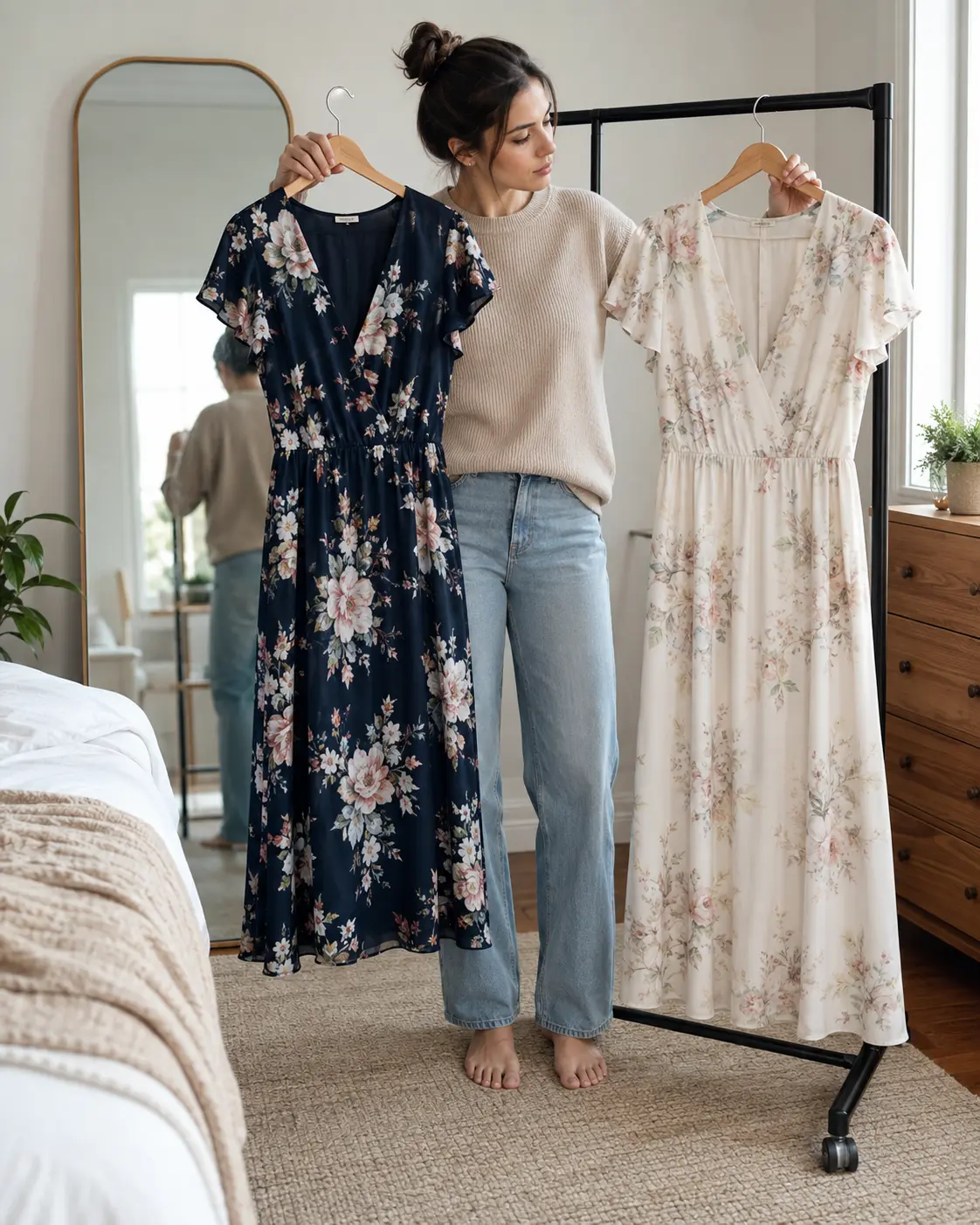
A dress does not automatically become inappropriate because its print contains a small amount of white.
The important question is which color dominates.
A navy dress with small white flowers will usually read as navy. A dress covered in colorful flowers but printed on a large white background may still read as white, especially from a distance.
Try this simple test:
- Hang the dress across the room.
- Step back several feet.
- Look at the entire outfit instead of individual flowers.
- Decide which color you notice first.
If your first thought is “white floral dress,” the white is probably too dominant.
Scale also changes the result. A dense print can visually cover the background, while widely spaced flowers leave large areas of visible white.
You should also consider the cut. A white-background floral mini dress may not resemble traditional bridal attire, but a floor-length white floral dress with romantic sleeves, lace or a flowing skirt can create a much more bridal impression.
There is no universal percentage that makes a print acceptable. Judge the complete visual effect.
Be Careful With Champagne, Blush and Pale Neutrals
Champagne, blush, beige, silver and pale gray are not automatically prohibited. The problem is that some versions photograph much lighter than they appear in person.
Modern wedding dresses are no longer limited to bright white. Brides may wear champagne, soft blush, light gold, silver-gray or nude fabric under ivory lace.
That does not mean guests must avoid every light neutral. It means you should inspect pale colors more carefully.
Riskier combinations include:
- Champagne satin with a floor-length silhouette
- Pale blush tulle
- Light beige lace
- Silver fabric with a strong white reflection
- Nude fabric covered in ivory embroidery
- Very pale gray photographed in bright sunlight
A darker tan, taupe, dusty rose, pewter or clearly metallic gold is less likely to appear white.
If you need to explain that the dress is “actually very pale beige,” the distinction may disappear in photographs.
Use the Wedding Dress Style Photo Test

Store lighting is not reliable.
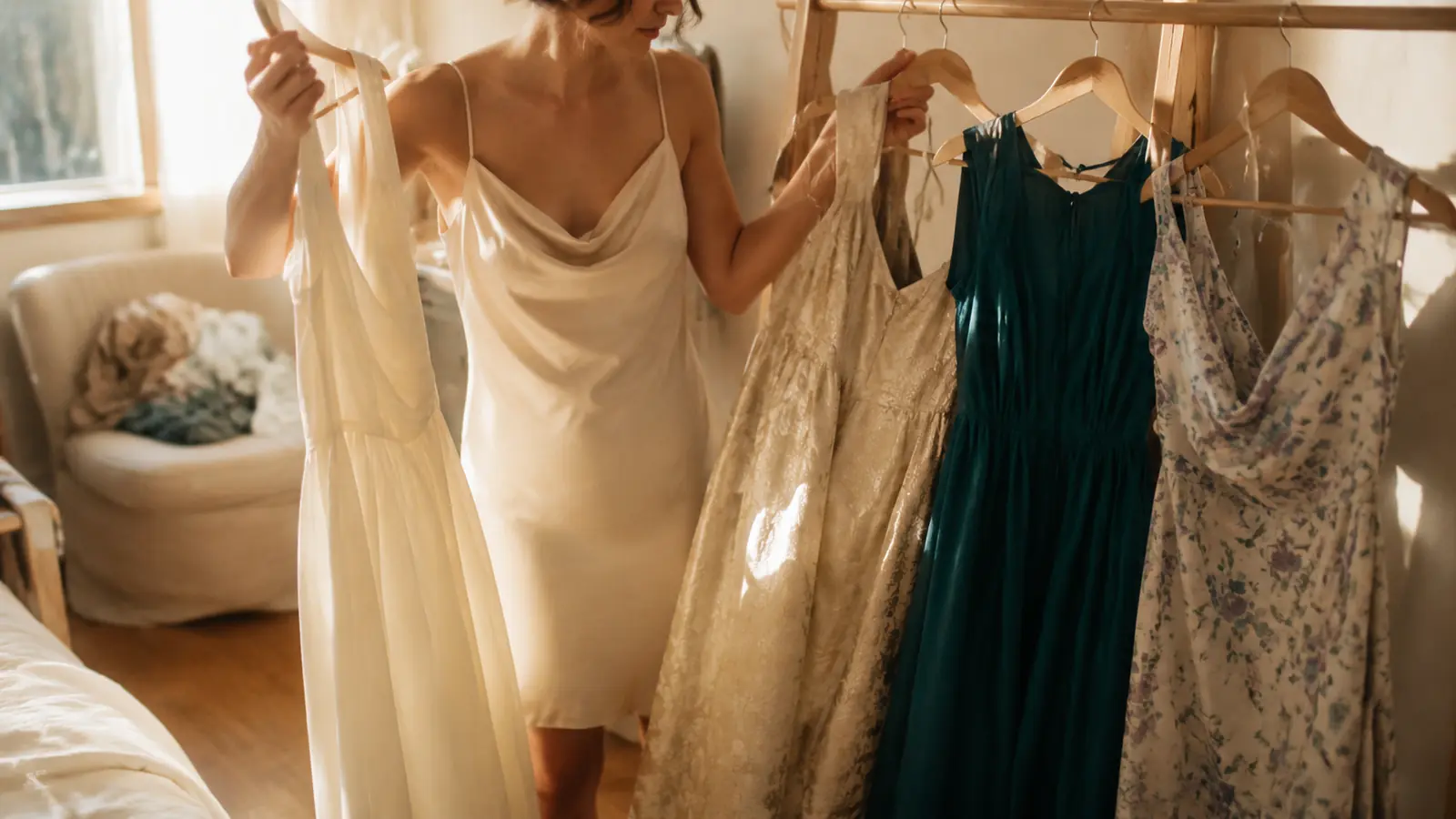
Boutiques and fitting rooms often use warm lighting that makes ivory appear golden and pale blush appear deeper. Daylight and camera flash can remove those warm tones.
Before choosing a very light outfit, complete this test:
- Wear the outfit beside a window during daylight.
- Photograph it against a light wall.
- Photograph it against a dark wall.
- Take one photograph with flash.
- Reduce the photograph to a small thumbnail.
- Ask what color the outfit appears to be—not what the label calls it.
The thumbnail step matters because most wedding photographs will not show you at full size. When details disappear, the dominant color becomes more obvious.
If a champagne dress repeatedly looks white in photographs, it will probably look white in some of the wedding photographs too.
Can You Wear Black to a Wedding?
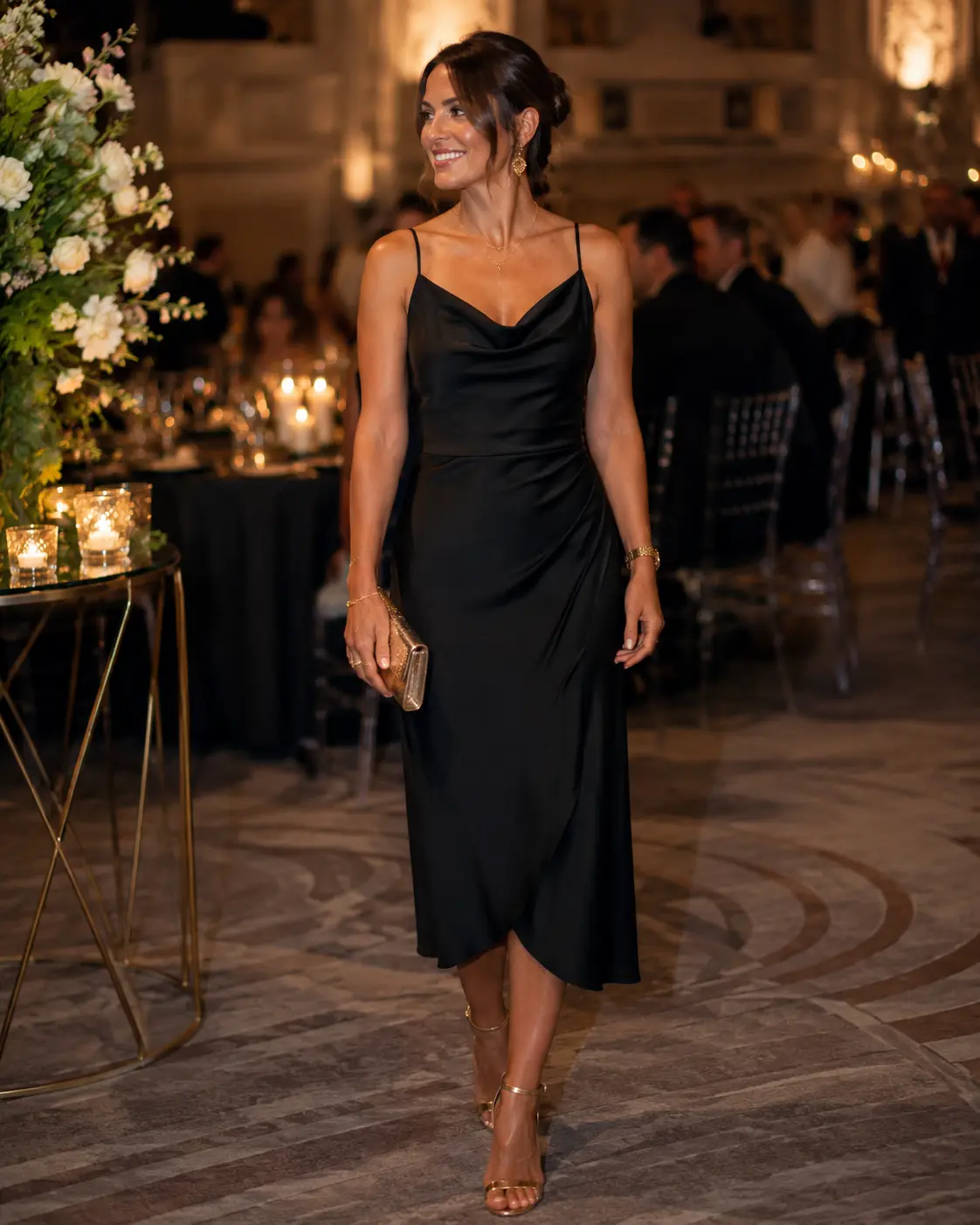
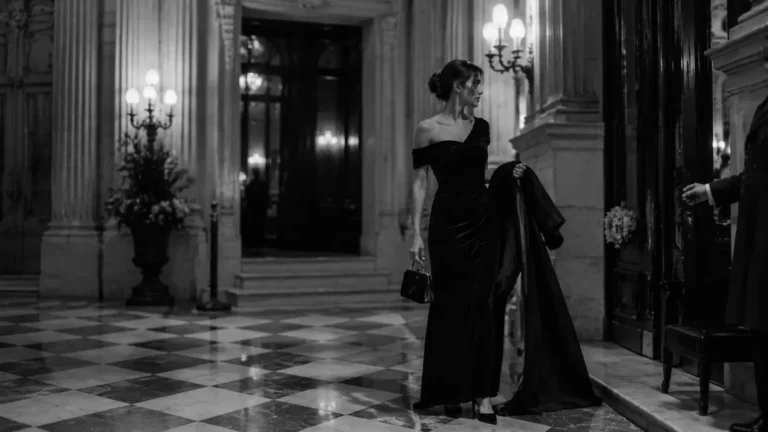
For most modern U.S. weddings, black is completely acceptable.
It is especially natural for:
- Black-tie weddings
- Formal evening celebrations
- Cocktail weddings
- City venues
- Fall and winter weddings
- Events with a modern or minimalist style
A black dress can look sophisticated rather than somber when the fabric, accessories and styling feel celebratory.
For example, a black midi dress paired with metallic shoes, intentional jewelry and a small evening bag will usually look wedding-ready. A plain black work dress with office pumps may feel less connected to the occasion.
Consider more than the color. Texture, shape and styling determine whether black reads as formal, festive, professional or funereal.
There are situations where black deserves more thought:
- The couple specifically requests another color palette.
- Black carries a negative meaning in the family’s culture.
- The wedding is a highly traditional daytime celebration.
- Your outfit resembles the clothing expected at a funeral rather than a celebration.
- The wedding party is wearing black and you are concerned about appearing to be an attendant.
None of these makes black universally wrong. They simply mean context should decide.
Can You Wear Red to a Wedding?
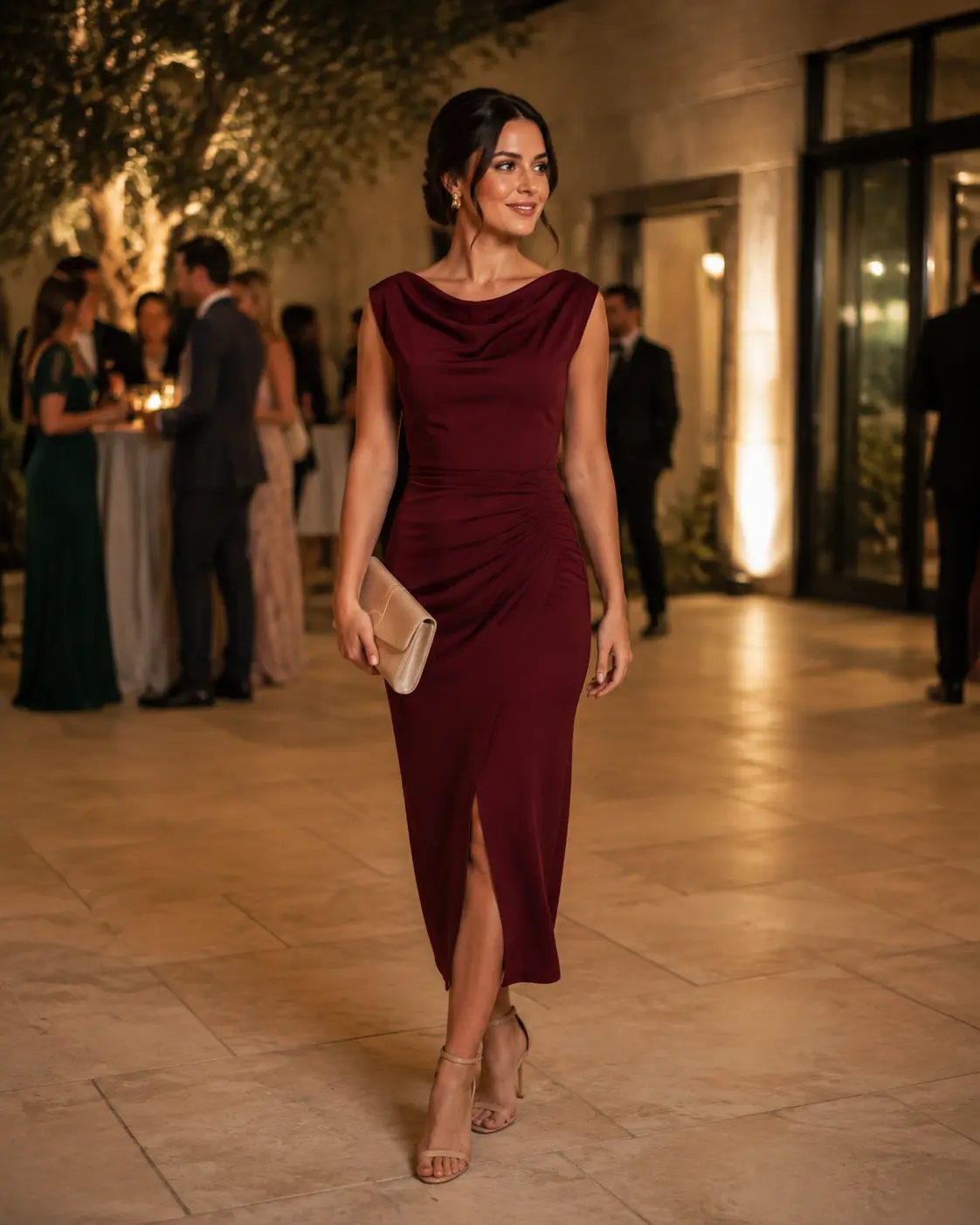
The idea that wearing red means a guest has a romantic history with the groom is an internet myth, not a standard American etiquette rule.
At many Western weddings, red is an acceptable guest color.
However, red naturally attracts attention. The shade, fabric and design determine how strongly it enters the room.
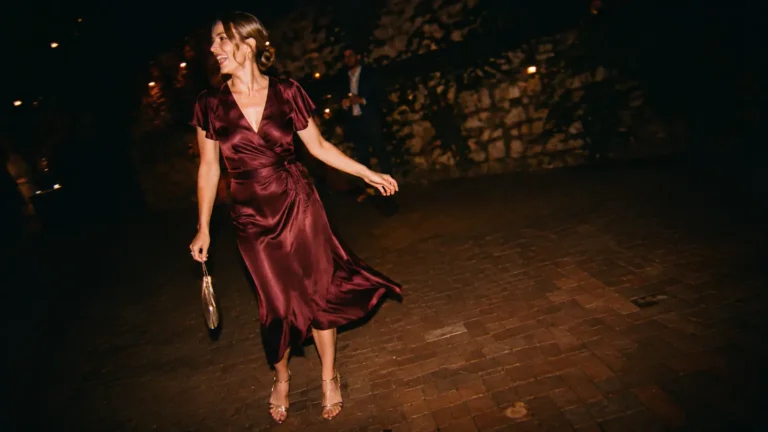
A cranberry midi dress or burgundy evening gown can feel elegant and controlled. A bright scarlet gown with sequins, a dramatic train and revealing cut creates a different visual effect.
The question is not whether red is forbidden. It is whether the complete outfit fits the event without competing with it.
Cultural context is especially important. Red can be associated with bridal attire in a number of Chinese, Indian and other South or East Asian wedding traditions.
These traditions are diverse, and individual couples may interpret them differently. Do not assume that one rule applies to every wedding within a culture.
Check the wedding website or ask the couple, a family member or a member of the wedding party when you are uncertain.
Cultural Wedding Colors Require Specific Research
The Western “do not wear white” rule should not be copied onto every wedding tradition.
Depending on the culture, religion, region and family:
- White may represent mourning.
- Red may be associated with the bride or prosperity.
- Black may be discouraged.
- Guests may be encouraged to wear bright colors.
- Specific colors may be reserved for particular ceremonies.
- Modesty and head-covering expectations may matter more than color.
A generic online list cannot fully explain a specific family’s traditions.
Start with information supplied by the couple. If the wedding includes several cultural events, check whether each one has separate attire guidance.
For example, an outfit appropriate for a welcome celebration may not be appropriate for the religious ceremony the following day.
Ask a direct, respectful question:
“I’m considering a red dress for the ceremony. Is red connected to the bridal attire in your family’s tradition?”
That question shows care without asking the couple to choose your entire outfit.
Do You Need to Avoid the Bridesmaid Colors?
Ordinary guests are not universally required to avoid the wedding-party colors.
Many guests will not know those colors before the wedding, and some couples intentionally encourage everyone to wear a coordinated palette.
The concern is practical rather than scandalous: you may look like a member of the wedding party when you are not one.
This matters more when:
- You are close to the couple.
- You will appear in many family photographs.
- The invitation clearly shows one repeated color.
- The bridesmaids are wearing a common, easily recognized style.
- Your dress strongly resembles the attendants’ dresses in color and design.
Merely wearing navy when the bridesmaids also wear navy is not a serious etiquette failure. Wearing the same floor-length navy dress from the same bridal collection could be confusing.
If you know the wedding-party color and prefer not to match it, choose a related but visibly different shade rather than rebuilding your entire outfit.
What About the Colors on the Invitation?
Invitation colors can provide a clue to the wedding’s atmosphere, but they do not always reveal the wedding-party wardrobe.
A sage-green invitation may mean:
- The bridesmaids are wearing sage.
- The flowers contain greenery.
- The venue has a botanical theme.
- The couple simply likes the color.
Do not assume that every invitation color is reserved.
Some couples now request that guests wear a specific palette. When that request appears clearly on the invitation or wedding website, follow it as closely as reasonably possible.
You do not need an exact color match unless the couple provides one. “Earth tones” can include olive, rust, terracotta, brown and muted gold. “Garden colors” may include floral prints, greens, blues and soft seasonal shades.
Use the request as a direction, not a reason to panic over tiny differences between colors on different screens.
Are Neon Colors Inappropriate?
Neon is not forbidden, but it can dominate photographs and draw attention before the outfit’s shape or formality is noticed.
A fluorescent green dress at a traditional church wedding will communicate something different from the same dress at a colorful destination celebration.
Before choosing a very bright color, consider:
- The couple’s style
- The dress code
- The venue
- Whether the fabric reflects light
- How much of the body the color covers
- Whether your accessories increase or soften the effect
A vivid color in a simple, refined silhouette can work beautifully. A vivid color combined with cutouts, sequins, feathers and dramatic accessories may become visually competitive.
Color is rarely the only reason an outfit feels too attention-seeking. Usually, several strong elements are working together.
Metallics and Sequins: Look at the Amount, Not Just the Color
Gold, silver and sequins can be appropriate for cocktail, formal, festive and New Year’s Eve weddings.
The risk appears when the outfit resembles bridal embellishment or reflects so much light that it becomes the visual center of every photograph.
A bronze midi dress, navy gown with subtle beading or dark green dress with metallic accessories can feel celebratory.
A floor-length pale silver gown covered in crystals may appear bridal. A head-to-toe mirror-sequin dress may feel more appropriate for a stage performance than a ceremony.
Apply the one-statement rule:
If the fabric is highly reflective, keep the silhouette and accessories controlled. If the silhouette is dramatic, choose a quieter fabric.
This is not about making yourself invisible. It is about giving each outfit a clear visual hierarchy.
Colors That Are Usually Reliable Choices
When the invitation does not request a specific palette, these colors frequently work well:
- Navy
- Emerald
- Teal
- Cobalt blue
- Dusty rose
- Mauve
- Burgundy
- Plum
- Terracotta
- Forest green
- Chocolate brown
- Medium or dark gray
- Clearly colorful floral prints
Adjust the depth of the color to the season, time and dress code.
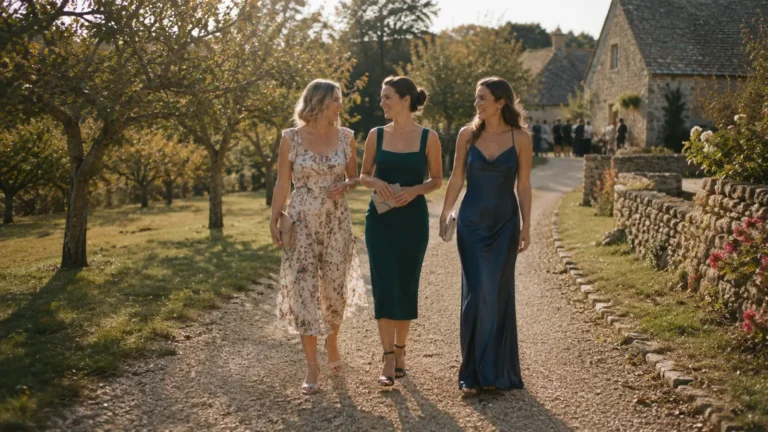
Lighter blues, greens and pinks can work beautifully for daytime spring and summer weddings, provided they do not wash out to white. Rich jewel tones and deeper neutrals tend to connect naturally with evening, fall and winter celebrations.
Color alone does not determine formality. A navy cotton sundress remains casual, while a navy silk gown can be black-tie appropriate.
If you are still deciding on the formality of your outfit, read our guide to what to wear to a wedding as a guest before choosing the final color.
What Should You Do When You Are Unsure?
First, test the outfit in daylight and photographs.
Then check:
- The invitation
- The wedding website
- The dress code
- Cultural or religious information
- Any requested guest color palette
If uncertainty remains, ask one well-informed person. Send a clear photograph and explain the exact concern:
“This dress is labeled champagne, but it looks lighter in photographs. Do you think it is too close to the wedding attire?”
Avoid sending ten options or asking the couple to style you. One focused question is easy to answer.
If you cannot ask anyone and you remain uncomfortable, choose another outfit.
A dress that creates anxiety before the wedding is unlikely to become more comfortable once you arrive.
Our Final Perspective
Wedding guest color etiquette is easier when you stop searching for a universal blacklist.
White, ivory and obviously bridal-looking colors remain the clearest shades to avoid at most Western weddings. Black is usually acceptable. Red depends more heavily on the outfit and cultural setting. Prints, pale neutrals, metallics and wedding-party colors require judgment rather than automatic rejection.
Use the couple’s guidance first. Consider their culture. Test pale colors with a camera. Evaluate the complete outfit rather than one fabric swatch.
The most respectful color is not always the quietest color.
It is the one that allows your personal style to join the celebration without creating confusion about whose celebration it is.